

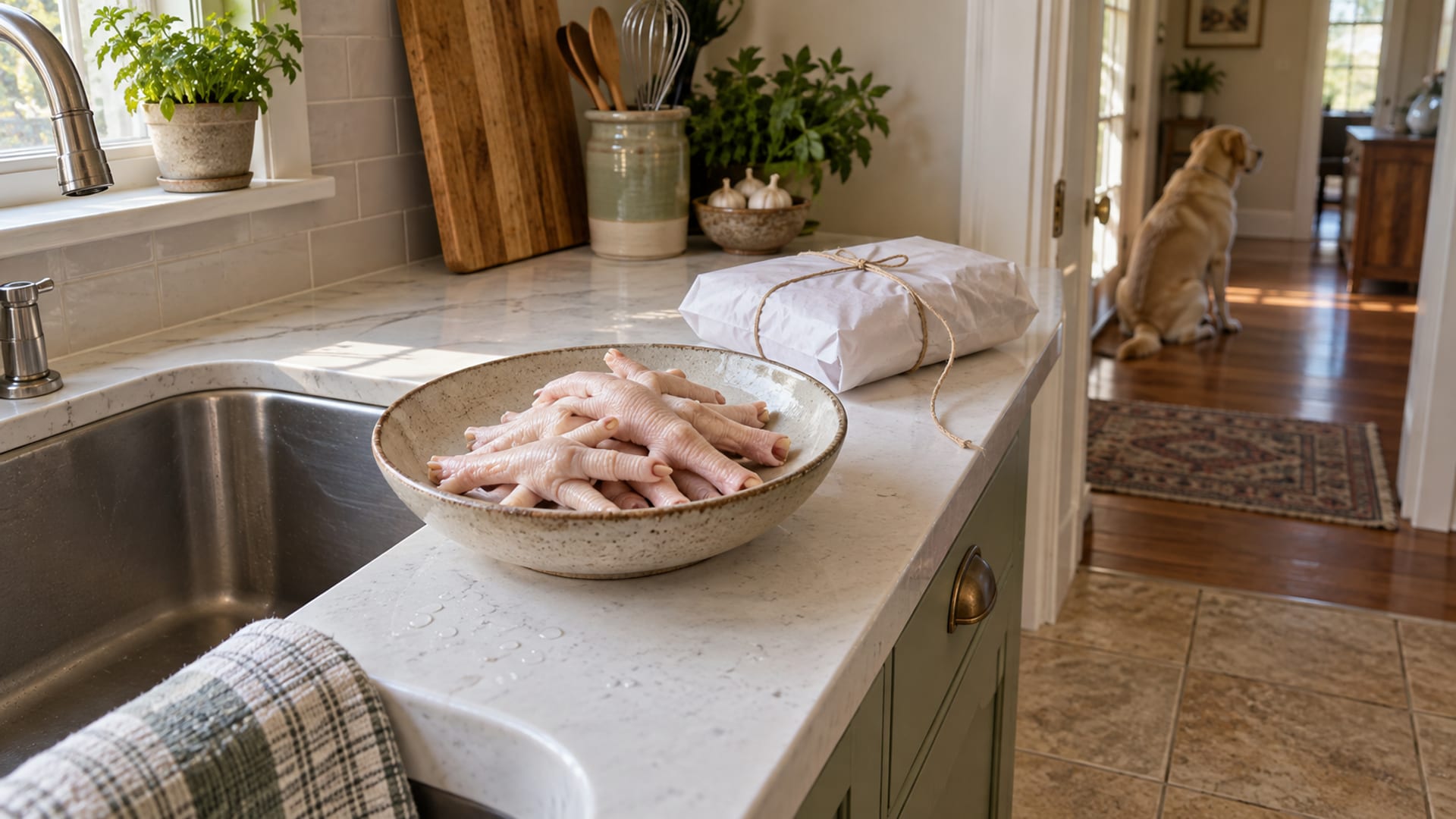
Chicken feet are a risky choice for dogs, whether they are raw, cooked or sold as a dried chew. Each foot holds a set of small bones, and the VCA Animal Hospitals advice is to avoid giving bones because they can choke a dog, break teeth, or injure and block the gut. Raw feet add a second problem: raw poultry can carry *Salmonella* and *Listeria*.
If your dog just ate a chicken foot, check first that it is breathing and swallowing normally. Then think about which kind it was. A cooked foot, a whole foot gulped by a small dog, or several feet at once is a reason to call your vet today, even if your dog seems fine.
Key takeaways
Tap a card to bring it forward.
- Raw chicken feet combine a bone hazard with raw-poultry germs.
- Cooked chicken feet are the riskiest for the bones, because cooking makes poultry bones brittle.
- Dried, dehydrated and freeze-dried chews still contain bone, and those processes do not kill every germ.
- Choking, gagging, drooling, vomiting, belly pain or blood needs a vet promptly.
- Wash hands, bowls and counters after handling raw chicken feet; the germs affect people too.
My dog ate a chicken foot: what to do now
- Watch your dog's breathing and swallowing. Choking, repeated gagging, heavy drooling or struggling to swallow needs a vet or emergency clinic right away.
- Do not reach down the throat to pull out a stuck piece. The Merck Veterinary Manual lists bones among the most common objects that lodge in a dog's esophagus, and removing one is a job for the vet.
- Work out what kind of foot it was: raw, cooked, dried, freeze-dried or part of a chew.
- Count what is missing and note the time and your dog's size.
- Call your vet if it was a cooked foot, a large piece, several feet, or a whole foot that seems big for your dog. A bone problem is a vet matter more than a poison-line matter.
- Keep the package if it was a store-bought chew, in case your vet or the maker needs the lot number.
Raw, cooked and store-bought chews compared
Tap or hover a row to highlight it.
| Type | Main risks | How concerned to be |
|---|---|---|
| TypeRaw whole feet | Main risksBones, plus *Salmonella*, *Listeria*, *Campylobacter* and *E. coli* | How concerned to beAvoid; call your vet if one was swallowed whole or signs start |
| TypeRaw feet with nails trimmed | Main risksSame bones and germs | How concerned to beAvoid |
| TypeCooked feet (boiled, fried, braised) | Main risksBrittle bones that splinter | How concerned to beCall your vet if one was eaten |
| TypeDehydrated or air-dried chews | Main risksBone still present; drying does not reliably kill germs | How concerned to beRead the label; watch closely |
| TypeFreeze-dried raw chews | Main risksBone still present; germs reduced, not all killed | How concerned to beRead the label; watch closely |
| TypeGround or powdered feet in a treat | Main risksDepends on whether it was cooked; ground bone can still irritate the gut | How concerned to beRead the label |
| TypeChicken-foot broth with no bones | Main risksFat, salt, onion or garlic added in cooking | How concerned to bePlain, fully cooked broth is lower risk |
Raw chicken feet
Raw feet contain bones, nails, skin and cartilage, and raw bones can still lodge or injure on the way down. The CDC does not recommend raw pet food or raw treats, because of germs like *Salmonella* and *Listeria*. In an FDA survey of raw pet foods, 15 of 196 samples tested positive for *Salmonella* and 32 of 196 for *Listeria monocytogenes*. Trimming the nails changes neither risk. Can dogs eat raw chicken? covers the germ side in more depth.
Cooked chicken feet
Cooking makes the germ risk lower and the bone risk higher. VCA notes that cooked chicken bones can become brittle and splinter, which can lead to a blockage or a tear in the intestine. A foot from a pot of soup, a dim sum plate or a fried platter belongs in this row. Can dogs eat chicken bones? walks through what to do after a cooked bone.
Dried, dehydrated and freeze-dried chews
These are the chicken feet sold in pet stores, and they are the form most owners buy on purpose. They are still whole feet with bones inside. The CDC notes that freeze-drying reduces germs without killing all of them, and dehydrating raw meat is not the same as cooking it. A chew made from fully cooked feet lowers the germ concern, but the bone is still there. VCA's advice to avoid bones covers bones sold as dog chews too, so ask your vet before making these a habit, especially for a small dog or a gulper.
Is there a safe number of chicken feet?
There is no published safe number of chicken feet by dog size, raw or cooked. The risk comes from the size and shape of the bone, whether it lodges or splinters, and the dog swallowing it.
Size matters most. Merck's guide to gastrointestinal obstruction notes that even small objects can block a small patient, so a foot that passes through a Labrador can lodge in a Chihuahua. Merck also reports that young large-breed dogs are more likely than older dogs to end up with a foreign-body blockage.
If a household includes babies, older adults, pregnant people or anyone with a weak immune system, raw feet bring extra risk to them as well, since dogs can pass on the germs.
Signs to watch for, and when
Tap or hover a row to highlight it.
| When | What you may see | What it can mean |
|---|---|---|
| WhenRight away | What you may seeChoking, gagging, drooling, pawing at the mouth, repeated swallowing, trouble breathing | What it can meanA piece is stuck. See a vet now. |
| WhenWithin hours to a day | What you may seeBringing food back up, vomiting, not eating, belly pain | What it can meanPossible piece in the esophagus or stomach; call your vet |
| WhenOver the next few days | What you may seeStraining to poop, constipation, blood in stool or vomit, lethargy | What it can meanPossible blockage or injury lower down; call your vet |
| WhenDays after a raw foot | What you may seeDiarrhea, vomiting, fever, or no signs at all | What it can meanPossible infection; your dog can shed germs without looking sick |
Merck notes that signs of a blockage depend on where it is and how long it has been there, and can include vomiting, loss of appetite, diarrhea, belly pain, lethargy and shock. Collapse, severe pain, blood or marked lethargy needs a vet right away.
"My dog has had chicken feet for years with no problems"
That can be true, and a lot of dogs chew chicken feet without trouble. A foot that is small compared with a big dog's throat and gut can pass without lodging. The batch may have carried no harmful germs. That record still does not make the next foot safe. A cooked foot splinters differently from a raw one. A smaller dog, or a puppy that gulps, meets the same foot with a narrower gut. Contamination varies from package to package, and the FDA notes that pets can carry and shed *Salmonella* without showing signs. A blockage can also build over days. So, if chicken feet are part of your dog's routine, talk with your vet about whether the bone risk suits your dog, and watch closely after each one.
Paws, broth and other look-alikes
- "Paws," "claws" and "chicken toes" can mean the same product or part of it, depending on the seller.
- Chicken wings, necks and drumsticks also hold poultry bones, with different sizes and shapes. See can dogs eat chicken bones?
- Pig feet are a separate product from a different animal. Can dogs eat pig feet? covers them.
- Bone broth made from feet has no whole bones once strained, but may carry fat, salt, onion or garlic from the pot.
- Collagen or synthetic chews shaped like feet may contain no bone at all. The ingredient panel tells you which one you have.
The AKC discusses possible benefits of bones alongside the choking, tooth and gut risks, while VCA advises avoiding bones altogether. Your vet can tell you which chews suit your dog.
Check what you learned
Quick check
Questions about dogs and chicken feet
Can dogs eat raw chicken feet?
They are best avoided. Raw feet contain bones and can carry *Salmonella*, *Listeria* and other germs, and the CDC does not recommend raw pet food or treats.
Are cooked chicken feet safer for dogs?
No. Cooking makes poultry bones brittle and more likely to splinter, which can lead to a blockage or a tear in the gut.
My dog swallowed a chicken foot and seems fine. What now?
A normal first hour does not mean the foot has passed. Watch for gagging, vomiting, belly pain, not eating, constipation, straining or blood, and call your vet promptly if the foot was cooked, large or swallowed whole.
Are dehydrated or freeze-dried chicken feet safe for dogs?
Not automatically. Those processes reduce germs without killing all of them, and the bones are still inside. VCA advises avoiding bones, including ones sold as chews.
How many chicken feet can a dog have?
There is no established safe number by dog size. The risk depends on the foot, how it was prepared and how your dog chews, so ask your vet before making them a regular treat.
Sources
Checked September 24, 2026.
- VCA Animal Hospitals, Why Bones Are Not Safe for Dogs
- VCA Animal Hospitals, Summer Fun and Follies
- Centers for Disease Control and Prevention, About Pet Food Safety
- U.S. Food and Drug Administration, Get the Facts! Raw Pet Food Diets Can Be Dangerous
- U.S. Food and Drug Administration, Think Food Safety and Be Salmonella Safe
- Merck Veterinary Manual, Esophageal Foreign Bodies in Small Animals
- Merck Veterinary Manual, Gastrointestinal Obstruction in Small Animals
- American Kennel Club, Can Dogs Eat Bones?