
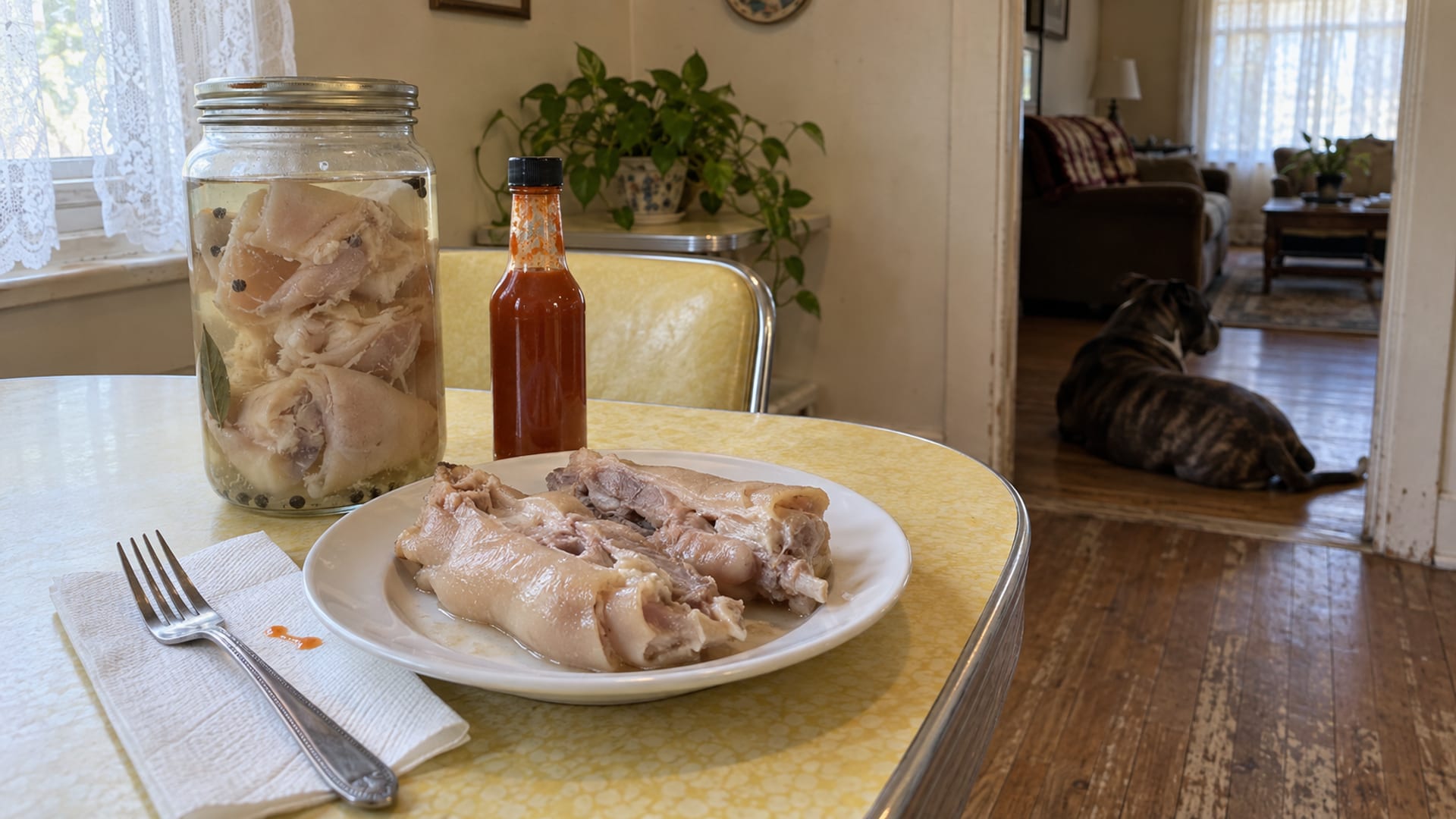
Keep pig feet on the people's plates, whether they are boiled soft, smoked, fried, straight from the pickling jar or sold dried as a dog chew. A pig foot is skin, fat, cartilage and a cluster of small bones, and Merck Veterinary Manual names bones as the object most often found stuck in a dog's esophagus. Cooking makes those bones brittle enough to splinter, which the ASPCA warns can seriously injure a dog.
If your dog swallowed a cooked pig foot bone, a good-sized piece, or you cannot tell how much went down, call your vet promptly for advice. Choking, gagging hard or trouble breathing means an emergency clinic, now.
Key takeaways
Tap a card to bring it forward.
- Pig feet are off the menu in every form: raw, boiled, smoked, fried, pickled or dried.
- Cooked foot bones splinter; raw ones still choke, block the gut, crack teeth and carry germs.
- The skin and meat are fatty, and pickled or cured feet can carry a lot of salt.
- A "dog chew" label on a dried pig foot does not remove the bone risks.
- After a swallowed bone, call your vet. Drooling, gagging, vomiting or straining without stool means call now.
What to do if your dog got into the pig feet
Tap or hover a row to highlight it.
| What happened | What to do |
|---|---|
| What happenedChoking, gagging, drooling hard, trying to swallow over and over, trouble breathing | What to doEmergency clinic now |
| What happenedSwallowed a cooked foot bone, a large piece, several pieces or an unknown amount | What to doCall your vet promptly, before signs start |
| What happenedChewed a raw or dried pig foot and swallowed chunks | What to doCall your vet for advice about your dog and that piece |
| What happenedLicked the plate or ate a little boneless skin | What to doWatch closely and call if any sign below shows up |
| What happenedGot into the pot liquor, sauce or pickling brine | What to doTell your vet or a pet poison line what went into the dish |
The AKC advises calling your vet for advice, or booking a visit, after a dog eats cooked bone, to rule out anything serious. Merck's guidance for owners on swallowed objects says a dog that vomits again and again, has a tender belly or stops passing stool needs a vet call right away. Leave laxatives and medicine alone, and do not try to pull a stuck bone out of the mouth or the rear end.
When you call, have the form of the foot ready (raw, boiled, smoked, pickled or a store chew), roughly how much is missing, when it happened and what your dog weighs.
Pig feet by form, from the pot to the pet store
Tap or hover a row to highlight it.
| Form | Verdict | What to know |
|---|---|---|
| FormRaw pig foot or trotter | VerdictAvoid | What to knowBone that can choke or block, plus raw-meat germs |
| FormBoiled, stewed or pressure-cooked pig feet | VerdictAvoid | What to knowCooked bone turns brittle and can splinter |
| FormSmoked, grilled, roasted, fried or barbecued | VerdictAvoid | What to knowCooked bone, often extra fat and seasoning |
| FormPickled pig feet from a jar or the deli | VerdictAvoid | What to knowCooked, cured bone, and the brine can add a lot of salt |
| FormDried pig foot sold as a dog chew | VerdictCaution to avoid; ask your vet | What to knowHard bone still chokes, blocks and breaks teeth |
| FormBroth, pot liquor, sauce or drippings | VerdictOnly if you know every ingredient | What to knowFat, salt, onion, garlic or other seasonings may be in it |
Long, slow cooking leaves the bone problem in place. Merck describes bones as slowly digested foreign bodies that can block the gut, and every foot holds a cluster of small ones.
The pickling jar, the pot and the fat
Pickled pig feet are cooked and usually cured before they sit in the vinegar brine, so they carry the bone risk and can add a lot of salt. How much salt varies a lot from one brand and one family recipe to the next, so there is no set amount to measure against. If your dog drank brine or ate several pickled pieces, say so when you call.
The fat matters as much as the bone for some dogs. Merck's pancreatitis chapter names eating something a dog should not have and high blood triglycerides among the risks, and reports higher rates in Miniature Schnauzers, Yorkshire Terriers, Cocker Spaniels, Dachshunds, Poodles and sled dogs. Dogs with past pancreatitis, high triglycerides or Cushing's disease (hyperadrenocorticism) should not get fatty pig foot skin or drippings. Signs of pancreatitis include vomiting, weakness, not eating, belly pain, dehydration and diarrhea.
The pot or the sauce can bring its own trouble. Pet Poison Helpline lists cooked bones among hazardous foods, and a poison line can help sort out onion, garlic, alcohol or a sauce sweetened with xylitol. See Can dogs eat onions? and Can dogs eat garlic? for those.
Signs to watch, from the first minutes to the next few days
High up, in the throat or esophagus: drooling, gagging, swallowing again and again, trouble swallowing or bringing food back up. These can start right away.
Further down, in the stomach or intestines: Merck lists a poor appetite, vomiting, diarrhea, low energy, belly pain or swelling, dehydration, fever or a low temperature, shock and not passing stool. A piece of bone that stays in the stomach can cause vomiting that keeps coming back.
At the end of the gut: bone that collects in the colon can cause constipation, straining and dry, hard stool.
Timing depends on where a piece goes and whether it blocks the gut partly or fully, so a dog can seem fine for a while. Left untreated, Merck's guide for dog owners warns a blockage can lead to shock and death. The worst cases include a torn gut with infection in the belly, emergency surgery or a scope, and severe pancreatitis. Call your vet for any sign on this list, and go in right away for blood in vomit or stool, weakness or collapse.
Some dogs are more likely to end up blocked. Merck says young dogs, and young large-breed dogs in particular, are more prone to a blockage from something they swallowed, as are dogs that eat things that are not food and dogs on medicine or with illnesses that make them hungrier. Very small pieces can block a very small dog.
Dried pig feet from the pet store
Dried pig feet are sold as dog chews, and they are still bone. The ASPCA says only natural bones sold for chewing should be considered at all, and warns that hard chewers can break off pieces or chip their own teeth. VCA Animal Hospitals goes further and advises against bones raw or cooked, because pieces can stay in the stomach, block the intestines, cause constipation and fracture teeth. Ask your vet before one of these goes in the cart.
Germs are the second question. The FDA has found Salmonella in pet treats, pig ears among them, and says pets can carry it without looking sick. That does not mean every dried pig foot is contaminated. It does mean clean hands matter: the FDA's handling tips call for washing with soap and hot water for at least 20 seconds before and after touching pet food or treats. The same goes for raw pig feet from the butcher case. In the FDA's raw pet food testing, 15 of 196 samples had Salmonella and 32 had Listeria monocytogenes. Cats in the house face the same bone and germ risks, so keep feet and scraps out of their reach too.
"My dog has eaten pig feet before and was fine"
That may be exactly what happened, and there is no reason to doubt it. On that night, the dog may have eaten mostly skin, chewed instead of swallowing, or passed a piece small or smooth enough to get through, and Merck notes that some small, smooth objects do pass without surgery while bones can digest slowly or be too big to pass. The dish may have been leaner or less salty than the next one. Germs can ride along without any sign, since the FDA says a pet can carry Salmonella or Listeria and look healthy. Pancreatitis can be mild and easy to miss, and a dog's breed and blood fats change the odds. A clean result last time is real for that dog, that foot and that night. It says little about the next foot, the next fragment or the next dog.
Pig skin, ears, hocks and other look-alikes
- Pork hocks: a cut from the lower leg, often smoked or cured, with a big bone inside. Treat it like any pork bone. See Can dogs eat pork bones?
- Cueritos and pickled pork skin: usually skin with no foot bones, but fatty and salty from the brine.
- Chicharrones and pork rinds: fried skin, fatty and salty. Not necessarily from the foot.
- Pig ears: a separate chew, with the FDA's Salmonella findings attached.
- Plain pork meat: a small amount of lean, plain, fully cooked pork is a different question. See Can dogs eat pork?
- Bones from other animals: start at Can dogs eat bones?
Check what you learned
Quick check
Questions about dogs and pig feet
Can my dog have just one bite of a cooked pig foot?
Skip it. One bite can hold a piece of brittle cooked bone or a mouthful of fatty, salty meat.
Are raw pig feet safer than cooked ones?
They splinter less, but they are still not a food to share. Raw foot bones can choke a dog, block the gut and crack teeth, and raw pork can carry Salmonella and Listeria.
My dog swallowed a pig foot bone. Should I wait for it to pass?
Call your vet promptly. Merck describes bones as slowly digested objects that can block the gut, and signs can be delayed or vary from dog to dog.
Is a dried pig foot safe because it is sold for dogs?
The label does not change the bone. Hard dried bone can still break teeth, shed pieces that get swallowed and block the gut, and the FDA has found Salmonella in some pet treats. Ask your vet first.
Which signs mean my dog needs a vet right away?
Choking, trouble breathing, gagging, swallowing over and over, heavy drooling, bringing food back up, repeated vomiting, belly pain, collapse or not being able to pass stool.
Sources
Checked September 24, 2026.
- Merck Veterinary Manual, Esophageal Foreign Bodies in Small Animals
- ASPCA, Destructive Chewing
- American Kennel Club, Can Dogs Eat Bones? Be Careful Before Giving Your Pup a Bone
- Merck Veterinary Manual, Minor Injuries and Accidents
- Merck Veterinary Manual, Pancreatitis in Dogs and Cats
- Pet Poison Helpline, Toxic and Hazardous Food Guide for Pets
- Merck Veterinary Manual, Disorders of the Stomach and Intestines in Dogs
- VCA Animal Hospitals, Why Bones Are Not Safe for Dogs
- U.S. FDA, Think Food Safety and Be Salmonella Safe
- U.S. FDA, Tips for Safe Handling of Pet Food and Treats
- U.S. FDA, Get the Facts! Raw Pet Food Diets Can Be Dangerous to You and Your Pet