
Dog Constipation: When to Call the Vet and What Is Safe to Do at Home
By Cal Hewitt · Published , updated
Health
If your dog can't pass urine, keeps vomiting, has a swollen or painful belly, or may have swallowed a bone or another object, call an emergency vet now. Dog constipation usually means hard, dry stool that is difficult or slow to pass, and one missed poop is not automatically an emergency. VCA Animal Hospitals says to call your veterinarian if your dog hasn't produced a bowel movement within 48 to 72 hours of the last one. Don't give human laxatives, enemas, or mineral oil by mouth unless a vet tells you to.
I know that's a lot while your dog is squatting in the yard and nothing is coming out, so the rest follows the order you need it.
Key takeaways
Tap a card to bring it forward.
- A dog that strains but produces little or no urine needs an emergency vet; check for pee first.
- Vomiting, a swollen or painful belly, blood, weakness, refusing food, or a swallowed bone or object means calling a vet today.
- VCA's threshold: no bowel movement within 48 to 72 hours of the last one is time to call.
- One missed poop with no straining, in a dog that is eating and acting normally, is less worrying.
- Water, gentle activity if your dog is comfortable, and fiber or pumpkin your vet approves are the home steps; no amounts here.
- No human laxatives, stool softeners, home enemas, or oral mineral oil without your vet's direction.
Go now, call today, or watch: the signs that decide it
The first job is sorting your dog into one of three groups. I'd go through them in this order, because the top group can't wait.
Go to an emergency vet now if your dog is straining to pee and little or nothing comes out, keeps vomiting, has a belly that looks swollen or feels tense or painful, is collapsing, very weak or very lethargic, or cries out in pain. These signs can mean a urinary blockage, an intestinal obstruction, or another serious illness, and none of them is something to manage at home.
Call your regular vet today if your dog keeps straining without producing stool, has blood in the stool, won't eat, or you know or suspect they ate a bone, a toy, hair, garbage, or something else they can't digest. Call today too if it has been 48 to 72 hours since the last bowel movement, which is the point where VCA advises contacting a veterinarian.
Watch closely if your dog missed a poop but is eating, drinking, peeing normally, acting like themselves, and isn't straining. PetMD says an occasional missed bowel movement without straining is less concerning, though it also advises getting a change in your dog's normal pattern checked if it lasts more than 24 hours. Those two timelines don't contradict each other. The 48 to 72 hour mark is VCA's outer limit, and any of the signs above moves the call earlier.
Owners online sometimes describe a dog whose only sign seemed to be constipation, until the night it became an emergency visit. That's why the warning signs come first. No web page can tell whether your dog has simple constipation, an obstruction, or a urinary blockage. A vet can.
What constipation looks like, and how often a dog normally poops
The Merck Veterinary Manual puts it plainly: "Constipation refers to difficult or infrequent elimination of stool." The stool is usually dry and hard. A constipated dog may squat again and again, strain, look uncomfortable, and produce only small amounts or nothing at all.
One sign surprises a lot of owners. VCA notes that a constipated dog can pass small amounts of watery stool or mucus without a normal bowel movement. So, seeing liquid doesn't rule out hard stool stuck further in. VCA also lists a tense or painful abdomen as a reason for concern.
What counts as normal depends on your dog. PetMD, in a page updated October 30, 2025, gives these general patterns:
- Adult dogs: most poop about once a day, but two or three times a day can also be normal.
- Puppies: they may go five times a day or more.
- Senior dogs: about once a day, sometimes less often.
Many dogs go about 30 minutes after a meal or after they get up. Your dog's own routine is the best yardstick, and a healthy stool is formed rather than runny all the time.
If your dog may be trying to pee instead, that's an emergency
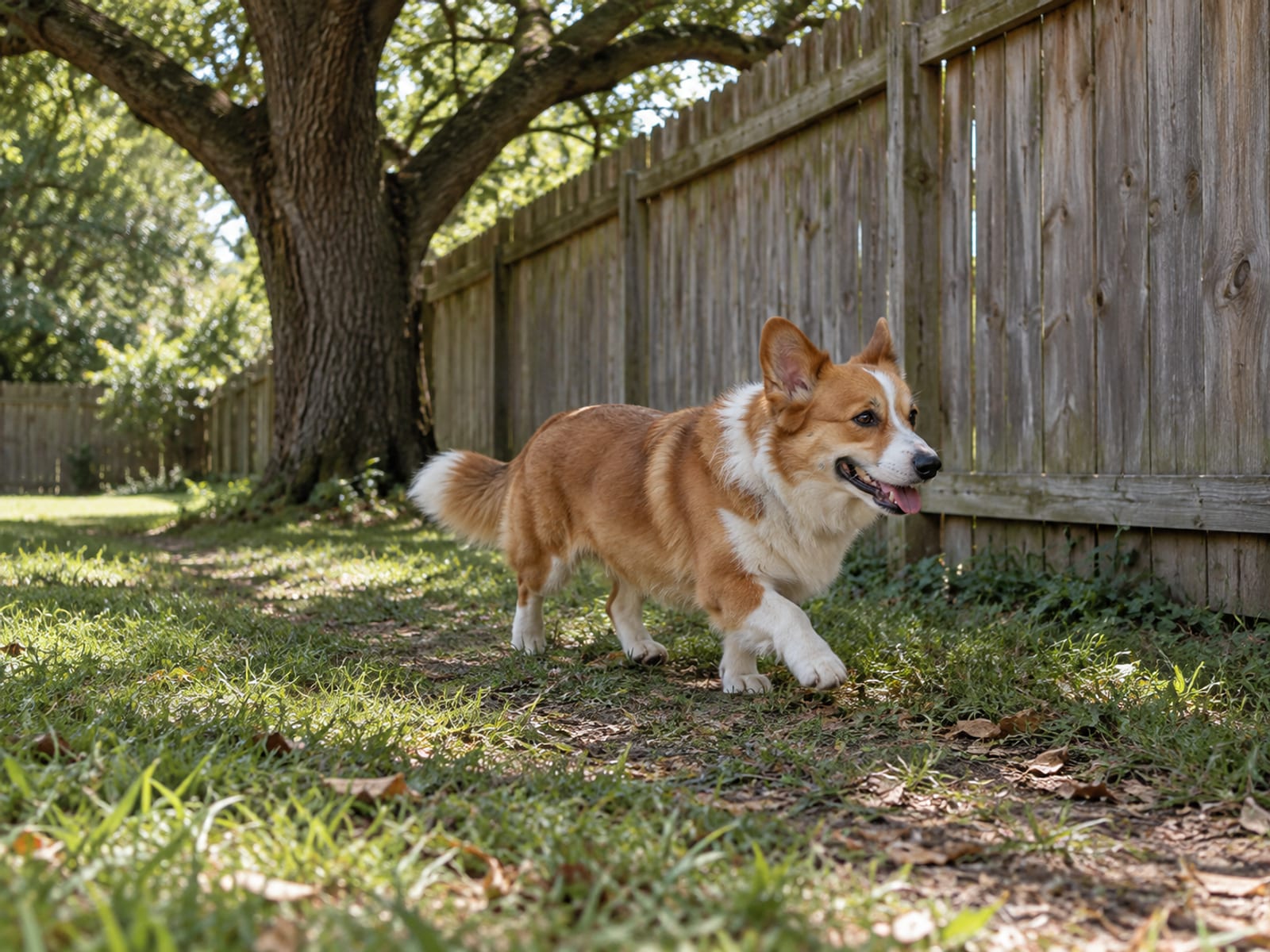
A dog squatting and straining might not be trying to poop at all. Straining to urinate can look very similar, and it is far more urgent. Cornell University College of Veterinary Medicine describes urinary obstruction as "potentially life-threatening" and "considered a medical emergency." Cornell says it can lead to vomiting, belly pain, lethargy, dehydration, and even a ruptured bladder.
Signs your dog may be straining to pee include repeated attempts with little or no urine, dribbling, blood in the urine, and licking at the genitals. PetMD says a dog that can't urinate should go to an emergency veterinarian immediately.
The practical step is to watch whether urine is actually coming out. If you can't tell, or you see only drops, don't spend time trying to work out the cause at home. Head to an emergency vet.
Constipation or diarrhea with straining?
Straining doesn't always mean hard stool is stuck. Diarrhea from the large bowel can cause repeated squatting, urgency, small frequent stools, mucus, and sometimes blood, as PetMD's colitis page describes. That can look a lot like constipation from across the yard.
Watery material doesn't prove constipation or rule it out, since VCA notes constipated dogs can pass liquid or mucus around retained stool. Clues that lean toward constipation are hard, dry pieces and long gaps between bowel movements. Frequent small, loose stools lean toward diarrhea. If you're seeing blood, or you truly can't tell which one you're dealing with, your vet should sort it out. Our Dog Diarrhea article covers the diarrhea side in more detail.
What causes constipation, including bones and swallowed objects
- Not enough water, or dehydration.
- Diet, including too little fiber or a diet that doesn't suit the dog.
- Too little exercise, which can slow the gut.
- Bones, hair, garbage, and other poorly digestible material. Merck calls out bones in particular.
- Swallowed objects or an intestinal obstruction.
- Holding it in because of stress, a dirty area, or a past bowel movement that hurt.
- Pain from arthritis, other joint or bone problems, anal or rectal disease, or a pelvic injury.
- Matted hair or debris around the anus that physically blocks stool.
- Anal gland (anal sac) disease.
- An enlarged prostate or another mass pressing on the rectum or colon.
- A pelvic fracture or a narrowed pelvis.
- Nerve and body-wide problems, such as spinal cord disease, pelvic nerve problems, low thyroid function, or electrolyte imbalances.
- Medicines that slow the gut.
- Age and chronic disease, including megacolon.
Not all of these are common. The one that changes your timeline most is a swallowed object: if your dog may have eaten a bone, a toy, or something else they couldn't digest and is now straining or not pooping, call your vet the same day instead of waiting out the 48 to 72 hours. With vomiting or a swollen belly too, go now. Our Bloat in Dogs and Dog Vomiting articles explain why those signs matter, and the bones entries in Can My Dog Eat cover why bones are risky.
What you can safely do for a mild case today, and what not to give without your vet
A mild case means your dog is still eating, drinking, peeing normally, not vomiting, not in obvious pain, and isn't known to have swallowed anything. If that describes your dog, a few steps are supported while you watch or wait to hear back from your vet.
Keep fresh water available and encourage drinking. Merck says constipated dogs should have plenty of water, and VCA also recommends encouraging your dog to drink.
Offer a short, gentle walk if your dog is comfortable. Normal activity can help things move. Skip it if your dog is painful, weak, vomiting, bloated, or might be blocked, and never let a walk delay a vet visit.
Ask your vet about fiber or pumpkin. Merck supports switching to an appropriate high-fiber diet for mild constipation, and veterinary sources support fiber or pumpkin in some cases. That doesn't make pumpkin right for every dog, and it doesn't always work. Your vet can tell you whether it fits your dog and how much to use, and our pumpkin entry in Can My Dog Eat covers the food-safety side. Sweet potato and milk come up often too; the veterinary sources behind this page don't cover them for constipation, so check with your vet before trying either.
Now the things to leave alone unless your vet specifically tells you to use them:
- Human laxatives and stool softeners. PetMD says not to treat constipation with a laxative unless a veterinarian recommends it, and Merck warns that laxatives made for people can be dangerous for animals.
- Enemas at home. Veterinary sources treat enemas as a clinical treatment for more severe cases. Phosphate enemas can cause severe electrolyte problems; Merck gives that warning specifically for cats, which is one more reason not to reach for a drugstore enema.
- Mineral oil by mouth. Merck warns that oral mineral oil can be breathed into the lungs and cause aspiration pneumonia.
I'm not giving amounts for any product here, on purpose. If your vet recommends something, use the product and the amount they give you.
What the vet will do, including obstipation and megacolon
Your vet will likely ask when your dog last had a normal bowel movement, what their usual schedule is, what the stool looks like, how much they're straining, what they eat, what medicines they take, whether they seem to be in pain, and whether they could have swallowed anything. Jot those answers down before you go, along with whether your dog has peed.
The exam usually includes feeling the belly and a rectal exam. VCA lists abdominal X-rays to see how much stool is retained and whether there's an obstruction, plus blood tests, a urine test, an ultrasound, or other tests when needed.
Treatment depends on how severe it is and what's causing it. It may include fluids, diet changes, laxatives chosen by the vet, veterinary enemas, and removing impacted stool by hand while your dog is sedated or under general anesthesia. Merck notes that fully clearing a severe blockage of stool may take two or three attempts over several days. Severe or repeated cases may need a hospital stay or surgery, and your vet will also look for the underlying cause.
You may hear two other terms. Obstipation is constipation that resists treatment, where the dog can't pass stool on their own. Megacolon is a stretched, weak colon that can't push stool along; it can be a cause of long-term constipation or a result of it. Only your vet can say whether either applies to your dog.
What treatment may cost
Cost is a fair worry, and it shouldn't be the reason you wait on an emergency sign. VetCostGuide, using 2025 estimates accessed in 2026, lists these rough US figures:
- Basic vet visit: about $75 to $200.
- X-rays: about $150 to $300 on top of the visit.
- Severe cases needing hospitalization: $1,000 or more.
These are third-party estimates, not an official fee schedule, and they aren't tied to any location, so your clinic's prices may differ a lot. Ask for a written estimate before treatment starts, and ask what each step is for.
Keeping it from coming back
Once your dog is feeling better, a few habits help lower the odds of a repeat. Merck and VCA point to the same basics:
- Keep clean water easy to reach all day.
- Feed a diet that suits your dog, with fiber your vet agrees on.
- Give regular chances to go outside and a clean, calm spot to do it.
- Keep bones, toys that break apart, garbage, and other indigestible things out of reach.
- Keep the hair around your dog's rear end trimmed if it tends to mat.
- Follow up with your vet, especially if constipation keeps coming back or your dog is older, stiff, or on medication.
It also helps to know your dog's normal, so a change stands out quickly. Our Signs of a Healthy Dog article covers that everyday baseline.
Questions owners ask about dog constipation
These come up most when a dog is straining and the owner wants a quick answer.
How can I relieve my dog's constipation fast?
The fastest safe route is a call to your vet, who can confirm it's constipation and not a blockage, then treat it directly if needed. At home, stick to water, a gentle walk if your dog is comfortable, and fiber only if your vet approves. In a severe case, a vet can remove the stool under sedation, which no home remedy can match.
What is the fastest-acting laxative for a dog?
No laxative should be picked at home for speed. Laxatives made for people can be dangerous for dogs, according to Merck, and PetMD advises using a laxative only when a vet recommends one. If your vet decides a laxative is right, they'll choose the product and amount for your dog.
Are there natural laxatives for dogs?
The home options veterinary sources support are water, activity, and dietary fiber, with pumpkin as one fiber option in some mild cases. None of these is guaranteed, and none is safe to use in place of a vet when your dog is vomiting, in pain, or may have swallowed something. Oral mineral oil is sometimes called natural, but Merck warns it can cause aspiration pneumonia.
How do I tell if my dog is constipated or has a blockage?
You often can't tell at home, which is why vets use abdominal X-rays to check for an obstruction. Vomiting, a swollen or painful belly, refusing food, weakness, or a known swallowed object all point toward something more serious than simple constipation. With any of those, go to a vet today, and go now if your dog also can't pee.
Your next step
Start with the pee check. If little or no urine is coming out, or your dog is vomiting, swollen, weak, or may have swallowed something, go to an emergency vet now. Otherwise, give water, watch the clock from the last bowel movement, and call your regular vet if 48 to 72 hours pass or anything changes. DogServ's directory lists regular vets and emergency vets so you can find help near you, and whatever your vet recommends, use their product and their amount.
Sources
- Cornell University College of Veterinary Medicine: Cornell University College of Veterinary Medicine
- Merck Veterinary Manual: The Merck Veterinary Manual
- PetMD: PetMD's colitis page
- PetMD: PetMD
- PetMD: PetMD
- PetMD: PetMD
- VCA Animal Hospitals: VCA Animal Hospitals
- vetcostguide.com: VetCostGuide