
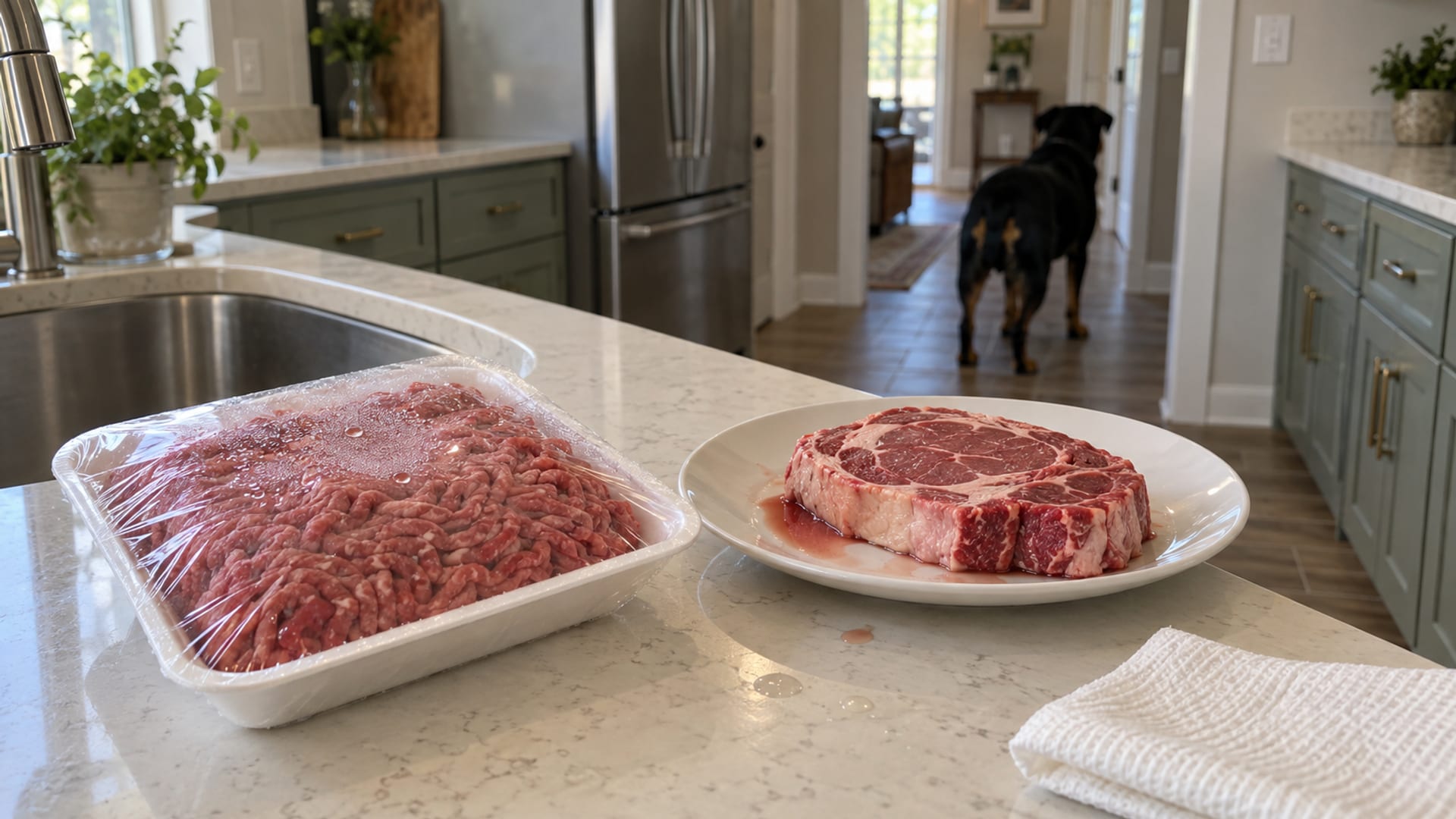
Raw meat is best kept out of your dog's bowl, because it can carry germs and parasites that cooking would kill. The CDC says raw pet food can make dogs sick with Salmonella and Listeria, and the FDA advises against feeding raw diets for that reason.
If your dog just pulled a raw steak or a pack of ground beef off the counter, the first question is whether a bone went down with it. A boneless bite in a healthy adult dog usually means watching for several days. Bones, raw salmon or trout, wild game, a puppy, or a dog that is already ill means calling your vet today.
Key takeaways
Tap a card to bring it forward.
- Raw meat can carry Salmonella, Listeria, E. coli, Campylobacter and parasites.
- Many dogs show no signs at all, yet can still shed germs in their poop and saliva.
- Raw bones can choke, crack teeth, block the gut or tear it.
- Raw Pacific salmon and trout carry a separate risk, salmon poisoning disease, that can show up a week or more later.
- Plain, fully cooked, boneless meat is the lower-risk way to share.
Your dog ate raw meat: first steps
- Pick up what is left and note what it was: ground beef, a steak, pork, organ meat, game, fish or a raw pet food.
- Look for bone. If bone was swallowed, call your vet. Can dogs eat bones? explains what can happen next.
- Call your vet today for a puppy, a pregnant dog, or a dog with an illness or weak immune system. Also call for a large amount, wild game, meat of unknown origin, raw salmon or trout, or a raw pet food that has been recalled.
- Check the seasoning. Marinades and sausage mixes can hold onion or garlic, which bring their own danger.
- Clean up well. Wash your hands, the counter, the floor and the bowls. People and other pets can pick up the same germs.
For a healthy adult dog that ate a small boneless piece of store-bought meat, watching at home is reasonable. Call if any sign below appears.
Why raw meat worries vets
Raw meat has no toxic dose because the risk is what is living on it, and that changes from one package to the next. In FDA sampling of commercial raw pet foods, Listeria turned up in 32 of 196 products and Salmonella in 15. A study in Veterinary Sciences that tested raw diets for Campylobacter, Salmonella and Yersinia also lists an unbalanced diet and internal punctures from bones among the health risks of raw feeding.
The Merck Veterinary Manual notes that many dogs carry Salmonella without looking sick, and that puppies and dogs already dealing with another illness are the ones most likely to become ill. The AVMA opposes feeding dogs and cats animal protein that has not been through a process that eliminates pathogens.
Raw meat, form by form
Tap or hover a row to highlight it.
| Form | Main concern | What to know |
|---|---|---|
| FormRaw boneless muscle meat | Main concernGerms, parasites | What to knowBeef, pork, lamb, poultry; risk varies by source |
| FormRaw organ meat (liver, kidney) | Main concernGerms, balance | What to knowSame germ risk; too much organ meat can unbalance a diet |
| FormRaw meaty bones | Main concernGerms, plus bone | What to knowChoking, broken teeth, blockage, gut injury |
| FormFrozen raw | Main concernGerms | What to knowFreezing does not reliably kill Salmonella or Listeria |
| FormFreeze-dried raw | Main concernGerms | What to knowThe CDC still counts it as raw pet food |
| FormDehydrated raw | Main concernGerms | What to knowWarm-air drying does not guarantee a germ-free product |
| FormRaw salmon, trout, steelhead | Main concernSalmon poisoning disease | What to knowA parasite-borne infection that can be fatal |
| FormRaw wild game or pork | Main concernGerms, parasites | What to knowHazards vary by animal and where it came from |
| FormPlain, fully cooked, boneless meat | Main concernLower | What to knowNo onion, garlic, heavy seasoning or fat trimmings |
| FormCooked bones | Main concernBone | What to knowBrittle and can splinter |
The chicken version of this question has its own page: can dogs eat raw chicken? For seasoned and processed meats, see lunch meat and hamburger.
Raw salmon and trout: a different clock
Raw Pacific salmon, trout and steelhead can carry a tiny parasite that transmits salmon poisoning disease. The Merck Veterinary Manual says signs usually appear about seven days after the meal and can take as long as 33 days. Fever, vomiting, diarrhea, weight loss, swollen lymph nodes and dehydration are typical, and without treatment the disease can kill.
If your dog ate raw salmonid fish, tell your vet now rather than waiting for signs, so they know what to look for. Can dogs eat salmon? covers the cooked side.
Signs to watch for in the days after
Germ-related illness has no fixed start time in dogs. Keep an eye out for:
- vomiting
- diarrhea, especially bloody
- fever, tiredness or weakness
- refusing food
- a painful belly
- signs of dehydration, such as dry gums or not keeping water down
Merck lists severe Salmonella illness as capable of spreading into the bloodstream, and notes it can cause a pregnant dog to lose her puppies. Bone problems look different: gagging, coughing, a sore mouth, retching, straining to pass stool, or vomiting that keeps coming. Any of these means a call right away.
"My dog has eaten raw meat for years and never been sick"
Many dogs do exactly that, and it is a real experience. It is not a promise for the next meal or the next dog. That meat may have carried no harmful germs, or too few to cause illness. A healthy adult dog often carries Salmonella without symptoms, while a puppy or a sick dog can go downhill on the same food. A different animal, supplier or storage method can change the risk. Bone and fat content vary too. And salmon poisoning disease can take more than a week to appear, long after nobody connects it to the fish. There is also the household to think of: a dog that looks perfectly well can still shed germs onto the floor, the couch and your hands.
Raw diets, freeze-dried food and raw toppers
- Commercial raw diets and toppers: the CDC does not recommend them. If raw feeding is your choice, work with your vet or a veterinary nutritionist so the diet is complete.
- Freeze-dried and dehydrated raw: the CDC classes these as raw food, since the processing does not reliably remove the germs.
- BARF diets: "Bones and Raw Food" plans often include raw bones, organs and supplements, and each part brings its own risk.
- Jerky and dried meat treats: some are cooked, some are dried raw. Check how they were made.
- Raw eggs: a similar Salmonella question, covered on can dogs eat eggs?
- Cats in the house: raw pet food can make cats sick too, and a cat can shed the same germs.
The FDA says thorough cooking kills Salmonella, Listeria and other foodborne bacteria. If you store raw pet food, keep it sealed, thaw it in the fridge, and clean every surface it touches.
Check what you learned
Quick check
Questions about dogs and raw meat
Can dogs eat raw beef?
Raw beef carries the same germ risk as other raw meat, including Salmonella and E. coli. Plain, fully cooked, boneless beef is the lower-risk way to share it.
My dog ate raw ground beef. What now?
For a healthy adult dog and a small amount, watch for vomiting, diarrhea, fever or tiredness over the next several days. Call your vet if any appear, or right away for a puppy, a sick dog, or a large amount.
Can dogs eat raw meat once in a while?
A single bite may cause no illness at all, but each piece carries a chance of germs, and there is no amount known to be free of risk. Cooking removes that risk.
Are raw bones safe for dogs?
Raw bones can crack teeth, get stuck, or injure the gut, and they can carry Salmonella. Cooked bones are more brittle and add a splinter risk.
Is raw meat better for dogs than cooked?
The CDC, FDA and AVMA all advise against raw feeding because of the germ risk to dogs and people. A complete diet matters more than whether meat is raw, so talk with your vet before changing what your dog eats.
Sources
Checked September 25, 2026.
- CDC, Healthy Pets, About Pet Food Safety
- U.S. Food and Drug Administration, Get the Facts! Raw Pet Food Diets Can Be Dangerous to You and Your Pet
- Merck Veterinary Manual, Salmonellosis in Animals
- Merck Veterinary Manual, Salmon Poisoning Disease in Dogs
- American Veterinary Medical Association, Raw or Undercooked Animal-Source Protein in Cat and Dog Diets
- Fredriksson-Ahomaa and colleagues, Veterinary Sciences, Raw Meat-Based Diets in Dogs and Cats