
Training a Stubborn Dog: How to Get a Dog Who Ignores You to Listen
By Cal Hewitt · Published , updated
Training
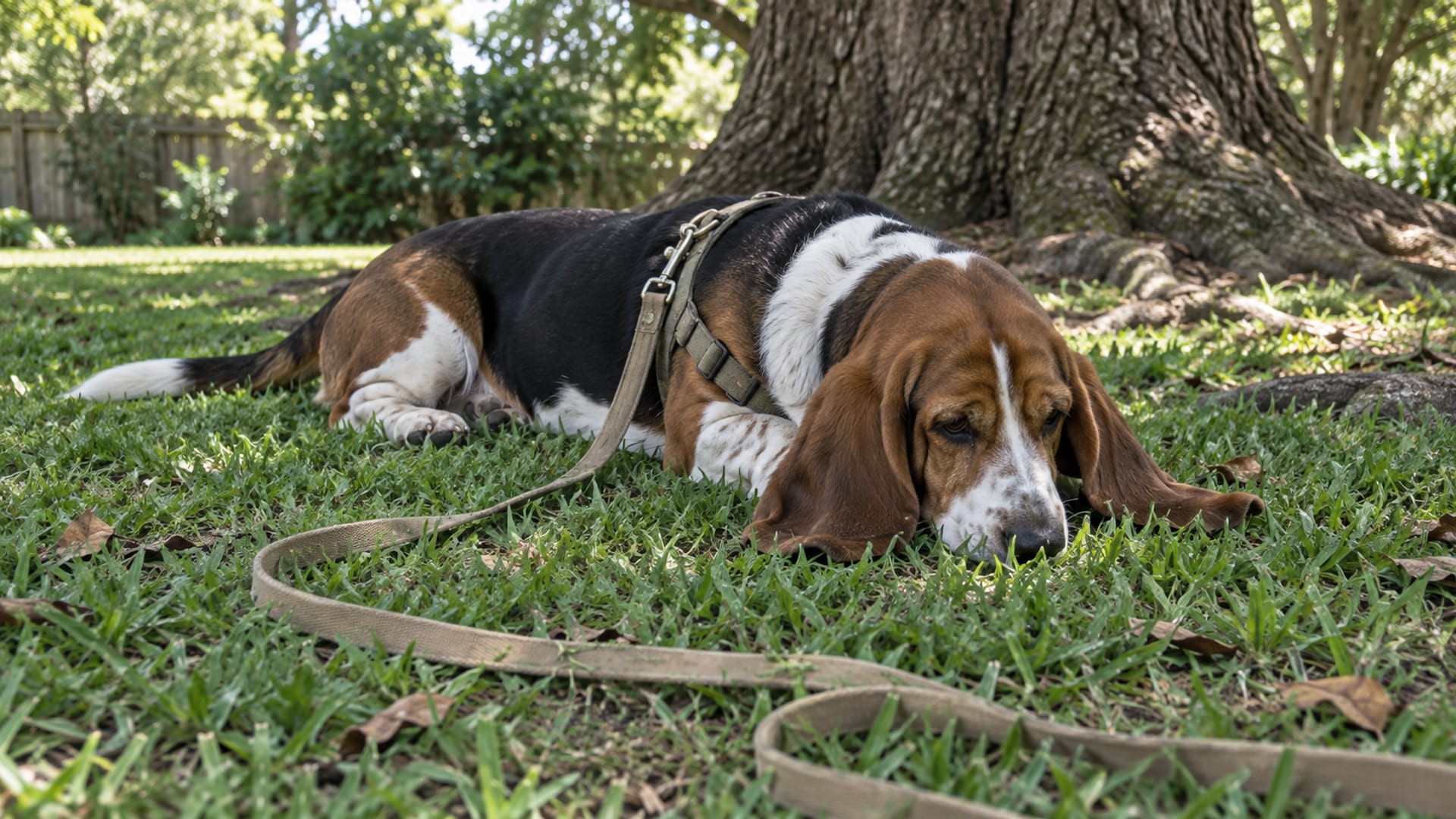
You say "sit" at the park, and your dog stares past you at a squirrel. You call them, and they keep sniffing as if you are not there. At home they know it all. Outside, with people watching, you feel like you are shouting at a wall, and part of you wonders whether you need to get tougher.
Here is what to do on your next walk. Go back to a place where your dog can still succeed, like the driveway or a quiet corner of the yard. Ask once, reward right away with something they really want, and make it harder only one small step at a time. Keep them on a leash or long line while you build it. And if the ignoring started suddenly, or your dog seems stiff, sore or off, call your vet first.
The plan below draws on the University of Pennsylvania's veterinary behavior service, UC Davis, the ASPCA, VCA Animal Hospitals and the American Veterinary Society of Animal Behavior (AVSAB).
Key takeaways
Tap a card to bring it forward.
- A cue your dog knows in the living room is a new skill in the park. Build it place by place.
- Rewards have to compete with what is out there: squirrels, smells, other dogs. Bring better ones outside.
- Change one thing at a time: the place, the distance, how long, or the distraction.
- Sudden refusal, stiffness or reluctance to sit, jump or be touched can mean pain. See your vet.
- Harsher corrections are not the answer. AVSAB says there is no evidence aversive training is necessary.
- Breed shapes what distracts a dog, but it does not decide whether your dog can learn.
What usually sits behind "stubborn"
When a dog responds at home and not outside, check these first:
- The cue is new in this place. Penn Vet's behavior service advises building a skill in the living room, then the deck, then the yard, then the park or neighborhood, moving on only once your dog is reliable at each stage.
- Something else is worth more right now. Scents, people, dogs, food and the chance to keep doing what they are doing can outweigh a dry biscuit.
- The cue was learned with help. A sit taught with a hand signal, in one room, with a treat in view, may not yet mean anything as a word on its own.
- Worry or overexcitement. A dog who is anxious or wound up has a hard time thinking. Cornell notes that reward-based training in safe places can build confidence in fearful dogs.
- Pain or illness. The American College of Veterinary Behaviorists says behavior problems can come from a medical condition, according to the ACVB.
Step by step: getting your dog to listen around distractions
- Check health first if anything changed suddenly. UC Davis recommends a veterinary evaluation before behavior training to rule out physical problems.
- Pick one behavior your dog does well at home. Use one clear word or hand signal, and mark and reward the moment they do it.
- Find out what your dog will work for outside. Food, a tug toy, a game, praise, or the chance to go sniff. Penn Vet suggests matching the treat to the difficulty: ordinary treats for easy work, exciting ones for hard work.
- Get lots of easy wins indoors, then change one thing. A different room, the doorway, the yard, a quiet street. Skip the jump from the living room straight to the dog park.
- In each new place, ask for less. A shorter stay, a closer recall, a sit with nothing going on nearby. If your dog cannot do it, move farther from the distraction or leave, and try an easier version.
- Add distractions slowly. The ASPCA's guidance for teaching a stay is to raise distractions gradually over many sessions and reward quickly.
- Keep your dog safe while you build it. A leash or long line, distance and a good choice of route mean your dog never has to be tested beyond what they can do. Do not practice an emergency recall near traffic.
- Keep practicing. A reliable dog is one who has been rewarded in many places, and a little practice and reward keep it that way.
A simple log helps: the place, the cue, how far from the distraction, the reward, and whether your dog got it. A growing number of easy, calm responses at each level is real progress.
Are some breeds more stubborn?
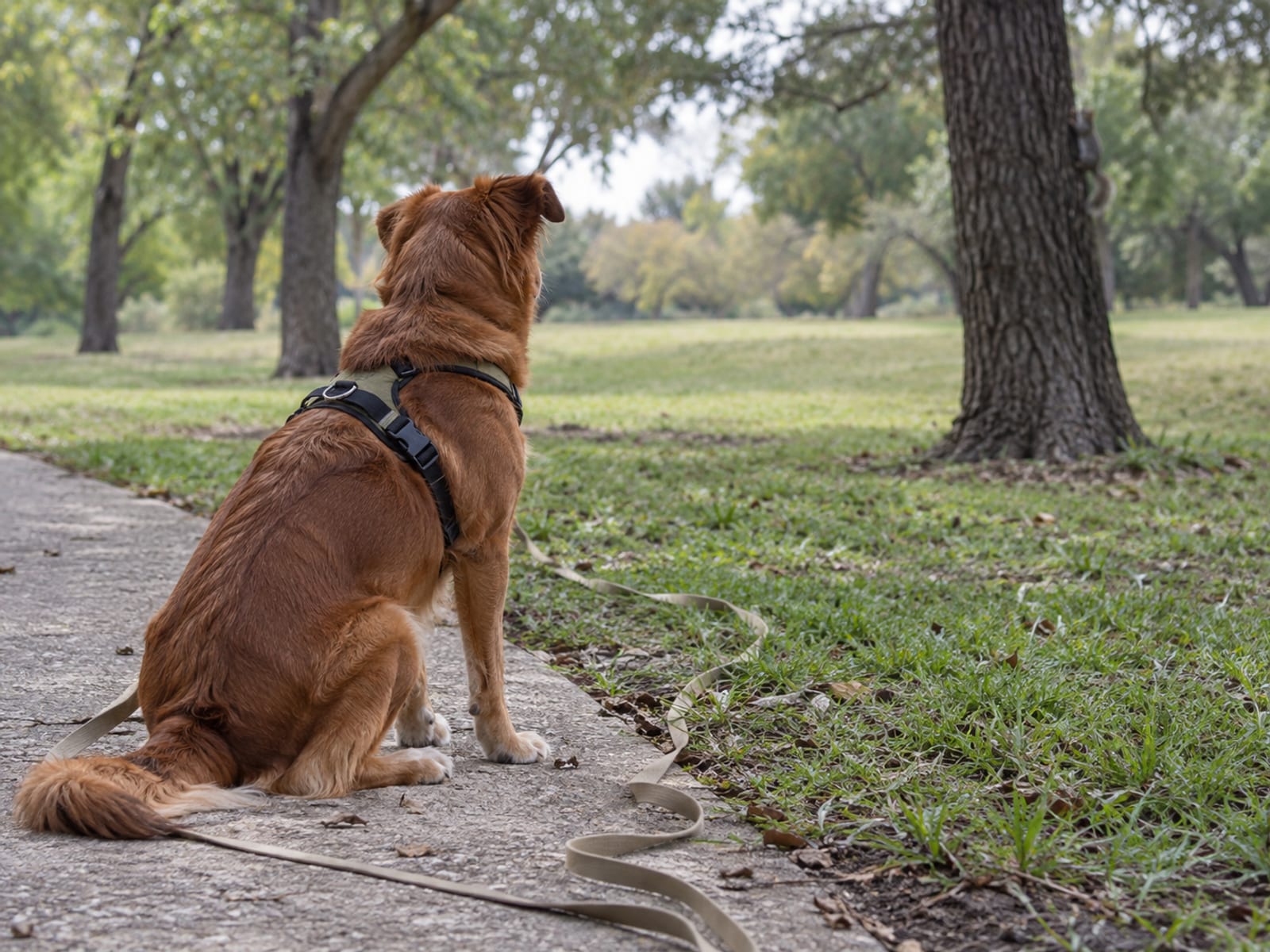
Breed matters, but it does not decide your dog's future. A 2019 study combining owner reports on more than 14,000 purebred dogs with genetic data found breed differences in a "trainability" score, which bundled attention to the owner, response to simple commands and ignoring distractions, according to Royal Society Open Science. But a study of agility dogs found that breeds seen as harder to train took no longer to reach precision; the difference was speed, not learning, according to Behavioural Processes.
What breed can tell you is what might compete for your dog's attention. Scent hounds follow their nose, sighthounds chase movement, herding dogs track motion, and guarding breeds watch the door. AKC notes that each breed's instincts affect trainability. Knowing that helps you choose the reward and the setting, and it is never a reason to give up.
When "stubborn" is really pain
See your vet before treating it as a training problem if you notice:
- A sudden change, or a cue your dog used to do reliably that they now refuse
- Reluctance to sit, lie down, jump, climb stairs, play or be handled
- A change in how they walk or stand, or guarding one part of their body
- Yelping, or changes in appetite, sleep, toileting or activity
- Refusal that only happens with a certain movement, or with a collar or harness on
VCA says a sudden drop in playfulness should be checked as a possible sign of pain. Only a vet can find the cause. For a sudden injury, severe pain, collapse or trouble breathing, go straight to an emergency vet.
How long it takes
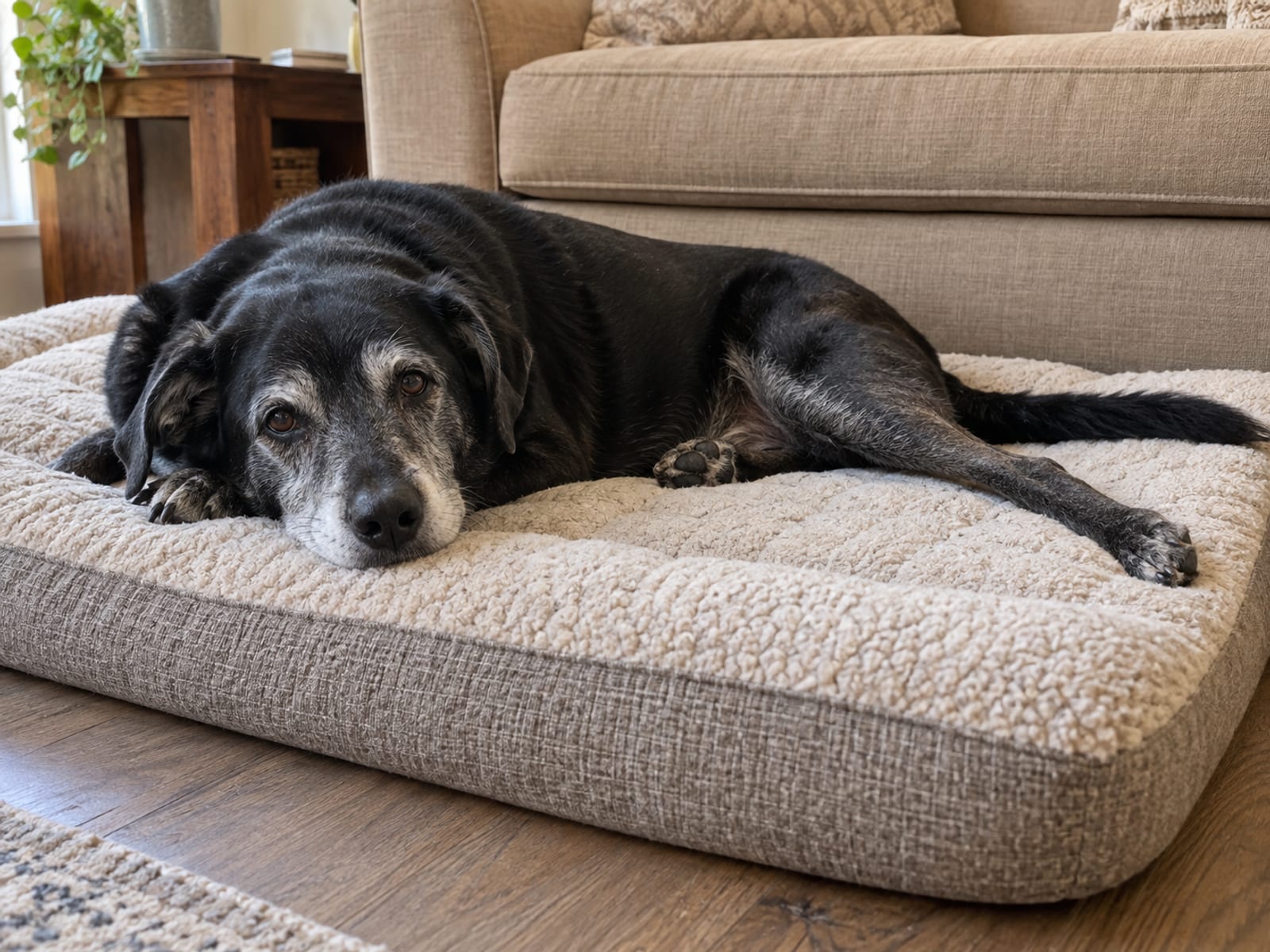
No one can give you a date. Progress means your dog succeeding in harder places over time: first the quiet spot, then one step harder, then more distance, time and distraction.
What progress looks like
Week 1
Your dog gets it right in the easy place, and you learn which rewards work outside.
The weeks after
One manageable challenge at a time: a new spot, a little more distance, one mild distraction.
Months
The skill holds up in everyday places, kept up with practice. AKC says changing habits like pulling or jumping can take weeks to months, depending on how long the habit has been paying off.
In one study, dogs in six weeks of one-hour obedience classes, adults as well as puppies, responded to commands better than dogs who did not take a class, according to Journal of Veterinary Medical Science. Adult dogs are not too old to learn.
Mistakes that make a dog seem more stubborn
- Testing a cue where it has not been taught. Go back to the last place it worked, and build in smaller steps.
- Making everything harder at once. Outside, farther away, near another dog and a longer stay is four changes. Pick one.
- Repeating the cue while your dog cannot respond. Change the setup, then ask once and reward.
- A reward that cannot compete. Bring better food or a toy, or work farther from the distraction.
- Skipping the vet after a sudden change.
- Punishment, intimidation or pain. AVSAB says reward-based methods should be used for all training and there is no evidence aversive training is necessary.
- Treating it as a character flaw. Define the exact situation, the trigger and the skill gap, and make the next try easier.
When to call a professional
Start with your vet for a sudden change, possible pain or illness, or changes in movement or toileting. The ASPCA points out that only a licensed vet can diagnose a medical condition.
For a healthy dog who needs help with skills around distractions, a certified reward-based trainer (CPDT-KA or CPDT-KSA) fits. For fear, anxiety, aggression or a safety concern, look for a behavior consultant (CBCC-KA or IAABC-CDBC) working with your vet, or a veterinary behaviorist (DACVB). VCA advises starting with a veterinary behaviorist when safety is a concern, when your dog may be in pain or ill, or when behavior changes suddenly.
Ask any trainer what methods and tools they use, who verifies the letters after their name, what experience they have with your exact problem, and how they refer medical concerns. Skip anyone who recommends pain, force, shock, prong or choke collars, or "dominance" methods. APDT membership is a professional association, not an independent certification.
Check what you learned
Quick check: the dog who will not listen
Questions about stubborn dogs
How do I get my dog to stop being so stubborn?
Make it easier to succeed and more worth it. Go back to where your dog responds, use a reward that beats the distraction, and build to harder places one step at a time. Check with your vet if the change was sudden.
Why doesn't my dog listen to me outside the house?
Dogs do not automatically carry a skill from the house to the street. Outside is a new place full of competing smells, sounds and animals, so the cue needs to be practiced there, starting easy.
Which dog breeds are most stubborn?
Research finds breed differences in how easily dogs are trained, on average, but it does not predict how any one dog will learn, and one study found "harder" breeds learned agility just as fast. Breed mostly tells you what will distract your dog.
Should I correct my dog for ignoring me?
AVSAB says aversive methods should not be used for training and there is no evidence they are necessary. Make the task easier and reward the response you want.
Can pain make a dog seem stubborn?
Yes. Pain and medical problems can change behavior, especially refusing to sit, jump, climb or be touched. Only a vet can tell, so book a check if the change was sudden.
Does my dog know a command if they only do it at home?
They know it at home. Penn Vet recommends moving to more distracting places only after your dog is reliable in the easier one.
On your next walk
Pick one cue, fill your pocket with something better than usual, and practice it in the driveway before you go anywhere busy. Keep your dog on a leash or long line while you build it. For the basics this builds on, see How to Train a Dog and Positive Reinforcement Dog Training. If you are thinking about a class, Obedience Training compares the options, and you can reach me through the contact page.
Sources
- American College of Veterinary Behaviorists: ACVB
- American Kennel Club: AKC
- American Veterinary Society of Animal Behavior: AVSAB
- ASPCA: ASPCA
- ASPCA: ASPCA
- PubMed: Behavioural Processes
- PubMed: Journal of Veterinary Medical Science
- PubMed Central: Royal Society Open Science
- UC Davis School of Veterinary Medicine: UC Davis
- VCA Animal Hospitals: VCA
- VCA Animal Hospitals: VCA
- vet.upenn.edu: Penn Vet