
How to Teach a Dog to Fetch: Bring It Back, Drop It and Keep It Safe
By Cal Hewitt · Published
Training
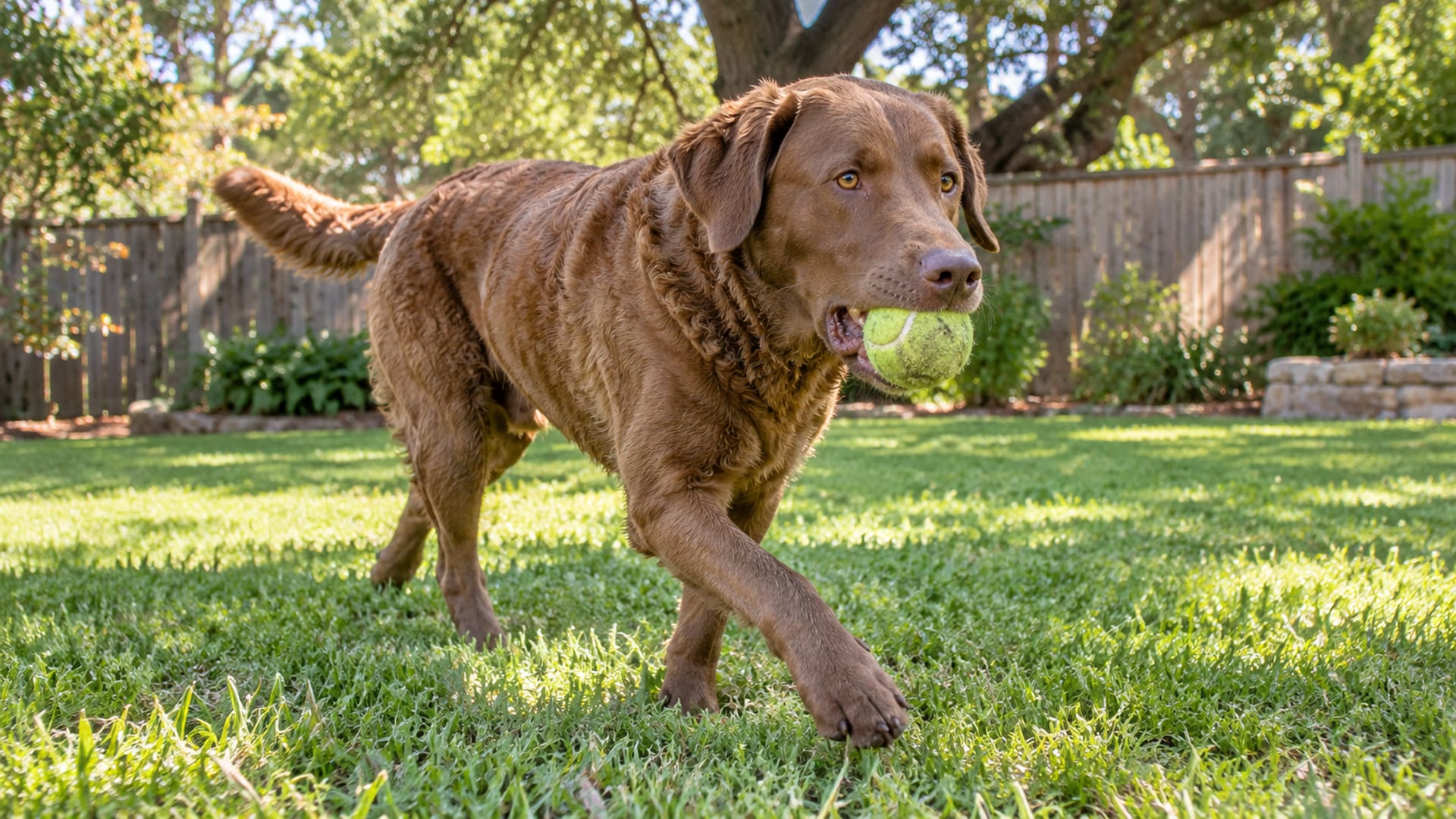
Teach fetch as four separate skills: get the toy, bring it back to you, let go of it, and repeat. Start indoors or in a quiet spot with a toy your dog already likes. Reward interest, pickup and any step toward you, and begin with a very short toss. When your dog returns, reward with food, praise, tug or another throw. Teach "drop it" as a trade, and hand the toy back during practice so letting go does not always end the game. Don't chase your dog, pry open the mouth, use force-fetch methods or throw sticks, and adjust the game for your dog's age, fitness, the heat and tiredness.
Key takeaways
Tap a card to bring it forward.
- Fetch has four parts: get, return, release, repeat. Teach them one at a time.
- Never chase a dog that runs off with the toy. Chasing teaches keep-away.
- Teach "drop it" as a trade, and give the toy back so letting go is not the end of the fun.
- Start with a toss of 1 to 2 feet, and add the word "fetch" only once the sequence is predictable.
- Choose a toy your dog cannot swallow, and skip real sticks and damaged toys.
- Stop for tiredness, heat or limping, and ask a professional for help with guarding, fear or biting.
If your dog charges after the ball and then trots off with it, you're not alone, and it is fixable. This plan is the one I'd start with today.
What fetch really includes: get, return, release, repeat
Most people think of a dog that runs, grabs the ball and brings it back. That is four skills stacked together, and a dog can be good at the first one and skip the rest. The AKC Fetch program notes that some dogs are natural retrievers, but retrieving often has to be taught. So, if your dog doesn't bring the ball back, nothing is wrong with your dog. It just hasn't been taught that part yet.
Use rewards for every step. The AVSAB humane training statement says evidence supports reward-based methods for all canine training, and that methods built on force, pain or discomfort should not be used. That rules out force-fetch and ear-pinch methods.
Before you start: a safe toy, a quiet space and a way to make your dog want it
Pick a toy your dog already wants to hold, sized so your dog can't swallow it. Work in a quiet room or a calm corner of the yard with few distractions. Have a second toy and some rewards ready. Food, praise, tug or attention can all be rewards; use what your dog values most.
To build interest, move the toy gently along the ground and reward your dog for looking at it, walking toward it, touching it or mouthing it. VCA points out that dogs differ in what they like to play, and some prefer people, sniffing or hide-and-seek. If the toy doesn't interest your dog, try another toy or another reward before deciding fetch is off the table.
Teach pickup and a short return before you throw
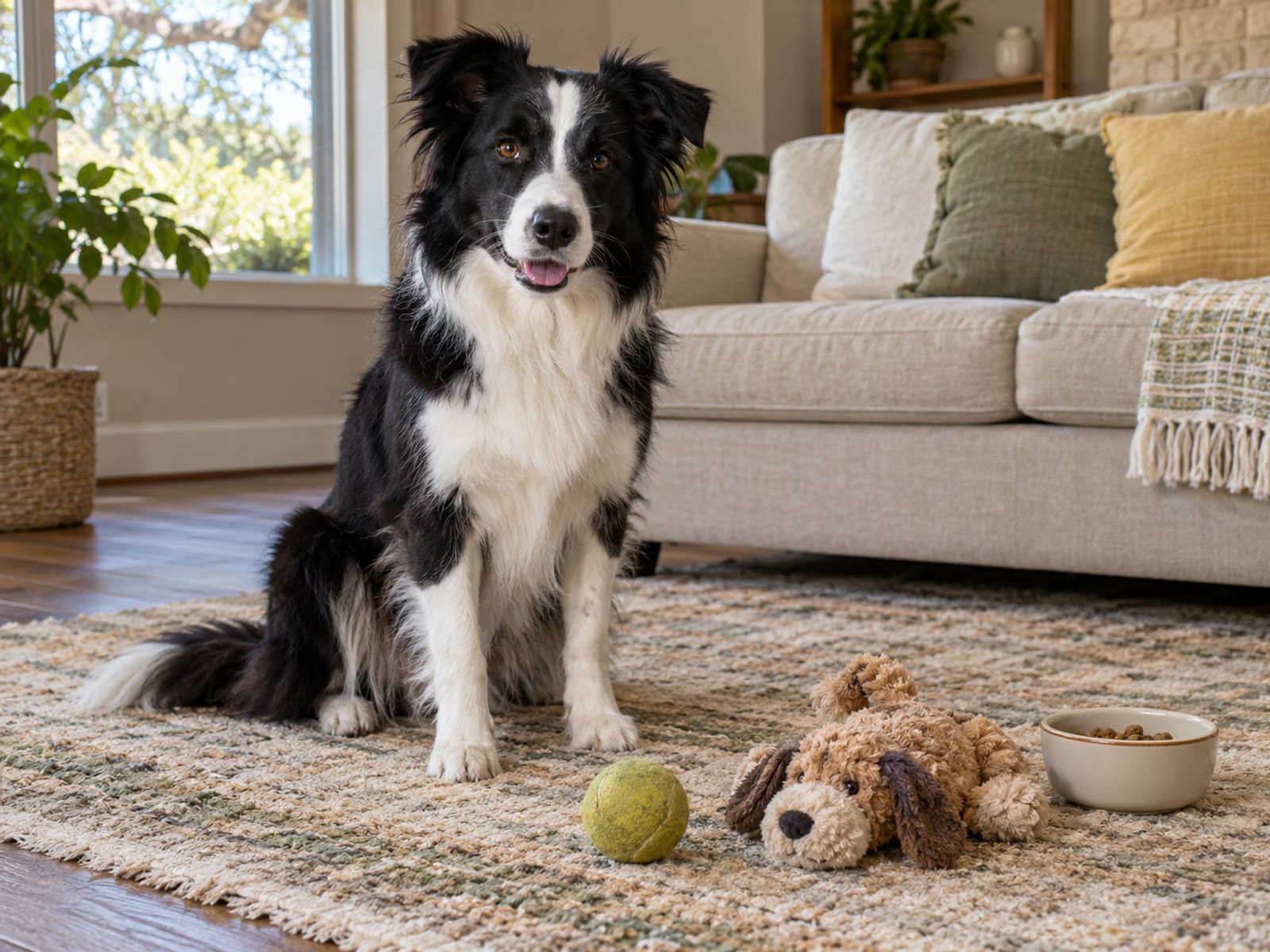
Start with the toy close to your dog. Reward pickup right away with food, praise, tug, attention or another toy. When pickup is easy, encourage your dog toward you by stepping backward, showing the second toy or using a reward your dog loves, and reward every step in your direction. VCA describes a starter game called "Get It and Give," followed by short tosses and a reward of tug or food when your dog comes back.
Once pickup, return and release all work at close range, toss the toy 1 to 2 feet, reward the return, cue the release and start the game again. Add distance and distractions a little at a time. If your dog stops succeeding, shorten the distance. For a dog that already knows a wait, our guides to teaching sit and stay can help you build calm starts. Our overview of positive reinforcement training covers the general approach.
Teach "drop it" as a trade, and give the toy back
Use a toy your dog likes but doesn't treat like treasure. The AKC's drop-it guidance turns release into something rewarding, and its trade-game steps go like this:
- Let your dog hold and play with the toy for a moment.
- Show a higher-value treat or a second toy.
- Wait for your dog to let go of the first toy.
- Mark the exact moment of release with praise, a marker word or a clicker.
- Give the reward.
- Pick up the first toy while your dog is busy with the reward.
- Give the original toy back when it is safe.
- Repeat until your dog releases reliably, then say "drop it," "give" or "trade" just before the release.
- Slowly delay showing the treat, so the cue and not the visible food prompts the release.
- Move from lower-value to higher-value toys gradually.
Giving the toy back matters, because it teaches your dog that letting go doesn't always end the fun. For a dog who loves toys more than food, use two toys and animate the second one. The AKC advises against prying open your dog's mouth or fighting over an object, since that can add to resource guarding. If your dog growls, snaps, bites, stiffens or guards things, stop the trade practice and talk to a qualified professional first.
When it goes wrong: your dog runs off, drops the ball halfway, loses interest or isn't into toys
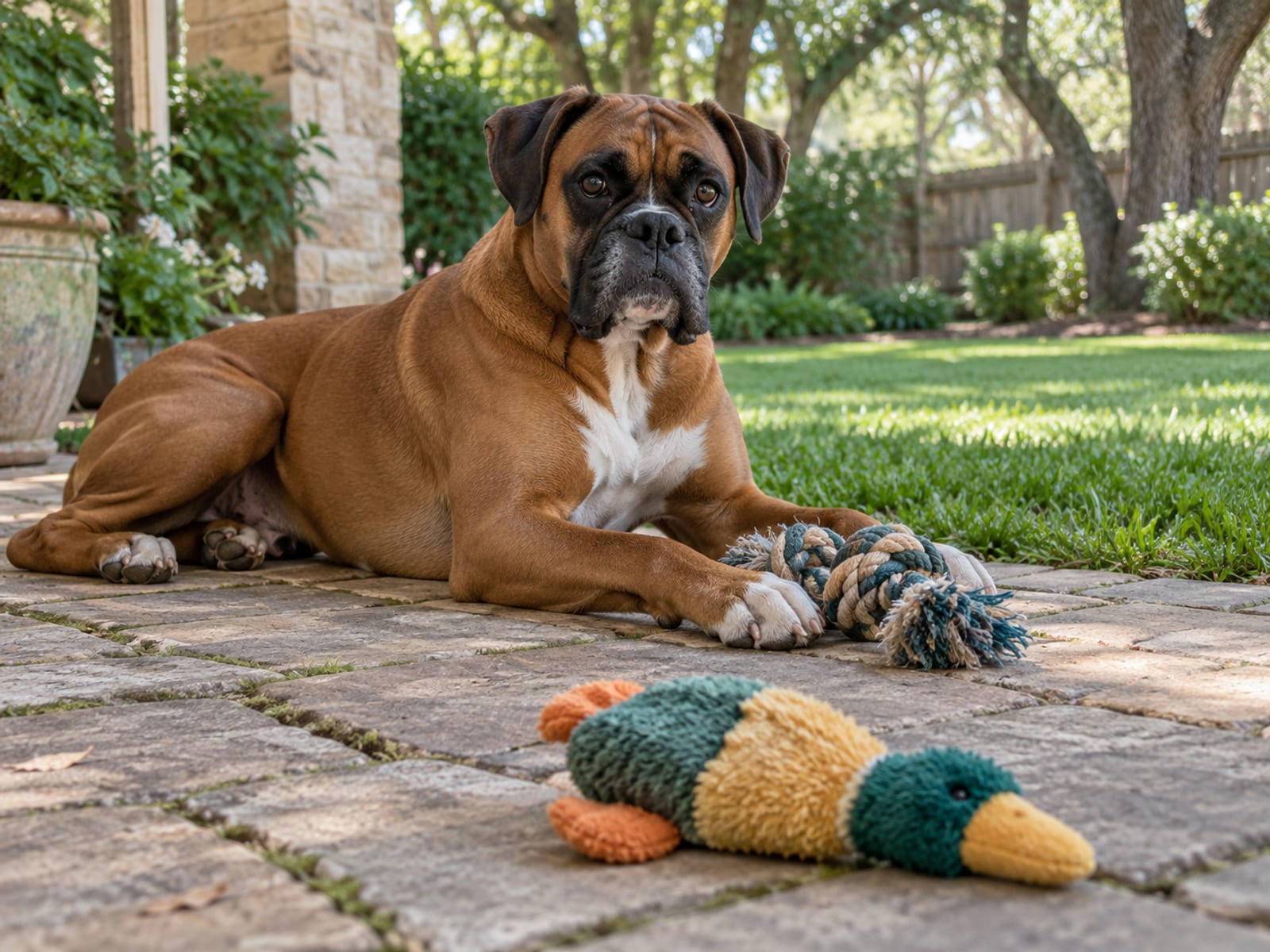
Your dog runs off with the ball. Don't chase. VCA warns that chasing teaches dogs to avoid coming when called and encourages keep-away. Practice in a smaller, controlled space, use a leash for early trade practice if needed, offer a better reward and reward every move toward you.
Your dog drops the ball halfway. Shorten the distance, reward each step toward you and use a second toy or food to make coming all the way worthwhile. Lengthen the distance only once the shorter return is steady.
Your dog won't drop it. Try a lower-value toy and a better treat or second toy. If your dog still won't let go, the reward pairing may be off or the item may be too valuable for this stage.
Your dog loses interest. End before your dog gets bored, do fewer throws, change the toy, move it gently and add food, tug or praise. Keep the excitement moderate. If your dog is frantic or can't settle, our guide to dog body language helps you read the signs.
Your dog isn't toy motivated, or only returns when food is visible. Use your dog's strongest reward, which might be food, play, attention or sniffing. A dog doesn't have to love ball fetch to get good exercise and enrichment, and games like search-and-find work well. If your dog seems to ignore you no matter what, see our guide to training a stubborn dog. To move away from visible food, delay showing the treat a little longer each round so the cue, not the treat, prompts the release.
When to add the word "fetch," and your first short tosses
Add "get it" once your dog is predictably moving toward and picking up the toy. Add "fetch" right before the sequence your dog already does well: going out, picking up and coming back. If your dog starts to struggle, go back to a shorter toss or fewer distractions. There is no proven number of days it takes, so let your dog's success set the pace instead of the calendar.
Safer fetch toys, and how much fetch is safe
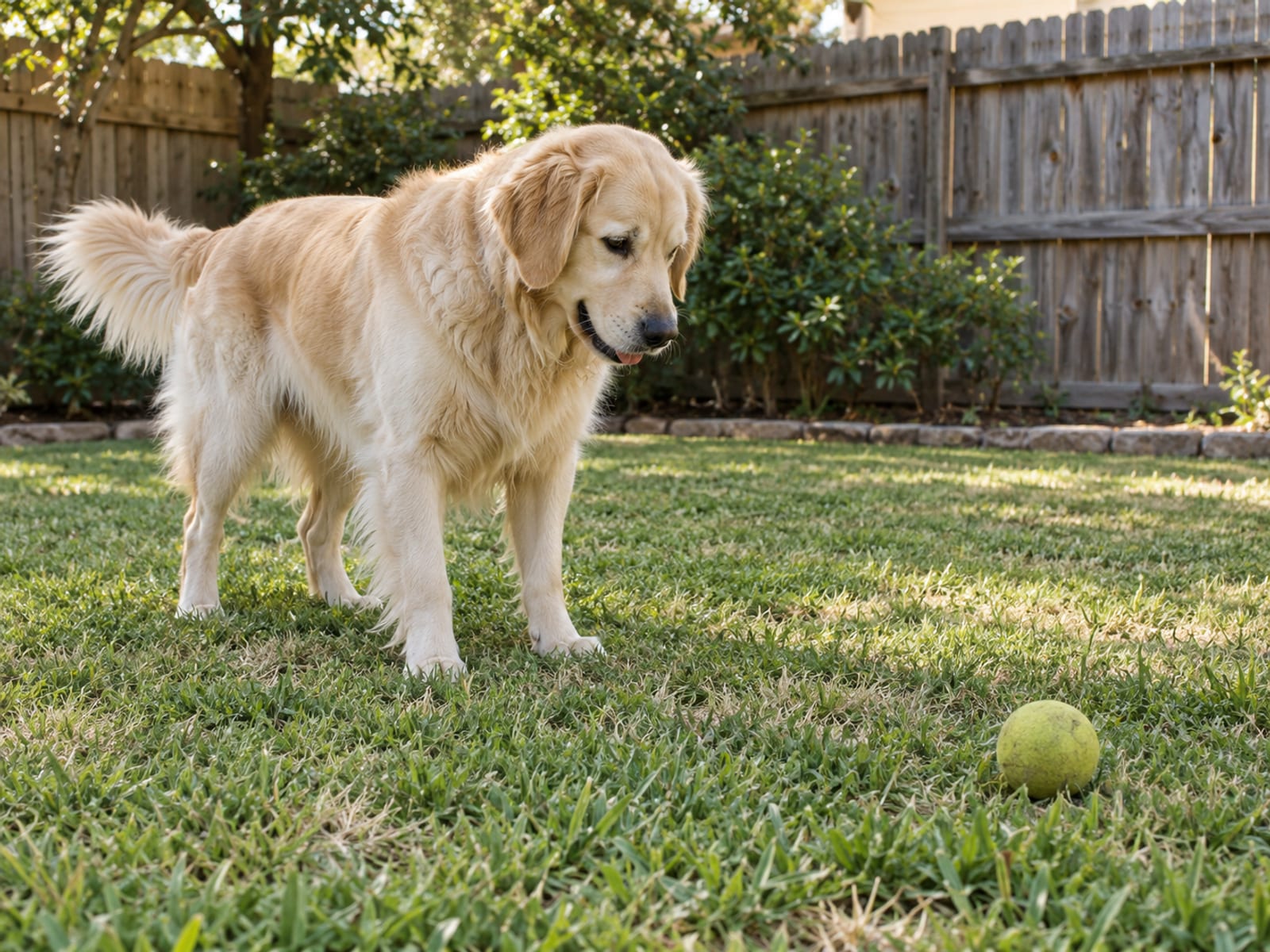
Toys. Choose a ball or toy large enough that your dog can't swallow it or lodge it in the throat. The AKC's toy shopping guide and VCA's chew toy guide also cover checking toys before and after play and removing any that split, shed pieces or show stuffing. Tennis balls can bring choking risks when broken, swallowed fuzz and tooth wear, especially when dirty, so supervise and don't let your dog chew one obsessively. A durable rubber fetch toy is often the better pick. No toy is risk-free, so match it to your dog's size, bite strength and habits, and see our guide to indestructible dog toys for heavy chewers.
Sticks. Don't throw real sticks. The AKC's stick article describes splinters, mouth punctures, throat injuries, obstructions and infections. Choking, a stick injury or collapse is an emergency, so head to an emergency vet.
How much. VCA says there is no universal number of throws or minutes, because it depends on age, development, health, body structure and how tired your dog is. Stop for heavy breathing, repeated sitting or lying down, slower responses, irritability, trouble lying down or getting up, or a sloppy sit. Build up hard exercise gradually. For a wider view, see how much exercise a dog needs.
- Puppies: avoid high jumps, jumping down from height, fast running followed by sudden stops and repeated sharp turns. VCA's puppy exercise page notes growth plates are vulnerable to strenuous exercise, with broad examples of a little over 6 months for small dogs and closer to 1.5 years for giant breeds, and individual variation.
- Seniors: low-impact games often suit better than repeated jumps and quick starts and stops. See our senior dog care guide.
- Dogs with extra pounds: sudden starts and stops can stress the joints, and these dogs may cool less efficiently.
- Short-nosed dogs and dogs with physical limits: ask your vet for an individual plan.
- Heat: skip fetch in high heat, and offer water, shade and rest or a cooler indoor game. Our heat safety guide for dogs in Texas has more.
- Sudden stops and turns: BluePearl lists fetching a tennis ball among activities linked to iliopsoas muscle tears.
If your dog limps, goes lame or moves oddly, stop playing and see your vet. Our guide on why a dog is limping explains what to do.
Tap or hover a row to highlight it.
| Figure | What it means | Source |
|---|---|---|
| Figure1 to 2 feet | What it meansFirst toss distance | SourceVCA |
| FigureA little over 6 months to about 1.5 years | What it meansBroad range for growth-plate maturity, small to giant breeds; varies by dog | SourceVCA |
| Figure6 months old | What it meansMinimum age for the AKC Fetch test | SourceAKC |
| Figure300 hours | What it meansMinimum training experience for CPDT-KA | SourceCCPDT |
Fetch indoors, with a flirt pole, in water and as a search game
Indoors. Use short throws in a clear, non-slip area. Avoid stairs, hard obstacles, sharp furniture and slippery floors, and watch your dog's speed to prevent collisions.
Flirt pole. The AKC describes a flirt pole as a toy on a string at the end of a pole, and lists it as a way to practice release. Keep movements low, controlled and gentle. VCA says to avoid rapid stops, quick direction changes, roughhousing and overexcitement.
Water. Introduce water gradually, since a dog may not like water or know how to swim. Supervise closely, use a safe way in and out and stop when your dog tires. VCA says swimming can be a good low-impact activity for some dogs.
Search-and-find. When repeated sprinting isn't a good fit, hide a toy or play a treat-search game.
When to bring in a trainer, a behavior consultant or a vet
Ask for help if your dog guards the toy, growls, snaps or bites, shows fear, gets dangerously frantic, can't switch off or suddenly refuses to play. See a vet for limping, pain, breathing trouble, collapse or overheating, or a sudden change in behavior.
The credentials mean different things:
- CPDT-KA (CCPDT): a trainer who passed a full certification exam and has at least 300 hours of training experience.
- CPDT-KSA (CCPDT): the same, plus a skills assessment.
- CBCC-KA (CCPDT): a behavior consultant who passed a behavior-modification exam and has at least 300 hours of consulting experience.
- IAABC Accredited Dog Trainer: for manners, life skills, sports, enrichment and prevention.
- IAABC Certified Dog Behavior Consultant: for complex behavior cases, with three or more years of consulting experience.
- Board-certified veterinary behaviorist (DACVB): a veterinarian with supervised specialty training in behavior. The ACVB distinguishes them from trainers, and they are the right choice when medical factors, severe fear, aggression or complex behavior are involved.
Ask any professional which methods they use, whether they train with food, toys and play, what experience they have with retrieving, keep-away, guarding or fear, and for a clear written plan. Walk away from anyone who relies on punishment or physical force. The CCPDT guide to choosing a trainer and IAABC credentials page help you check a name. For classes and private lessons, read our guide to obedience training for dogs.
Questions dog owners ask about fetch
Common questions about fetch:
How do you teach a dog to fetch and bring the ball back?
Teach pickup, return and release separately, then join them with a 1 to 2 foot toss. Reward the return with food, play, praise or another throw, and never chase.
How long does it take a dog to learn fetch?
No timeline is proven, and it varies by dog and by which step is hardest. Move on when your dog can do the current step at close range, and shorten the distance if the game falls apart.
Are tennis balls and sticks safe for fetch?
Real sticks are not; they can cause punctures, splinters and blockages. Tennis balls carry choking, fuzz and tooth-wear risks, so supervise, replace damaged ones and consider a durable rubber toy.
Can puppies and older dogs play fetch?
Yes, in a gentler form. Puppies should avoid high jumps, fast stops and sharp turns, and seniors often do better with low-impact games. Ask your vet for an individual plan.
Your next step today
Sources
- American College of Veterinary Behaviorists: ACVB
- American Kennel Club: AKC Fetch program
- American Kennel Club: AKC's drop-it guidance
- American Kennel Club: AKC's stick article
- American Kennel Club: AKC's toy shopping guide
- American Kennel Club: trade-game steps
- American Veterinary Society of Animal Behavior: AVSAB humane training statement
- bluepearlvet.com: BluePearl
- Certification Council for Professional Dog Trainers: CCPDT guide to choosing a trainer
- IAABC: IAABC credentials page
- VCA Animal Hospitals: VCA's chew toy guide
- VCA Animal Hospitals: VCA's puppy exercise page
- VCA Animal Hospitals: VCA