
How to Teach Your Dog to Stay: A Step-by-Step Plan From One Second to the Front Door
By Cal Hewitt · Published
Training
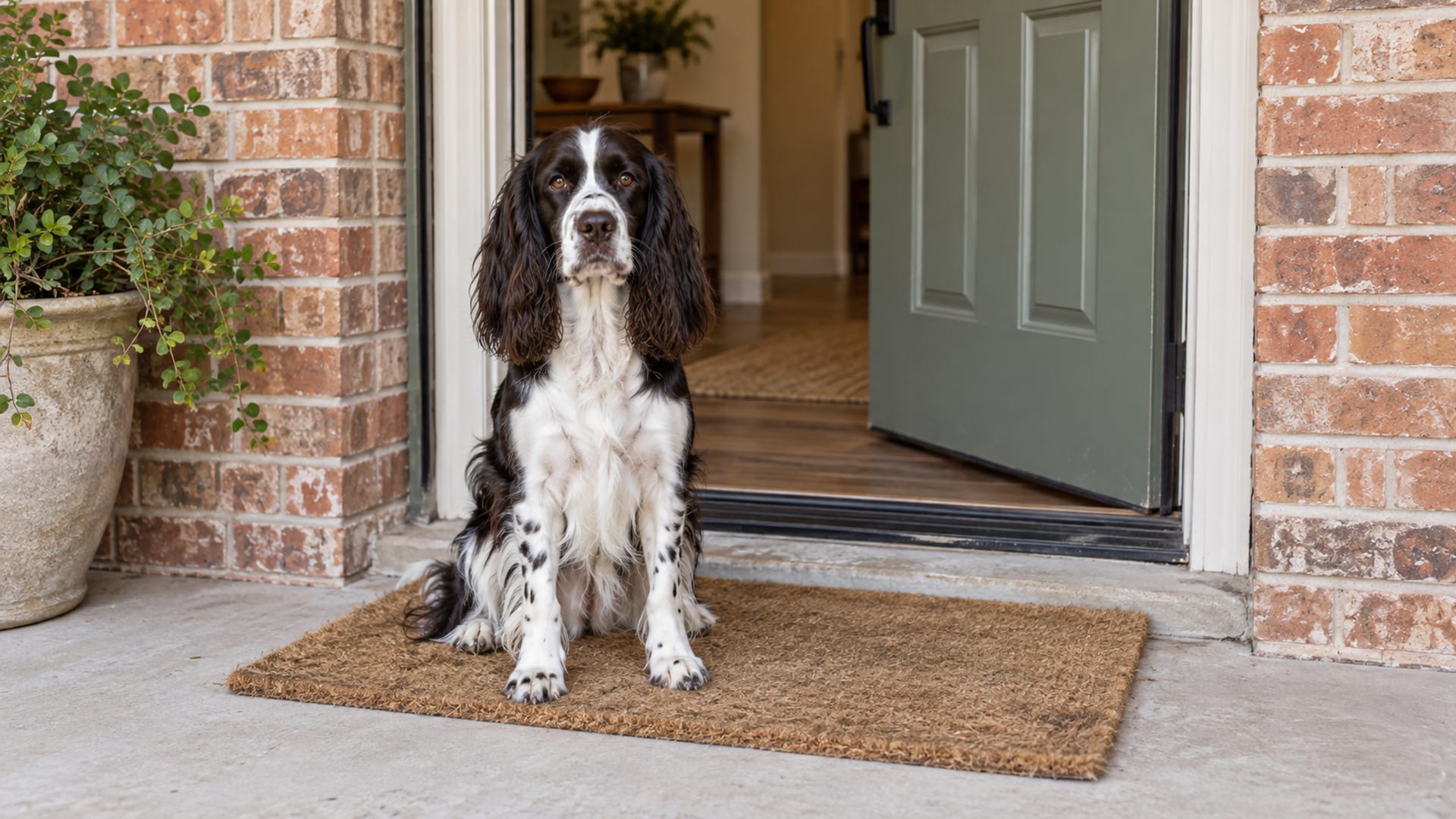
To teach your dog to stay, ask for a sit or a down, say "stay," reward your dog while it holds the position, then walk back, give your release word, and reward the release. Start with one or two seconds and almost no movement from you. Build the time first, then add distance and distractions one at a time. If your dog gets up, don't punish it; make the next try easier. And at a door, a stay is one part of a safety plan. It never replaces a leash, a gate or a fence.
That is the whole method in one paragraph, and it follows the sequence the American Kennel Club lays out in its stay guide. If your dog sits nicely and then pops up the second you shift your weight, you're stuck at the most common point in stay training. Knowing the word isn't the problem. Your movement, the distance, the door and the doorbell are, and each one gets its own small step below.
Key takeaways
Tap a card to bring it forward.
- Teach a release word first, so your dog knows exactly when the stay ends.
- Reward while your dog is still in position, then return to your dog before you release.
- Build duration first. Add distance and distractions later, one at a time.
- When your dog gets up early, make the next repetition easier instead of punishing.
- Near doors, cars and streets, a leash, gate or fence does the safety work.
- No reliable source gives a universal timeline, so progress at your dog's pace.
What does "stay" mean, and why teach the release word first?
A stay means your dog holds a chosen position, usually a sit or a down, until you give a release word. The AKC's stay guide describes it that way: the dog stays put until released, even if you step away briefly. That last part matters. A dog that gets up when you walk off hasn't broken a rule it understands yet; it simply hasn't learned that the behavior lasts until a specific word.
That's why I'd teach the release word before the stay itself. The release word is the "you're done" signal, and without it a stay has no clear end. The AKC's release word article says any consistent word can work. Common choices are "free," "okay" and "break." Pick one, and use it only to end a behavior.
To teach it on its own, follow the AKC steps:
- Ask your dog for a sit or a down.
- After about one second, calmly give a treat while your dog is still in position.
- Say your release word.
- Encourage your dog to move. You can walk away, pat your legs or toss a treat a short distance.
- Reward the movement once your dog gets up.
- Repeat until your dog starts moving as soon as it hears the word.
If your dog doesn't have a reliable sit yet, start there with how to teach your dog to sit, then come back. A stay is built on top of a sit or a down, not in place of one.
Your first stay: one second, a reward in place, then the release
Once your dog knows the release word, the first real stay is tiny on purpose. Start in a quiet room at home, away from doors and away from the busiest part of the house.
- Ask for a sit or a down.
- Say "stay." You can add a hand signal if you like, as long as you use the same one every time.
- Wait one or two seconds.
- Give a treat while your dog is still sitting or lying down.
- Return to your dog if you moved at all, say your release word, and reward the movement.
The order in step 4 and step 5 is the part people often flip. The reward for staying goes to the dog in position. The release comes after, and it clearly ends the behavior. If you only reward after your dog gets up, you're paying for the getting up.
Keep these repetitions short and successful. One or two seconds may feel too easy, and that's the point.
How to build duration without setting your dog up to fail
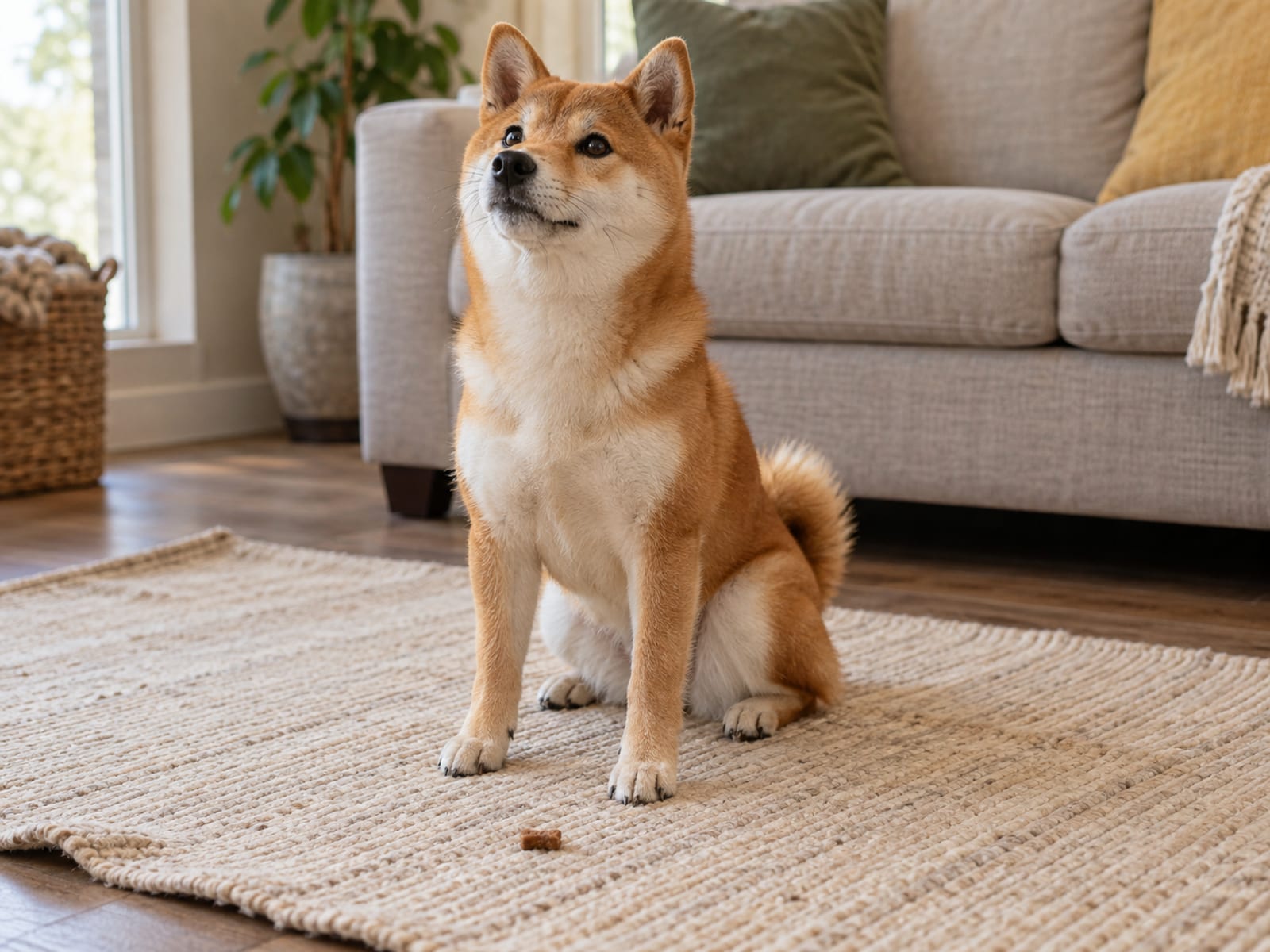
Time comes first. The AKC's article on duration, distance and distraction recommends building duration before the other two, and adding only a few seconds at a time. Once your dog can hold the stay for about 10 seconds or more, the AKC says you can give several treats during the stay instead of just one. Its detailed stay guide recommends building to at least 30 seconds before you add distance or distractions.
It's tempting to keep adding time until your dog finally breaks, just to see how far it can go. The AKC recommends the opposite: baby steps, short intervals your dog can win, and less difficulty when a stay breaks.
Watch where the food is, too. If you hold a treat up in front of your dog's face, your dog is watching the treat, not holding a stay. Keep treats in a pocket or in your other hand, and bring the reward to your dog from a spot that doesn't pull it forward. You can vary what the reward is as your dog improves, but keep rewarding successful stays. The AVSAB guidance on choosing a trainer names treats, toys and play as reward options, so "without treats in my hand" doesn't have to mean "without rewards."
Adding distance and distractions, one at a time
After duration is solid, change one thing at a time, and make the other two easier while you do.
Distractions. Start small, such as a mild hand movement or a clap, then work up to harder ones. The AKC's three Ds article says that when you add a distraction, you lower the duration and distance for those reps.
Distance. Take one step away, come right back, reward your dog in position, release and repeat. Then try two steps. The AKC's advice on the best way to teach stay stresses returning to your dog before you release it.
Your own body counts as a distraction. If your dog breaks the moment you move, start with a small shift of your weight, reward, return and release. From there, work up to turning, one step, walking backward and turning your back, and move to the next one only when your dog is succeeding at the current one. That's why a dog can stay beside you but not across the room: each new place and movement is a new level that needs its own easy start.
When your dog gets up: reset at an easier level
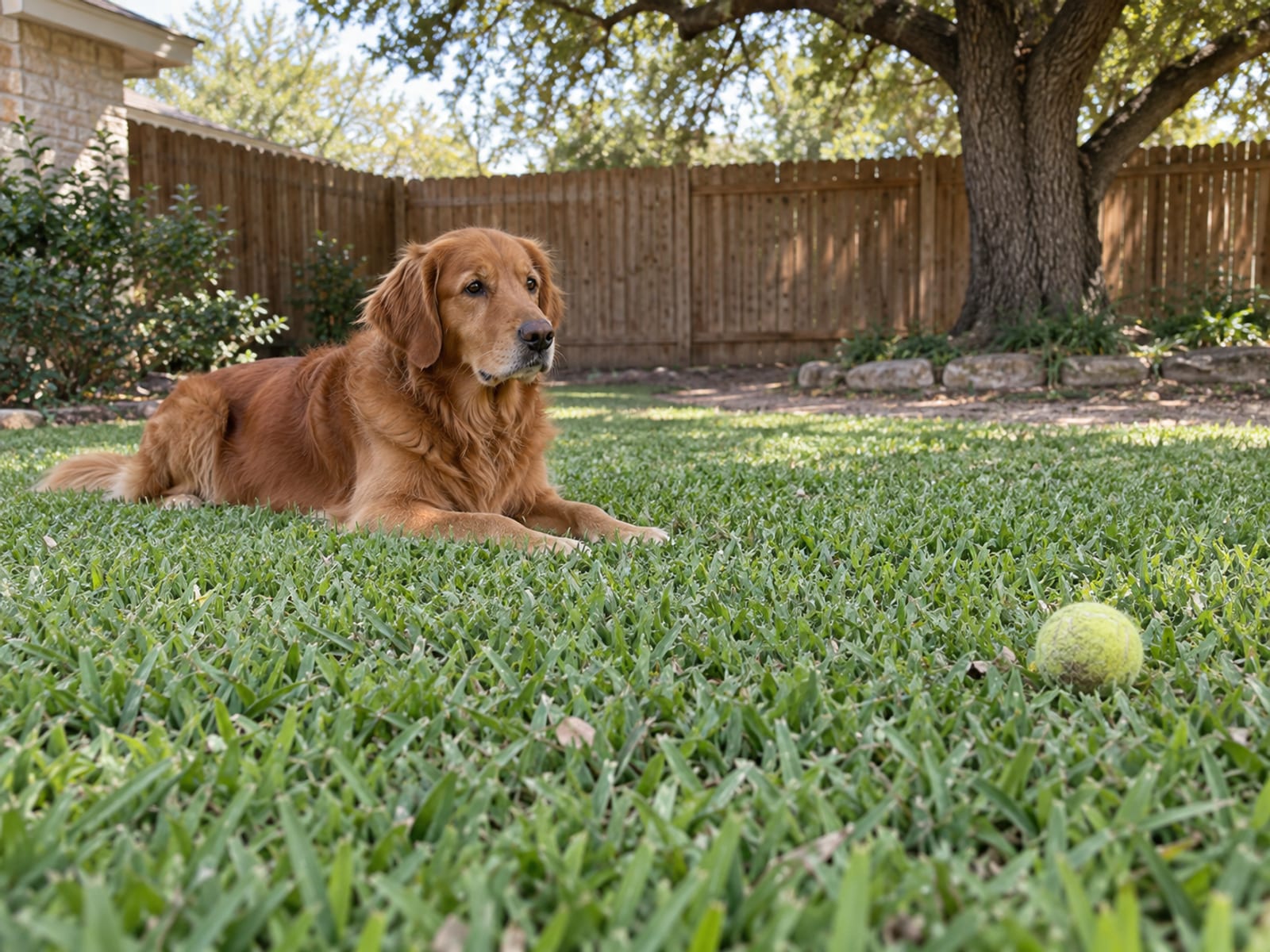
A broken stay is information, not defiance. The AKC recommends assuming the step was too hard, going back to an easier level and not punishing the dog.
When your dog gets up early, calmly set it up again and make the next repetition easier:
- Shorten the time.
- Stand closer.
- Remove the distraction.
- Move less before you return.
Skip the leash pops, the pushing down on the hips and the raised voice. The American Veterinary Society of Animal Behavior's 2021 position statement says the evidence supports reward-based methods for all dog training, and that methods relying on force, pain, or physical or emotional discomfort should not be used. That statement covers training in general rather than a stay schedule, but it applies here. The stay you want is one your dog chooses to hold because holding pays off.
Stay at the front door, in the car and near the street
The front door is where most owners want this to work, and it's also where it's hardest. The doorbell, the handle, the open gap and whoever's outside are all distractions at once. The AKC's three Ds article describes building up to doors gradually, in steps like these:
- Practice away from doors.
- Practice at a quiet interior doorway.
- Add a little movement of the door handle.
- Open the door slightly, then return and reward your dog.
- Move to a back door.
- Move to the front door.
- Add a helper playing a calm visitor.
- Practice opening the car door and waiting before your dog gets out.
- Practice outdoor transitions only with your dog under physical control.
For guests, that helper step is your rehearsal. Have someone knock, ring or walk in while your dog is on an easy stay, and lower the time and distance while you do it.
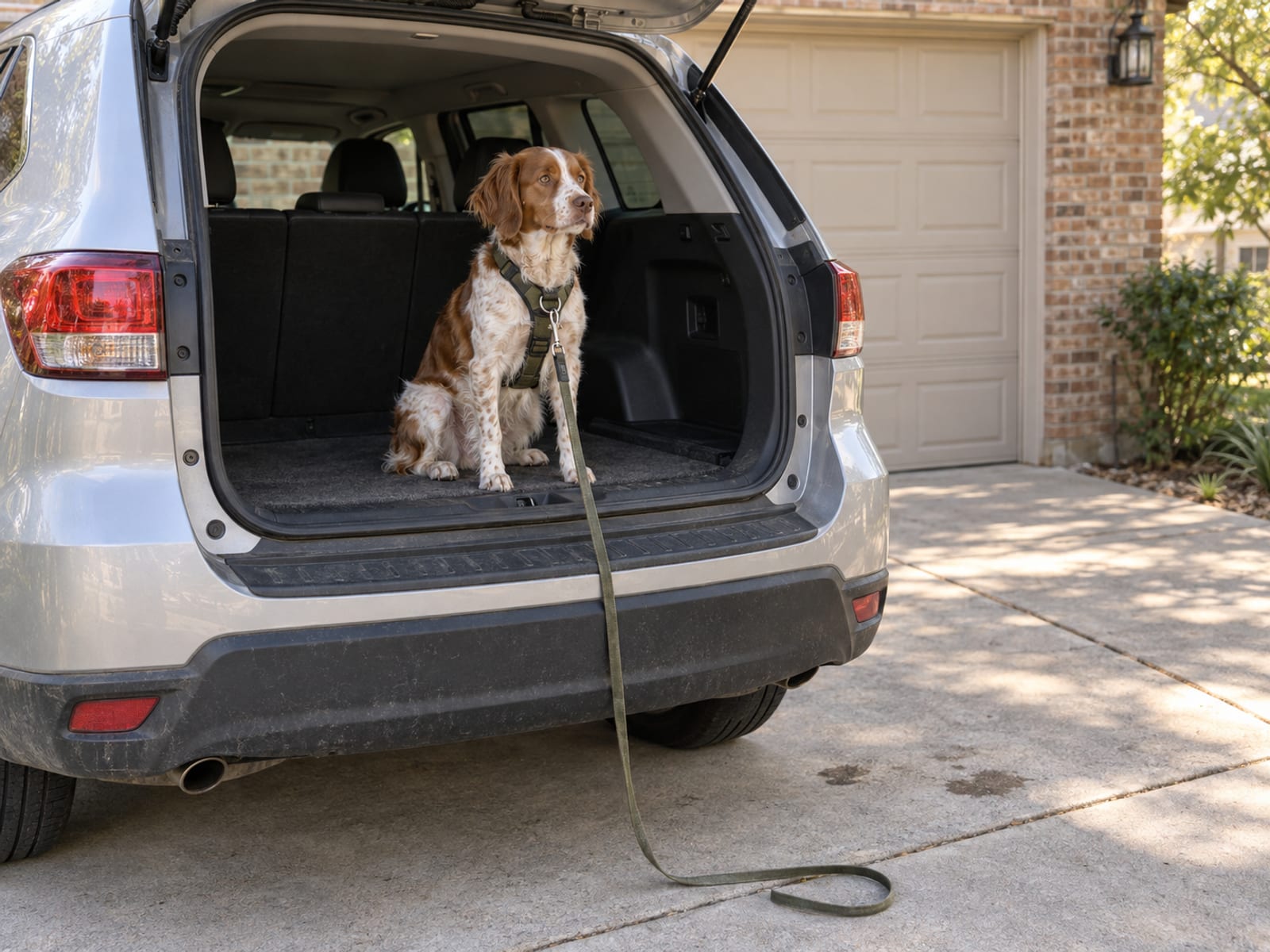
The honest limit is this. A stay can help your dog pause while you handle the door or the groceries, but it doesn't guarantee your dog will hold under a big distraction, like a squirrel, a dog walking by or a car door opening onto a busy street. Near traffic, at a curb or around an open car door, use a leash, a gate, a fence, a crate or other physical control. Don't let a stay be the only thing between your dog and the street. Busy nights with a lot of doorbells, like Halloween, are a good time to lean on a gate or a closed room rather than a stay.
Stay, wait, place and leave it: how they differ
These words get mixed up a lot, and the difference changes how you use them at the door. The AKC's stay guide contrasts the two main ones: stay means holding a position until released, while wait usually means a shorter pause.
- Stay: a set position, held until your release word.
- Wait: a brief pause, such as before a door opens or before the food bowl goes down.
- Sit until released: a sit that simply lasts until the release word, so your dog doesn't need a separate stay cue.
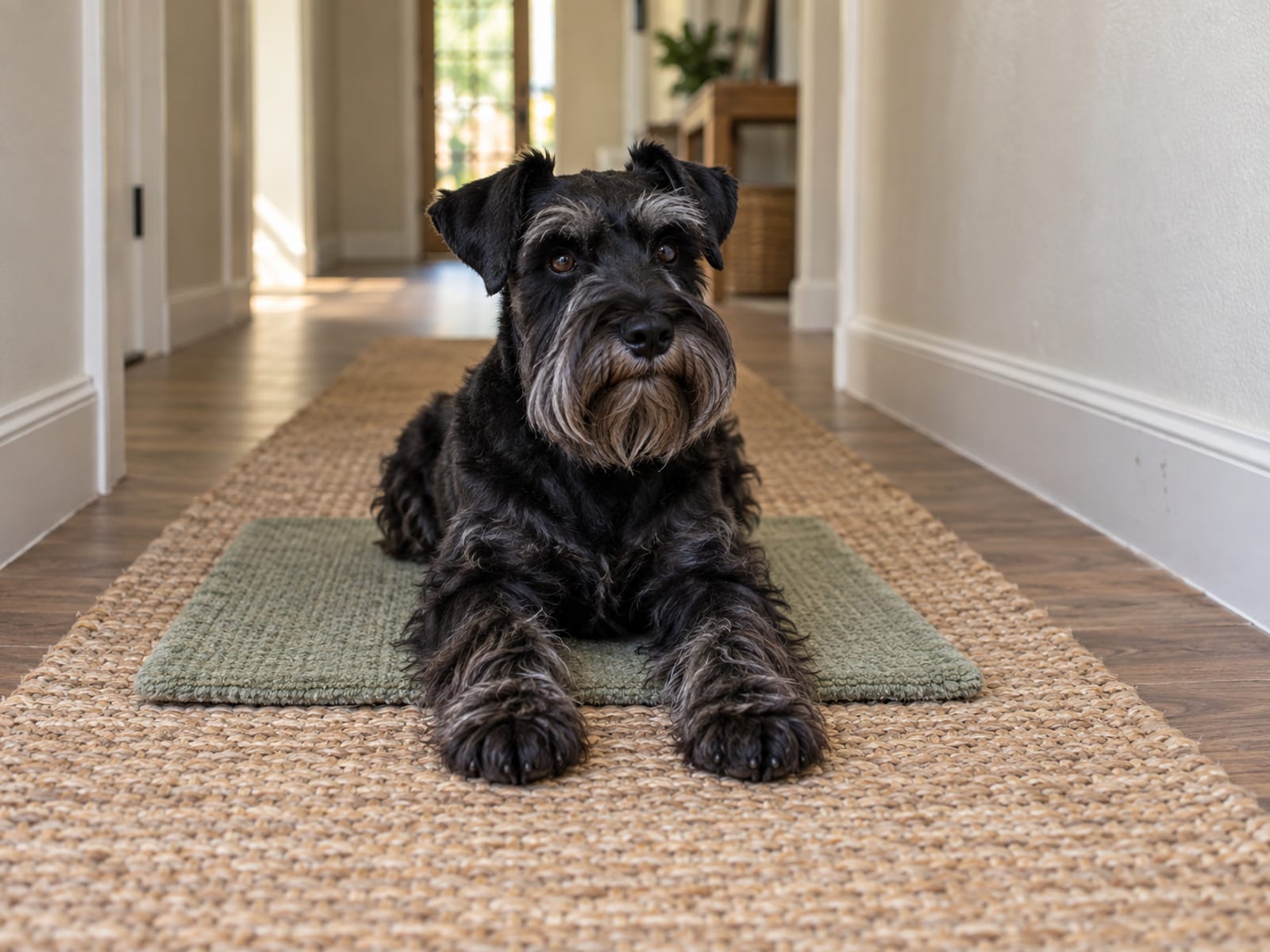
- Place: staying on a specific mat or bed.
- Leave it: not taking or investigating something.
Trainers use these words differently, and that's fine. Consistency matters more than the particular word. If your household speaks Spanish, "quieto" is the everyday word most people use for stay, and "espera" often means the shorter wait. Just make sure everyone at home uses the same word for the same behavior.
Creeping, following or an anxious look: what to change, and how long training takes
Most stay problems come down to one criterion being too hard. These are the changes to make for the common ones.
Creeping forward. Your dog is either finding the step too hard or guessing that the release is coming. Shorten the time, stand closer, return sooner, reward your dog in its original spot and release it before it starts to creep.
Following you. Your movement is the distraction. Go back to a small body shift and build up through turning, one step and walking backward, as described above.
Only staying when food is visible. Stop using food as a lure. Keep it in a pocket or your other hand, and keep rewarding successful stays.
Looking anxious. Lower the distance, time, movement and noise around you, and don't force your dog to stay put. AVSAB lists tense posture, a lowered body, lip licking, yawning, panting, a lowered tail and yelping among stress-related behaviors. Learning to read dog body language helps here. If your dog gets distressed specifically when you leave, that's a different problem than a stay, and it's worth looking into separation anxiety. If anxiety sticks around or safety is at stake, get qualified help.
So, how long does it take? I can't give you a number, and neither can the sources behind this page. The AKC gives progression steps, not a completion date or a success rate, and no reliable source I have gives a universal timeline or a maximum session length by age. Puppies generally need very short stays and frequent resets. Adult dogs can learn the same sequence, though their training history, excitement level and any fear affect progress. Rescue dogs with an unknown past may need fewer distractions and less distance at first. Age alone doesn't set the pace. Your dog's success at the current step does.
When to bring in a professional trainer
Home practice handles most stay training, but some situations call for help. Consider a professional when:
- Your dog's behavior creates an immediate risk of escape or injury.
- Your dog shows ongoing fear or anxiety during training.
- Your dog becomes aggressive around doors, visitors, food, toys or other dogs.
- You can't lower distractions enough to get safe, successful repetitions.
- Your dog's behavior changes suddenly.
- Repeated practice brings no progress, even after you make the task easier.
Credentials help you sort trainers. According to the Certification Council for Professional Dog Trainers, a CPDT-KA has passed a knowledge assessment and has at least 300 hours of dog training experience, and a CPDT-KSA has also passed a practical skills assessment. For more complex behavior cases, CCPDT's CBCC-KA behavior consultant credential is the one to look for. The IAABC offers training and behavior consulting credentials too, and it's worth matching the credential to your dog's problem. For serious fear or anxiety, a veterinary behaviorist, who is a veterinarian with specialized training in animal behavior, may be the right referral; check their status through the relevant professional organization. A credential shows assessed knowledge and experience, not a guaranteed outcome.
Before you hire anyone, ask:
- Which methods and tools do you use?
- Do you use food, toys, play and other rewards?
- How do you handle a dog that breaks a behavior?
- What do you do if the dog is fearful?
- What credentials and experience do you have with this problem?
- Will you use gates and leashes while we train?
- Can you explain the plan and its risks clearly?
AVSAB's trainer guidance recommends trainers who use primarily or only reward-based methods, so the answers to the first two questions tell you a lot.
Questions owners ask about teaching stay
These come up often once the basic method is in place.
How long does it take to teach a dog to stay?
There's no universal timeline. The AKC gives a sequence of steps rather than a number of days, and progress depends on your dog's age, history and the difficulty you're working at. Move up only while your dog is succeeding, and step back after a break.
Can I teach stay without holding treats in my hand?
Yes. Keep treats in a pocket or your other hand so your dog isn't staring at a lure, and bring the reward to your dog after it holds the position. Toys and play also count as rewards, but keep rewarding successful stays as you go.
Does my dog need a separate stay cue if it already sits?
Not necessarily. Some owners teach that a sit simply lasts until the release word, which works as an automatic stay. What matters is that your training is consistent about how the behavior ends.
Can an older or rescue dog learn to stay?
Yes, adult dogs can learn the same sequence. Their past training, excitement level and any fear affect how fast things go, and a rescue with an unknown history may need fewer distractions and less distance at the start.
Your next step
Start small tonight. Pick your release word, find a quiet room, and do a few short reps of the release on its own. When your dog moves as soon as it hears the word, add a one-second stay, reward in position, return and release. Keep it easy enough that your dog wins almost every time.
While you build toward the front door, put the gate or leash in place now. Our guide to positive reinforcement dog training covers the reward basics behind every step here, and if fear, aggression or an escape risk shows up, call a qualified trainer or behavior professional.
Sources
- American Kennel Club: AKC's advice on the best way to teach stay
- American Kennel Club: AKC's article on duration, distance and distraction
- American Kennel Club: AKC's release word article
- American Kennel Club: American Kennel Club lays out in its stay guide
- American Veterinary Society of Animal Behavior: American Veterinary Society of Animal Behavior's 2021 position statement
- American Veterinary Society of Animal Behavior: AVSAB guidance on choosing a trainer
- Certification Council for Professional Dog Trainers: CBCC-KA behavior consultant credential
- Certification Council for Professional Dog Trainers: Certification Council for Professional Dog Trainers
- IAABC: IAABC