
Resource Guarding in Dogs: Safety Steps Today and When to Call a Professional
By Cal Hewitt · Published
Training
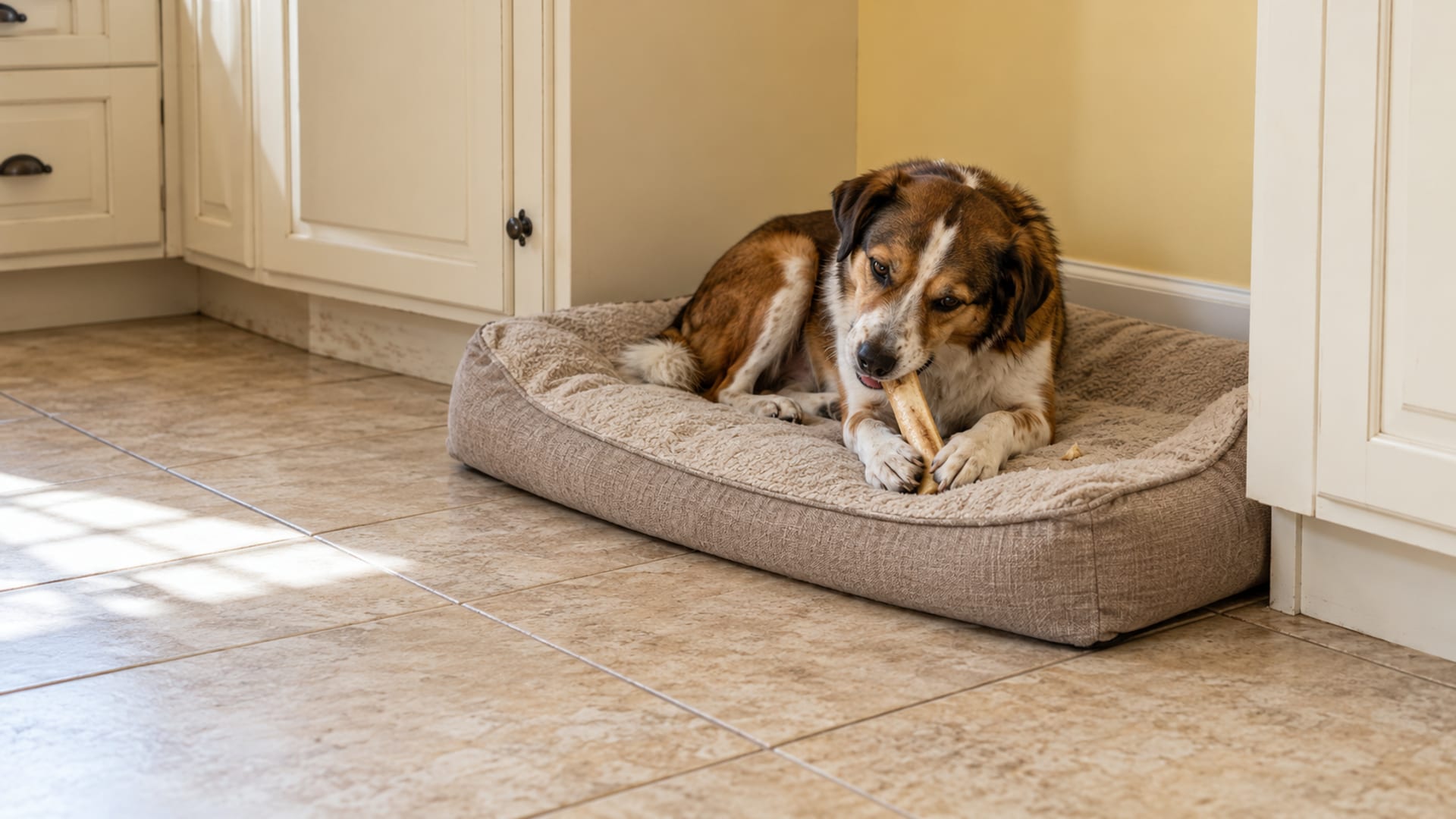
Resource guarding is when a dog tries to keep people or other animals away from something it prizes, such as food, a bowl, a bone, a toy, a stolen sock, a bed, a resting place, or a favorite person. Early signs include freezing, eating faster, stiffening, staring, turning away, or putting the head or a paw over the item. Growling, lip lifting, snapping, lunging and biting are the escalating warnings. Do not take the bowl away, reach into it, punish a growl, or test the dog. Feed the dog separately and give everyone space. After a snap or bite, or if a child is at risk, call a qualified behavior professional and your veterinarian.
Key takeaways
Tap a card to bring it forward.
- Resource guarding is behavior that keeps people or animals away from something the dog values, and it can start as quiet as freezing over a bowl.
- A growl is a request for distance. Back away and give the dog space instead of punishing it.
- Never take the bowl away, reach in, or force a bone or toy out of a dog's mouth.
- Feed in a quiet spot behind a gate, closed door or crate, and keep children and other pets away during meals and chews.
- A snap, bite, lunge, or a sudden change in behavior means a veterinarian and a qualified behavior professional, not a home experiment.
- Behavior can often be reduced, but a complete cure is not guaranteed and management may stay in place for good.
I'm Cal, and I'm not a veterinarian or a trainer. If you're reading this because a dog in your house just growled at someone, you probably feel worried, maybe embarrassed, and you want to know how serious this is. It's fair to take it seriously. The good news is that there is a lot you can do today to keep everyone safe.
What does resource guarding look like, from the first signs to a bite?
Dogs rarely go from calm to biting with no warning. The ASPCA and VCA Animal Hospitals describe a ladder of signs, and learning the lower rungs gives you time to act.
The early signs are easy to miss:
- Moving away with the item, or turning the head away
- Eating faster
- Freezing or stiffening
- A hard stare
- Placing the chin or a paw over the item
- Lip licking, lip lifting, or showing the whites of the eyes
The escalating signs are growling, snarling, snapping, lunging, chasing and biting. Any of them near a bowl, chew, toy, bed or person is a reason to give the dog distance. Our guide to dog body language covers stress signals like these in more detail, and why dogs bite explains bite risk and what to do after one.
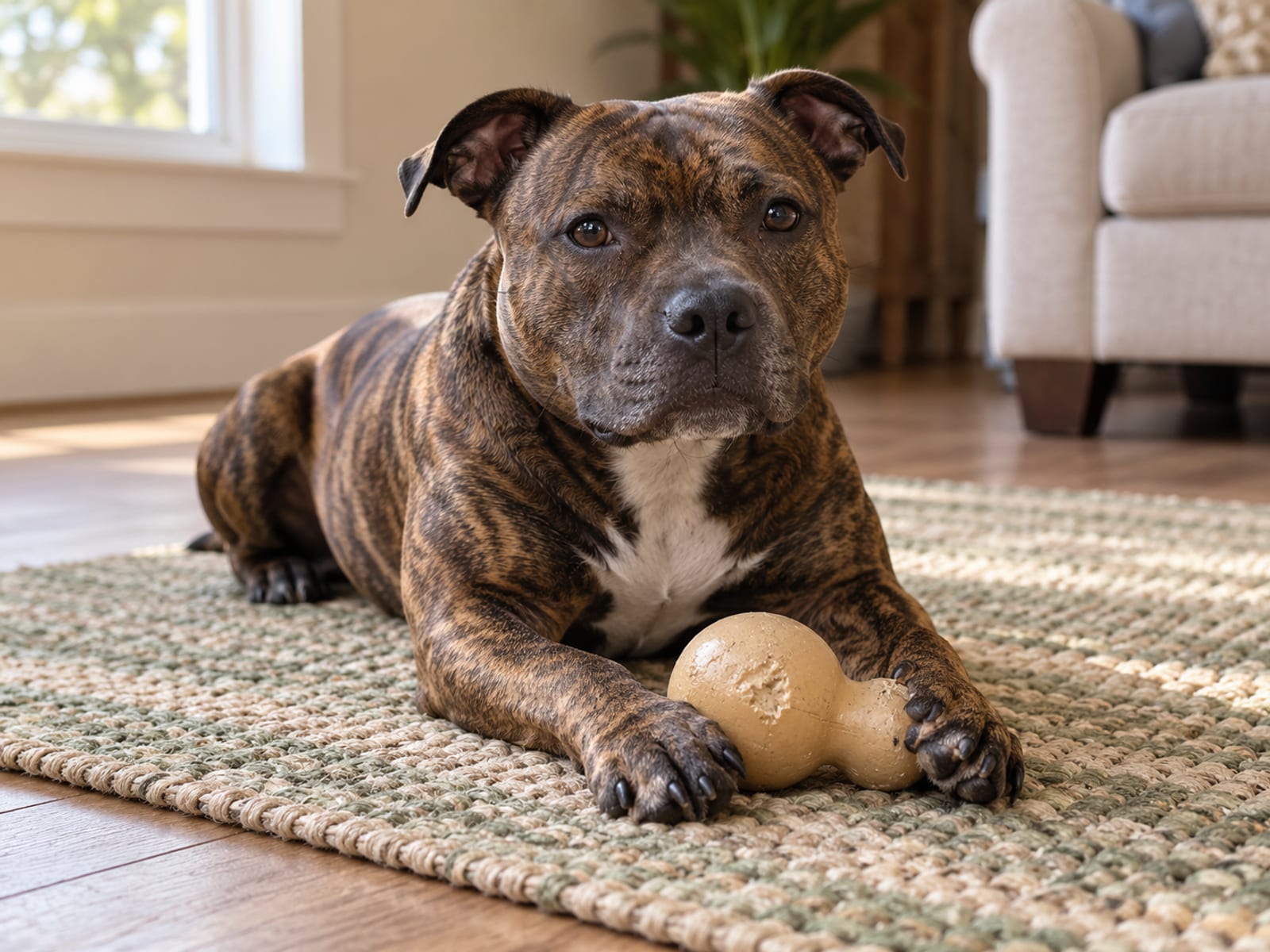
Dogs can guard many things. Food and bowls are the classic case, but bones, chews, enrichment toys, stolen objects such as socks, wrappers or trash, beds, crates, couches, and even a favorite person can all become something a dog defends. Sometimes it's a water bowl or food meant for people. A dog that guards one thing won't necessarily guard everything, and it may guard from some individuals and not others, according to the ASPCA.
You may also hear it called food aggression or guarding. Whatever the name, the safety steps below apply either way.
What does a growl mean, and why is punishing it unsafe?
A growl is a warning. It tells you the dog is uncomfortable and wants more distance. VCA says it must be respected, because ignoring warning signals can lead to escalation. That doesn't mean every growl ends in a bite. It means the growl is useful information, and you want to keep receiving it.
Punishing a growl is where many owners go wrong, and it's an understandable mistake. A growl is alarming, and scolding feels like the responsible reaction. VCA's Spanish-language behavior article explains the risk: punishment may suppress the warning while the underlying conflict stays exactly where it was. The next time the dog feels threatened, it may skip the growl and go straight to a snap or a bite.
When a dog growls near its food or a chew, stop approaching, stay calm, and move away. You haven't lost anything by backing off. You've kept the dog's warning system working and kept your hands out of harm's way.
What should I stop doing today?
These habits raise the chance of a bite, so stop them now:
- Taking the bowl away to test the dog or show who is in charge. VCA says never remove the bowl or food while the dog is eating, because it can result in a bite.
- Reaching into the bowl with your hand.
- Prying a bone or toy out by force, or chasing the dog for a stolen item.
- Scolding, intimidating, hitting, or physically pushing the dog around.
- Staring the dog down or rolling it onto its back. The American Veterinary Society of Animal Behavior reports that confrontational techniques like these frequently drew aggressive responses in the study it cites.
- Provoking the dog to see whether it will growl or snap.
- Letting children approach while the dog eats, chews, sleeps or rests.
You may have seen videos telling owners to prove who's boss at the bowl. AVSAB rejects that explanation for guarding and the confrontational techniques that go with it. Guarding isn't a challenge to your authority. It's a dog protecting something it values, and the safe response is to remove the conflict, not to win it.
How should I feed and manage the dog at home?
Management means arranging the house so the dog never has to guard, and nobody is close enough to get hurt. Start today:
- Feed in a quiet, low-traffic area.
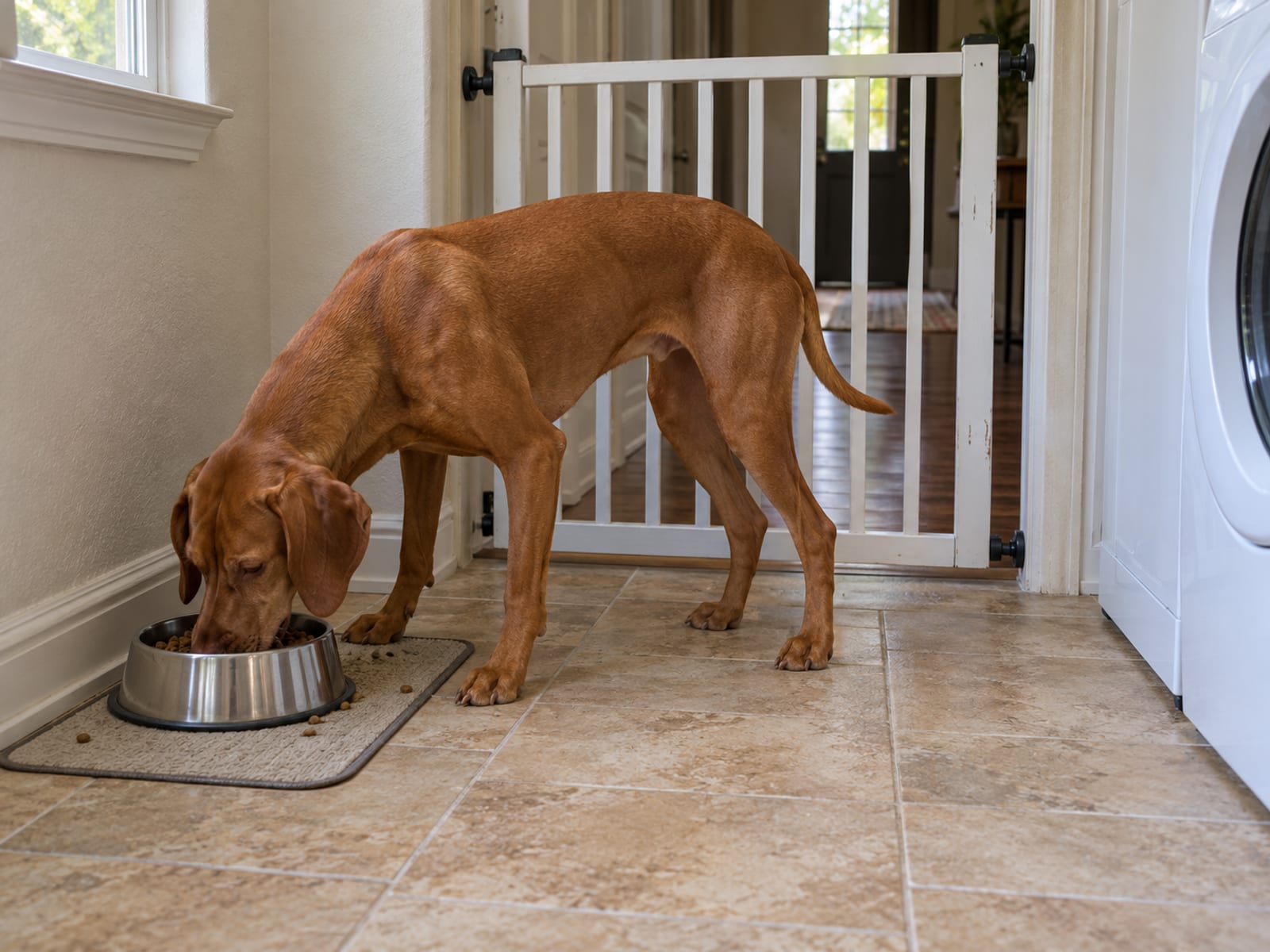
- Put a physical barrier between the dog and everyone else: a closed door, a sturdy baby gate, or a crate.
- Feed household dogs in separate spaces.
- Keep children and other pets away during meals and high-value chewing.
- Pick up the empty bowl after the dog has finished and walked away from it, not while it's eating.
- Remove frequently guarded objects from the dog's reach when you can.
The ASPCA and VCA both stress that these steps are about safety first. They don't fix the underlying behavior, and they're not meant to. They buy you the safe conditions a professional needs to work with.
If the dog grabs a sock, a wrapper or something else that isn't a chew, distance helps. Offer a safe trade only if the dog can take it without any threat. If the item is dangerous to swallow, or the dog is stiffening, staring or growling, don't reach in. Call your veterinarian or an emergency clinic for the dangerous item, and bring in a professional for the guarding. You can find local help in our directory of veterinarians and emergency vets.
How do I keep children safe around a dog that guards?
Children are the biggest worry for most readers, and that worry is well placed. The ASPCA says children are more likely to be bitten because they may not recognize warning signals and may behave unpredictably around a dog.
Children should never approach a dog that is eating, chewing, sleeping, resting or holding something it values. Telling a child to be careful isn't enough. Use physical separation: a closed door, a sturdy gate, or a separate room that the child can't open. Adult supervision helps, but supervision doesn't replace separation while a dog is actively guarding. Keep the barrier in place for every meal, every chew, and every rest period until a professional says otherwise.
This also applies after things seem to improve. A dog that has stopped growling may simply have learned to stay quiet, so keep the same rules for children until your professional tells you what's safe for your household.
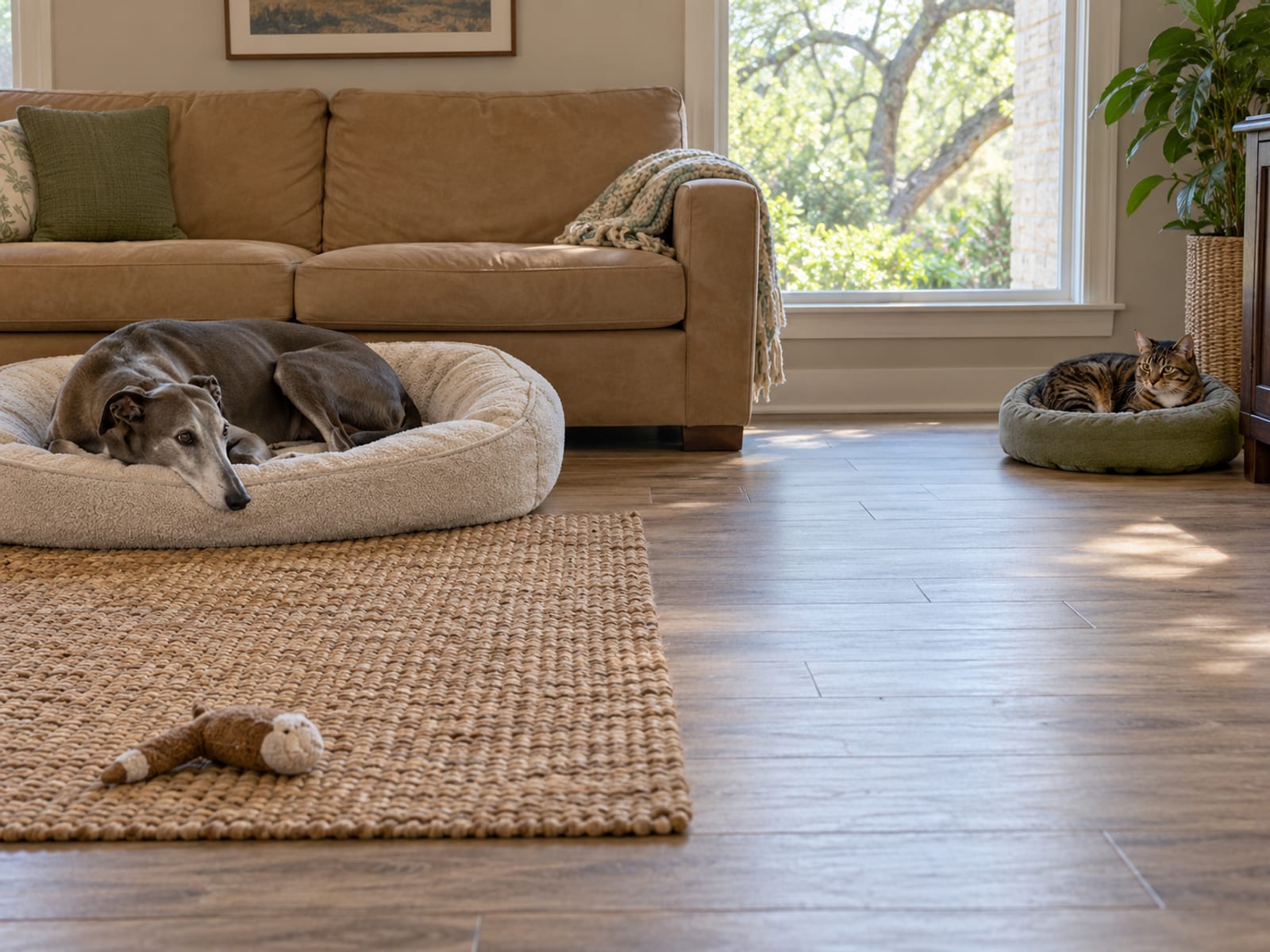
What if the dog guards from another dog or a cat?
Guarding between animals in the same home is common, and it needs the same two things: distance and a plan. VCA recommends feeding separately and preventing access to another animal's bowl or resting place. These steps help:
- Feed every pet in its own space, and pick up bowls when meals are done.
- Take away high-value chews and toys when animals are together, if guarding is likely.
- Block access to another animal's bed or crate.
- Separate the animals whenever an adult can't supervise.
If a conflict starts, don't put your hands between the animals or grab a guarding animal. Use a door, a gate or a loud noise from a safe distance to break it up, and keep the animals apart afterward. Because aggression between household animals is complex and injury risk is hard to predict, bring in a professional assessment rather than waiting to see what happens. Our guide on how to introduce dogs covers household introductions and conflict prevention.
Could pain or an illness be behind the guarding?
Yes, it can. VCA says pain or another physical problem can contribute to aggression, and it recommends a physical exam when behavior is new or has increased suddenly. If your dog never guarded before and now growls over a bed or a toy, don't assume it's stubbornness. A sore tooth, joint pain or an illness can make a dog protect itself or its space.
Book a veterinary exam for any new or worsening guarding, and tell the clinic exactly what you've seen: which items, which people, what the dog did, and how recently it began. If a bite has happened, mention that too. Your veterinarian can look for medical causes and tell you whether a referral to a veterinary behaviorist makes sense.
When should I bring in a professional, and how do I choose one?
Call a professional promptly if any of these apply:
- The dog has bitten, snapped or lunged
- A child has been targeted
- The dog guards many things, or guards people or resting places
- The guarding can't be safely avoided
- Other animals in the home could be hurt
- The behavior started suddenly or is getting worse
For a serious case, start with your veterinarian and ask about a referral to a veterinary behaviorist. Here is what the main credentials mean, according to CCPDT, IAABC and the ASPCA:
Tap or hover a row to highlight it.
| Credential | What it shows |
|---|---|
| CredentialDACVB | What it showsA veterinarian with specialty training in animal behavior. The level for serious aggression, complex cases, and cases with possible medical causes. |
| CredentialCAAB or ACAAB | What it showsAn applied animal behaviorist credential recognized by the Animal Behavior Society. Confirm the person's species, case experience and current practice. |
| CredentialCBCC-KA | What it showsCCPDT's behavior consultant credential, with a behavior-modification exam and at least 300 hours of behavior-consulting experience. |
| CredentialCDBC | What it showsIAABC's certified dog behavior consultant. IAABC recommends at least three years of relevant experience and 400 hours of education. |
| CredentialCPDT-KA | What it showsTested knowledge and at least 300 hours of dog-training experience. |
| CredentialCPDT-KSA | What it showsTested knowledge, practical skills, and at least 300 hours of dog-training experience. |
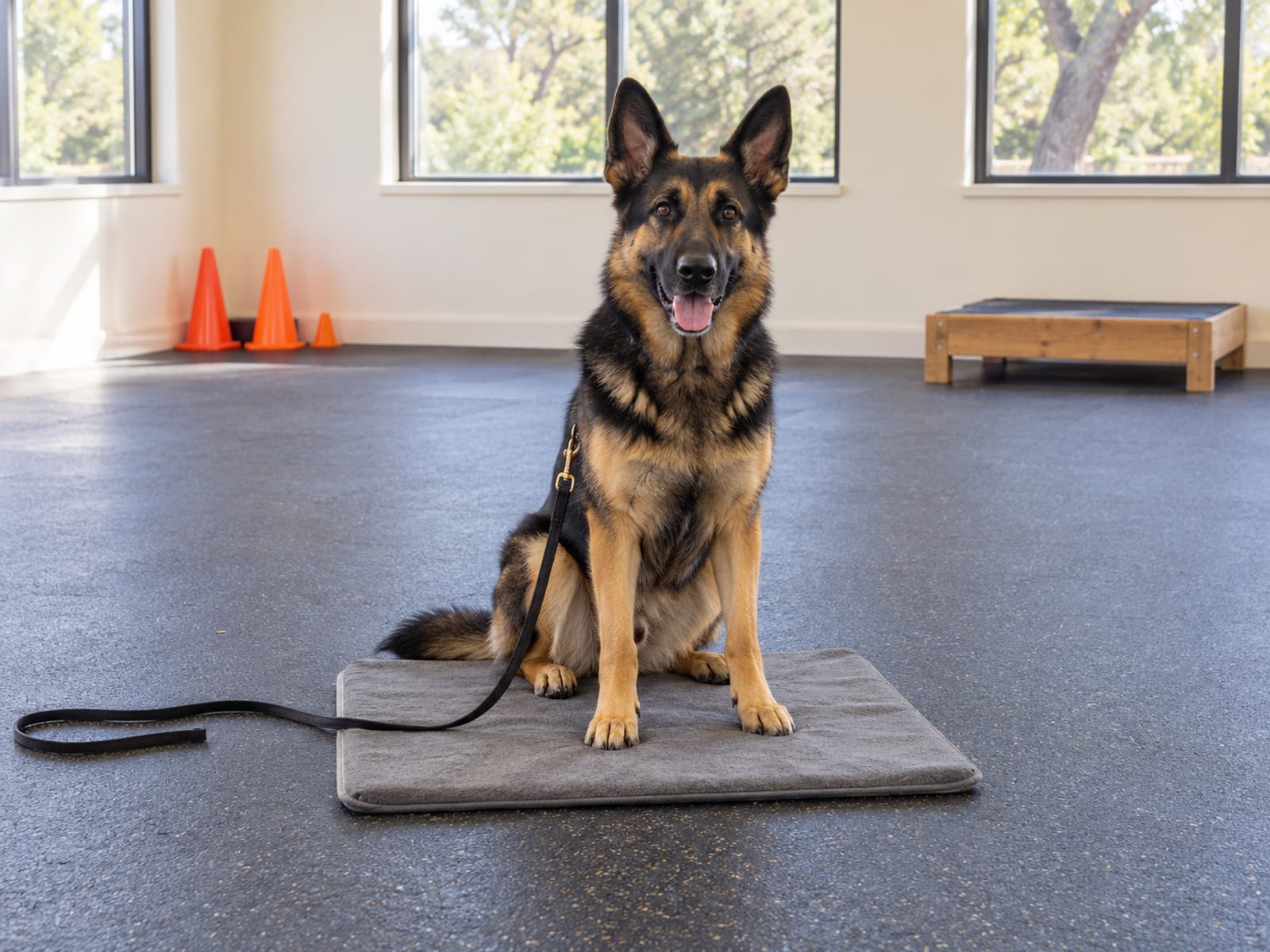
A CPDT credential alone doesn't prove aggression experience, the ASPCA says. Ask any trainer or consultant directly about their resource guarding and aggression cases, their methods, how they plan for household safety, and whether they'll work with your veterinarian.
A good professional uses reward-based behavior modification, asks for a detailed history, and builds safety and management into the plan. They won't recommend rolling the dog over, staring it down, punishing growls, or provoking it on purpose. AVSAB's 2021 position statement says aversive methods that rely on force, pain or discomfort shouldn't be used for behavioral disorders. Our directory of trainers can help you look locally, and our articles on positive reinforcement dog training and dog training mistakes explain the approach to look for.
For aggression-specific information beyond what we cover, DW Dog Training is the place to read next.
How long does improvement take, and will I always need management?
There is no reliable timeline, and anyone who promises one is guessing. How long it takes depends on what the dog guards, how close a person can get, how severe the behavior is, whether there's a bite history, how consistent the household is, and how the individual dog responds.
The ASPCA says aggression may be reduced or sometimes eliminated, but there's no guarantee of a complete cure and long-term management may still be needed. Many households keep the separate feeding spot and the gate for the dog's whole life, and that counts as a success. Your professional will tell you which parts of management can ease and which should stay.
At a high level, professionals commonly use desensitization and counterconditioning, which means exposing the dog to a trigger at a level it can handle while it receives something good, and increasing the difficulty only when the dog stays relaxed. They may also teach trade and drop cues. The exercises have to fit the individual dog and its risk level, so I won't lay out a treatment plan here. The ASPCA says to stop any exercise and call a professional if the dog becomes stressed, refuses food, or stops making progress.
Shelter research gives a sense of how common the behavior is, with a limit on what it can tell you. A peer-reviewed study of shelter dogs reported these figures:
Tap or hover a row to highlight it.
| Measure | Figure |
|---|---|
| MeasureDogs evaluated | Figure1,051 |
| MeasureDogs assessed as resource guarders | Figure161 |
| MeasureDogs made available for adoption classified as guarders | Figure146 of 1,016 (14.4%) |
| MeasureGuarders showing food-bowl guarding | Figure30.8% |
| MeasureGuarders showing possession guarding | Figure83.6% |
These numbers describe shelter dogs, not every pet dog. They show that guarding is common and that dogs often guard objects as well as bowls.
Questions about resource guarding
These are the questions owners ask most often.
How do I stop my dog from resource guarding?
Start with safety and management, not a training experiment. Feed in a separate, quiet area behind a barrier, never take the bowl away, and keep children and other pets away during meals and chews. Then bring in a qualified behavior professional, who can use desensitization and counterconditioning at a pace that fits your dog.
Can resource guarding be corrected in dogs?
Behavior can often be reduced, and sometimes it's eliminated, but a complete cure isn't guaranteed. The ASPCA notes that long-term management may still be needed. Progress depends on the dog, the resource and the household.
How do you know if your dog is resource guarding?
Watch for freezing, stiffening, a hard stare, eating faster, turning away, or putting the head or a paw over an item. Lip licking, lip lifting and showing the whites of the eyes can come next. Growling, snapping, lunging and biting mean the guarding has escalated.
At what age do dogs start resource guarding?
It can show up at any age. The ASPCA says possessive aggression is common in both puppies and adults, and puppies may guard because they compete with littermates for food. Don't assume a puppy will grow out of it, and use the same safety steps for a puppy as for an adult, including separate feeding. Our puppy training tips cover early household management.
Why does my dog keep growling?
A dog that keeps growling is repeating a request for distance because the situation hasn't changed. Look at what's happening each time, whether it's a bowl, a chew, a bed or a person, and add space or a barrier. A growl that is new, frequent or getting worse also deserves a veterinary exam to rule out pain.
Does guarding a favorite person or a cat need a professional?
Yes, in most cases. Guarding that involves a person, resting places, or another animal in the home is harder to manage safely at home, and injury risk can be hard to predict. Keep the animals apart and ask a veterinarian or qualified behavior professional to assess the situation.
Quick check: resource guarding in dogs
What is the next step?
Tonight, set up the separate feeding spot, put the barrier in place, and tell everyone in the house, children included, to leave the dog alone while it eats or chews. Then book a veterinary exam, especially if the behavior is new or has been getting worse. If there has been a snap or bite, or a child is at risk, ask your veterinarian about a referral to a veterinary behaviorist, or contact a credentialed behavior consultant from our trainer directory. You haven't failed your dog by asking for help, and getting that help early is the safest thing you can do for everyone in your home.
Sources
- American Veterinary Society of Animal Behavior: American Veterinary Society of Animal Behavior
- ASPCA: ASPCA
- Certification Council for Professional Dog Trainers: CCPDT
- DW Dog Training: DW Dog Training
- IAABC: IAABC
- PubMed Central: reported these figures
- VCA Animal Hospitals: VCA Animal Hospitals
- VCA Animal Hospitals: VCA's Spanish-language behavior article