
Puppy Training Tips: What to Teach First, and How to Handle Biting, Chewing and Jumping
By Cal Hewitt · Published
Training
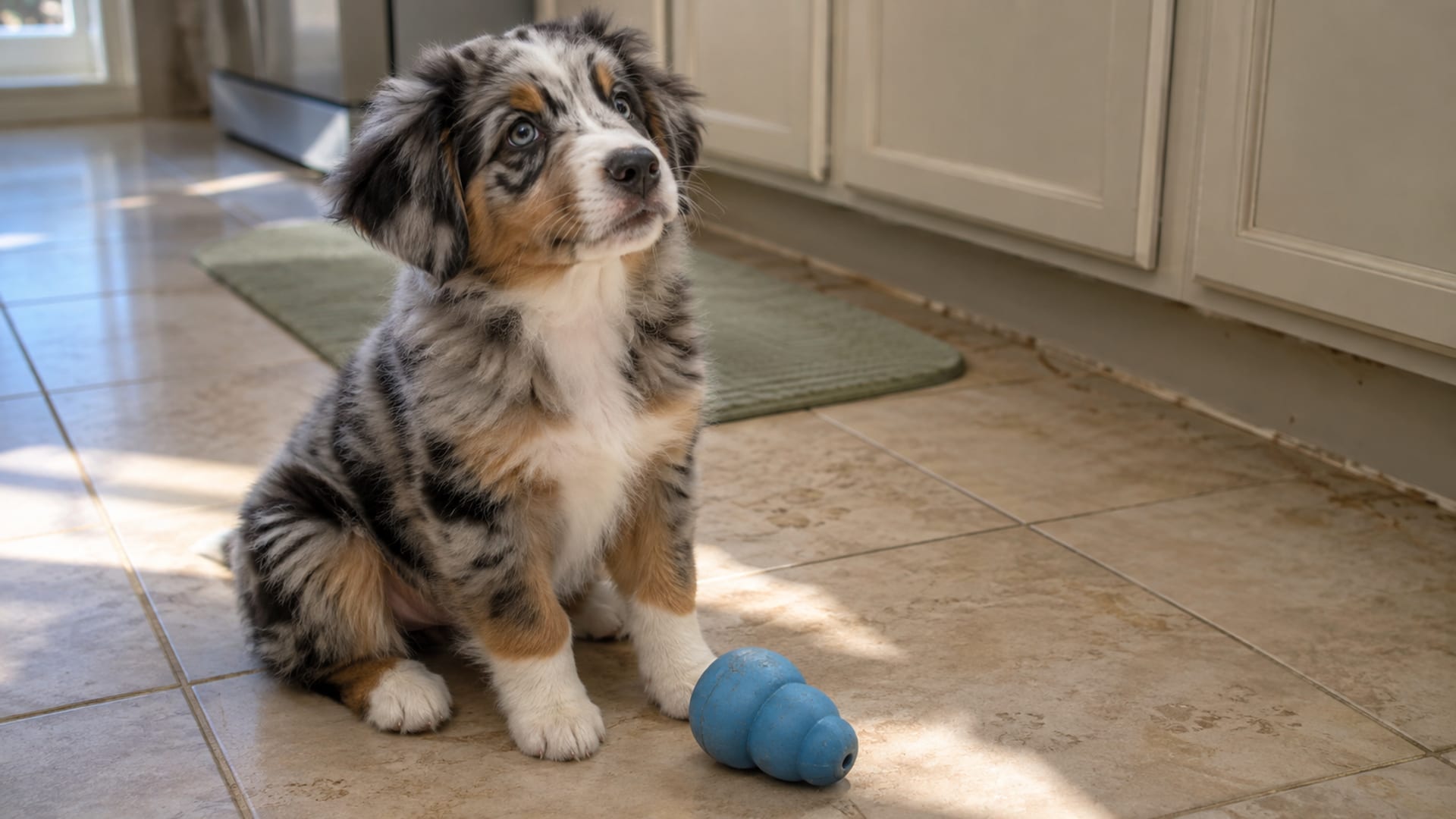
The puppy is home. In the first few days you have been nipped more times than you can count, a shoe has lost its laces, and your puppy greets every guest by launching at their knees. Somewhere in there a worry creeps in: have I already done something wrong, and will this turn into a problem dog?
Probably not. Nipping, chewing and jumping are ordinary puppy behavior, and the first weeks are about setting things up so your puppy practices the right habits more often than the wrong ones. Here is what to do today: set up one puppy-safe area with a gate or pen, keep a chew toy within reach wherever you sit, go still when teeth land on skin, reward your puppy the moment all four paws are on the floor, and book the first vet visit so you know which outings are safe before the vaccines are finished.
The advice below follows the American Veterinary Society of Animal Behavior (AVSAB), the ASPCA, the American Kennel Club (AKC), UC Davis School of Veterinary Medicine and the professional bodies that certify trainers, linked in each section.
Key takeaways
Tap a card to bring it forward.
- In the first weeks, put safety, routine and calm handling ahead of a long list of commands.
- Management comes first: gates, a pen, puppy-proofed rooms and supervision stop bad habits before they start.
- For nipping, offer a toy before teeth reach skin, go still if they do, and end the game briefly if a bite is hard.
- Never hit, scruff, shake or yell. The ASPCA warns physical punishment can make a puppy bite harder or become fearful.
- AVSAB calls the first three months the most important time for socialization, and says safe socialization before vaccines are complete should be standard care.
- Growling, freezing, guarding, snapping or a bite that breaks skin means call your vet and a qualified behavior professional now.
What to teach a puppy first, in order
A puppy's first lessons are less about "sit" and more about keeping life calm and safe while they learn. This order puts first things first:
- A vet visit and a safe setup. Confirm the vaccine, deworming and parasite plan with your vet and ask which places near you are risky for disease. Puppy-proof the rooms your puppy uses, and set up a gate, pen or close supervision. Give meals, sleep, toilet trips and quiet time a predictable rhythm. AVSAB says behaviors like jumping and house soiling can be managed by arranging the environment and rewarding the behavior you want.
- Their name and a reward marker. Say the name once and reward your puppy for looking at you. Pick a marker, a short "yes" or a click, and pair it with a treat. AVSAB describes a marker as a signal that pinpoints the exact moment your puppy did the right thing, which makes every later lesson clearer.
- Gentle handling. Short, rewarded moments of touching the collar, paws, ears and mouth, and brushing (more on this below).
- House rules with an alternative. Reward four paws on the floor, chewing the right toy, settling on a mat and following you. Put away shoes, cords and trash. For accidents and a toilet routine, see the full guide to potty training a puppy, and for sleeping and resting in a crate, the step-by-step crate training plan.
- Small life skills in tiny sessions. A hand target, sit, recall games indoors, trading an item for a treat, a few steps walking beside you, and short stretches of calm time alone. Reward what you want instead of correcting what you do not.
- Safe, positive socialization. New people, calm healthy dogs, surfaces, sounds, car rides and grooming, paired with good things and at a pace your puppy can handle.
- A good puppy class, once your vet agrees your puppy can attend.
This is not an obedience checklist. The formal cues come later, and How to Train a Dog walks through teaching them at home, while DW Dog Training's list of the 10 commands to teach first is a good next step once your puppy has the basics. Every puppy is different: breed, where they came from, health and how comfortable they are all change the pace.
Biting, chewing and jumping: what to do in the moment
These three cause most of the stress in the first weeks. The pattern for all of them is the same: prevent the wrong choice, interrupt calmly, reward the right choice, and make the next try easier.
Tap or hover a row to highlight it.
| Behavior | Do this now | Avoid |
|---|---|---|
| BehaviorNipping hands, feet or clothes | Do this nowOffer a toy before teeth land; go still if they do; end the game for 10 to 20 seconds after a hard bite | AvoidWaving hands, pulling away fast, slapping, scruffing, yelling |
| BehaviorChewing household things | Do this nowPuppy-proof, supervise, keep approved chews easy to find, trade for a treat | AvoidChasing your puppy, scolding after you find damage |
| BehaviorJumping on people | Do this nowUse a gate or leash before greetings; reward four paws on the floor | AvoidPetting, talking to or pushing a jumping puppy |
| BehaviorFear, stiffness, growling or snapping | Do this nowGive distance, end the practice, call your vet and a qualified professional | AvoidPushing through it with drills or forced contact |
When your puppy bites and nips
- Keep a toy within reach and put it into play before hands, ankles or sleeves become the target.
- If teeth touch skin, go still. The ASPCA explains that jerking your hand away can invite your puppy to grab, and that slapping or hitting can make a puppy bite harder or become afraid.
- For a hard bite, end the game and your attention for 10 to 20 seconds by quietly standing up or stepping behind a gate.
- Start again calmly with a toy, and reward gentle play.
A yelp or "ow" helps some puppies and winds others up. The ASPCA lists it as one option, and the AKC notes it excites some puppies. If it makes your puppy wilder, drop it and just go still.
If the nipping keeps getting more intense, look at what your puppy might need: a toilet trip, food, water, or sleep. An overtired puppy often gets bitey. Do not use the crate as a punishment; it should stay a place your puppy likes.
When your puppy chews everything
- Puppy-proof first. Close doors, use gates, put things away and supervise. When you cannot actively watch and train, management is the plan.
- Make the right chews easy to find. Redirect early to one, then praise and reward your puppy for choosing it. A few durable chew toys spread around the house help.
- Trade instead of chasing. Offer a treat, take the item when your puppy lets go, and give harmless items back. Punishing after you find the damage does not work, because your puppy cannot connect it to what they did earlier.
If your puppy swallows something, call your vet right away, and do not try to make them vomit unless your vet tells you to. For anything that could be toxic, call the ASPCA Animal Poison Control Center at (888) 426-4435 or the Pet Poison Helpline at (855) 764-7661. For foods, Can My Dog Eat lists what is safe and what is not.
When your puppy jumps on people
- Before anyone comes in, use a gate, a leash or a pen, so a visitor cannot accidentally reward the jump.
- Ask guests to keep their hands, voice and eyes to themselves while paws are up. The instant all four paws touch the floor, mark it and give calm attention or a treat low to the ground. AKC points out that petting a jumping puppy rewards the jumping.
- Practice a replacement, like sit, a hand target or going to a mat, without guests first. Reward it a lot, then use it for short real greetings.
- If jumping comes with panic, hard mouthing, a stiff body or guarding, stop greeting practice and talk to your vet or a qualified behavior professional.
Normal does not mean you have to wait it out. The goals are softer mouthing and then no teeth on skin, more choices of the right chew, and more greetings with four paws down. AKC says a puppy who still cannot tone down play biting by six months should see an experienced trainer or animal behavior specialist.

Getting your puppy used to being handled
Vet visits, nail trims, baths and brushing all go easier with a puppy who is relaxed about being touched. Keep sessions very short: touch the collar, a paw, an ear or the mouth for a second and give a treat while you touch. Add brushing and, if it suits your puppy, being lifted. If your puppy pulls away, go back to a lighter touch. The goal is a puppy who is comfortable, not one who has learned to put up with being held down. Early encounters should be positive, according to UC Davis.
A puppy who stiffens, freezes, growls or snaps during handling needs space and professional advice, not more practice.
Socializing your puppy before the vaccines are done
This is where many owners feel stuck: the vet says be careful about disease, and everyone else says socialize. Both are right. AVSAB says the first three months are the primary and most important time for puppy socialization, and that socializing before vaccines are complete should be standard care, because the chance is time-limited and behavior problems are a serious welfare risk. It also says the exposure should not overwhelm the puppy.
Socialization means good experiences at your puppy's pace, not meeting every dog and person. Ways to do it safely:
- Ask your vet which places near you are higher risk and whether your puppy can join a screened class.
- Pick low-risk experiences that keep paws off public ground: visitors at home, carrying your puppy to watch the world go by, a clean private yard, car rides, household sounds at low volume, and friendly, vaccinated dogs your vet approves.
- Let your puppy opt out. Add distance, lower the intensity or end the session at the first signs of stress. Passing a puppy around a crowd or taking them to a busy dog park is not socialization.
- Keep going after the early weeks. UC Davis says socialization can happen at any age but goes more slowly after 14 weeks.
If you have been holding back, you are not alone. A 2017 survey of 296 owners in the US and Canada, published in JAVMA, found that almost a third gave their puppies only minimal exposure to people and dogs outside the home. Nobody can promise that early socialization guarantees a confident adult dog, but it gives your puppy the best start you can offer.
Puppy classes: when to start and how to choose one
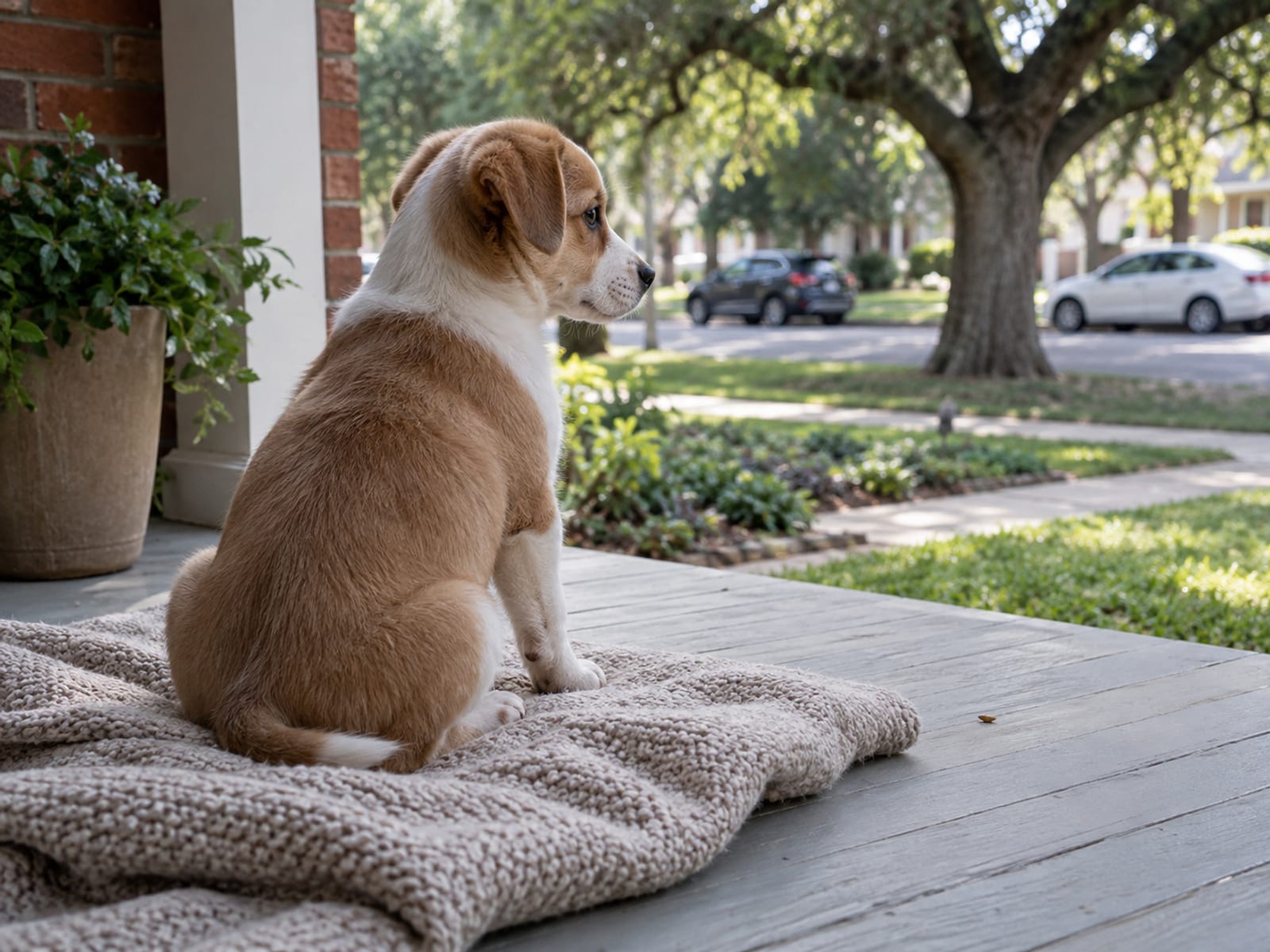
AVSAB says a puppy can start a socialization class as early as 7 to 8 weeks, once they have had at least one set of vaccines at least seven days before the first class and a first deworming, and stay up to date during class. The Merck Veterinary Manual suggests enrolling before 12 weeks. Your own vet has the final word, based on your puppy's health and local disease risk.
A good class has:
- An instructor who explains their methods in plain words and uses rewards.
- Rules on vaccines, illness and cleaning.
- Carefully matched, short, supervised play with breaks, not a free-for-all.
- Time spent coaching you on handling, chewing, nipping, greetings, recall and settling.
- No choke, prong or shock collars, no intimidation, no forced greetings.
Ask to watch a class first, and ask what happens when a puppy is scared. Costs vary a lot by area, so compare local options.
What progress looks like
There is no reliable "trained in X weeks" timeline. Progress looks like fewer repeats of the problem, quicker recovery from ordinary surprises, more check-ins with you, more choices of the right chew and a softer mouth.
The first months, stage by stage
The first week at home
Setup and getting to know each other. Progress is your puppy taking food, looking at you, settling for short spells, choosing a chew when you offer one and recovering from household noises. Reliable cues are not expected yet.
Weeks 2 to 4
With steady management and several very short reward-based sessions a day, you may see more sitting for attention, taking a toy instead of your hand, and turning to their name in quiet rooms. Expect it to fall apart around visitors, outdoors or when your puppy is tired.
Up to about 12 to 14 weeks of age
Put safe, positive experiences and gentle handling first while socialization is most efficient.
The months after
Add distractions and duration slowly. If play biting has not eased by six months, AKC says to bring in an experienced trainer or behavior specialist.
Setbacks are normal during teething, a move, visitors, illness or a scary experience. Go back to an easier step. A setback is not defiance.
Mistakes to avoid
- Keeping your puppy home until every shot is done. Follow your vet on disease risk, but use safe, controlled exposure instead of a blanket "never go out" rule.
- Treating socialization as dog-park play or forced greetings. Calm watching from a distance counts.
- Punishing after the fact. Change the setup, interrupt calmly and reward the alternative. AVSAB's humane training statement says there is no evidence that aversive training is necessary.
- Giving free run of the house too soon. Gates and supervision work better than scolding.
- Rewarding the behavior by accident. Chasing, exciting talk or petting during jumping and nipping all keep it going.
- Long sessions, or only training when things go wrong. Practice short and easy skills when your puppy is calm. For more on keeping lessons short and rewarding, see positive reinforcement dog training, and for the wider list, common dog training mistakes.
- Pushing a scared puppy through fear. Forced exposure can make it worse. Add distance and get help.
When to call your vet or a professional
Call your vet for a sudden change in behavior, signs of pain, vomiting or diarrhea, appetite or sleep changes, toilet changes, anything your puppy may have swallowed, or questions about vaccines and safe outings.
Bring in a reward-based trainer if rough mouthing continues even with good management, jumping risks hurting someone, chewing cannot be managed, handling and grooming are a struggle, or you simply feel overwhelmed. Getting help early is fine.
Get a veterinary behaviorist involved without waiting for growling, freezing, hard staring, guarding, snapping, a bite that breaks skin, repeated panic or severe avoidance. Keep everyone safe in the meantime by avoiding the trigger, and do not punish. A board-certified veterinary behaviorist (DACVB) can check for medical causes and prescribe medication when it is needed, according to the ACVB.
Dog training is unregulated in the US, so check credentials. A CPDT-KA has passed an exam and logged at least 300 hours of training experience, and the CCPDT flags talk of dominance and punishment-heavy methods as red flags. The IAABC awards the IAABC-ADT to trainers with two or more years of experience. Ask any trainer what they do when a puppy is scared, whether you can watch, and whether they use prong, choke or shock collars. Walk away from anyone who promises results by a set date or will not explain their methods. When you are ready for obedience work, obedience training covers what a structured plan looks like.
Check what you learned
Quick check: puppy training
Questions about puppy training
What should I teach my puppy first?
Start with a safe setup and routine, their name and a reward marker, gentle handling, chewing the right things, four paws on the floor and safe socialization. Formal commands can come in small steps alongside those.
Is puppy biting normal?
Yes, play mouthing and chewing are common in puppies. Teeth on people should be redirected to a toy, and hard biting should briefly end the game. Avoid physical punishment, which the ASPCA says can make biting harder or cause fear.
Should I yelp when my puppy bites?
It works for some puppies and not others. If yelping makes your puppy more excited, stop using it and go still instead.
Can I socialize my puppy before all the vaccines are done?
Yes, safely. AVSAB says early socialization should be standard care. Ask your vet about local disease risk and stick to low-risk experiences until your vet clears more.
When can my puppy start a puppy class?
AVSAB says as early as 7 to 8 weeks, after at least one set of vaccines given at least seven days before the first class and a first deworming. Check with your vet first.
When does puppy biting get better?
It varies with the puppy and how consistently you manage and redirect it. If your puppy still cannot soften their play biting by six months, AKC recommends an experienced trainer or animal behavior specialist.
Where to start today
Set up one gated puppy area, put a chew toy in every room you use, and practice their name with a treat five times today. Call your vet to ask which outings are safe this week. Small, calm steps now make every week after easier.
If something about your puppy's behavior worries you, your vet is the first call. To find a trainer, a puppy class or a vet near you, search the DogServ directory. And for anything else, reach me through the contact page.
Sources
- American College of Veterinary Behaviorists: ACVB
- American Kennel Club: AKC
- American Veterinary Society of Animal Behavior: AVSAB
- American Veterinary Society of Animal Behavior: AVSAB
- ASPCA: ASPCA
- Certification Council for Professional Dog Trainers: CCPDT
- DW Dog Training: the 10 commands to teach first
- IAABC: IAABC
- PubMed: JAVMA
- UC Davis School of Veterinary Medicine: UC Davis