

How to Socialize a Puppy: A Safe Plan for the First Three Months and Beyond
By Cal Hewitt · Published
Training
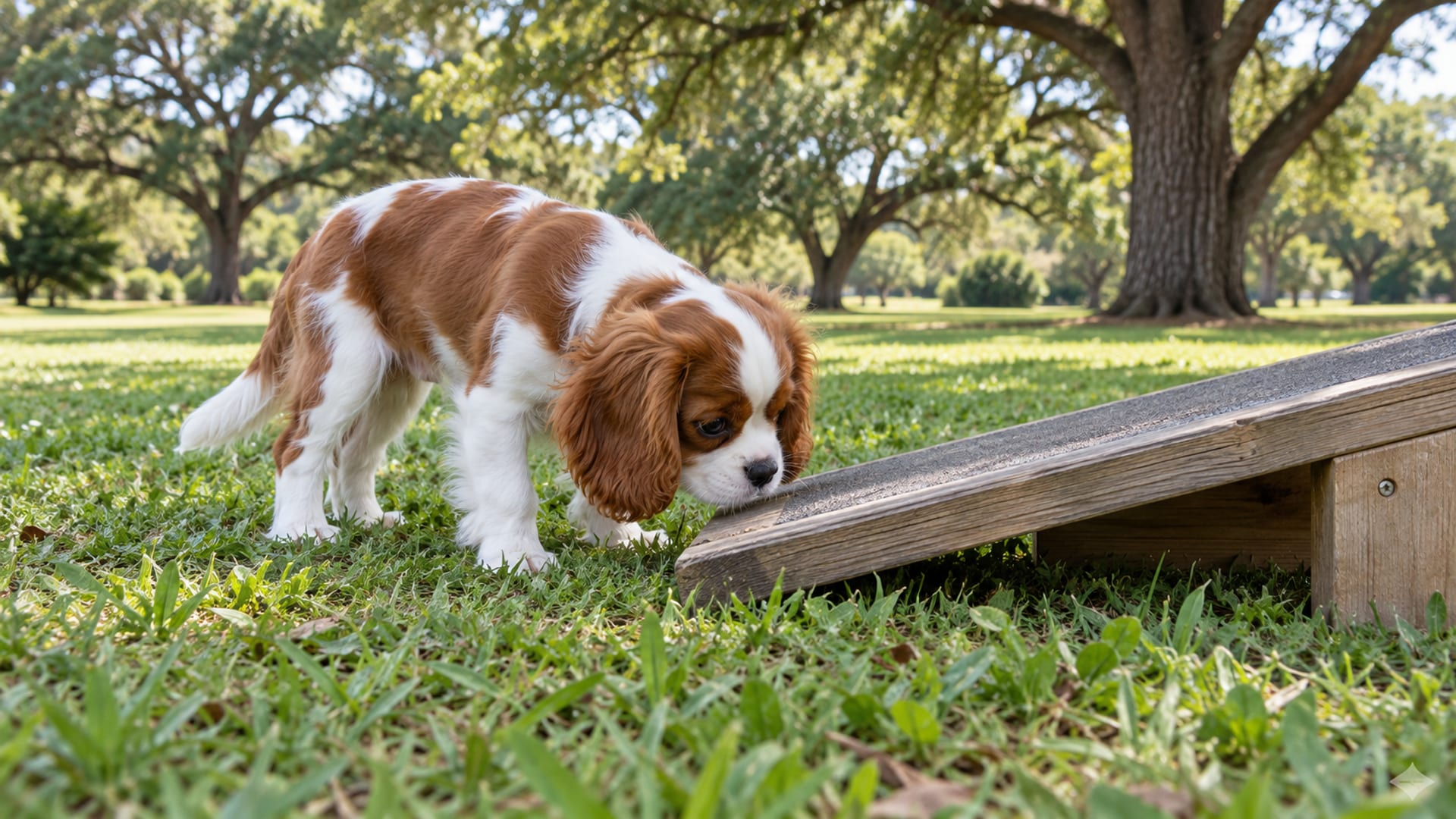
Start the day your puppy comes home. Socializing a puppy means helping them feel safe and relaxed around the people, animals, places, sounds, handling and situations they will meet. The American Veterinary Society of Animal Behavior (AVSAB) calls the first three months of life the most important period, and you do not have to wait for the last vaccine. Ask your vet about local parvo and distemper risk, use a well-run puppy class that requires age-appropriate vaccines, stay away from dog parks and unknown dogs, and add new things slowly with a treat or play. If your puppy freezes, hides, trembles, tries to escape or stops taking food, add distance.
Key takeaways
Tap a card to bring it forward.
- Start when your puppy comes home. AVSAB names the first three months as the primary socialization period.
- You do not need to wait for the full vaccine series. Use controlled settings and ask your vet about local disease risk.
- Skip dog parks, feces, sick animals and unknown dogs while vaccines are still in progress.
- Pair each new experience with a treat, play or praise, and begin below the level that scares your puppy.
- If your puppy freezes, hides, trembles or refuses food, stop advancing, add distance and let them recover.
- Fear that persists or gets worse is a reason to call a reward-based trainer, a behavior consultant or your vet.
What should you do in the first days with your puppy?
I'd start small and on your puppy's terms. You are not trying to fill a checklist in one weekend. You are trying to let your puppy learn, one calm experience at a time, that the world is a place where good things happen.
Today, that can be as simple as letting your puppy watch a person walk past from across the room while you hand over a small treat. Or it can be running the vacuum in another room at low volume while your puppy eats. Keep it short, stop while your puppy is still comfortable, and let them rest. Then book a vet visit and ask about puppy class options and local disease risk, because that answer decides where you can safely go next. The new puppy checklist covers first-week preparation and vet planning.
What does socialization actually mean?
It means your puppy learns to stay calm and comfortable around ordinary things. AAHA's 2026 puppy guidance describes it as teaching a puppy to remain calm and relaxed around people, animals and varied situations, not as arranging play for its own sake.
So, your puppy does not need to greet every person or play with every dog. Watching the mail carrier from a distance and staying relaxed counts. Getting used to a nail trim counts. A puppy who is forced to say hello to everyone is not being socialized. That puppy is being pushed, and AVSAB makes the point that socialization is more than mere exposure. Being near something scary does not teach a puppy that it is safe.
Socialization is also not the same as bonding, and it is not obedience training. Those are related jobs with their own steps. If you want help with the relationship side, see how to bond with your puppy.

How long is the window, and is it too late for an older puppy?
AVSAB says the primary and most important socialization period is the first three months of life. During that time, puppies should meet as many new people, animals, sounds and places as can be done safely and without excessive fear, withdrawal or avoidance. AAHA describes these sensitive periods as times when missing out on exposure raises the risk of later behavior problems.
Three months does not close the door. AVSAB's statement names the first three months as the most important period, and positive experiences stay useful throughout life. If your puppy is four, five or six months old, you have not missed it. Start where your puppy is today, keep the experiences gentle and gradual, and pay extra attention to any fear you see. An older puppy who already seems wary may do best with a professional's help, which I cover further down.
Can you socialize a puppy before the vaccines are finished?
Yes, with precautions. It is the worry that stops many new owners, and it is a fair one. AVSAB argues that the risk of infection has to be balanced against the risk of missing the early socialization period. AAHA's behavior guidelines say there is no medical reason to delay puppy classes or social exposure until the vaccine series is done, as long as sick animals are excluded, hygiene is practiced and other precautions are used.
AVSAB says puppies can generally start socialization classes at 7 to 8 weeks of age. Its stated precautions are:
- At least one set of vaccines given at least seven days before the first class.
- A first deworming.
- Staying current on vaccines throughout the class.
- A clean, controlled class setting.
Here is how to lower the disease risk at home and around town:
- Ask your vet about local parvo and distemper risk.
- Pick a class that has vaccine and illness-screening policies.
- Avoid dog parks, pet-heavy public areas, feces, sick animals and unknown dogs.
- Choose healthy, vaccinated adult dogs for controlled meetings.
- Carry your puppy, or use a clean blanket, carrier or stroller, where ground contamination is a concern.
- Follow the class's hygiene rules and keep up the vaccine schedule your vet recommends.
The timing of the last vaccine varies with the vaccine protocol, the puppy and the risk where you live, so there is no single date that means "safe to go everywhere." Your vet knows your area. For background on the diseases themselves, see parvo in puppies and distemper in dogs.

What should your puppy meet, and how do you introduce it?
Think in categories, then go one at a time:
- People: adults, children who can follow instructions, and people who look, sound and move differently, such as someone in a hat, under an umbrella or using a mobility aid.
- Dogs: calm, healthy, vaccinated dogs with suitable play styles, closely supervised.
- Travel and places: short car rides, the vet's office and quiet outdoor spots.
- Surfaces: grass, tile, gravel, stairs and rubber mats.
- Handling: gentle touching of ears, paws, mouth area, collar, harness, tail and body, paired with rewards.
- Sounds: vacuums, appliances, traffic, doors, alarms and music, at low volume first.
- Daily events: visitors, deliveries seen from a distance, grooming tools, crates and rest periods.
Then follow a simple sequence, which matches AVSAB's graded-exposure approach:
- Start far enough away that your puppy can see the new thing and still feel fine.
- Offer a small treat, a toy or praise. AVSAB notes that food, play and attention can all work as rewards.
- Let your puppy choose. They can come closer, look, sniff or move away.
- End the session while your puppy is still relaxed.
- Give a rest before the next new thing, then repeat gradually.
Begin below the level that causes fear. The test is whether your puppy can still watch, eat, play or look to you. If they can't, you've gone too far too fast. For handling practice, a groomer or vet who works gently can help. The trainer directory and vet directory can help you find local ones.
How can you tell if your puppy is comfortable or scared?
Watch the whole dog, not just the tail. A wagging tail can go with excitement or with uncertainty, so read posture, face, ears, movement and whether your puppy can take food.
A comfortable puppy usually has a loose body, a soft face, and moves about normally with curiosity. They can look away or walk away, they check in with you, and they will take food or play.
A scared or overwhelmed puppy may:
- Back away or hide behind you.
- Freeze or shut down.
- Tremble, tuck the tail or crouch.
- Pin the ears back or show the whites of the eyes.
- Lick the lips, yawn or sniff the ground in a way that is not curiosity.
- Try to escape.
- Bark or growl to make something go away.
- Refuse food they normally love.
When you see this, stop advancing, add distance, turn down the sound or movement and let your puppy recover. Do not drag your puppy closer, hold them still for a greeting, punish barking or growling, or insist they accept being touched. For more on reading a dog's signals, see dog body language.
If the fear keeps showing up, gets worse or starts to get in the way of normal life, AAHA notes that puppies generally do not simply outgrow behavior problems, and early professional help is appropriate. Waiting and hoping is not a plan.

How does trust fit in while you do all this?
Every calm, rewarded experience tells your puppy you are the one who helps when something is new. I'm not going to repeat the bonding steps here, because they have their own page. If you want play, handling and daily routines that build the relationship, read how to bond with your puppy alongside this one. For the reward-based approach behind both, see positive reinforcement dog training.
Which mistakes set puppies back?
The common ones are easy to fall into when you mean well:
- Flooding: keeping a puppy in an intense situation until they can't escape or recover. AVSAB's humane training statement lists flooding as a technique to avoid and says the learner must be able to opt out.
- Forced greetings: making a retreating or frightened puppy say hello, be petted or be handled.
- Too much at once: a busy place, strangers, loud noise, rough play and a long outing all in one go.
- Ignoring body language: carrying on because your puppy is physically there, even though they are frozen, hiding, trembling or refusing food.
- Dog parks as puppy school: dog parks are uncontrolled, and they carry disease, injury and frightening-play risks, especially for a puppy who has not finished vaccines.
- Punishment: correcting fear, barking or growling with pain, intimidation or leash jerks.
- Skipping recovery: moving from one new thing to the next with no rest.
AVSAB says evidence supports reward-based methods for all canine training. Reward-based does not mean rule-free. You can still use structure, routine and management, just without fear, pain or intimidation. For biting, chewing and jumping, see puppy training tips.
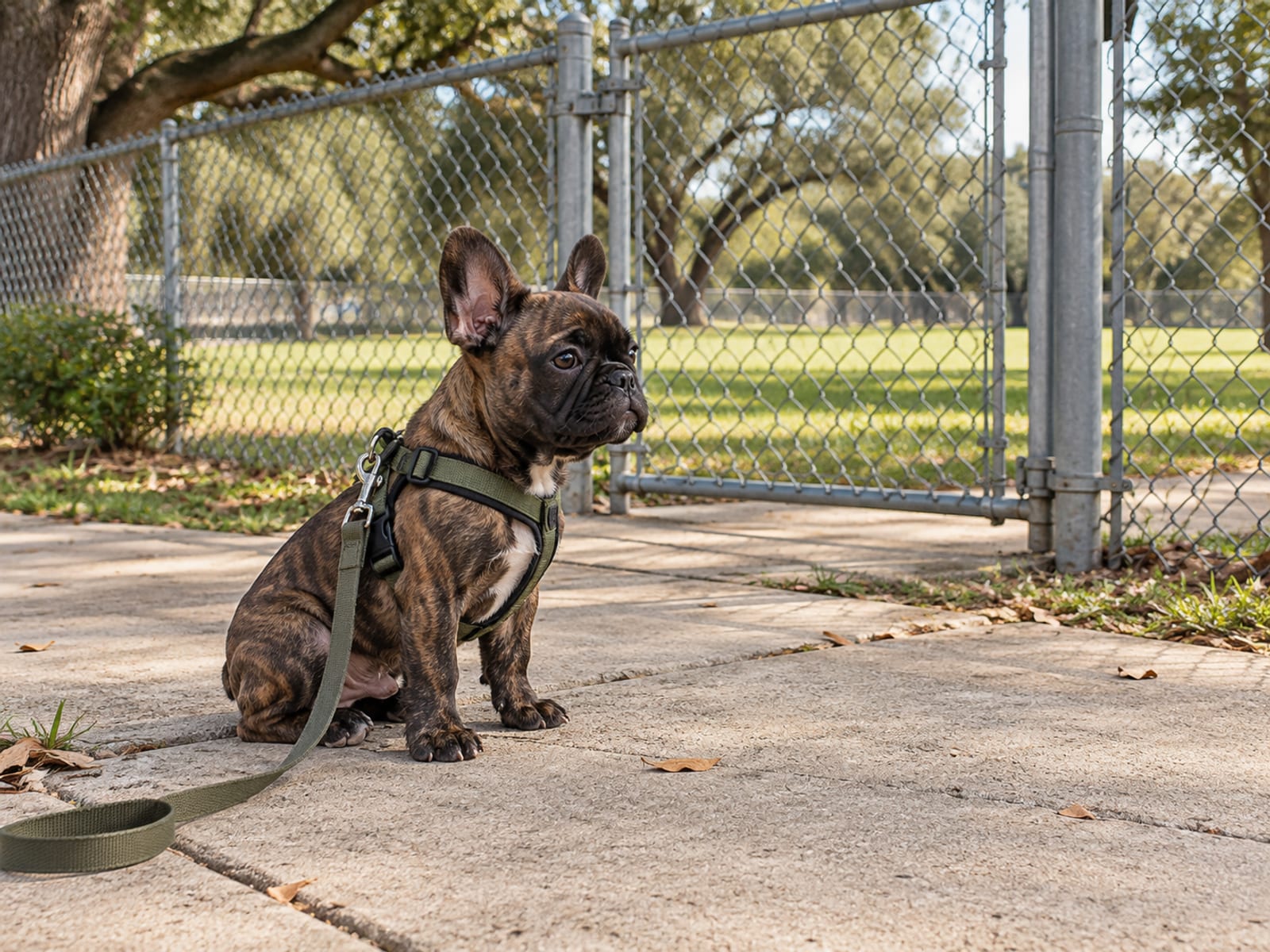
How do you choose a puppy class, and when should you call a professional?
Look for a class that:
- Requires age-appropriate vaccines and screens for illness.
- Requires or discusses deworming.
- Uses clean surfaces and keeps groups small and matched by size, age, temperament and play style where possible.
- Builds in supervised breaks, so it is calm learning and not nonstop wrestling.
- Teaches you to read body language.
- Lets puppies move away from people and dogs.
- Uses rewards, play and management, never intimidation or physical corrections.
- Lets you watch a class before you sign up.
- Has an instructor who explains their methods, credentials and when they refer a case out.
Ask the instructor exactly what happens when a puppy is afraid. A good answer involves distance and choice, not pushing through. The trainer directory is a place to start looking, and obedience training for dogs covers class and private-lesson options.
Bring in a professional early if your puppy repeatedly freezes, hides, trembles, panics, can't recover, avoids ordinary activities, shows escalating defensive behavior, or if safety is a concern. Here is what the credentials mean:
- CPDT-KA and CPDT-KSA: CCPDT describes CPDT-KA as a knowledge exam plus at least 300 hours of dog-training experience. CPDT-KSA adds a hands-on skills assessment.
- CBCC-KA and CDBC: CBCC-KA is CCPDT's credential for complex behavior cases. IAABC describes CDBC as a credential for behavior consultants with at least three years of consulting experience with complex cases.
- DACVB (veterinary behaviorist): per the American College of Veterinary Behaviorists, a veterinarian with specialized behavior training who can evaluate medical and behavioral contributors. Ask your vet about this route when fear is severe, affects safety or welfare, or may have a medical part.
- "Trainer" with no credential: the title is not itself regulated. Ask about education, experience, methods, insurance, references and referrals.
Steer clear of anyone who recommends shock, prong or choke tools, physical corrections, alpha rolls, intimidation or flooding.
Quick check: socializing your puppy
Questions people ask about socializing a puppy
These short answers add a few details the sections above do not cover.
What age is best to socialize a puppy?
As early as your puppy comes home. AVSAB identifies the first three months as the primary period, and classes can generally begin at 7 to 8 weeks with at least one vaccine set given at least seven days before class and a first deworming.
Is 20 weeks too late to socialize a puppy?
No. Early socialization matters most, but positive, gradual learning continues throughout life. Keep experiences gentle, go slowly with anything your puppy finds scary, and bring in a reward-based trainer if fear is strong or not improving.
Should my puppy go to a dog park?
No. A dog park is not needed for socialization, and it is a poor fit for a puppy who has not finished vaccines. You cannot control which dogs are there, their health, or how roughly they play.
What if my puppy growls, hides or freezes?
Stop pressing forward, add distance and let your puppy recover. Do not force contact or punish the growl, which is your puppy's way of asking for space. If it keeps happening, talk with your vet and a reward-based professional.
What is the next step?
Pick one thing your puppy can do comfortably today, add a treat, and stop while it still feels easy. Then call your vet to ask about local disease risk and puppy classes. If fear shows up and does not ease, reach out to a reward-based trainer or ask your vet about a veterinary behaviorist. You can begin with the DogServ trainer directory, and the vet directory can help you find a clinic. No plan guarantees a result, and puppies differ, but a slow start on your puppy's terms is the best thing I can point you toward.
Sources
- American Animal Hospital Association: AAHA's 2026 puppy guidance
- American Animal Hospital Association: AAHA
- American College of Veterinary Behaviorists: American College of Veterinary Behaviorists
- American Veterinary Society of Animal Behavior: American Veterinary Society of Animal Behavior (AVSAB)
- American Veterinary Society of Animal Behavior: AVSAB's humane training statement
- American Veterinary Society of Animal Behavior: AVSAB
- American Veterinary Society of Animal Behavior: AVSAB
- Certification Council for Professional Dog Trainers: CCPDT
- IAABC: IAABC