

How to Bond With Your Puppy: A Daily Plan That Builds Trust Without Forcing It
By Cal Hewitt · Published
Training
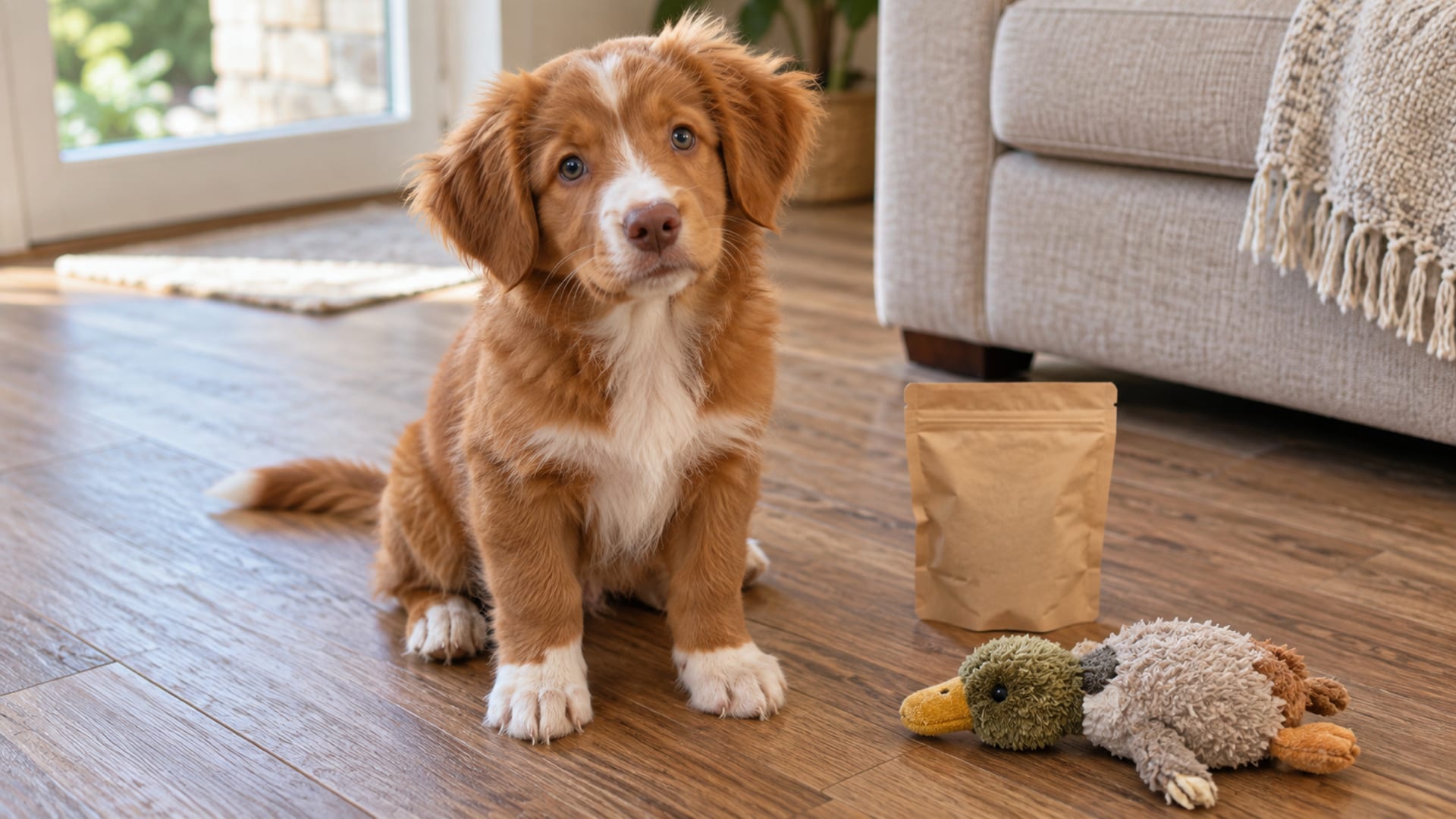
Bonding with a puppy grows from repeated experiences in which your puppy can predict that you bring food, safety, rest, play, gentle handling and rewards for good choices. Start with a calm routine, short reward-based games, brief play, quiet time nearby, and gentle exposure to people, sounds, surfaces and places at your puppy's pace. Don't force cuddling, don't overwhelm your puppy, and don't use punishment or intimidation. AAHA's new-puppy guidance says puppies differ, so I won't put a number of days on it.
If your puppy hides, wriggles away or seems to like someone else better, I know that can sting. It doesn't mean you've failed or that your puppy doesn't care. It means trust is still being built, and you can do something about that today.
Key takeaways
Tap a card to bring it forward.
- Trust grows from predictable care: regular meals, sleep, bathroom breaks, play and quiet time.
- Short, easy reward games and brief play build the relationship better than long sessions.
- Let your puppy choose contact, and stop when it backs away, freezes or won't take treats.
- Socialization means staying comfortable around new things, not meeting as many dogs and people as possible.
- Ask your vet about local disease risk; you can still expose your puppy to the world safely before vaccines are done.
- Intense or lasting fear, withdrawing, or biting that worries you is a reason to call a professional.
What can you start doing today?
You don't need special equipment for the first steps. You need a routine your puppy can count on and a few minutes several times a day. Feed at regular times, protect naps, take bathroom breaks on a steady schedule, say your puppy's name in a happy voice and reward a look, and end every interaction while your puppy still wants more. The sections below take it one piece at a time.
What does bonding actually mean, and how long does it take?
In practical terms, bonding is trust plus predictability. Your puppy learns, through many small repeated experiences, that you are the one who brings food, safety, rest, play, gentle handling and rewards. Your puppy also learns that it can approach you, or walk away from an interaction, and nothing bad happens. That freedom to engage on its own terms is part of the bond, not a threat to it.
How long does that take? There's no set timeline. AAHA's guidance treats bonding as an ongoing relationship, and puppies differ in temperament and in what they've been through before they reached you. One puppy follows you to the kitchen on day two. Another takes weeks to eat a treat from your hand. Both can end up deeply attached.
Don't read too much into any single moment. A puppy that follows you everywhere isn't automatically securely attached, because following can come from curiosity, excitement or worry. A puppy that naps in another room isn't rejecting you either. Look at the whole body and the whole day.
What does a daily plan for the first weeks look like?
This pattern fits the guidance from AAHA and the AVSAB puppy socialization statement. Adjust the timing to your household.
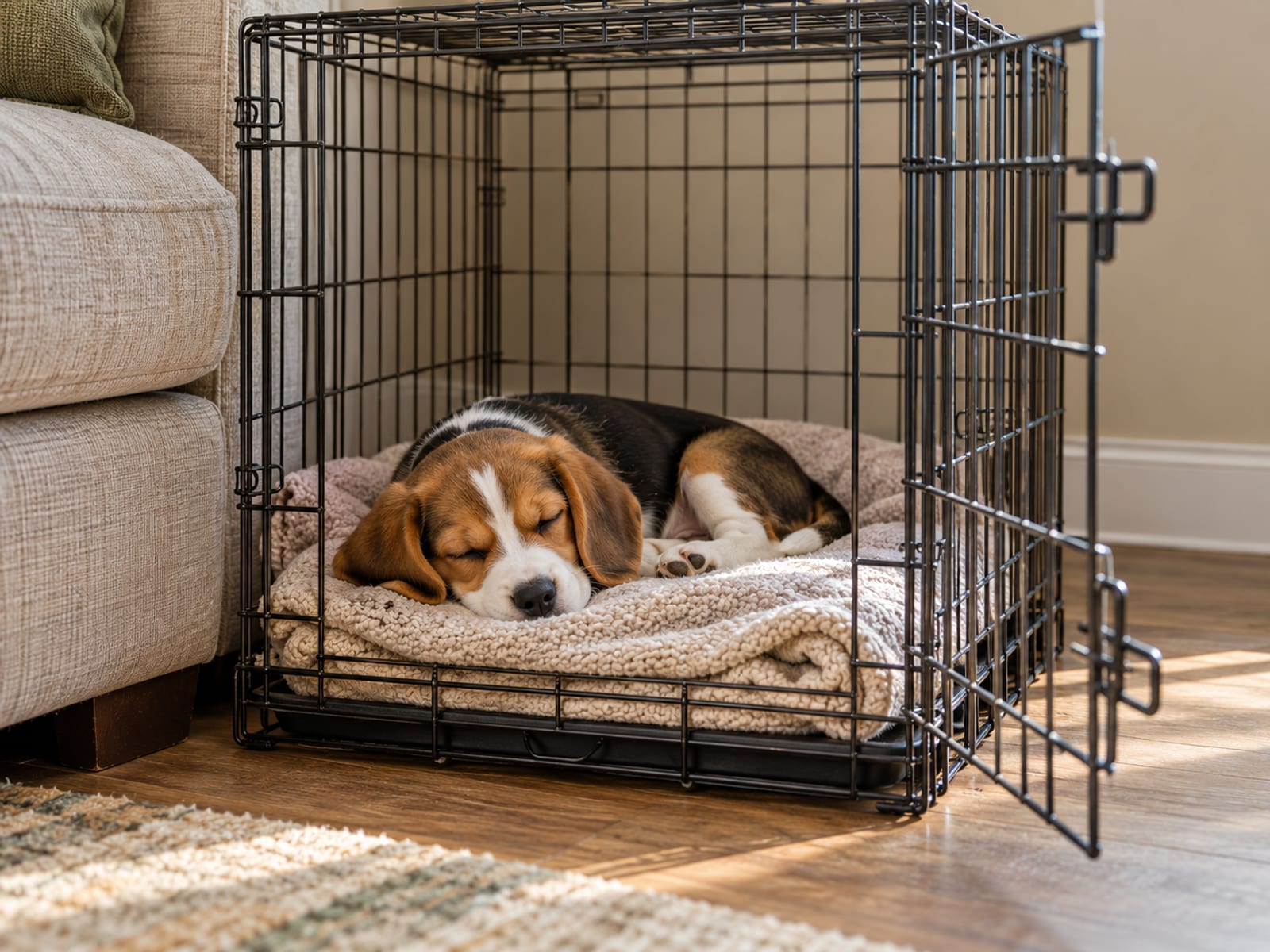
- Predictable care. Keep meals, sleep, bathroom breaks, play and quiet periods reasonably regular. If you're building a crate routine or a bathroom routine at the same time, our pages on crate training and potty training a puppy fit right in.
- Your presence means good things. Pair being near you with food, toys, praise and safe things to do. Let your puppy earn some of its food through short check-ins and training games.
- Very short, easy games. Reward your puppy for answering to its name, walking toward you, touching your hand with its nose, or settling down nearby. Keep each game to a minute or two and stop while it's still going well.
- Hand-feeding, if you like it. Hand-feeding is one way to deliver rewards. It isn't required, and nothing shows that it creates a bond on its own, so skip it without guilt if your puppy is nervous about hands.
- Play that stops early. Play in ways your puppy enjoys, and stop while your puppy is still comfortable and interested, not when it's wound up or tired.
- Gentle handling with rewards. Touch a paw, an ear or the collar area, give a treat, and stop if your puppy pulls away or looks worried. You're building comfort for later grooming and vet visits.
- Quiet time nearby. Sit close without demanding anything. Read a book. Let your puppy be near you without being asked to perform.
- New things, added slowly. Introduce a new sound, floor surface or person one at a time and pair it with rewards.
- Protected sleep. Puppies need a lot of rest, and a puppy that skips naps gets cranky and harder to read. Let your puppy leave an interaction whenever it wants.
Throughout, watch for backing away, a tucked tail, freezing, a worried brow, or refusing food. Any of those means ease off, add distance or take a break. Our page on dog body language shows what to look for, and our new puppy checklist covers the first-home basics.
How does reward-based training build trust, and which habits damage it?
Training is a relationship activity, not just a way to get sit and down. The AVSAB 2021 humane dog training position statement recommends reward-based training and says rewards can be praise, petting, play and treats. It also says boundaries should be taught with structure and routine, without fear, intimidation or pain. AVSAB says reward-based methods have advantages for welfare, for training results and for the dog-human relationship.
AVSAB cites Hiby, Rooney and Bradshaw (2004), who found the highest obedience in dogs trained only with rewards and the lowest in dogs trained only with aversive methods. These studies are about training methods and welfare. They don't give a bonding timeline.
If you want a starting point for skills, our pages on positive reinforcement dog training, puppy training tips and how to train a dog go into the how-to.
Now the other side. These habits wear down trust, and most of them come from good intentions:
- Giving too much attention all at once.
- Forcing cuddles, handling, greetings or play.
- Punishment, shouting, leash jerks, pain or intimidation.
- Changing the household rules from day to day.
- Flooding a fearful puppy with new experiences.
- Ignoring body language.
- Keeping your puppy away from every safe new experience.
- Skipping naps and quiet recovery time.
If you've yelled, and most of us have at some point, you can rebuild from there. Go back to the predictable routine, reward the small things your puppy gets right, and give it space.

How do you socialize your puppy at its own pace, even before vaccines are finished?
Socialization is about helping your puppy stay comfortable around people, animals, handling, sounds, surfaces and places. It is not the same as maximizing greetings. The commonly cited sensitive period runs from roughly 3 to 14 weeks, and positive experiences are especially important before about 16 weeks, according to the AVSAB socialization statement.
End each outing or session before your puppy is overwhelmed. If your puppy stops taking treats, pulls toward home or goes stiff, you've gone a little past what it can handle, and that's useful information, not a failure.
What about the vaccine series? AAHA says there's no medical reason to delay all puppy classes or social exposure until vaccination is complete, as long as sick animals are avoided, hygiene is practiced and your puppy's health plan is appropriate. Ask your veterinarian about disease risk where you live. Safe options include:
- Carrying your puppy outside, or using a stroller.
- Watching people, traffic and other dogs from a distance.
- Meeting healthy dogs you know.
- Attending a puppy class your vet is comfortable with.
AVSAB adds a clear caution: avoid dog parks and places heavily trafficked by dogs of unknown vaccination status. Before you introduce your puppy to another dog, our page on how to introduce dogs walks through a slow, safe start.
What if your puppy is shy, scared or from a rescue?
Slow down, and let your puppy lead. That is the whole idea, and everything else is detail.
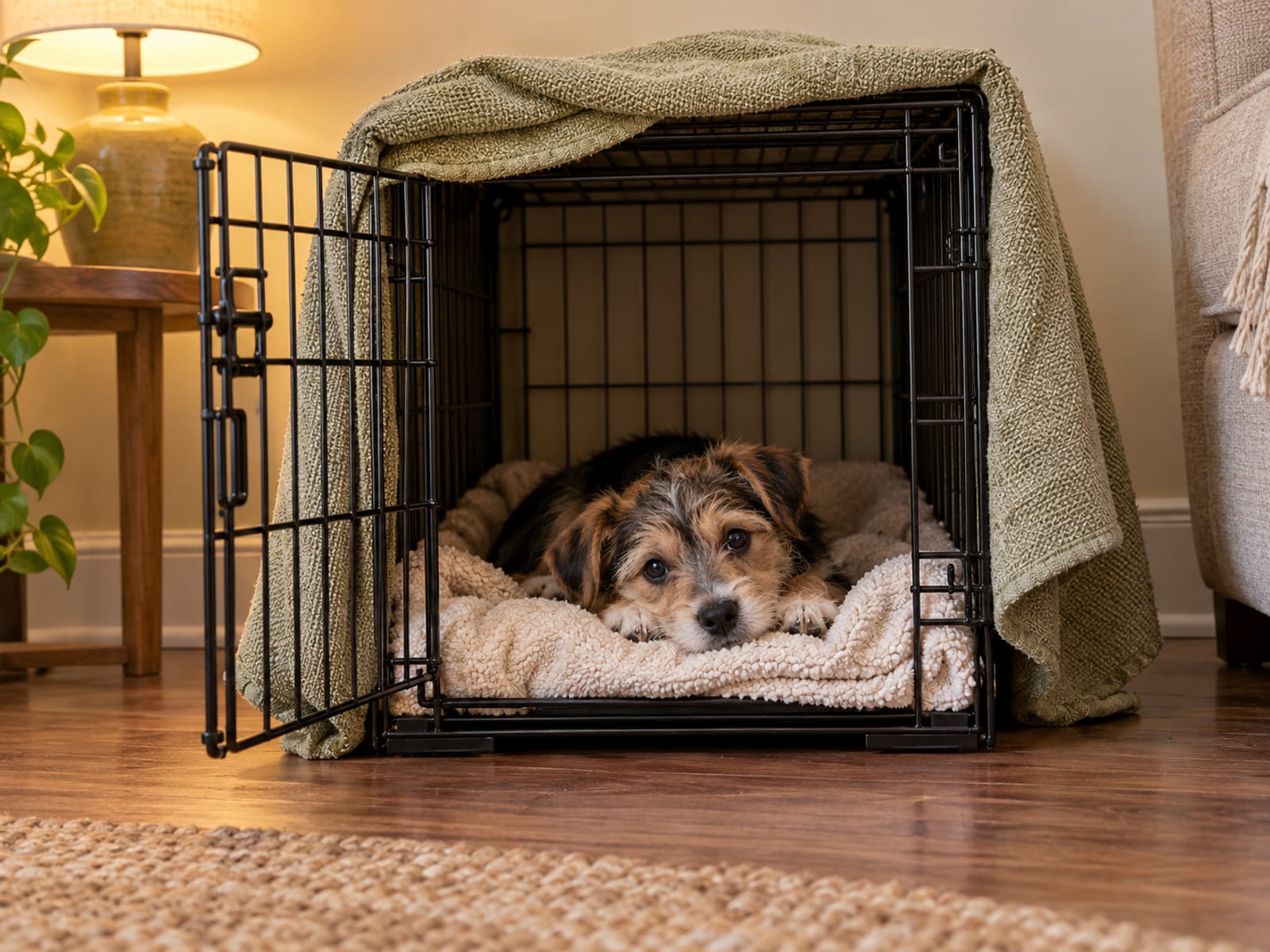
- Give your puppy a quiet retreat it can go to anytime.
- Sit nearby without reaching, cornering, staring or calling its name over and over.
- Let your puppy choose to come to you.
- Reward small voluntary steps: looking at you, turning toward you, moving closer, resting near you.
- Keep new experiences brief and below the point where fear rises.
- Stop, or add distance, when your puppy freezes, backs away, tucks its tail, shows a worried brow or can't take food.
- Skip forced greetings, flooding, punishment and physical restraint for social contact.
- Repeat manageable experiences over time.
AAHA says there is no required timeline for a puppy to join in. If your puppy doesn't want to take part after 5 to 10 minutes, end the session and try another day. That is a guideline for a single session, not a promise that bonding will happen in 5 to 10 minutes or in any set number of days.
More exposure isn't always the answer. AAHA warns that continuing to expose a fearful puppy can sensitize it, and says extreme fear calls for a veterinary behavior consultation. If fear runs high, I'd call your vet before adding anything new.
What are the signs your puppy trusts you, and what does eye contact show?
Progress usually looks ordinary. You might see your puppy:
- Walk up to you on its own.
- Hold a loose, relaxed body, with soft eyes and a loose tail.
- Look at you, then look away, then look at you again, as if checking in.
- Accept gentle handling and stay for it.
- Play with you.
- Bounce back faster after something startling.
No single behavior proves trust. Look for several of these across the week, and watch the trend.
Eye contact gets more credit than it deserves. It's welcome when your puppy offers it with a relaxed body, and it should never be forced. Nagasawa and colleagues, writing in Science in 2015, studied 30 dog-owner pairs and ran a separate experiment with 30 dogs. They found that longer dog-to-owner gaze was associated with changes in urinary oxytocin. That is an association under specific conditions. It doesn't show that staring at a puppy creates attachment, and it doesn't mean a puppy that avoids eye contact lacks a bond. If your puppy looks away, let it.
When should you ask for help, and how do you choose a trainer or behavior professional?
Get help if any of these are true:
- Fear is intense or won't let up.
- Your puppy is withdrawing from interaction.
- Your puppy can't recover from ordinary events.
- There's biting or aggression that creates a safety concern.
- Things are getting worse even though you're handling it humanely.
- A medical problem could be part of it. Pain and illness can change behavior, so your vet is often the first call. Use our vet directory, or the emergency vet directory if something is urgent.
Who you call depends on the problem, and titles can be confusing:
- A certified professional dog trainer helps with puppy skills, manners, socialization plans and prevention. CCPDT says CPDT-KA means passing an exam and having at least 300 hours of training experience. CPDT-KSA adds a skills assessment.
- A behavior consultant handles more complex cases. The title is not protected, so ask about education, credentials, experience and methods. IAABC offers the Certified Dog Behavior Consultant (CDBC) credential, which calls for at least three years of consulting on complex cases, and the Accredited Dog Trainer (ADT) credential.
- A veterinary behaviorist (DACVB) is a board-certified veterinarian who can look for medical contributors and prescribe medication when it's appropriate. AVSAB's consultant guide describes the residency and board exam behind it.
- A CAAB is a Certified Applied Animal Behaviorist with graduate-level training in behavior. A CAAB can't prescribe medication.
Before you hire anyone, ask these questions:
- Which credentials do you hold?
- How much experience do you have with puppies and with fear?
- What methods and equipment do you use?
- What do you do when a puppy is afraid?
- Do you use punishment, intimidation, prong or choke collars, electronic collars, leash jerks or flooding?
- When do you refer to a veterinarian or a veterinary behaviorist?
AVSAB says to choose reward-based, humane, evidence-based practice and to steer away from anyone who promotes aversive methods. You can start with our trainer directory. If your puppy gets anxious when left alone, dog separation anxiety is the page to read next.
Questions people ask about bonding with a puppy
These are the questions owners ask most, with short answers.
How long does it take for a new puppy to bond with you?
No evidence supports a single timeline. Puppies differ in temperament and past experience, and trust builds through repeated safe experiences. Judge by progress, such as more voluntary approach and quicker recovery from surprises, not by the calendar.
How can you tell if your puppy is bonded to you?
Look for voluntary approach, a relaxed body, checking in with you, accepting gentle handling and a willingness to play. No one behavior proves it, and following you around doesn't always mean secure attachment. Our dog body language page helps you tell comfort from worry.
Does hand-feeding or sleeping together build a bond?
Hand-feeding is one option for delivering rewards, but it isn't required, and nothing shows it creates a bond by itself. The same goes for where your puppy sleeps. Protected sleep matters, and your puppy should be able to leave when it wants to.
Can I socialize my puppy before the vaccines are done?
Ask your vet about local disease risk first. AAHA supports carefully managed exposure before the series is complete when sick animals are avoided and hygiene is practiced, while AVSAB says to skip dog parks and other places busy with dogs of unknown vaccination status.
What is the next step?
Pick one thing from this page and do it tonight. Reward your puppy for looking at you, or sit on the floor for five quiet minutes with a chew nearby and let your puppy decide what to do. Tomorrow, add one more small piece. If you want more to build on, start with our new puppy checklist and puppy training tips, and walk your puppy at a sensible pace using how often to walk a dog. If you ever feel stuck, there's no shame in calling a qualified trainer or your vet. Most puppies and owners get there with a little patience and a lot of small, calm wins.
Sources
- American Animal Hospital Association: AAHA's new-puppy guidance
- American Animal Hospital Association: no medical reason to delay all puppy classes or social exposure
- American Veterinary Society of Animal Behavior: AVSAB 2021 humane dog training position statement
- American Veterinary Society of Animal Behavior: AVSAB puppy socialization statement
- American Veterinary Society of Animal Behavior: AVSAB's consultant guide
- Certification Council for Professional Dog Trainers: CCPDT
- IAABC: IAABC
- PubMed: Nagasawa and colleagues