
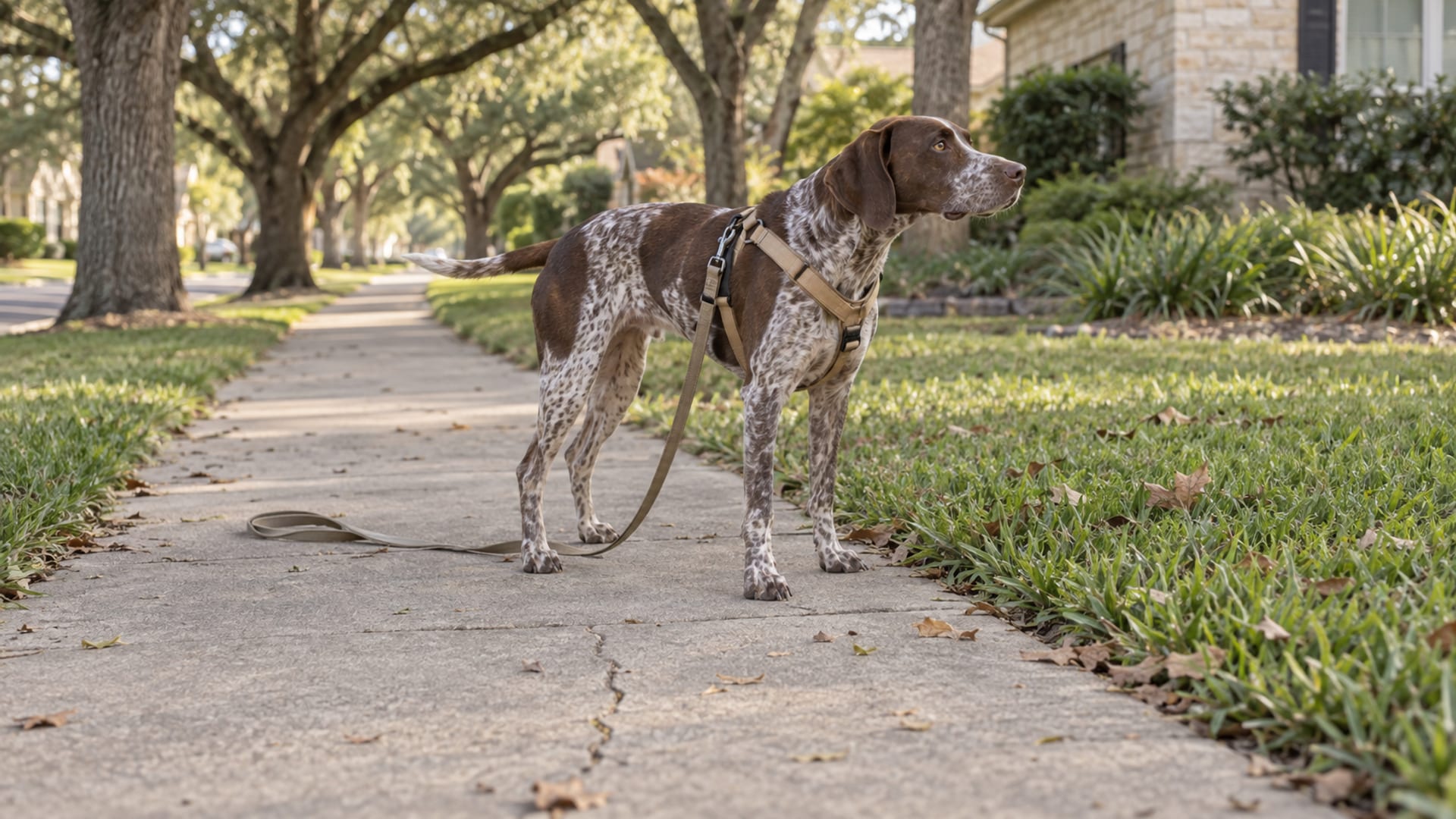
Maybe you work long days and wonder whether one walk before work and one after is enough. Maybe you just brought home a puppy, or adopted a dog who seems to have endless energy, or your older dog has started lagging behind on the route you have walked together for years. Underneath the question about minutes is a quieter one: am I giving my dog what they need?
For most healthy adult dogs, the ASPCA suggests aiming for 30 to 60 minutes of activity a day, based on health and age. That does not have to be one long walk. Two or three shorter walks, plus play, sniffing and a little training, all count. Puppies need several short outings, seniors usually need a gentler pace, and every dog needs extra care in the heat.
If your dog is weak, confused, vomiting, collapses, has a seizure or struggles to breathe after a walk in the heat, go to an emergency vet now. Those are heatstroke warning signs.
The ranges below come from the ASPCA, the American Animal Hospital Association (AAHA), the American Kennel Club (AKC), VCA Animal Hospitals, the AVMA, Cornell and Texas A&M veterinary colleges and the Merck Veterinary Manual, linked in each section.
Key takeaways
Tap a card to bring it forward.
- A healthy adult dog usually needs about 30 to 60 minutes of activity a day (ASPCA), split however suits you and your dog.
- There is no single right number for every dog. AAHA says evidence is lacking for an ideal exercise program; age, breed, fitness, health and weather all change it.
- Puppies do best with several short, self-paced outings. Hold off on jogging with a puppy until they are physically mature.
- Seniors still need daily movement, usually slower and shorter. New stiffness or limping after walks is a reason to see your vet.
- In heat, walk in the coolest part of the day. If you cannot hold your hand on the pavement for about 10 seconds, it is too hot for paws (Cornell).
- A dog walker can cover a midday break on long workdays. Rover's national average is $21.45 for a 30-minute walk.
How much walking does a dog need?
Start with the dog in front of you. The ASPCA says exercise needs vary with breed or mix, sex, age and health, and the 2021 AAHA weight-management guideline states that evidence is lacking to describe an ideal exercise program for dogs. So, the numbers below are starting points from named sources, not prescriptions.
Tap or hover a row to highlight it.
| Dog | Starting point | Source |
|---|---|---|
| DogHealthy adult, average energy | Starting point30 to 60 minutes of activity a day, not necessarily one walk | SourceASPCA; AAHA says at least 30 minutes, adjusted for fitness and breed |
| DogLower-energy adult | Starting pointSome inactive breeds may do well with one 30-minute walk a day | SourceVCA |
| DogHigh-energy adult | Starting pointAn active dog such as a Husky may need two to three longer walks | SourceVCA |
| DogAdult starting from little exercise | Starting pointBegin with 10 to 15 minutes, or 5 minutes three times a day, building toward 30 to 45 minutes | SourceAKC; AAHA example for an overweight dog |
| DogPuppy | Starting pointShort, frequent outings; for example, 10 minutes two or three times a day at 10 weeks | SourceAKC |
| DogSenior | Starting pointGentler, shorter, slower walks; no set number of minutes | SourceAKC |
Size alone is not a reliable guide. A fit small terrier can need more activity than a laid-back giant breed. Flat-faced breeds, overweight dogs, and dogs with heart, breathing or joint problems often tolerate less exercise and less heat, and for them your vet should set the target.
A walk also does more than burn energy. New smells, sights and a few minutes of training give your dog something to think about, and that mental work adds to physical exercise rather than replacing it.
One walk a day or two?
One walk a day can be enough for some healthy, lower-energy adults. VCA gives one 30-minute walk as an example for some inactive breeds, and two to three longer walks for an active dog like a Husky. Many households land on two walks, morning and evening, with play in between.
A few clues that your dog may need more: restlessness in the evening, trouble settling, or chewing things out of boredom. The ASPCA links boredom to destructive chewing and suggests outlets for both mind and body. More exercise does not fix every behavior problem, though. A dog who is anxious or distressed may have a medical or behavioral cause, and running them to exhaustion is not the answer. For behavior questions, positive reinforcement dog training is a good place to start, including for teaching calm leash walking.
A yard helps, but it does not do everything a walk does. Walks bring new smells, practice and time with you.
Puppies: short, frequent and self-paced
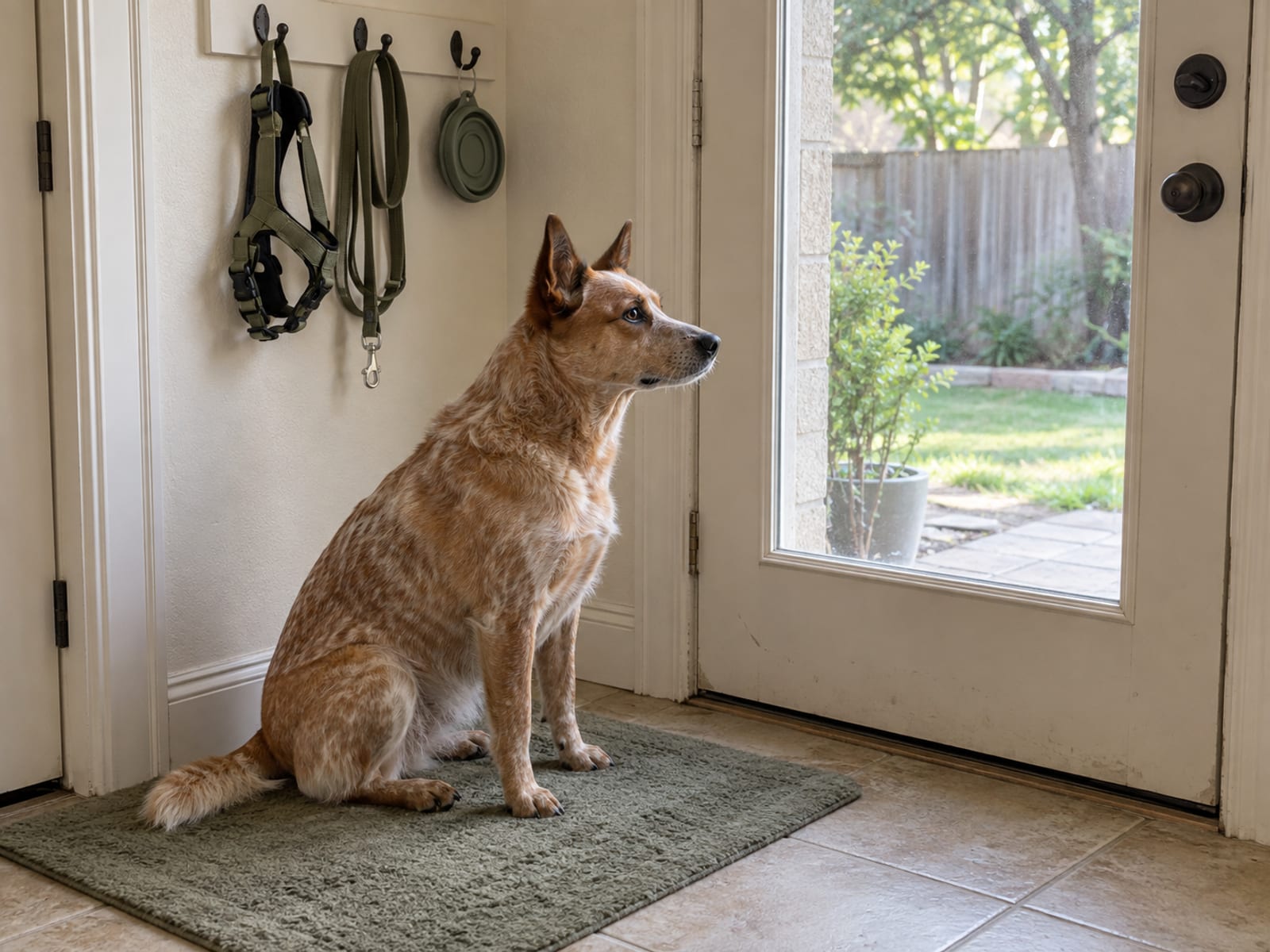
Puppies need lots of short outings: toilet trips, a little exploring, leash practice, play and plenty of rest. The AKC gives a 10-week-old puppy as an example: about 10 minutes, two or three times a day, and says several short sessions are safer than one long one. You may also hear the "five minutes per month of age, once or twice a day" rule. The AKC reports it as a rough guide from a veterinary researcher; treat it as a loose ceiling, and let your puppy's energy, pace and tiredness come first.
Do not take a growing puppy on long forced marches or runs. The AKC says overexertion can injure developing bones and tendons, and gives rough ages to wait before jogging on leash:
- Small breeds: about 6 to 8 months
- Medium breeds: about 12 months
- Large breeds: about 12 to 18 months
- Giant breeds: about 18 to 24 months
These are broad guides, not a green light on a birthday. Ask your vet about your own puppy. A Norwegian study of four large and giant breeds, published in Preventive Veterinary Medicine, linked daily stair use in the first three months with a higher risk of hip dysplasia, and off-leash exercise in that period with a lower risk. That is an association, not proof that stairs cause it. The practical takeaway: favor short, voluntary, low-impact play over repeated forced high-impact exercise while your puppy grows.
For more on the first weeks with a new puppy, see these puppy training tips.
Senior dogs and dogs with health problems
Older dogs still benefit from daily movement. The AKC suggests a slower pace and shorter, gentler walks, and its sample fitness plan for seniors or dogs just starting out includes at least 15 minutes per session, 10 times a week, for three months. The Merck Veterinary Manual says mild to moderate daily exercise helps dogs with osteoarthritis, while strenuous exercise can make joint pain worse.
Shorten or stop the walk if your senior shows stiffness, limping, stopping or lying down, hard panting, or trouble with curbs. New stiffness after walks, trouble getting up, difficulty with stairs or jumping, or less interest in play are worth a vet visit. They can be signs of arthritis, but only an exam can say.
If your dog has hip dysplasia, heart disease or a breathing problem, the AKC recommends a routine designed with your vet rather than a general target.
Walking in the heat
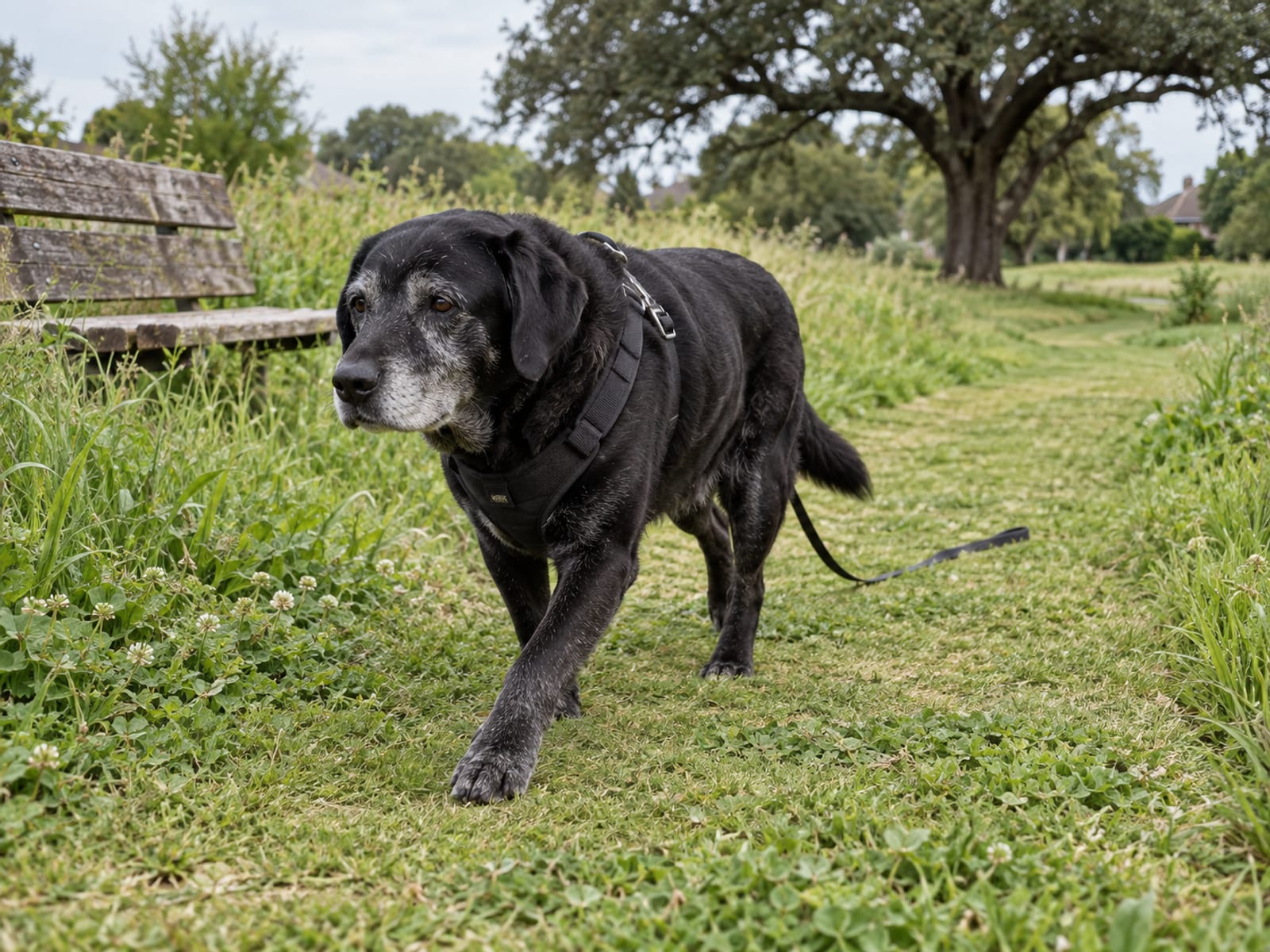
Summer changes everything. The AVMA advises against walks, runs or hikes during the hottest part of the day or on particularly warm days, and recommends frequent breaks and water. Texas A&M advises avoiding walks and strenuous activity in hot, humid weather.
There is no single safe temperature for every dog, because humidity, sun, coat, weight, age, breed and how used to the heat your dog is all change the risk. What you can do:
- Walk early in the morning or later in the evening, in the shade and on grass where you can.
- Check the pavement. Cornell suggests putting your hand or bare foot on it: if you cannot keep it there for about 10 seconds, it is likely too hot for your dog's paws.
- Bring water and take breaks.
- Turn back early at the first signs of heat stress: heavier panting, looking for shade, slowing down or stopping, drooling, whining or not wanting to play.
- On the hottest days, shorten the walk and swap in indoor games, food puzzles or a short training session.
Flat-faced breeds, overweight dogs, older dogs, dogs with heart or breathing disease, and dogs with thick or dark coats overheat more easily, according to Cornell. Every dog can.
If your dog starts to overheat: move them into shade or air conditioning, offer water, wet them with cool or lukewarm water and use a fan. Texas A&M says not to use ice water or put your dog in ice. If you see weakness, confusion, collapse, a seizure, vomiting, bloody diarrhea or trouble breathing, keep cooling on the way and go straight to an emergency vet. Heatstroke is a veterinary emergency.
If you work long days: dog walkers and what they cost
A dog walker makes sense when you cannot get home for a midday break, you have a puppy who needs frequent short outings, your vet has asked for a steady gentle routine, or you are temporarily unable to walk your dog yourself. AAHA lists hiring a pet sitter or dog walker as one way to give a dog daytime company and exercise.
As of September 2026, Rover reports a national average of $21.45 for a 30-minute walk, with ranges of $16 to $25 for a 15- or 30-minute walk and $29 to $38 for an hour. Walkers set their own rates, so local prices vary. Thumbtack gives a wider estimate of $20 to $40 an hour. At Rover's range, one 30-minute walk every weekday works out to about $80 to $125 a week before fees.
When you compare walkers, ask about the length of the walk, solo or group walks, extra charges for a second dog, holidays or puppies, and the cancellation policy. You can look for walkers near you in the DogServ directory.
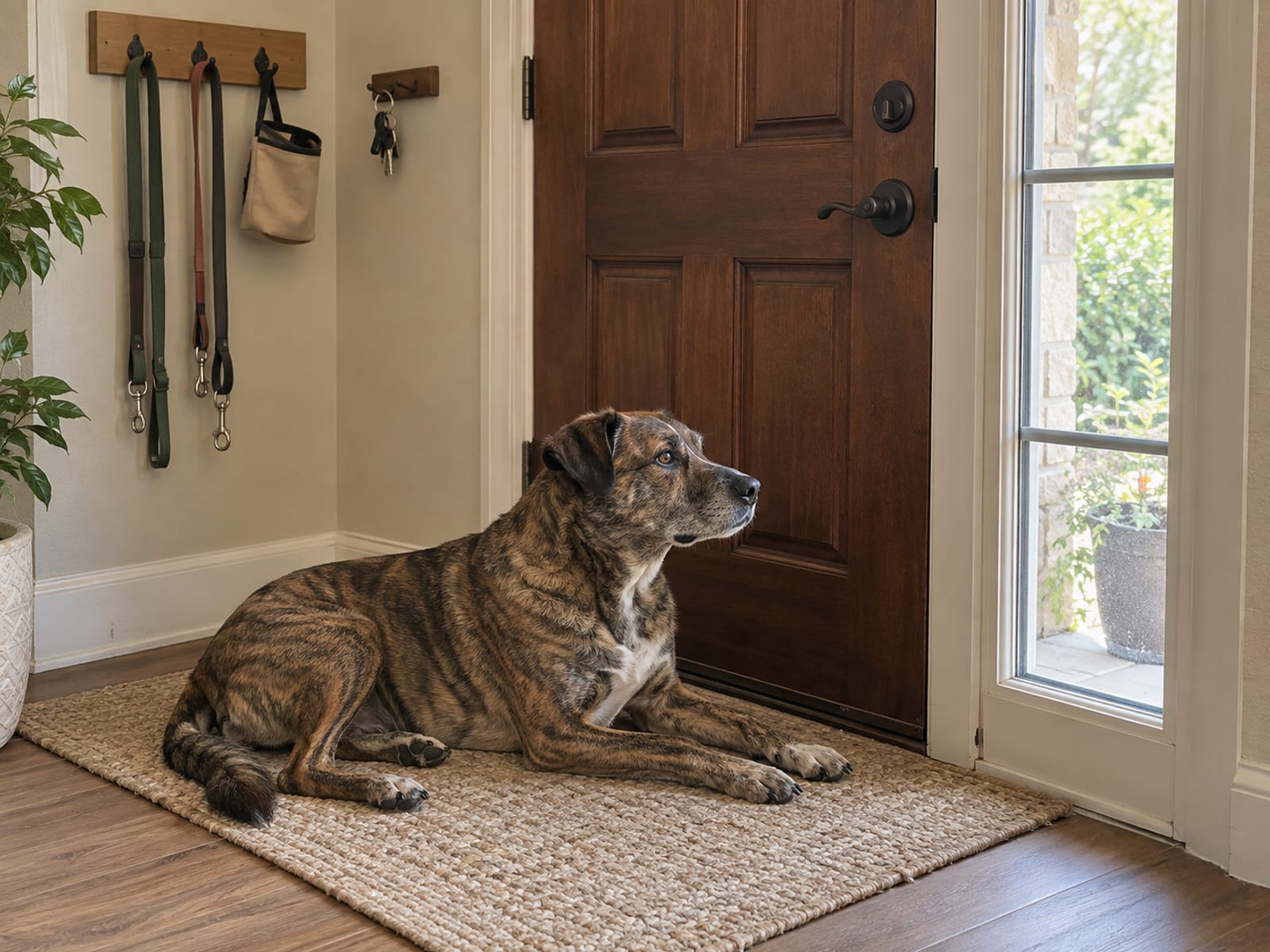
Building a routine that fits your dog
The simplest way to find the right amount is to start modestly, watch how your dog recovers and adjust slowly.
A first two weeks of walking
Day 1
Walk at your dog's comfortable pace for a length that suits their age and fitness. Note the time, the weather, the pace and how your dog seems afterward.
The first week
Keep the routine steady. Let part of each walk be sniffing and exploring. A dog who recovers quickly, sleeps well and is eager the next day is coping.
The second week
Change one thing at a time, a few more minutes or a second walk, not everything at once. Skip the hottest hours.
After two weeks
If you are still unsure what is right, take your notes to your vet.
"My dog has always done this walk and been fine" can be true. A healthy, conditioned dog who finishes comfortably and recovers quickly is handling their routine. But age, weight, fitness, illness, a new medication or a hotter, more humid day can change what is safe. AAHA and Texas A&M both advise building up gradually. If your dog starts slowing down, panting hard for longer, limping or stiffening on a familiar route, treat it as new information, not just a bad day.
Signs a walk was too much
Tap or hover a row to highlight it.
| What you see | What to do |
|---|---|
| What you seeAfter heat or exercise: trouble breathing, nonstop heavy panting or drooling, weakness, confusion, seizure, collapse, vomiting, bloody diarrhea | What to doEmergency vet now, cooling your dog on the way (Cornell, Texas A&M) |
| What you seeCan't stand or walk, an obvious fracture, or limping after a fall or accident | What to doEmergency vet now (VCA) |
| What you seeSudden limping or pain that does not ease within about an hour, or pain when you touch the neck or back | What to doCall your vet today (VCA) |
| What you seeStiffness after walks that keeps happening, trouble getting up, stairs or jumping, less interest in play | What to doBook a vet visit soon (Merck) |
| What you seePants harder or slows down on a warm day, then recovers fully in the shade with water | What to doWatch at home and walk shorter or cooler next time (Texas A&M) |
The VCA urgent-care guidance covers limping and pain. If you are not sure which row your dog fits, call your vet. Do not give your dog human pain medicine.
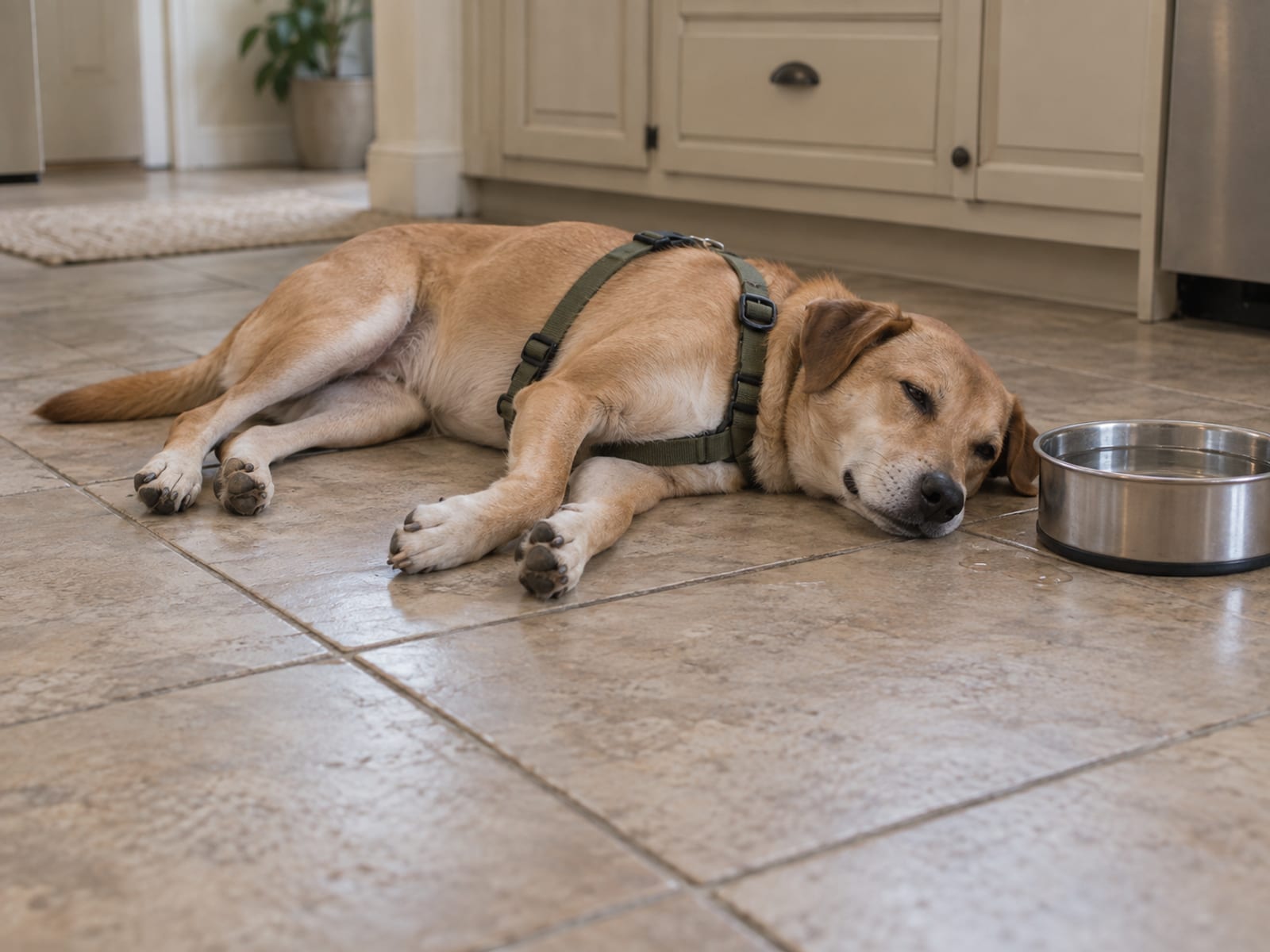
Mistakes to avoid
- Weekend warrior walks. A long hike after a quiet week risks soreness and injury. Build up gradually.
- Jogging with a young puppy. Wait for physical maturity and your vet's okay.
- Walking at midday in summer just to hit a number. Cooler hours matter more than minutes.
- Hot asphalt. Do the 10-second hand test.
- Aiming for exhaustion. A tired dog is not the goal; a dog who recovers well and wants to go again tomorrow is.
- Leash jerks or punishment for stopping. A puppy who stops may be tired, unsure or scared. AVSAB recommends reward-based methods only, and dog training mistakes covers why corrections backfire.
Check what you learned
Quick check: walking your dog
Questions about walking your dog
Is one walk a day enough for a dog?
For some healthy, lower-energy adults, it can be. VCA gives one 30-minute walk as an example for some inactive breeds and two to three longer walks for an active dog like a Husky. Look at your dog's total daily activity, age, health and behavior, not only the number of walks.
How long should I walk my puppy?
Several short, positive outings rather than one long walk. AKC's example for a 10-week-old is about 10 minutes, two or three times a day. Hold off on jogging until your puppy is physically mature, and ask your vet about your puppy.
Is it too hot to walk my dog?
There is no single cutoff temperature. Avoid the hottest part of hot or humid days, walk in shade with water, and skip pavement you cannot hold your hand or bare foot on for about 10 seconds.
How do I know if a walk was too much?
Slow down or stop for reluctance, lagging, hard panting, repeated stopping, limping, stiffness or trouble with curbs. Weakness, confusion, vomiting, bloody diarrhea, a seizure or collapse after exercise in the heat need an emergency vet.
Do senior dogs still need walks?
Yes, if they are willing and able, usually slower, shorter and gentler. Have new stiffness, limping or trouble getting up checked by your vet.
Does a dog walker help if my dog is home alone all day?
It can add a toilet break, company, activity and something new to sniff in the middle of the day. Rover's national average in September 2026 was $21.45 for a 30-minute walk, and local rates vary.
Where to start this week
Pick two times a day that work for you and your dog, avoid the hottest hours, and write down how long you walked and how your dog seemed afterward. After a week, adjust one thing. For a puppy, a senior, a flat-faced breed or a dog with a health condition, ask your vet what target makes sense before you add more.
For a general health check you can do at home, see signs of a healthy dog. To find a dog walker or a vet near you, search the DogServ directory, and for anything else, reach me through the contact page.
Sources
- American Animal Hospital Association: AAHA
- American Animal Hospital Association: AAHA
- American Kennel Club: AKC
- American Veterinary Medical Association: AVMA
- ASPCA: ASPCA
- ASPCA: ASPCA
- Cornell University College of Veterinary Medicine: Cornell
- Merck Veterinary Manual: Merck Veterinary Manual
- PubMed: Preventive Veterinary Medicine
- Rover: Rover
- Texas A&M College of Veterinary Medicine: Texas A&M
- Thumbtack: Thumbtack
- VCA Animal Hospitals: VCA
- VCA Animal Hospitals: VCA