

How to Introduce Dogs: The First Meeting, the First Days and the Signs to Watch
By Cal Hewitt · Published
Training
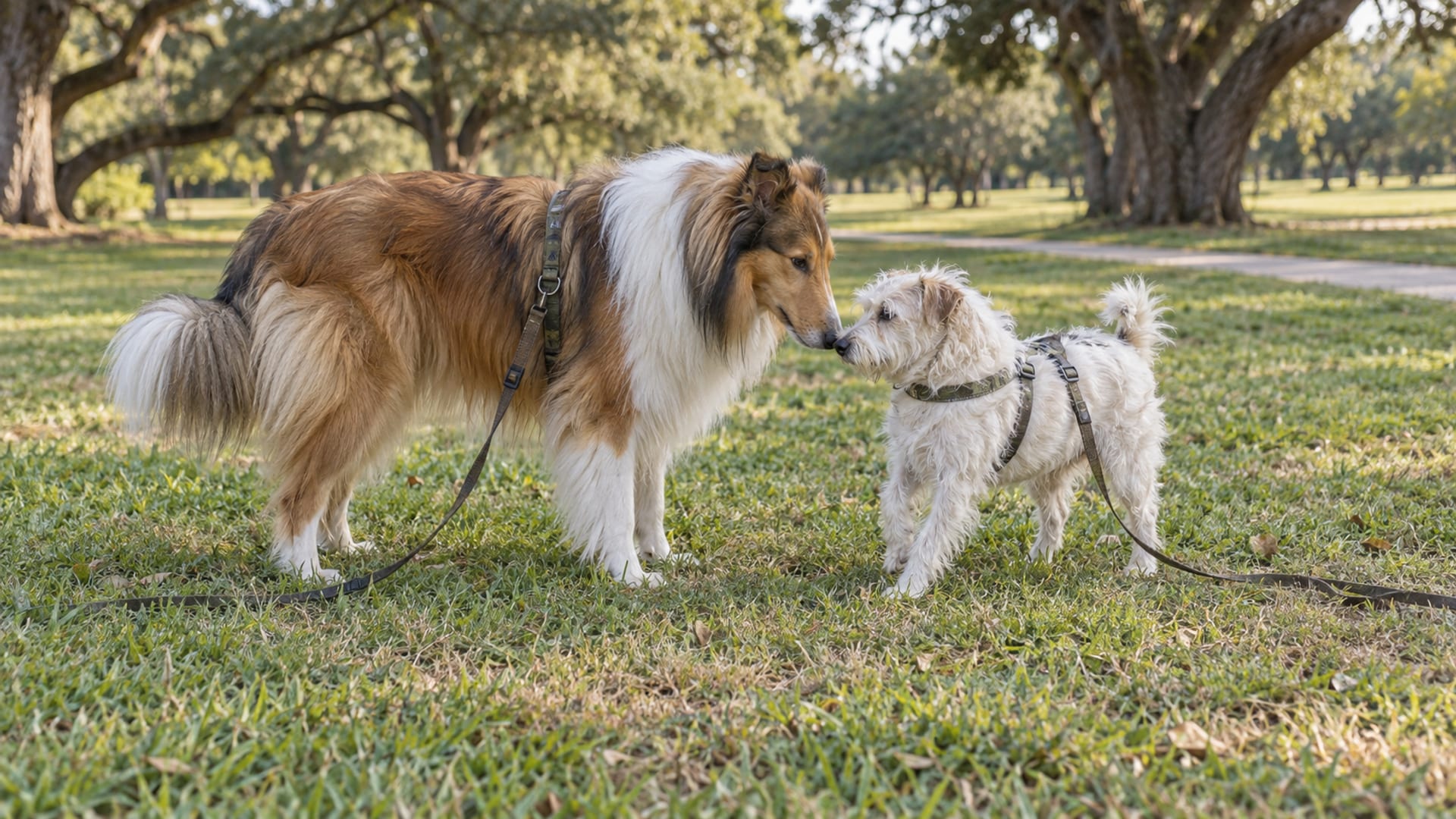
Introduce dogs slowly, and start outdoors on neutral ground. Give each dog its own handler if you can, walk them side by side with enough space that both stay relaxed, keep the leashes loose, and end the first session while it is still calm. At home, use gates, crates or separate rooms, feed the dogs apart, put away high-value toys and supervise every interaction. That is the plan the American Kennel Club's guide to introducing a new dog lays out, and each step is below in the order you'll need it.
If you're worried the dogs will fight, or that your first dog will feel pushed out of its own home, that worry makes sense. A slow start protects both dogs, and it gives you time to read what each one is telling you.
Key takeaways
Tap a card to bring it forward.
- Hold the first meeting outdoors on neutral ground, with one handler per dog when possible.
- Walk the dogs in parallel with loose leashes, and let them get closer only while both stay relaxed.
- At home, use gates, crates or separate rooms, feed separately and supervise every interaction.
- Relaxed bodies, play bows and easy disengagement are good signs. Stiffening, hard stares, growling or lunging mean add distance and pause.
- There is no fixed timeline, so judge progress by each dog's behavior.
- After a serious fight, a bite or repeated escalation, bring in a qualified behavior professional.
Where should two dogs meet first, and what should you set up beforehand?
The first meeting works best somewhere neither dog thinks of as home. AKC recommends a neutral outdoor location for the first introduction, and that rules out your resident dog's house and its yard too. A yard feels like open space to us, but to the dog who lives there it's part of its territory. Save the yard for later, once the dogs have had a calm walk together.
Pick a place with room to spread out: a quiet street, a park path at an off hour, or an open lot where you can keep plenty of distance and change direction easily.
Before the meeting, line up a second person. AKC suggests one handler per dog when possible, because it's much harder to read two dogs and manage two leashes on your own. Then get the house ready before the new dog ever walks in. Set up separate beds, crates, gates or pens, and a quiet retreat spot for each dog. Put out more than one water bowl.
How do you run the first walk together?
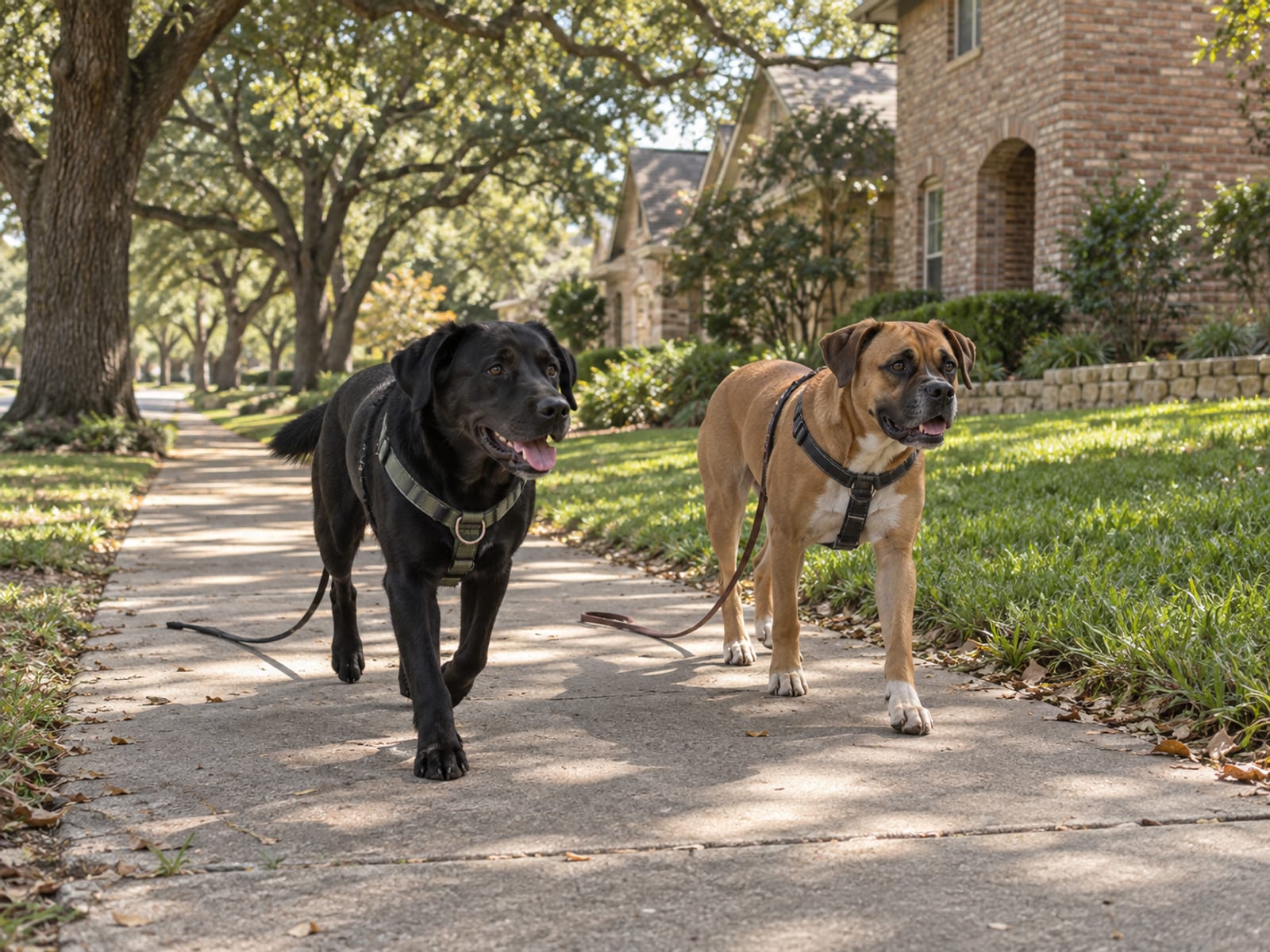
Start far enough apart that both dogs can still walk, sniff the ground and respond to you. If either dog is locked onto the other and can't move forward, you're too close. Then walk in the same direction, parallel to each other, with the handlers keeping the gap steady. Walking side by side lets the dogs take in each other's presence and scent without a head-on greeting, which is why AKC favors it at the start.
Keep the leashes loose, and don't drag either dog toward the other. The American Veterinary Society of Animal Behavior (AVSAB) humane training position statement also lists leash corrections among the methods that should be avoided, so if a dog pulls or stares, add distance instead of jerking the leash.
As the walk goes on, you can let the gap shrink a little at a time. Allow brief sniffing only if both dogs stay relaxed, and move them apart again at the first sign of tension or avoidance. Keep this first session short. In its guidance on helping an adult dog adjust to a new home, AKC describes the first neutral-ground introduction as lasting a few minutes. End it while things are still going well.
How do you bring the dogs home after the walk?
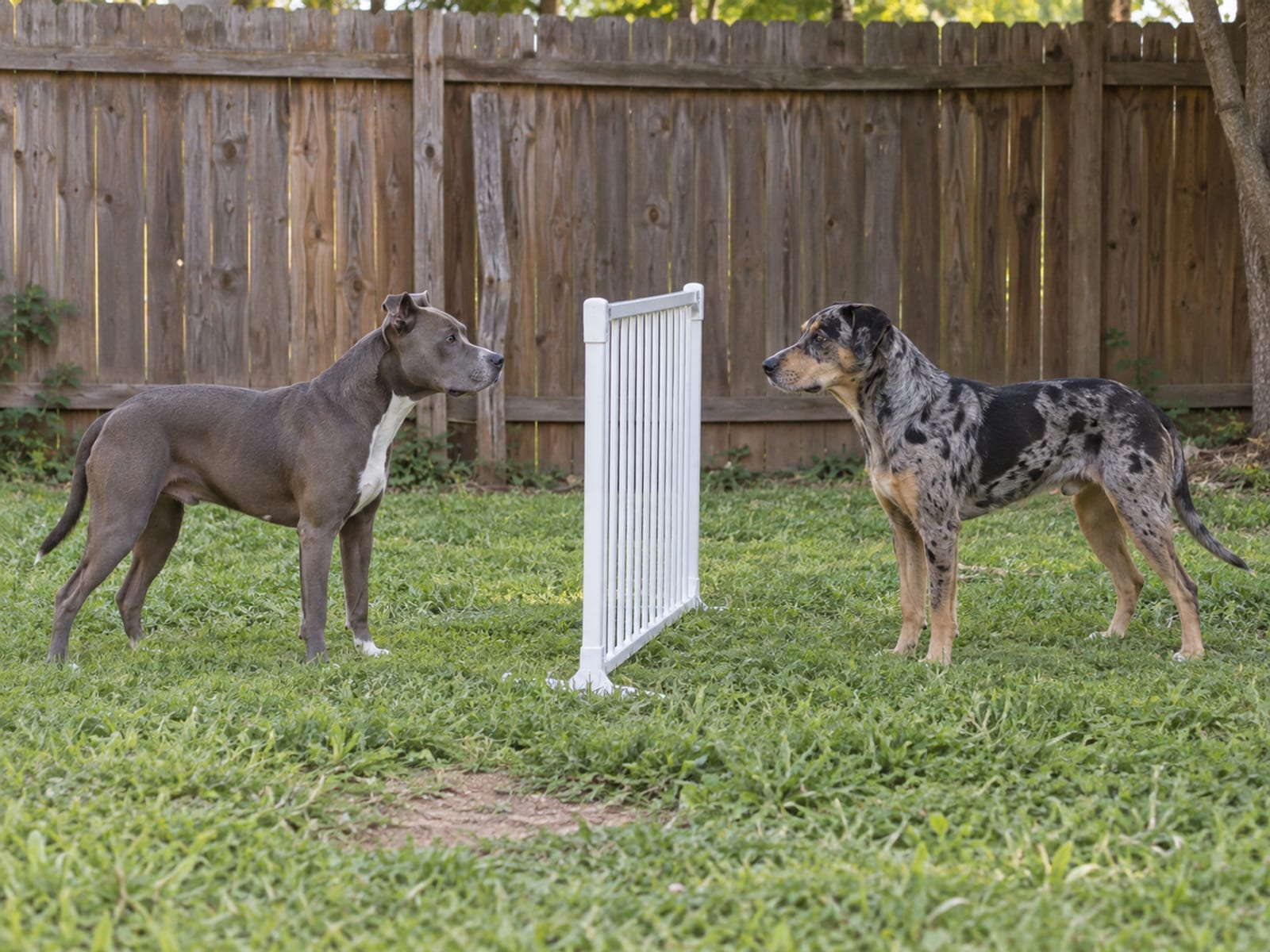
Once the outdoor meeting has been calm, AKC suggests walking into the home together. From that moment, use your gates, crates and pens so the dogs can take breaks from each other. A baby gate across a doorway is one of the most useful tools you have: the dogs can see and smell each other and practice being calm in the same space, with no physical contact. Our guide to crate training covers making the crate a comfortable place to rest.
Keep the first shared sessions indoors short, and end them before either dog gets agitated. Don't assume a good walk means a good evening. Dogs who were relaxed outside can be more tense inside, where the resident dog's bed, bowls and people are.
This is also where the worry about the first dog comes in. AKC's guidance says to keep each dog's routine and give each one individual attention, and to give the resident dog regular breaks from the newcomer. Walks, meals and quiet time with you shouldn't disappear just because there's a new dog in the house. When nobody can supervise directly, keep the dogs separated. If you're also working on how either dog handles time alone, our page on dog separation anxiety covers gradual alone-time routines.
How should you handle food, toys, beds and crates in the first weeks?
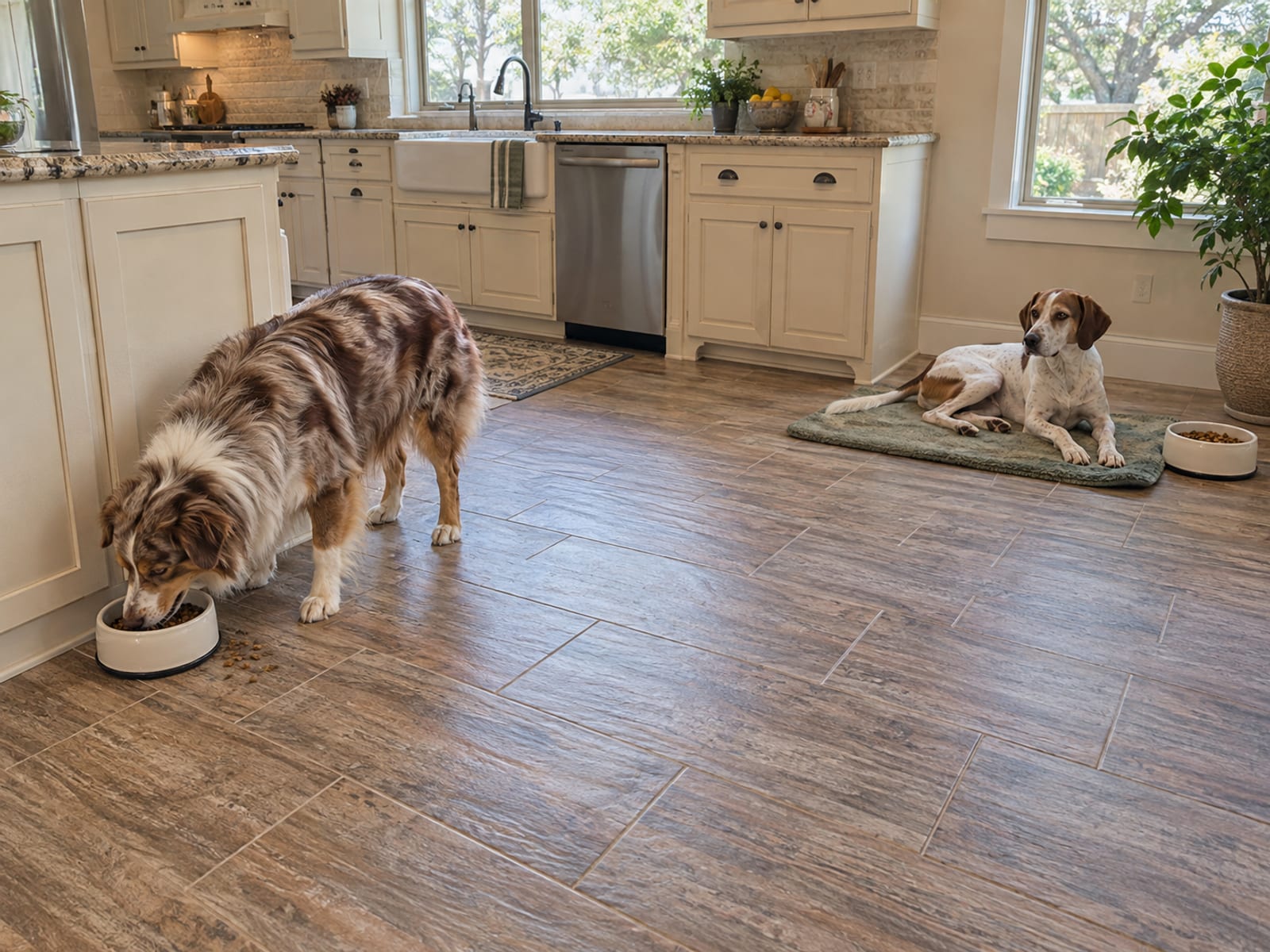
Food and favorite things are where a lot of early conflict starts, so manage them before they become a problem. AKC recommends feeding the dogs in separate areas and supervising meals, and it's safest to never leave newly introduced dogs unattended with food. Separate rooms or a closed crate door at mealtime both work well.
For the first weeks, take high-value toys, chews and treats out of shared spaces. Bring them out only when the dogs are apart. Give each dog its own bed and its own crate, placed where the other dog can't crowd it.
Watch for guarding. If your resident dog stiffens, freezes or growls over food, toys, beds or even a person, that tells you where the pressure is. Manage it by separating that resource. If the guarding can't be managed safely at home, that's a reason to bring in a professional. As things improve, widen shared access gradually, and let each dog's behavior set the pace.
What does it look like when the introduction is going well?
AKC lists several signs that point in a good direction, and it reads them in combination: relaxed facial expressions, loose and wiggly movement, play bows, fast wagging with a loose body, wiggling hindquarters, sniffing that each dog chooses on its own, and the ability to turn away and disengage. That last one matters a lot. Two dogs who can meet, sniff and then drift apart are communicating well.
A wagging tail on its own doesn't tell you much. AKC reads the tail together with the rest of the body, so a wag paired with a stiff frame means something very different from a wag paired with a loose, bouncy one. Our dog body language guide goes further into those signals.
Don't be discouraged if the first meeting is a little awkward. AKC notes that dog relationships take time and are rarely love at first sight. When you see the behavior you want, like a dog looking away and coming back to you, reward it. Positive reinforcement training is the approach AVSAB recommends, and it gives both dogs a reason to stay calm around each other.
Which signs mean you should pause or separate the dogs?
Some signals mean "slow down." AKC lists yawning, turning the head away, a tense jaw, a low tail, shaking, raised hair along the back, avoidance, stiffening, a hard stare and fixation that won't break. When you see these, pause the session and add distance. You aren't failing; you're giving the dog the space it just asked for.
Other signals mean "separate now." Growling, barking, lunging, snapping, snarling or biting call for immediate separation. If they're serious or keep happening, the dogs need a professional assessment before you continue.
One point changes what you should do in the moment: don't punish a growl. AKC describes growling as a dog's way of saying it is uncomfortable. If you punish it, the discomfort is still there, and you may lose the warning that came before a snap. Separate the dogs or redirect them instead.
If one dog keeps avoiding the other, let it. Make sure it can always reach its retreat space, and keep sessions shorter until it chooses to come closer. If the dogs were fine outside but keep clashing inside, go back a step to gates and short supervised visits.
How long does it take two dogs to settle in together?
There is no universal schedule. AKC reports a common rule of thumb, the 3-3-3 rule, and presents it as a belief many trainers and behaviorists hold, with no guarantee attached. Some pairs relax quickly. Others need much longer.
What changes the timeline is the dogs themselves and the setup around them. Age, history, temperament, health, past experience with other dogs, resource guarding, your household routine, stress in the environment, how well the dogs are managed and whether either dog has fought before all play a part. That's why I'd judge progress by behavior and safety. If the dogs are calmer this week than last, you're moving in the right direction, whatever the calendar says.
What changes with a puppy, a senior dog, a big size gap or a dog that has fought before?
The basic plan stays the same for every pair, but a few situations need extra care.
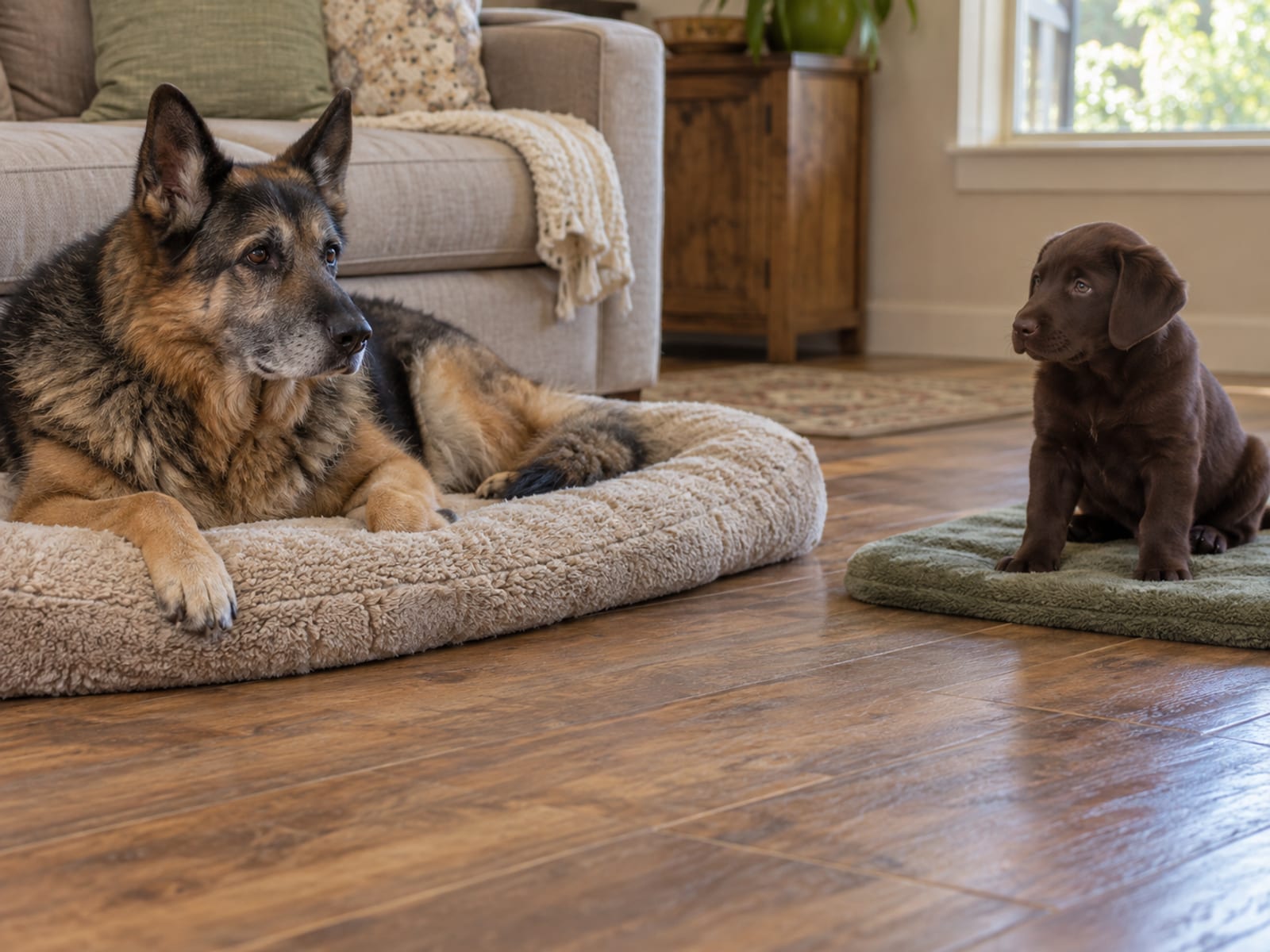
A puppy with an adult dog. According to AKC's article on introducing puppies to senior dogs, puppies may not understand an adult dog's boundaries and can pester it again and again. Supervise closely, redirect the puppy when it won't let up, give the adult dog regular breaks, and use a gate or pen whenever you can't watch directly. Our puppy training tips cover biting, jumping and settling, which helps here too.
A senior resident dog. Think about your older dog's mobility, pain, stamina, eyesight and hearing. AKC points out that a puppy's jumping, tugging and nonstop play can overwhelm or even injure an older dog. Your senior needs a quiet retreat the puppy can't reach, and short sessions it can walk away from.
A big size difference. Prevent rough play, chasing and jumping that could hurt either dog. Size, physical condition and medical history all shape the safety plan.
A reactive dog, an aggressive dog or a dog with a fight history. This isn't an ordinary introduction. If either dog has a history of serious fights, bites or severe aggression toward other dogs, or can't disengage once it fixates, bring in a qualified behavior professional before the first meeting. For serious aggression and dog fights, DW Dog Training's resources on aggression and dog fights are the place to go.
What should you do after a scuffle, and how do you choose a qualified professional?
If a scuffle breaks out, protect yourself first. Don't reach between the dogs, and don't grab collars with bare hands. When you can, use a barrier, a door, a gate or distance to separate them, anything that keeps your hands away from their mouths. Once they're apart, keep them apart. Check both dogs for injuries, and call a veterinarian for any wound or suspected injury. You can find one in our directory of vets.
After a serious fight, a bite, repeated fights or any situation you can't manage safely, get professional help before trying again. AVSAB's 2021 position statement says aggression should be treated with humane methods, and that professionals should refer to a veterinarian, a board-certified veterinary behaviorist or a certified applied animal behaviorist when a case calls for it.
When you look for help, credentials tell you what a person has been tested on. The Certification Council for Professional Dog Trainers (CCPDT) explains three of them:
- CPDT-KA: a trainer who passed a knowledge exam and has at least 300 hours of training experience.
- CPDT-KSA: the same knowledge and experience, plus a practical skills assessment.
- CBCC-KA: a certified behavior consultant who passed a behavior-modification exam and has at least 300 hours of behavior-consulting experience.
These are professional certifications, which are separate from a government license. For complex cases that may involve a medical problem or a severe behavior disorder, a veterinary behaviorist is the right level of referral.
Ask any candidate about their experience with dog-to-dog introductions, their methods, how they plan for safety, which tools they use, and for references. AVSAB's 2021 statement, reiterated in its 2025 board statement, recommends only reward-based training and says electronic collars, prong collars, choke chains, leash corrections and physical or psychological punishment should not be used. You can search for trainers near you in our dog trainer directory.
Questions owners ask about introducing dogs
These are the questions that come up most once the first meeting is behind you.
What is the 3-3-3 rule for a new dog?
AKC attributes it to Patricia McConnell: the first three days may feel like shock for a new dog, many dogs seem more settled after about three weeks, and a full routine may take about three months. AKC presents it as a belief held by many trainers and behaviorists, so treat it as a rough guide for your expectations. Your dogs may move faster or slower.
What should I avoid when introducing two dogs?
Avoid forcing a face-to-face greeting, holding the first meeting in the resident dog's house or yard, and letting two new dogs "work it out" on their own. Skip leash jerks and any punishment, including punishing a growl. And don't give the dogs free run of the house together until you've seen calm, supervised behavior many times over.
How long does it take a dog to get used to another dog?
It depends on the two dogs, and no reliable schedule fits every pair. Watch for steady signs of comfort, like loose bodies, easy disengagement and calm meals in nearby rooms. If things are getting worse over several days or weeks, that's the time to call a professional.
When can the dogs be left alone together?
Only once their behavior is consistently safe across many supervised sessions, and ideally when a professional who has seen them together agrees. Until then, gates, crates or separate rooms keep both dogs safe while you're away.
Your next step
If you're planning an introduction this week, start with the setup. Choose a neutral spot outdoors, ask someone to handle the second dog, and get the gates, crates, beds and bowls in place at home before the new dog arrives. Then keep that first walk short and end it on a calm note.
If either dog has a fight history, or if a first attempt already went badly, I'd call a qualified professional before trying again. I can't promise any two dogs will become friends, but a slow, managed start gives them the best chance to live together safely.
Sources
- American Kennel Club: American Kennel Club's guide to introducing a new dog
- American Kennel Club: guidance on helping an adult dog adjust to a new home
- American Kennel Club: introducing puppies to senior dogs
- American Veterinary Society of Animal Behavior: 2025 board statement
- American Veterinary Society of Animal Behavior: American Veterinary Society of Animal Behavior (AVSAB) humane training position statement
- Certification Council for Professional Dog Trainers: Certification Council for Professional Dog Trainers (CCPDT) explains
- Certification Council for Professional Dog Trainers: certified behavior consultant
- DW Dog Training: DW Dog Training's resources on aggression and dog fights