

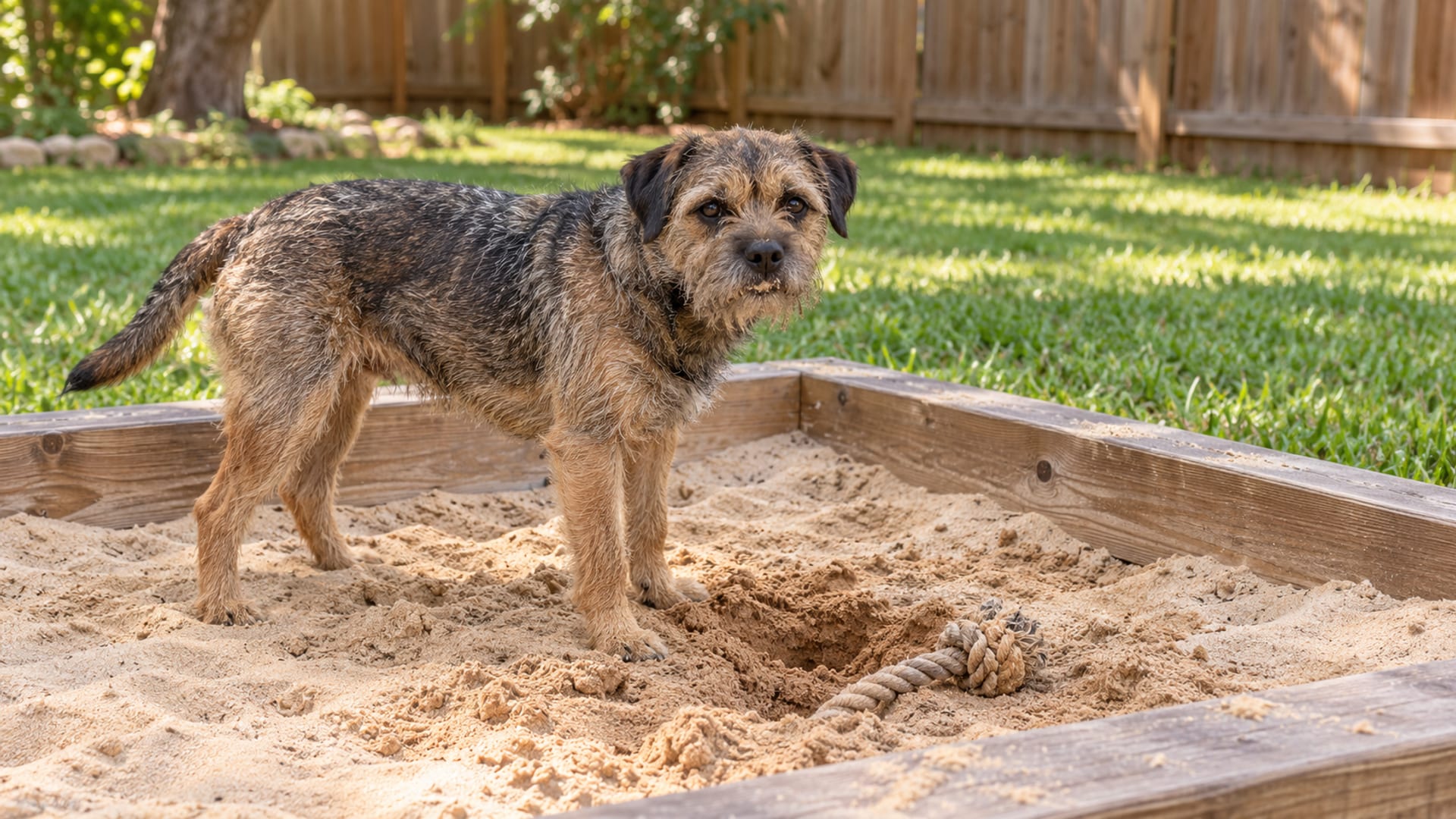
Dogs dig for different reasons, and where the hole is, when it appears and what your dog does next will usually point to the reason. Digging can be normal instinct, a way to reach cool or sheltered soil, an attempt to get at prey, a way to burn off boredom, or an attempt to escape. Digging that happens only when you are gone, especially at doors, windows or the fence and alongside pacing, barking or distress, raises concern for separation-related behavior. Start by preventing unsafe digging, adding shade and water, supervising yard time, and redirecting calmly. Do not punish a hole after it is made.
Key takeaways
Tap a card to bring it forward.
- Digging is normal dog behavior, and the same hole can come from very different causes.
- The location, the timing and whether you are home are your best clues.
- Fence-line digging and digging only while you are away are safety and welfare questions first.
- Supervise, add shade and water, increase exercise and enrichment, and redirect calmly.
- Give your dog a place where digging is allowed and reward it there.
- Never punish a hole you find later. Call a professional for injury, escape risk or digging your dog cannot stop.
Why is my dog digging, and how do I find out?
I know what you are looking at: a trashed flower bed, a crater by the back fence, maybe a couch cushion with the stuffing pulled out. It is easy to worry that something is wrong with your dog, or that your dog is doing it on purpose. Neither is the usual story.
UC Davis's veterinary behavior handout lists the common functions: hunting, cooling off, boredom, caching food, escape and anxiety. The AKC adds instinct, denning and plain play. Some dogs have a stronger pull toward it because people bred their ancestors for underground work, but the breed label does not tell you the cause of the holes in your yard. Your dog's situation does.
I cannot promise you a result or a timeline, and nobody honestly can. What I can give you is the method veterinary behavior guidance points to: work out the likely reason from the context, change what you can, and reward the behavior you want. The hole itself, and the moments around it, are the clues.
What do the location and timing of the digging tell you?
Write down where the digging happens, what time of day it is, what the weather is doing, and whether you are home. Then read the pattern.
- At the fence line. Your dog may be trying to reach something outside, such as another dog, a person, an animal or open space, or may want out of the yard altogether. UC Davis and the AKC both list escape as a reason dogs dig. Treat this as a safety problem first, because a dog that gets under the fence can end up in the road.
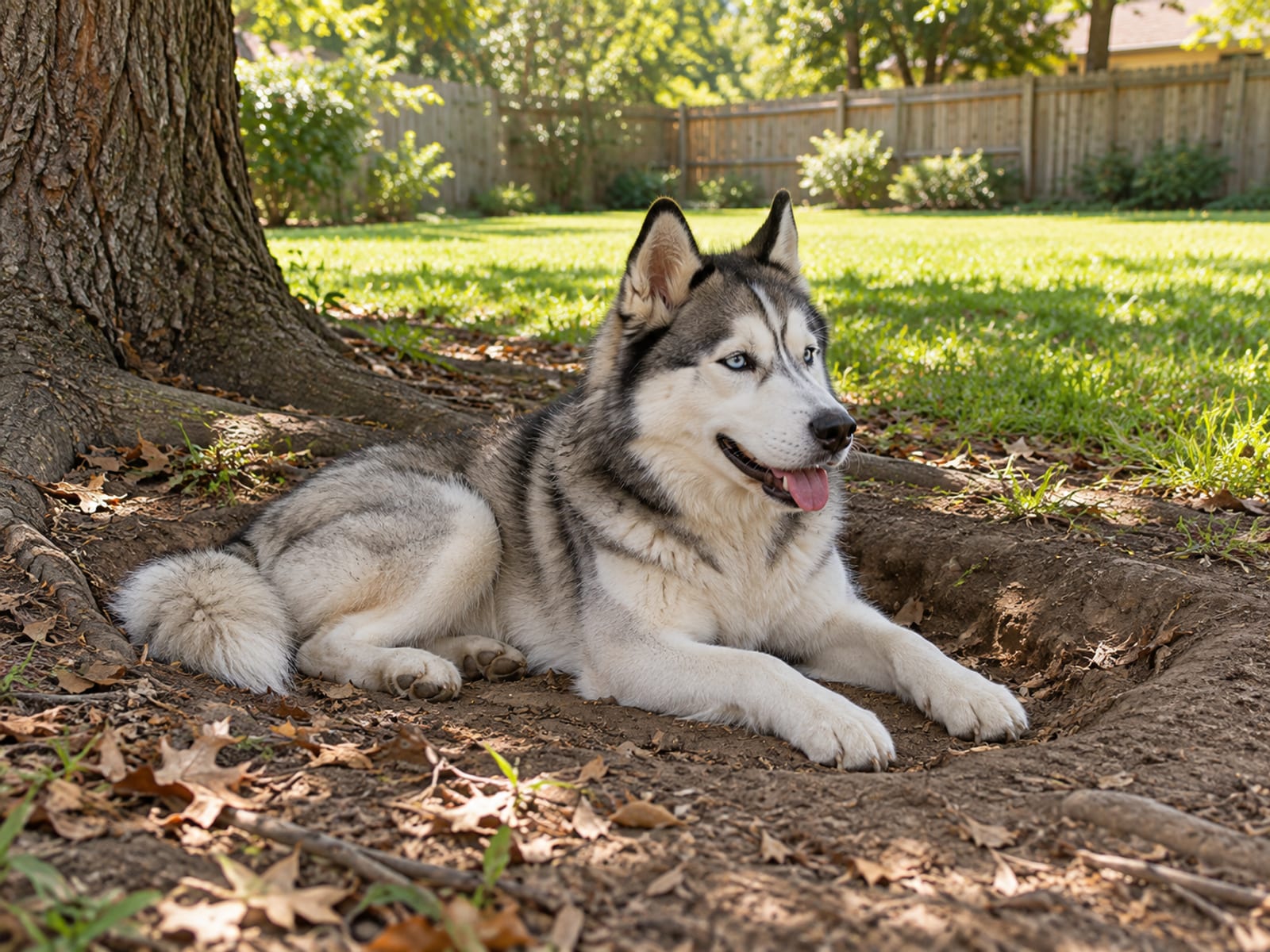
- In the shade, or a hole your dog lies in. A dog may dig down to cool soil in warm weather, or make a sheltered spot in cold weather. If your dog digs and then stretches out in the hole, look at shade, water and where your dog can rest before anything else.
- Along rodent tracks, mole tunnels or near an odd smell. Underground animals and scents can set off focused digging, sometimes with whining, barking or staring at the ground. Your dog is hunting.
- Random holes around the yard. Scattered digging in different places often fits play, exploration or too little to do.
- Only when you are gone. Digging that happens only during your absence, especially at doors, windows or the fence and with pacing, drooling, barking or destruction, raises concern for separation anxiety. The ASPCA describes this pattern and how to tell it from boredom. More on that below.
The Merck Veterinary Manual says digging can be normal dog behavior that is simply unwanted, while excessive behavior can point to a more serious problem. A practical way to sort yours: occasional, tied to an obvious reason, and easy to interrupt is on the normal side. Long stretches, escape attempts, torn nails, scraped paws or broken teeth, digging that seems detached from any reason, or digging with aggression or a dog you cannot handle safely needs closer attention. So does any sudden change in behavior, or a dog who seems unwell. A sudden change is a reason to call your veterinarian, because medical problems can show up as behavior.
A pregnant dog who scratches at bedding may be nesting, which is normal. If it is intense or comes with other changes, call your vet.
Why do dogs dig to hide bones and toys?
Some dogs bury food, bones and toys to come back to later. This is caching, and it is its own topic, so I have kept it short here. My article on why dogs bury bones and toys covers what it means and what to do about it. If the holes in your yard appear right after your dog gets a chew or a toy, start there, then come back for the plan below.
Why does my dog dig at the bed, couch or carpet?
Digging indoors does not always mean worry. Dogs often scratch at beds, blankets and cushions because of denning and settling. Your dog may be arranging a resting place, following a normal scratch-and-turn routine before lying down, or looking for a comfortable surface. A few seconds of scratching before your dog settles is usually just that.
Indoor digging can have other causes too:
- Boredom or too little enrichment.
- Attention that has followed the behavior, even when you only meant to say "stop."
- Stress or anxiety.
- Repetitive behavior with no clear purpose.
- An odor, object or crumb of food under or inside the surface.
Timing and context sort these out. A short scratch before sleep is one thing. Long digging that damages the furniture, digging that happens only while you are out, or digging that hurts your dog is another. Do not assume every indoor scratch is anxiety. If you want a better read on your dog's mood, my guide to dog body language shows the signs of stress, fear and comfort.

What can I do today to stop unsafe digging?
Start with what keeps your dog safe, then work on the habit, using guidance from UC Davis, the AKC and AVSAB.
- Watch your dog outside. Supervise yard time so you can interrupt and redirect. Do not leave a bored dog outside alone for long stretches.
- Secure the fence line. Block or reinforce the spots where your dog digs toward the boundary before your dog gets out.
- Block favorite spots. Make the popular holes hard to reach while you teach something better.
- Fix shade and water. If your dog digs and lies in the hole, give your dog a cooler, shadier place to rest and fresh water first. Digging for cool soil is a comfort problem, and a reward plan will not solve it.
- Deal with prey safely. If rodents or moles are drawing your dog, use dog-safe pest control and keep your dog away from traps and toxic products. Do not put anything out where your dog can reach it.
- Add exercise and enrichment. Give your dog exercise that fits age, health and needs, plus training, scent games, food puzzles and play. My articles on how much exercise a dog needs and how often to walk a dog can help you set a baseline. Exercise alone will not stop every dog from digging, but a dog with nothing to do has a lot of reasons to start.
- Keep notes. Record where, when and how long your dog digs, what set it off, and whether your dog can stop when you call. That record shows you whether the changes are working, and a professional can use it if you need one.
How do I redirect digging without punishment?
When you catch your dog digging in a spot you do not want, interrupt calmly. Call your dog away, offer something else to do, and reward the choice. AVSAB's position statements recommend reward-based methods for changing behavior, and the AKC advises rewarding the new behavior heavily. If you want to build the skill, my guide to positive reinforcement dog training shows how to start.
Punishing a hole you find later does not help. Your dog may not connect your anger with something done earlier, and punishment does nothing about the reason for the digging. AVSAB says aversive methods should not be used in training or behavior change, and it warns that punishment risks fear, weaker learning and damage to the bond between you and your dog. A dog can also learn to hide the digging from you and keep at it when you are not watching, or shift to another destructive habit. Prevention, calm interruption, changes to the yard and rewarding an alternative work better.
How do I set up a digging pit and teach my dog to use it?
A digging pit gives the instinct somewhere to go. UC Davis and the AKC both suggest a designated digging area.
- Pick a spot and mark it clearly. Choose an area that looks different from the rest of the yard, with loose sand or soil your dog can dig in.
- Make it worth visiting. Bury safe toys or treats just under the surface and let your dog find them. Reward your dog when digging happens there.
- Send your dog to it. When your dog starts digging somewhere else, call your dog over to the pit, or to another activity, and reward the choice.
- Block the old holes so the pit is the easy, rewarding option.
A pit will not solve every case. If your dog is digging for cool soil, chasing prey, working on the fence or upset when alone, deal with that first. Otherwise the pit is just another hole in the yard.
When is digging a sign of separation anxiety?
Think about separation anxiety when the digging happens only while you are away, especially at doors, windows or the fence. The ASPCA describes the related signs: pacing, barking or howling, drooling, destruction and attempts to get out, with a risk of injury. Digging can be one part of that picture.
Digging only when you are gone does not prove anxiety, and boredom or a dog who has found something interesting can look similar. What points toward anxiety is the whole pattern: absence-only, focused on exits, with other signs of distress. If that sounds like your dog, read my article on dog separation anxiety for the signs, what helps and when to get help. A dog who is hurting themselves trying to get out should be seen by a professional sooner rather than later.

When should I call a professional, and which kind?
Call for help if any of these are true:
- Your dog is at risk of escaping.
- Digging is causing broken teeth, damaged nails, scraped paws or other injury.
- Your dog is severely distressed when alone.
- Your dog cannot stop a repetitive digging routine.
- The behavior is sudden, getting worse, or comes with other concerning changes.
- Calm, reward-based changes have not helped enough.
- You cannot work out the trigger or manage it safely.
Start with your veterinarian for any sudden change or if your dog seems unwell, since medical problems can contribute. For the behavior itself, the ASPCA and AAHA describe how the roles differ.
- A trainer fits normal but unwanted digging, supervision skills, redirection and teaching an alternative. Ask exactly which tools and methods the trainer uses.
- A behavior consultant fits anxiety, repetitive patterns or complicated cases. Credentials you may see include CBCC-KA and CDBC.
- A veterinary behaviorist (DACVB) is a veterinarian with advanced training in behavior, and is the right call when medical factors may contribute, when the behavior is severe, or when a diagnosis or medication may be needed. AVSAB's guide to choosing a behavior consultant describes a residency of 2 to 3 years, more than 400 supervised cases and a board exam for this credential.
- An applied animal behaviorist (CAAB or ACAAB) has graduate-level education and supervised experience.
Ask for a written plan, humane methods, clear steps for managing the problem, ways to measure progress and a referral plan. Avoid anyone who relies on shock, prong or choke collars, leash jerks, intimidation or physical punishment. You can look for trainers and veterinarians in our directory, and use the emergency vet listings if your dog is badly hurt.
Questions owners ask about dogs digging
These are the questions that come up most after the first answer.
Do dogs dig when they are happy?
Sometimes. Dogs can dig for play or fun, and plenty of digging is simply enjoyment of the activity. That does not mean it is harmless, so check the location and timing before you decide it is only play.
Should you let dogs dig?
You can, in a place you choose. A designated digging pit with rewards for using it lets the instinct out without wrecking the garden. Do not allow digging at the fence line or where your dog could get hurt or get out.
What does it mean if the dog is digging?
It depends on where, when and what else is going on. Look for shade and cool soil, rodent activity, escape at the fence, boredom, a caching habit, or distress when you are away. If the digging is only when you are gone or comes with injury, escape attempts or severe distress, bring in a professional.
What is the next step?
Tonight, walk the yard and find the holes. Note where they are and when they started, then fix the safety problems first: the fence line, shade and water, and anything that could harm your dog. Then set up a digging pit, add exercise and play, and reward your dog for choosing the right spot.
If your dog is hurt, about to escape, or upset every time you leave, do not wait. Talk with your veterinarian or a qualified behavior professional. I cannot promise how fast a dog's digging will change, but humane steps and a clear record give you the best chance of figuring out what your dog needs.
Sources
- American Animal Hospital Association: AAHA
- American Kennel Club: AKC
- American Veterinary Society of Animal Behavior: guide to choosing a behavior consultant
- American Veterinary Society of Animal Behavior: position statements
- ASPCA: ASPCA
- ASPCA: ASPCA
- Merck Veterinary Manual: Merck Veterinary Manual
- UC Davis School of Veterinary Medicine: UC Davis's veterinary behavior handout