

Halloween Safety for Dogs: Candy, Costumes and the Doorbell
By Cal Hewitt · Published , updated
Safety
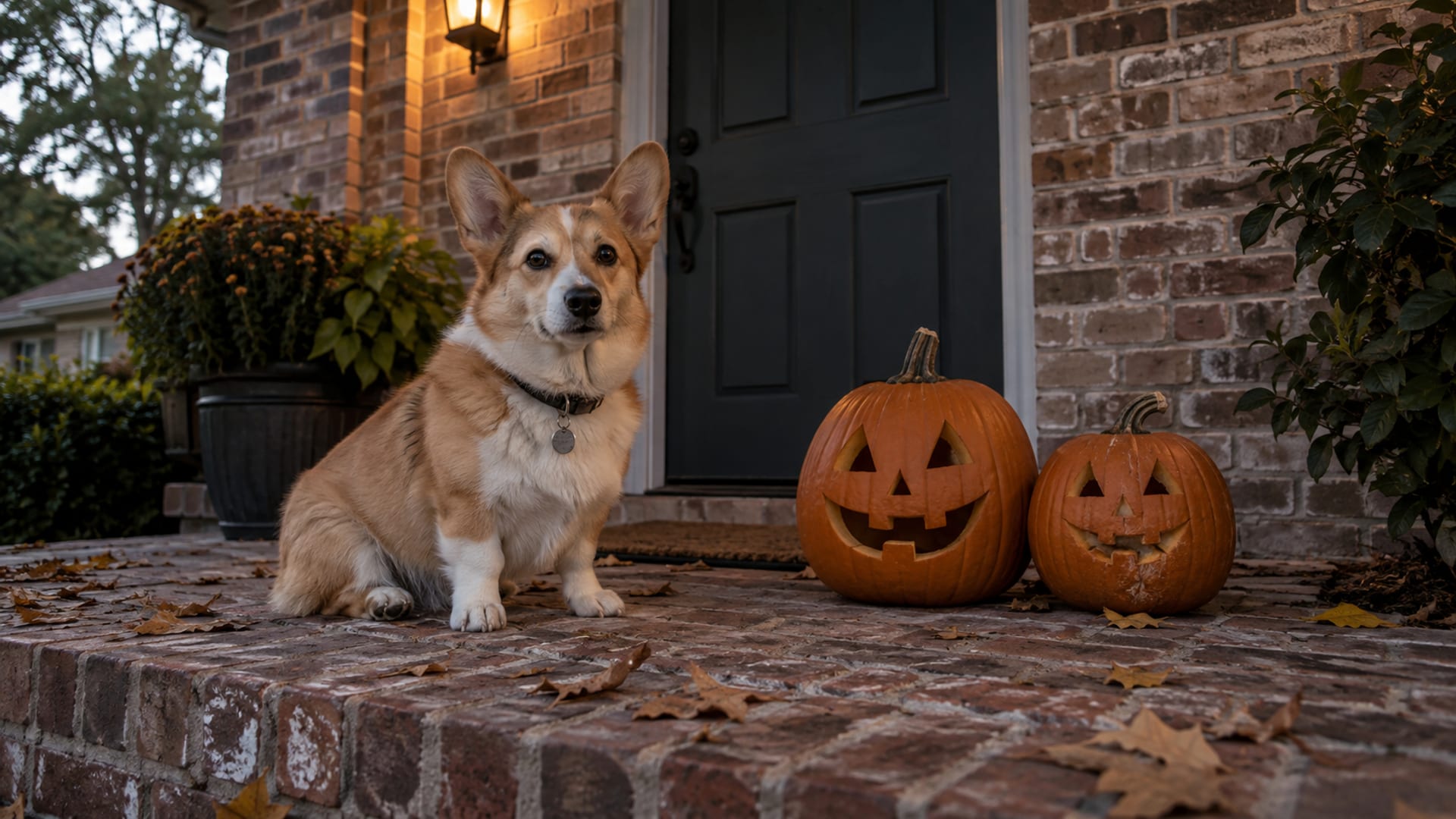
Halloween asks a lot of a dog. There is a bowl of candy by the door, a pile of trick-or-treat loot on the floor, a costume someone wants to try, and a doorbell that rings every few minutes for three hours. Most of the time it goes fine. When it does not, it is usually one of two things: the dog got into the candy, or the dog got out the door.
If your dog already got into the candy: take the rest away, keep the wrappers and packaging, work out roughly what and how much they ate and when, and call now. Do not wait for symptoms if it was chocolate, sugar-free candy, raisins, wrappers or anything you cannot identify. Call your vet, an emergency vet, the ASPCA Animal Poison Control Center at (888) 426-4435 or the Pet Poison Helpline at (855) 764-7661. If your dog is collapsing, having a seizure or struggling to breathe, go to an emergency vet now and call on the way.
If nothing has happened yet, the rest of this guide is the plan: which treats are the dangerous ones, how long signs can take to show up, and how to set up the house so the candy, the costumes and the front door are not a problem.
Key takeaways
Tap a card to bring it forward.
- Chocolate, sugar-free candy with xylitol, raisins and wrappers are the Halloween treats that need a call right away, even if your dog seems fine.
- Keep the packaging. The exact product and amount decide how serious it is.
- Some signs take hours or days: pancreatitis after a big fatty candy haul may not show for two to four days (Pet Poison Helpline).
- Put your dog in a quiet, closed room away from the front door during trick-or-treating (ASPCA).
- Check the ID tag and microchip details before the evening.
- A costume is optional. Skip it if it limits movement, sight or breathing, or your dog looks stressed.
If your dog got into the Halloween candy
Chocolate is the one most people think of first, and for good reason. It was the most common dog poison on the Pet Poison Helpline's list for 2024, ahead of grapes and raisins, with xylitol fourth. If chocolate was in the bowl, read Can dogs eat chocolate? What to do if your dog ate chocolate next. It covers how the type of chocolate and your dog's weight change the risk.
Whatever they ate, the first steps are the same:
- Move your dog away from the candy and pick up everything left, including wrappers.
- Gather the evidence. Keep the bags, wrappers, ingredient labels and any pieces left over. The ASPCA asks owners to collect the packaging so the vet or poison center can tell what type of chocolate it was and how much your dog may have eaten.
- Call. Have ready your dog's weight, age, health problems and medicines, the product name and ingredients, how much might be gone, when it happened, and any symptoms. Tell them if wrappers or sticks are missing too.
- Follow the advice you get, and bring the packaging if you are told to come in.
Do not make your dog vomit, and do not give hydrogen peroxide, activated charcoal, milk, oil, salt, bread or any home remedy unless a vet or poison-control professional tells you to. The Merck Veterinary Manual says vomiting at home is not recommended after xylitol because signs can start fast, and charcoal does not bind xylitol. Both poison lines charge a fee per case; check the current price when you call.
Store-bought or homemade? A store-bought candy has a label, which makes the call quicker. With homemade treats, like cookies, brownies, popcorn balls or trail mix, find out what went into them: chocolate, raisins, nuts or a sugar-free sweetener all change the answer.
Which Halloween treats are an emergency
Some Halloween candy is mostly a stomachache risk. Some needs a call the moment you find out. The exact product, the amount and your dog decide which, so treat this table as a guide to how fast to call, not a way to rule anything out.
Tap or hover a row to highlight it.
| Treat | Why it matters | What to do |
|---|---|---|
| TreatChocolate candy, brownies, chocolate cookies | Why it mattersThe darker the chocolate, the more poisonous it is (Pet Poison Helpline). Small dogs need less for a problem (AKC) | What to doCall now with the package and your dog's weight |
| TreatSugar-free candy and gum | Why it mattersMay contain xylitol, which can drop blood sugar fast and may hurt the liver (Merck) | What to doCall now, even with no signs |
| TreatRaisins, chocolate-covered raisins, trail mix | Why it mattersGrapes and raisins are linked to sudden kidney injury, with no safe amount to rely on (Merck) | What to doCall now, even with no signs |
| TreatWrappers, foil, cellophane, lollipop sticks | Why it mattersCan block the bowel; a severe blockage may need surgery (Pet Poison Helpline) | What to doCall now |
| TreatCannabis edibles | Why it mattersTreat any possible exposure as urgent | What to doCall now |
| TreatA big haul of plain sugary or fatty candy | Why it mattersCan lead to pancreatitis two to four days later (Pet Poison Helpline) | What to doCall for advice, especially for a small dog or one with a history of pancreatitis |
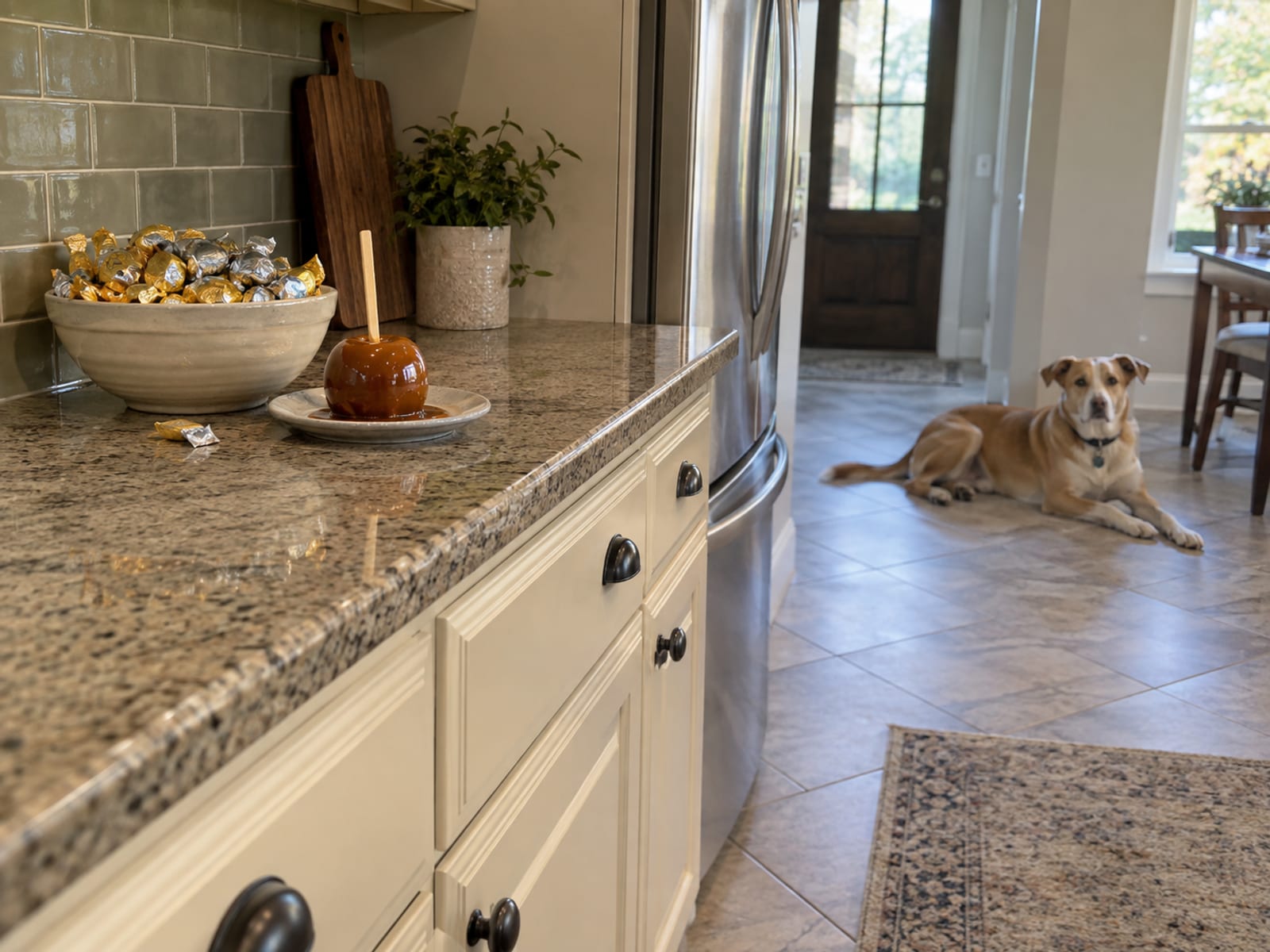
| TreatCaramel apples | Why it mattersThe VCA says even natural treats like caramel apples should be off limits; the stick is a swallowing hazard | What to doCall if the stick or a large amount is gone |
White or milk chocolate is not automatically safe, and a small candy can still come with a wrapper or a sugar-free sweetener. The ASPCA warns that xylitol turns up in sugar-free gum, candy and other products, so read the label.
If you know what your dog got into, these entries go into each food in detail:
- A mixed bag, or you are not sure which candy it was: can dogs eat Halloween candy
- Chocolate bars, cups and chips: can dogs eat chocolate
- Raisins in trail mix, cookies or snack boxes: can dogs eat grapes and raisins
- Jelly beans and chewy candy: can dogs eat jelly beans
- Hard candy and peppermints: can dogs eat candy canes
- Marshmallows and s'mores treats: can dogs eat marshmallows
- Peanut candy and peanut butter treats: can dogs eat peanuts and can dogs eat peanut butter
- Mixed nuts and trail mix: can dogs eat nuts
- Popcorn balls and caramel corn: can dogs eat popcorn
- Apples without the caramel: can dogs eat apples
- Pumpkin, from the can or the jack-o'-lantern: can dogs eat pumpkin
- Party snacks and crackers: can dogs eat Cheez-Its
Signs to watch for, and how long they can take
A dog who looks fine an hour after eating candy is not in the clear yet. The Merck Veterinary Manual says chocolate signs usually start within 6 to 12 hours, and some problems take days.
When signs can show up after Halloween candy
Within 30 minutes
Xylitol can cause signs this fast, starting with low blood sugar; with gum they may come later (Merck).
6 to 12 hours
Chocolate signs usually start, and vomiting or diarrhea after grapes or raisins may begin (Merck).
1 to 2 days
Liver signs after xylitol may appear (Merck).
24 to 72 hours
Kidney failure after grapes or raisins may develop (Merck).
2 to 4 days
Pancreatitis after a large amount of fatty or sugary candy may show up (Pet Poison Helpline).
Go to an emergency vet now for a seizure, collapse, severe weakness, being unable to stand, tremors, confusion, severe agitation, trouble breathing, a racing or irregular heartbeat, repeated vomiting, a painful or swollen belly, pale or blue gums, or choking.
Call your vet today for vomiting or diarrhea that keeps going, refusing food, low energy, belly pain, drinking or peeing more than usual, or yellow gums, skin or eyes.
Watching at home is only for when a vet or poison-control professional has heard the details and told you to watch. If you are not sure what normal looks like for your dog, signs of a healthy dog covers normal gums, breathing and temperature.
Keeping the candy out of reach
Most candy trouble starts with a bowl or a bag at nose height. A few minutes of setup before the doorbell starts saves a phone call later:
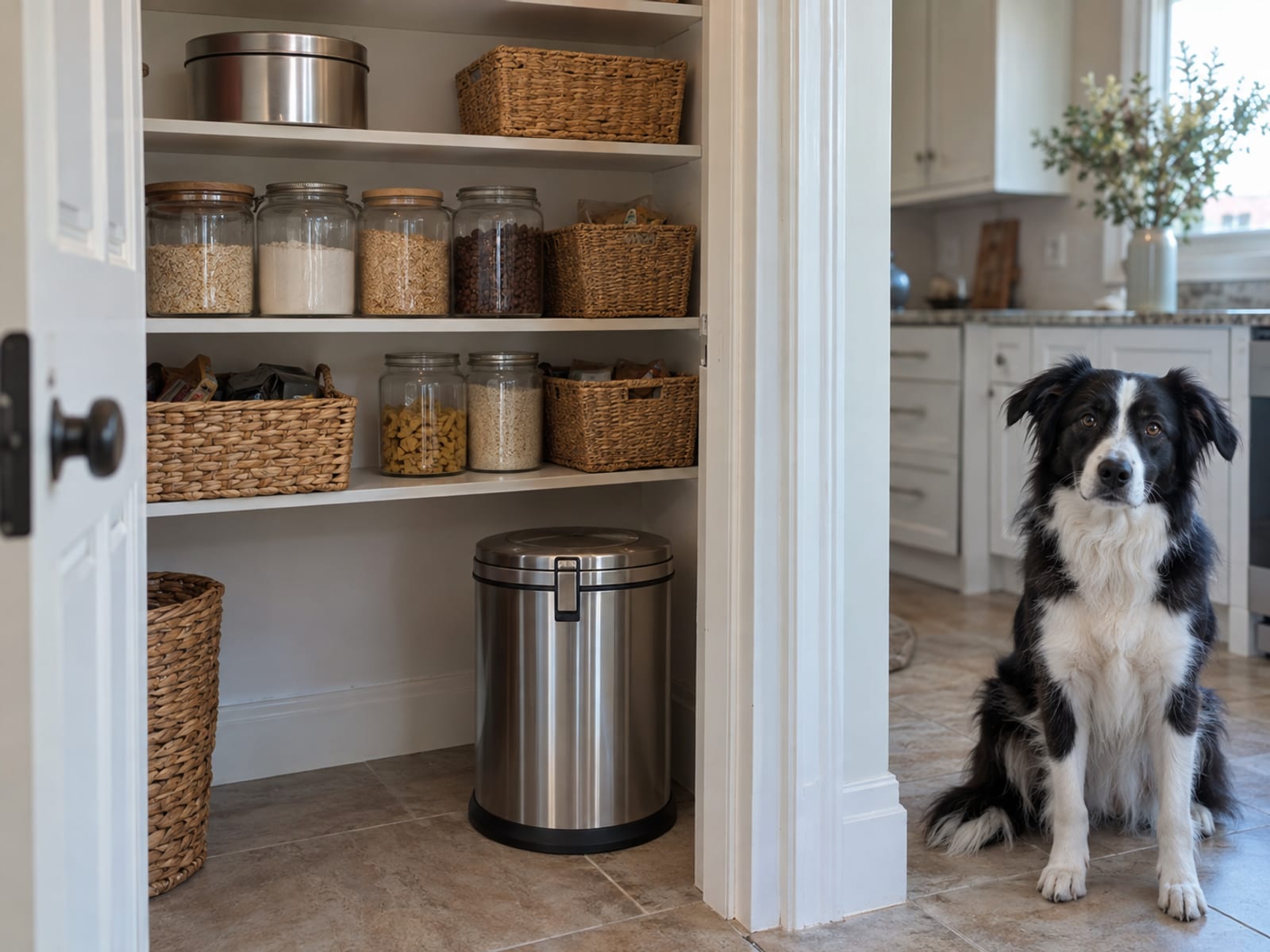
- Keep the candy bowl and every bag in a closed cupboard or up high, not on the coffee table or by the door.
- When the kids come home, sort their haul at a table, and put it away before anyone walks off.
- Check labels for xylitol on any sugar-free candy or gum in the house.
- Keep raisin boxes and trail mix away from the trick-or-treat pile.
- Put wrappers straight into a bin with a lid.
- Ask guests at a Halloween party not to share treats with your dog.
The doorbell: keeping your dog calm and inside
The ASPCA recommends that all but the most social pets stay in a comfortable room away from the front door during peak trick-or-treating hours. The American Animal Hospital Association points out that a door opening over and over is a chance for a dog to slip out, and suggests closed doors, crates or baby gates, and handing out candy from the end of the driveway.
Even friendly dogs can react differently on Halloween. The American Veterinary Society of Animal Behavior explains that doorbells and arrivals already get dogs worked up, and costumes change how people look and sound, hide their faces and keep coming. A dog who loves visitors can bark, growl, freeze or lunge. Last year's calm night does not promise the same this year, so set your dog up away from the door before the first knock rather than waiting to see.
Before the evening:
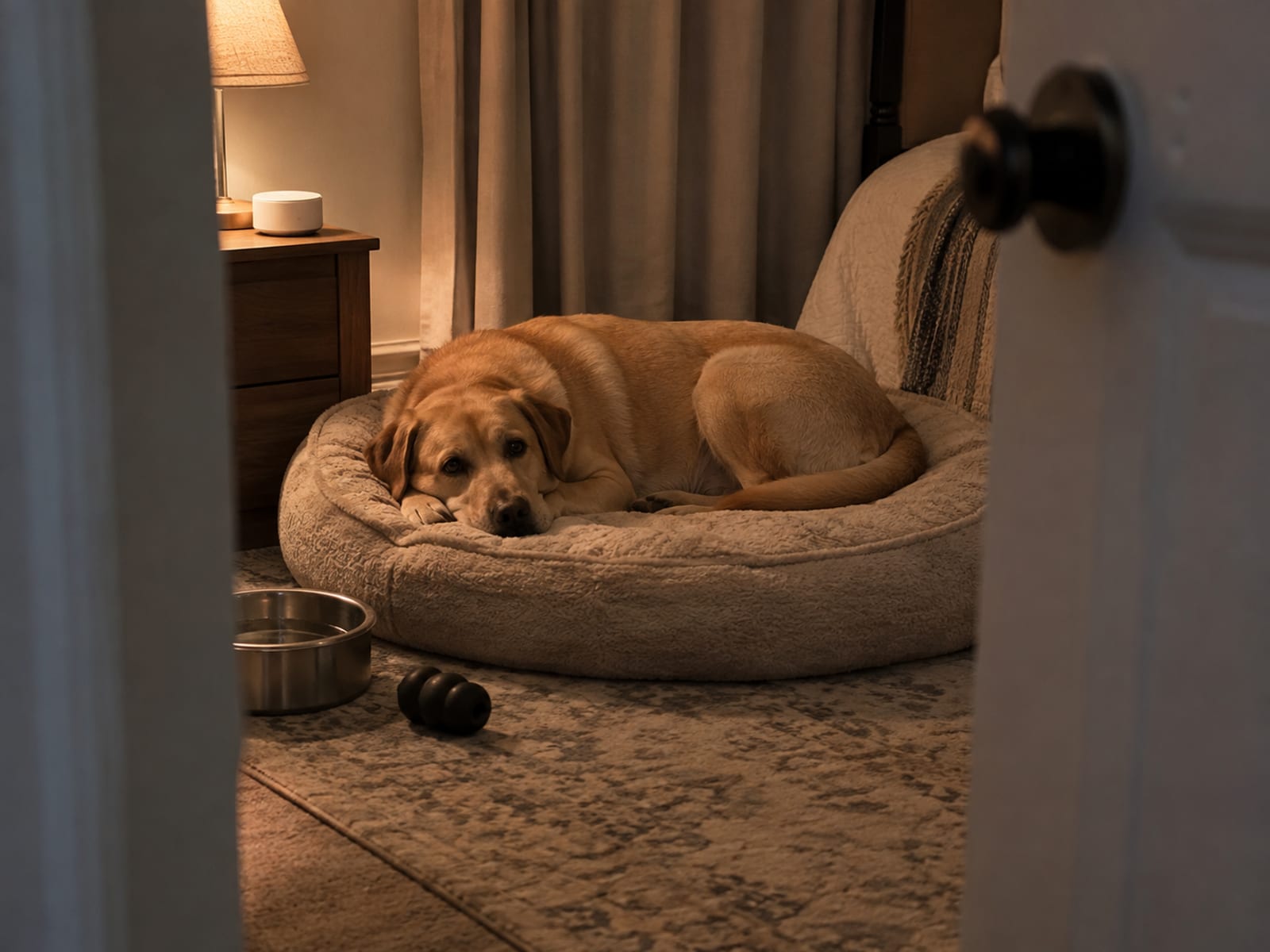
- Set up a quiet room with water, bedding, a familiar chew or food toy, and a fan, radio or TV to soften the noise. A crate works only if your dog already rests in it happily; crate training covers how to get there, which takes longer than one evening.
- Check ID. The AKC says to make sure your dog has an ID tag, is microchipped, and that the contact details are current. A microchip does not stop an escape; it only helps if the registration is up to date.
- Walk early. Take your dog out before trick-or-treating starts. If you walk after dark, the ASPCA advises a reflective collar, a secure leash and proper ID.
- Keep your dog indoors. Do not leave a dog alone in the yard during trick-or-treating.
- Decide about the door. If your dog is upset by strangers, hand out candy outside, or turn the porch light off and skip it this year.
Watch your dog during the evening. One or two alert barks and then settling down is usually manageable. Pacing, freezing, trying to escape, growling, snapping, frantic barking, or refusing a favorite treat mean your dog needs more distance and a closed door, not introductions. If your dog has bitten or nearly bitten someone, or you cannot keep them safely contained, talk to your vet and a qualified behavior professional before the next busy night. You can look for one in the dog trainer directory.
Costumes: when to skip one and how to fit one safely
Your dog does not need a costume. The VCA notes that many dogs are not comfortable wearing one. If yours seems happy in a bandana, that can be enough.
If you do use a costume:
- Try it on before Halloween, for short stretches, with treats.
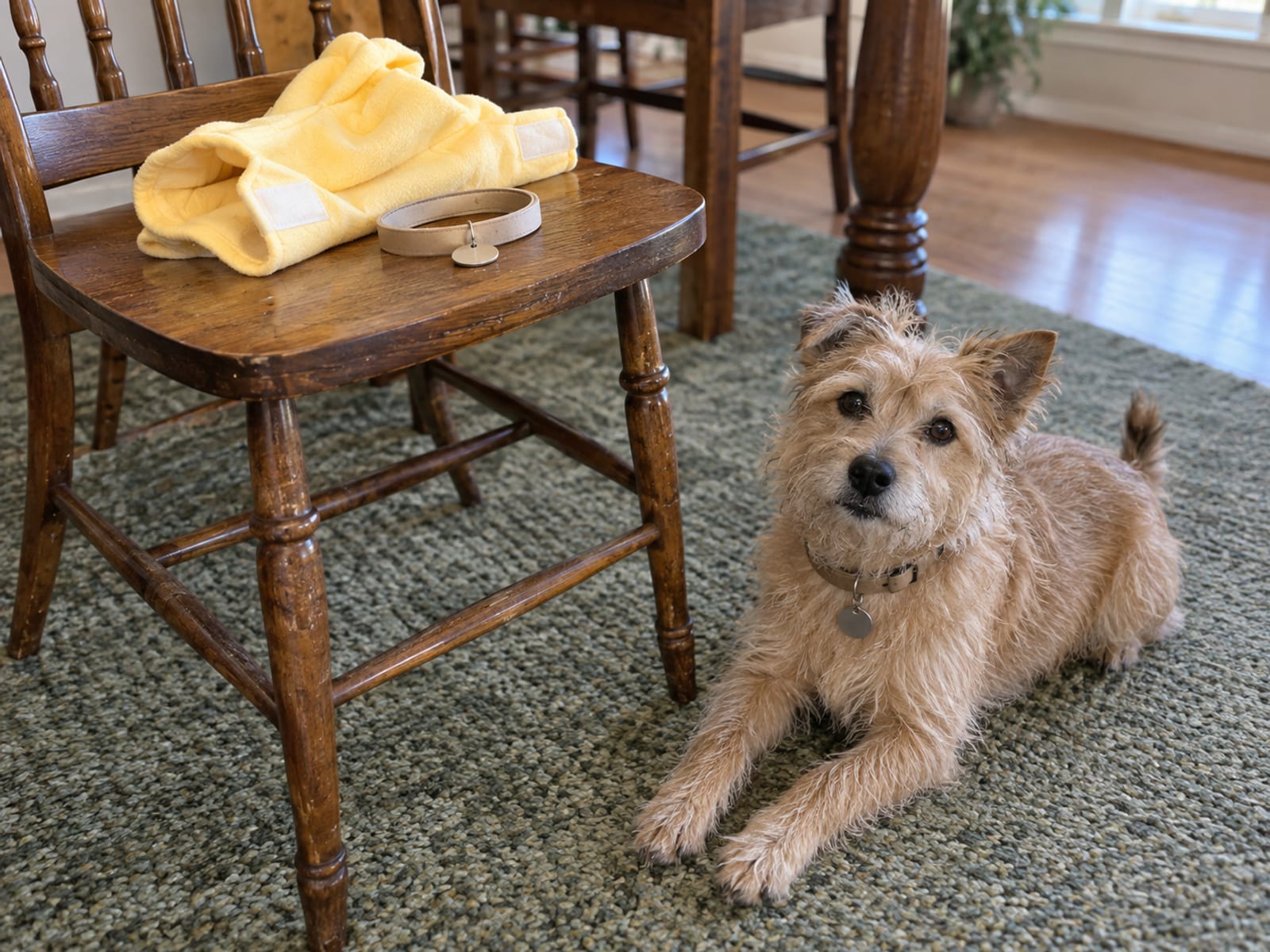
- Check the fit. The ASPCA says it should not limit movement, sight or the ability to breathe or bark, and warns that small, dangling or easily chewed pieces can choke a dog.
- Check the fastenings. The AKC says Velcro is best, not buttons, drawstrings or elastic. The Pet Poison Helpline warns that metal beads or snaps can be a problem if swallowed.
- Skip the dye and paint. Pet Poison Helpline advises against coloring your dog's fur; a product that is safe for people can still harm a dog who licks it.
- Stay with your dog the whole time the costume is on.
Take it off at the first sign of stress. VCA lists licking lips, yawning, pacing, shaking, panting, and wide eyes showing the whites. A tucked tail, ears pinned back, hiding or trying to get away mean the same thing.
Decorations, candles and glow sticks
The non-food side of Halloween causes its own trouble:
- Jack-o'-lanterns and candles. The ASPCA warns that pets can knock over a lit pumpkin and start a fire. Use a battery candle, or keep real flames where a nose or a wagging tail cannot reach.
- Cords and wires. Keep light strings and cords for animated decorations out of reach. Puppies especially may chew them.
- Pumpkins and decorative corn. The AKC says corncobs and pumpkins can break into pieces and cause blockages if a dog chews and swallows them.
- Glow sticks and glow jewelry. The Pet Poison Helpline says the liquid inside is usually not life-threatening, but a punctured one can cause mouth pain and irritation, heavy drooling and foaming. Call your vet or a poison line if your dog bites into one.
- Everything else on the porch and mantel. The VCA notes that festive decorations can pose health risks for dogs, so keep small, chewable pieces out of reach.
Check what you learned
Quick check: Halloween safety for dogs
Questions about Halloween and dogs
My dog ate Halloween candy. What do I do first?
Take the rest away, keep the packaging and wrappers, work out what they ate and when, and call your vet or a pet poison line. Do not make your dog vomit or try a home remedy unless a professional tells you to.
Is one piece of chocolate going to hurt my dog?
It depends on the kind of chocolate, how much, your dog's size, and what else was in the candy. Call with the package in hand if there is any doubt. The chocolate entry explains how those things change the risk.
My dog has eaten candy before and been fine. Do I still need to call?
It is good that nothing happened before, and I believe you. It is just not a promise for next time. A different candy, a bigger amount or a sugar-free sweetener can change everything, and some problems, like kidney injury after raisins or pancreatitis after a big fatty haul, can take days to show up. A quick call is the safer choice.
Should I keep my dog in another room when trick-or-treaters come?
Usually, yes. The ASPCA advises a comfortable room away from the front door for all but the most social pets, and AAHA recommends barriers and a quiet retreat so your dog cannot slip out.
Why is my dog barking at kids in costumes when they like visitors?
Repeated doorbells, masks, hidden faces and unusual shapes can unsettle a friendly dog. Give them distance and a quiet room instead of asking them to greet anyone.
Can I put my dog in a Halloween costume?
Only if your dog is comfortable in it and you stay with them. It should not limit breathing, movement, sight or hearing, and should have no small pieces to chew off. Take it off at any sign of stress.
What should I do if my dog bit a glow stick?
Call your vet or a pet poison line. Pet Poison Helpline says the liquid is usually not life-threatening, but it can cause mouth pain, drooling and foaming.
Get ready before the first knock
Tonight, put the candy in a closed cupboard, pick the quiet room your dog will use, and check that the tag and microchip details are current. Save the two poison-control numbers in your phone: ASPCA Animal Poison Control (888) 426-4435 and Pet Poison Helpline (855) 764-7661. And if you do not have an emergency vet picked out yet, search the DogServ vet directory now, while nothing is wrong.
Sources
- American Animal Hospital Association: American Animal Hospital Association
- American Kennel Club: AKC
- American Veterinary Society of Animal Behavior: American Veterinary Society of Animal Behavior
- ASPCA: ASPCA
- ASPCA: ASPCA
- ASPCA: ASPCA
- Merck Veterinary Manual: Merck Veterinary Manual
- Merck Veterinary Manual: Merck: chocolate
- Merck Veterinary Manual: Merck: grapes and raisins
- Pet Poison Helpline: Pet Poison Helpline: Halloween dangers
- Pet Poison Helpline: Pet Poison Helpline
- VCA Animal Hospitals: VCA