
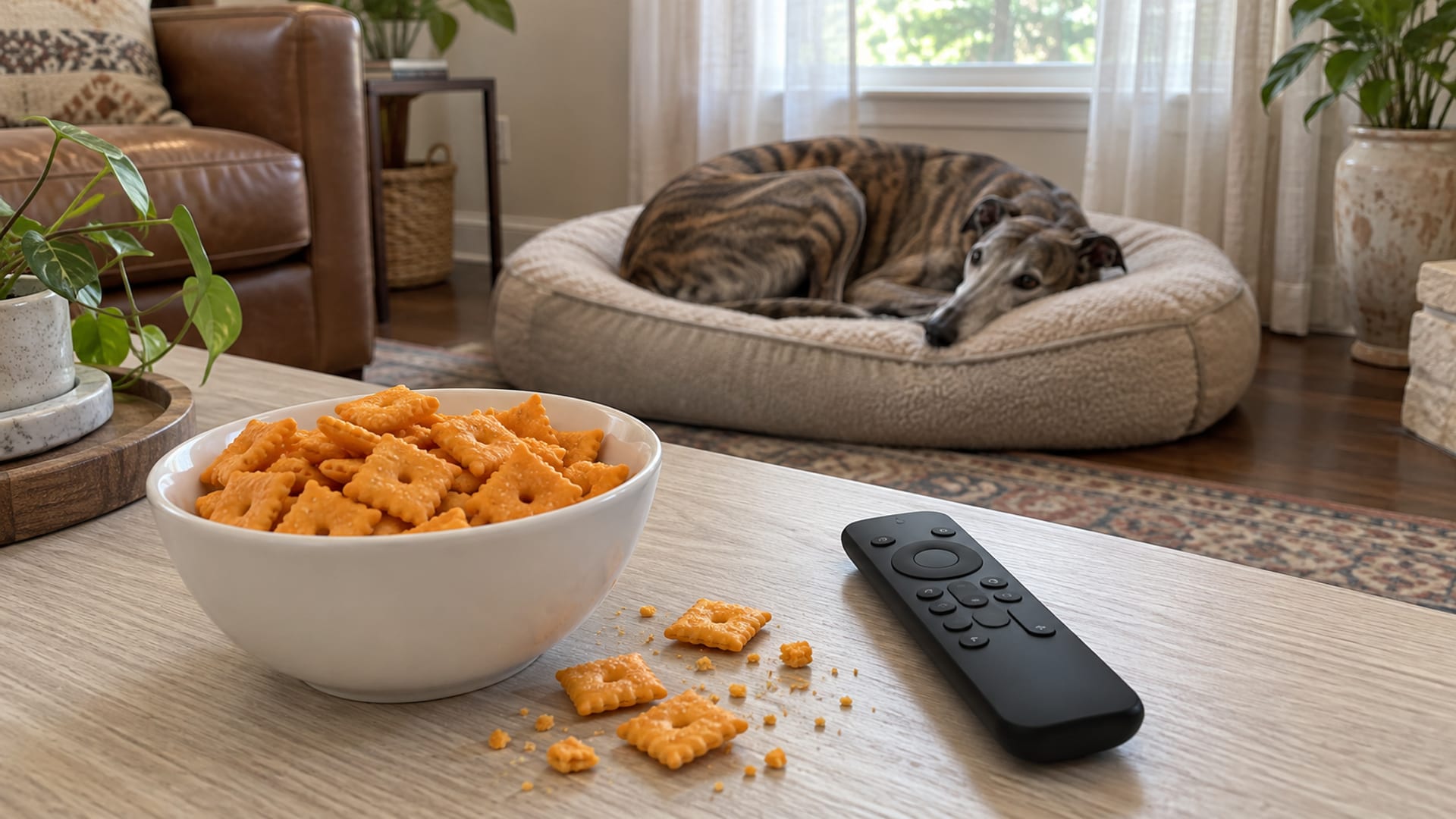
A few Cheez-Its will not poison a healthy dog. They are baked cheese crackers made with flour, oil, cheese and salt, and those last three are why they make a poor dog treat. The ASPCA warns that too much salt can cause vomiting, diarrhea, tremors, seizures and even death, and that fatty foods can bring on pancreatitis.
If your dog snagged a few crackers that fell on the floor and is acting normal, make sure the water bowl is full and carry on with your day. If they emptied a box, especially a small dog, ate part of the bag, or start vomiting, drinking far more than usual, stumbling or trembling, call your vet or a poison line with the box in hand.
Key takeaways
Tap a card to bring it forward.
- A few Original Cheez-Its are unlikely to harm a healthy dog.
- Salt and fat are the concerns, and they add up fast when a dog eats a whole box.
- Small dogs get a much bigger dose from the same pile of crackers.
- Flavors differ. Check the exact box for onion, garlic, spice and sodium.
- Keep fresh water out, and call about a big or unknown amount, a swallowed bag, or any stumbling, tremors or repeated vomiting.
My dog ate Cheez-Its: what to do
Tap or hover a row to highlight it.
| What happened | What to do |
|---|---|
| What happenedA few crackers | What to doFill the water bowl and watch for thirst, loose stool or vomiting. |
| What happenedA handful, in a small dog or puppy | What to doCall your vet for advice with your dog's weight and the box. |
| What happenedMost of a box or a whole box | What to doCall your vet or a poison line now. |
| What happenedPart of the plastic bag or cardboard box | What to doCall your vet. Watch for gagging, repeated vomiting, belly pain or no stool. |
| What happenedA spicy, hot or unusual flavor | What to doRead the box for onion, garlic or other add-ins, then call if you find them or cannot tell. |
| What happenedAny amount, in a dog with pancreatitis, kidney disease or a low-sodium diet | What to doCall your vet today. |
When you call, have the box in front of you so you can read out the exact product and ingredients. An estimate of how much is gone, the time and your dog's weight help too. Pet Poison Helpline says to call them or get to a vet right away if you think your pet has eaten something potentially toxic.
Water matters here. The Merck Veterinary Manual explains that salt poisoning is closely tied to how much water a dog can get, and is unlikely when fresh water is freely available. Put a full bowl down and keep it full.
Head straight to an emergency vet for stumbling, confusion, tremors, a seizure, collapse or trouble breathing.
Original, White Cheddar, Extra Toasty: do flavors matter?
Tap or hover a row to highlight it.
| Product | Concern | What to check |
|---|---|---|
| ProductOriginal Cheez-It crackers | ConcernLow in a few crackers | What to checkSalt, fat and calories |
| ProductWhite Cheddar, Extra Toasty, Reduced Fat | ConcernLow in a few crackers | What to checkSodium and fat differ; read the box |
| ProductHot, spicy or seasoned flavors | ConcernHigher | What to checkSpice and possible onion or garlic in the seasoning |
| ProductSnap'd, Grooves, Puff'd and other lines | ConcernRead the box | What to checkDifferent recipes from the Original |
| ProductLoose cheese dust and crumbs | ConcernLow in small amounts | What to checkMostly salt and cheese seasoning |
| ProductOther brands of cheese crackers | ConcernRead the box | What to checkSalt, spices and flavorings vary |
| ProductStale or moldy crackers | ConcernAvoid | What to checkMold brings its own risks |
| ProductThe bag or box itself | ConcernCall your vet | What to checkCan cause choking or a blockage |
The ingredient list for Original Cheez-It crackers shows enriched wheat flour, vegetable oil, cheese made with skim milk, salt, paprika, yeast and soy lecithin. There is no onion or garlic on that list, and no xylitol or chocolate. Other flavors use other recipes, so the box your dog got into is the one to read. If you find onion or garlic powder, Can dogs eat onions? and Can dogs eat garlic? explain why powdered forms still count.
How much is a concern
There is no cracker count that fits every dog. These are the things that change the picture:
- Size of the dog. Ten crackers in a 70-pound Lab is a very different dose from ten crackers in a 7-pound Yorkie.
- The salt figures. Merck puts the first signs of salt poisoning in dogs at roughly 2 to 3 grams of salt per kilogram of body weight. That is salt itself. A few crackers usually come in under it for a healthy dog, and a small dog that finished a box is the case to call about.
- Water. A dog with fresh water nearby is much better placed than one without.
- Health. Dogs with kidney disease may handle salt and fluids less well. Dogs with pancreatitis, high blood fats or a prescribed low-fat diet are more vulnerable to fatty snacks.
- Wheat and dairy. Wheat is not toxic, but a dog with a diagnosed wheat allergy can react. Dairy in the cheese can upset a dog that does not handle lactose. Can dogs eat cheese? goes into that side.
If you want to share a crunchy snack, plain dog treats are a better habit. The ASPCA cautions that high-fat and sugary people food can contribute to pancreatitis.
Signs to watch for, and how soon
- Mild upset: more thirst and peeing, gas, loose stool, vomiting, a sore belly or going off food.
- Salt poisoning: vomiting, diarrhea, stumbling, confusion, tremors, seizures and collapse, according to Pet Poison Helpline. Signs can come on within hours of a big salty meal. Merck notes that treatment corrects the salt level slowly, over two to three days.
- Pancreatitis: vomiting, belly pain, low energy and not eating after a fatty binge. The ASPCA's cookout safety page lists vomiting, belly pain and a dull, depressed mood among the signs fatty food can cause in some pets.
- A swallowed bag: gagging, vomiting again and again, belly pain or no stool.
"My dog has shared my Cheez-Its for years"
Lots of dogs have, and if yours never had a problem, that is real. It is a record of what your dog got, though. It does not make a rule for every dog.
A cracker or two tossed from the couch is a different thing from a dog that tears open a box while you are at work. A big dog spreads the same salt over far more body weight than a small one. Original crackers are not the same recipe as a spicy flavor. A dog with water right there is better placed than one shut away without it. Dogs differ in how their stomachs and pancreas handle fat, and a dog that develops kidney disease or pancreatitis is starting from a different place. Sometimes a dog simply did not get enough to get sick that time.
Goldfish, Ritz, pretzels and other salty snacks
- Other cheese crackers: similar concerns. Read the box, since seasonings and salt vary.
- Cheese puffs and curls: a different product with its own seasoning. Check for onion and garlic powder.
- Popcorn and fries: see Can dogs eat popcorn? and Can dogs eat french fries?
- Bread: plain bread is covered in Can dogs eat bread?
- Cheese-flavored dog treats: made for dogs, with their own ingredients and calories. They are a separate thing from Cheez-Its.
- Mac and cheese: Can dogs eat mac and cheese? covers the other cheesy pantry favorite.
Check what you learned
Quick check
Questions about dogs and Cheez-Its
My dog ate one or two Cheez-Its. Is that dangerous?
Usually not for a healthy dog. Keep water available and do not make crackers a regular treat.
My dog ate a whole box of Cheez-Its. What should I do?
Call your vet or a poison line now. Have the box, your dog's weight, a rough amount and the time ready, and keep fresh water out while you call.
Are White Cheddar or Extra Toasty Cheez-Its different for dogs?
They can be. Sodium, fat and seasoning differ by product, so read the box your dog got into.
Can Cheez-Its cause pancreatitis?
Fatty people food can contribute to pancreatitis in some pets, according to the ASPCA. A dog that has had pancreatitis or eats a low-fat diet should not get crackers without the vet's okay.
Can puppies eat Cheez-Its?
It is best not to share them. A puppy's small size means a handful counts for more, and their stomachs upset easily.
Sources
Checked September 24, 2026.
- ASPCA, People Foods to Avoid Feeding Your Pets
- ASPCA, Sharing is Caring: Foods You Can Safely Share with Your Pet
- ASPCA, What BBQ Staples are Dangerous to My Pet?
- Merck Veterinary Manual, Salt Toxicosis in Animals
- Pet Poison Helpline, Salt Is Toxic To Pets
- Cheez-It, Cheez-It Original Snack Crackers