
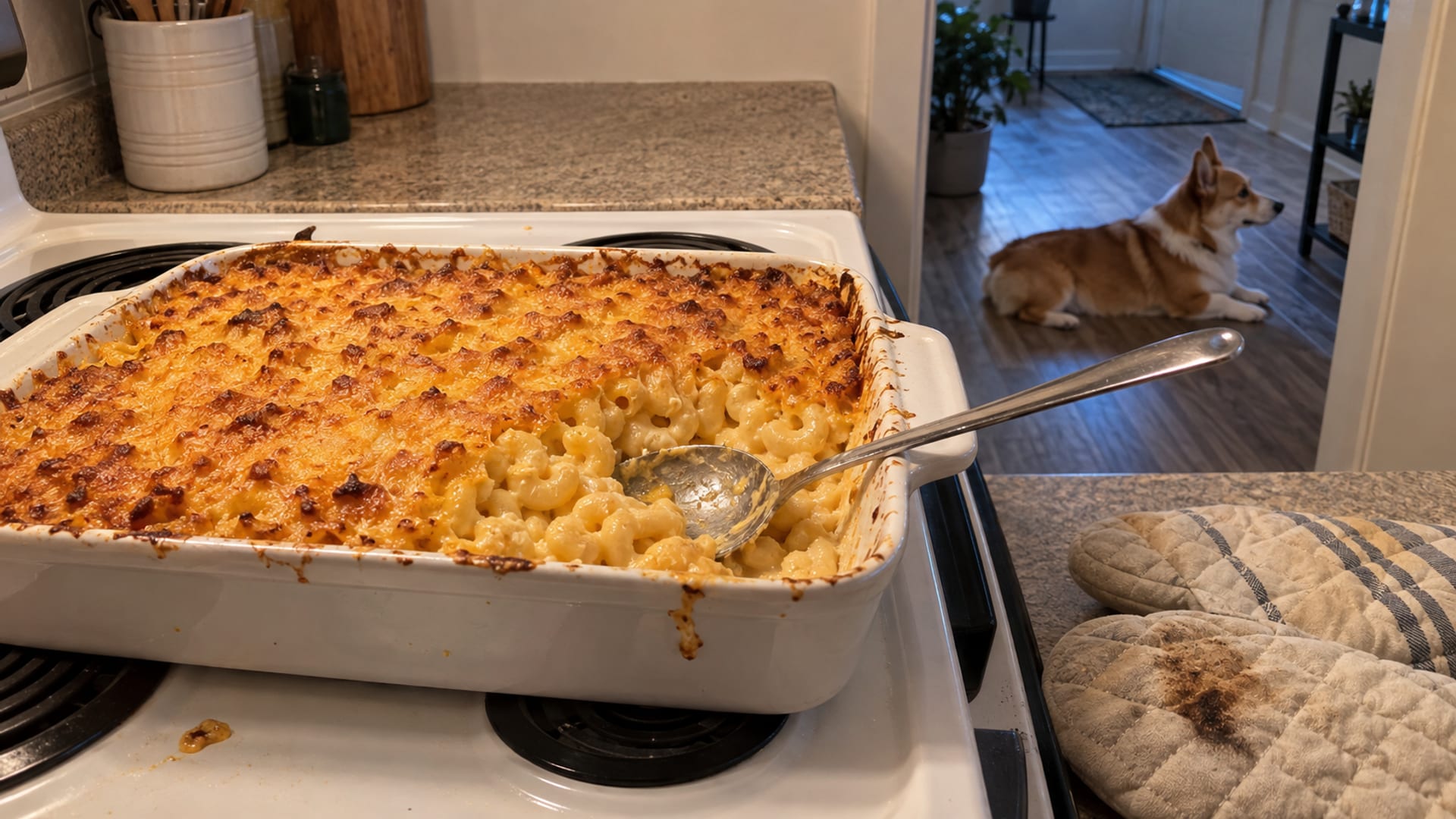
A small taste of plain mac and cheese is usually low risk for a healthy dog. What decides the rest is the recipe. Pasta and cheese on their own are not poisonous, but the sauce or seasoning packet can carry onion or garlic powder, plenty of salt and a lot of fat. Onion and garlic stay harmful after cooking and drying, according to a review of household food toxins in Frontiers in Veterinary Science.
If your dog licked a plate of plain boxed mac and cheese and is acting normal, you can watch them at home. If the recipe had onion, garlic, chives or an unknown seasoning, if your dog ate a big bowlful or the dry powder packet, or if they are small or have had pancreatitis, find the box or recipe and call your vet or a poison line.
Key takeaways
Tap a card to bring it forward.
- A taste of plain mac and cheese with no onion or garlic is usually low risk.
- Onion and garlic, fresh or powdered, raw or cooked, can damage a dog's red blood cells.
- That damage can take 3 to 5 days to show, so a dog that seems fine tonight still needs watching.
- Salt and fat are the other concerns, especially for small dogs and dogs with pancreatitis.
- Keep mac and cheese off the treat list. Recipes vary too much to know what is in each bite.
My dog ate mac and cheese: what to do now
Tap or hover a row to highlight it.
| What they ate | Next step |
|---|---|
| What they ateA lick or a spoonful of plain mac and cheese | Next stepWatch for vomiting or diarrhea over the next day or two. |
| What they ateA full bowl or a big share of the pot | Next stepCall your vet, especially for a small dog. |
| What they ateHomemade or baked mac and cheese with onion, garlic or chives | Next stepCall your vet or a poison line now, with the recipe. |
| What they ateThe dry cheese powder packet | Next stepCheck the packet for onion or garlic powder and salt, then call. |
| What they ateMac and cheese with bacon, sausage or ham | Next stepCall if it was more than a taste. Extra fat and salt add up. |
| What they ateUncooked dry macaroni | Next stepWatch for gagging, vomiting or belly pain, and call if any show up. |
| What they ateAny amount, for a dog with pancreatitis or kidney disease | Next stepCall your vet today. |
The ASPCA asks owners to note how much was eaten and contact a vet or poison control. Before you call, grab the box or write down what went into a homemade dish, and have a rough amount, the time and your dog's weight ready. The person on the phone decides whether your dog needs to be seen.
Go straight to an emergency vet for pale gums, weakness, fast breathing, dark urine, tremors, a seizure, collapse or trouble breathing.
Boxed, baked, homemade: which kind matters
Tap or hover a row to highlight it.
| Type | Concern | Why |
|---|---|---|
| TypePlain cooked macaroni, no sauce | ConcernLow in a small amount | WhyMostly starch |
| TypeBoxed mac and cheese with the powder packet | ConcernCaution | WhyThe packet may list onion powder, garlic powder and salt; read it |
| TypeHomemade stovetop or baked | ConcernCaution to high | WhyMany recipes add onion, garlic, butter and extra cheese |
| TypeWith bacon, sausage, ham or chorizo | ConcernCaution | WhyMore fat and salt, and meat is often seasoned with garlic or onion |
| TypeVegan mac and cheese | ConcernCaution | WhyOften cashews, oil, onion and garlic; check each ingredient |
| TypeWith jalapeño, hot sauce or spices | ConcernCaution | WhyCan irritate the stomach |
| TypeUncooked dry macaroni | ConcernLow toxicity | WhyHard pieces can be a choking or blockage risk for small dogs |
| TypeMac and cheese left out or spoiled | ConcernAvoid | WhySpoiled food brings its own risks |
Brand names help you find the box, and the ingredient list on that box is what answers the question. Formulas can differ between product lines and countries, and words such as "natural flavors" or "seasoning" do not tell you whether onion or garlic is in there. If you cannot see an ingredient list, treat the dish as if it might contain them.
The Merck Veterinary Manual says onion, garlic, leeks and chives cause poisoning whether raw, cooked, dried or powdered, and that garlic is three to five times more toxic than onion. Can dogs eat onions? and Can dogs eat garlic? cover those two in depth. For the cheese itself, see Can dogs eat cheese?
How much is a concern
There is no safe serving of mac and cheese to aim for, because no two pots are the same. What changes the risk is:
- Onion or garlic in any form. This is the main reason to call. Even a moderate helping of a garlicky baked dish is a different situation from a lick of plain boxed macaroni.
- Your dog's size. The same bowl is a much bigger dose for a 10-pound dog than for a 70-pound dog.
- Salt. Merck's page on salt toxicosis describes vomiting within several hours of too much salt, followed by weakness, diarrhea, tremors or seizures in severe cases. Make sure fresh water is out.
- Fat. Butter, cheese and meat add up. The Merck Veterinary Manual describes pancreatitis as a disease that can turn severe, with complications across the body.
- Breed. The Frontiers review reports that Akitas, Shiba Inus and Jindos carry red blood cell traits that may make them more sensitive to onion damage.
If you want to share something from the pot, a few pieces of plain cooked macaroni pulled out before the sauce goes on is the lower-risk choice.
Signs to watch for, and when they show
- Early stomach trouble: vomiting, diarrhea, drooling, a sore belly, going off food or low energy, often within the first day.
- Too much salt: heavy thirst, then vomiting within hours. Severe cases bring weakness, stumbling, tremors or seizures.
- Onion or garlic damage: Merck says red blood cell changes begin within 24 hours and peak around 72 hours, with red cells breaking down 3 to 5 days after the meal. Look for weakness, pale gums, fast breathing, a racing heart, tiring on walks, yellow eyes or gums, and red or brown urine.
- Pancreatitis: vomiting, belly pain, not eating and weakness after a rich meal. Call your vet if you see these.
"My dog has eaten mac and cheese off the kids' plates for years"
That happens in plenty of homes, and it may never have caused a problem. Your dog's experience is real. It is a record of the mac and cheese your dog happened to get, and it does not cover every recipe or every dog.
Boxed macaroni from one brand and a holiday casserole with sautéed onion and garlic are two different foods that share a name. A few noodles are a different amount from half a pan. A big dog shrugs off a portion that would matter to a small one. Some breeds handle onion worse than others. And because onion damage takes days to show, a dog that seemed fine at dinner is not proof the dish was harmless. When the recipe changes, the old track record stops applying.
Macaroni salad, cheesy pasta and other look-alikes
- Macaroni salad: often made with onion, garlic, mayonnaise and mustard. It is a different dish from plain macaroni.
- Cheesy pasta, shells and cheese, and cheese sauce: same questions. Check for onion, garlic and salt.
- Cheese itself: American cheese, string cheese and cream cheese each have their own entry.
- Cheese crackers: Can dogs eat Cheez-Its? covers salty cheese snacks.
- "Mac" meaning macadamia: macadamia nuts are a separate question for dogs and nothing to do with macaroni. See Can dogs eat nuts?
Check what you learned
Quick check
Questions about dogs and mac and cheese
Can dogs eat a little mac and cheese?
A small taste of plain mac and cheese with no onion or garlic is usually low risk. It is still best kept off the treat list, since recipes vary so much in salt, fat and seasoning.
What if the mac and cheese had onion or garlic powder?
Call your vet or a poison line with the box, the amount and the time. Onion and garlic powder are concentrated and stay toxic after cooking.
My dog seems fine. Is the danger over?
Not always. Red blood cell damage from onion or garlic can take 3 to 5 days to show, so keep watching for weakness, pale gums or dark urine.
Can dogs eat boxed mac and cheese?
Only the ingredient list on that box can answer it. Look for onion powder, garlic powder, chives, leeks and a high sodium number. A small taste without those is lower risk than a big bowl of a seasoned one.
What signs mean my dog needs a vet right away?
Vomiting that repeats, severe diarrhea, weakness, pale gums, fast breathing, dark urine, yellow eyes or gums, tremors, seizures, collapse or trouble breathing.
Sources
Checked September 24, 2026.
- ASPCA, People Foods to Avoid Feeding Your Pets
- Merck Veterinary Manual, Garlic and Onion (Allium spp) Toxicosis in Animals
- Merck Veterinary Manual, Salt Toxicosis in Animals
- Merck Veterinary Manual, Pancreatitis in Dogs and Cats
- Verma SK and others, Household Food Items Toxic to Dogs and Cats, Frontiers in Veterinary Science, 2016