
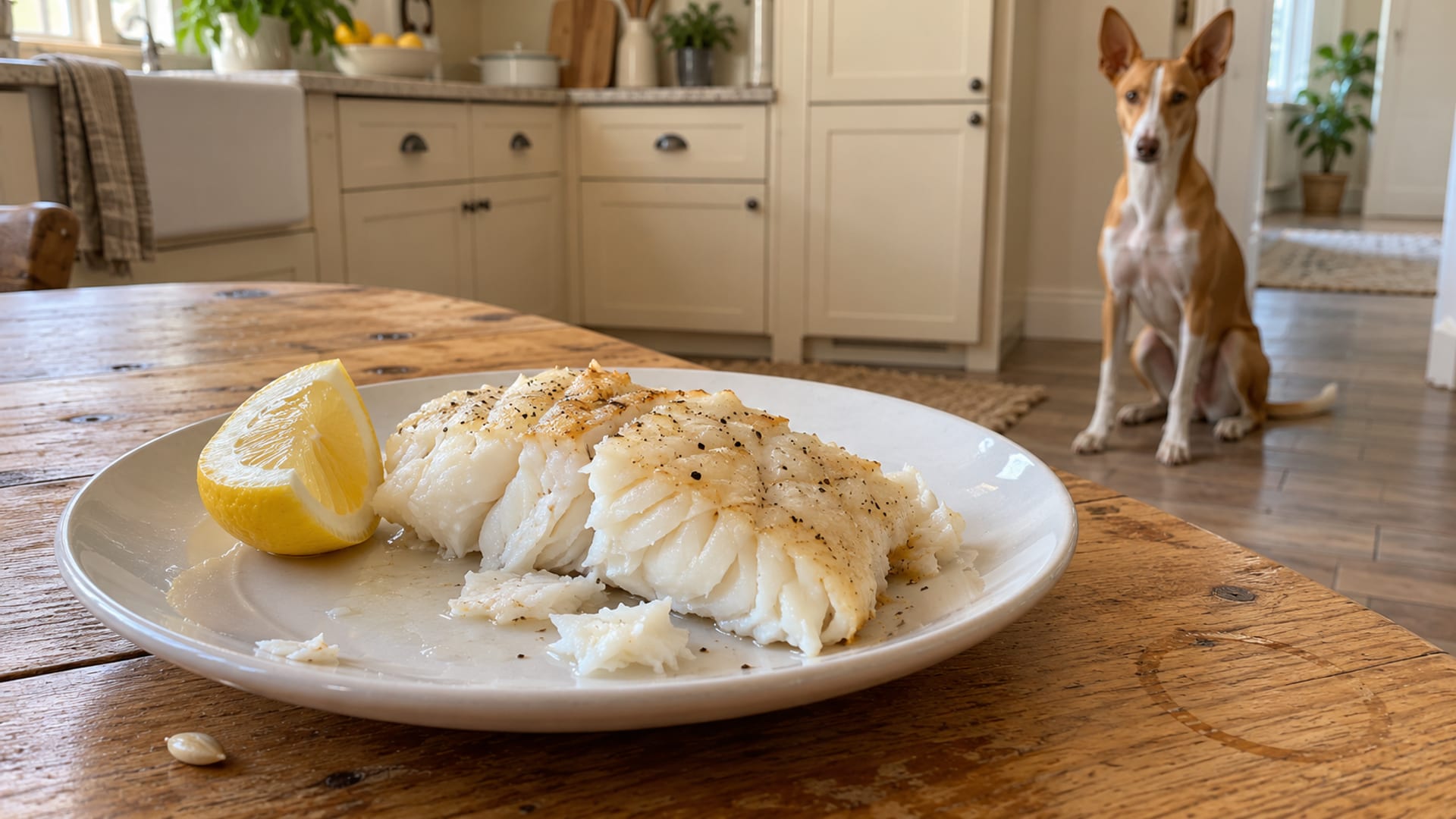
Yes. A small portion of plain, fully cooked, cooled, boneless cod is a fine occasional treat for most dogs, and the AKC says dogs should eat fish fully cooked. What changes the answer is the form: raw or undercooked cod, bones, salt cod, smoked or fried cod, and cod cooked with onion, garlic or sauces are a different situation. If your dog already got some, start with the steps below, and call your vet about any bones, salty or seasoned fish, or vomiting, weakness or trouble swallowing.
Key takeaways
Tap a card to bring it forward.
- Plain, fully cooked, cooled, boneless cod in a small portion is an acceptable occasional treat.
- Bones, skin, heads and whole fish can cause choking, gut injury or a blockage, and raw or undercooked cod can carry parasites and bacteria.
- Salt cod (bacalao seco), smoked, fried, battered and sauced cod are not plain cod, because of the salt, the fat and seasonings like onion and garlic.
- Cod liver oil is a separate product with concentrated vitamins A and D, so it needs your vet's direction.
- Choking, repeated vomiting, bloody stool, collapse or severe weakness means an emergency vet visit now.
What to do if your dog already ate cod
The first few minutes are about working out which kind of cod it was, because the form matters more than the fish. Here is the order I would go in.
- Take away whatever is left, and work out the form. Was it raw, cooked, salted, smoked or fried, and did it have bones? The answer sorts a harmless snack from a vet call.
- Check for choking or trouble breathing. Gagging, pawing at the mouth or repeated swallowing after fish with bones needs an emergency vet right away, as Pet Poison Helpline advises for choking and breathing difficulty.
- Keep the package, menu or recipe. Your vet will want to know about salt, onion, garlic, alcohol or sauce, and a label answers that faster than memory.
- Estimate how much your dog ate. A lick and a whole fillet call for different responses, and a puppy or very small dog gets a bigger dose from the same bite.
- Call your vet if the fish was raw or undercooked, heavily salted, smoked or seasoned, had bones, or was a large or unknown amount. The same goes for a puppy, a very small dog, or a dog with a health condition that makes dehydration or sodium riskier.
- If it was a small amount of plain, cooked, boneless cod and your dog is acting normal, watch them and call your vet if any worry comes up.
- Hold off on hydrogen peroxide, salt, oil or any medication unless your vet or a poison line tells you to give it, because home remedies can add a second problem to the first.
Which forms of cod are fine and which are not
Cod is a mild white fish and is not poisonous to dogs by itself. The trouble comes from how it was prepared and what came with it. This table follows the FDA seafood guidance and the AVMA policy on raw animal protein.
Tap or hover a row to highlight it.
| Form | Call | Why |
|---|---|---|
| FormPlain cooked fillet, boneless | CallFine in moderation | WhyNo salt, oil or seasoning to worry about |
| FormRaw or undercooked cod | CallAvoid | WhyRaw seafood can carry parasites and bacteria, and the AVMA advises against raw or undercooked animal protein |
| FormBones, skin, head, fins, whole fish | CallAvoid | WhyChoking, gut injury or a blockage |
| FormSalt cod or dried bacalao | CallAvoid unless fully desalted and plain | WhySalt-cured fish can be very high in sodium |
| FormSmoked cod or cod jerky made for people | CallAvoid | WhySubstantial sodium, and it may keep foodborne germs |
| FormFried, battered cod, fish sticks, restaurant cod | CallAvoid | WhyBreading, oil, salt, and sauces that may hold onion or garlic |
| FormCanned cod | CallOnly plain, low-sodium, packed in water | WhyBrine, oil, sauce or seasoning make it a poor choice |
| FormCod liver oil | CallOnly with your vet's direction | WhyConcentrated vitamins A and D |
| FormCod roe or milt | CallSkip it | WhyNot the same as boneless cod flesh, so skip it |
How much to give and how to serve it
Keep it small and occasional. A few flakes of plain cooked cod, cooled, with every bone removed, is the right size of serving for most dogs, and it should fit inside your dog's normal calorie allowance for the day. The AKC also says to limit fish to no more than twice a week.
Cook it all the way through, and let it cool. Leave out salt, butter, oil, garlic, onion, sauces, batter and seasoning; a fillet you pan-fried in garlic butter is not the one to share. If you are baking cod for dinner, set aside a plain piece before you season the rest.
Some dogs need extra care. Small dogs and puppies take in more per pound of body weight from the same bite, they dehydrate faster after vomiting or diarrhea, and a relatively large bone is more likely to block a puppy. Senior dogs and dogs with kidney, heart or blood pressure disease may handle high-sodium foods poorly. A dog with pancreatitis or a fat-sensitive stomach should not get fried, oily or fatty cod, and a dog with diabetes should not get sweet sauces or breaded pieces. If any of that is your dog, ask your vet before sharing fish at all.
Signs to watch for and when they show up
After plain cooked cod, your dog may show nothing at all. A dog can still get a short bout of vomiting or diarrhea from a new food, a big portion, or the fat and oil in a dish.
Raw or contaminated fish is different. Foodborne bacterial illness commonly causes vomiting, diarrhea, belly discomfort, tiredness and less interest in food, and the FDA says illness from dangerous foodborne bacteria usually appears within 1 to 3 days after eating the contaminated food. So, a dog that seems fine tonight after raw fish is not yet in the clear.
Bones can cause trouble right away or later on. Watch for gagging, repeated swallowing, vomiting, belly pain, constipation or bloody stool, because those can point to a blockage or an injury inside the gut. Salty fish can cause sodium-related illness, so a dog that ate salt cod and seems off should see a vet promptly.
Go to an emergency vet for choking or trouble breathing, repeated vomiting, bloody diarrhea, collapse, severe weakness, tremors, seizures or marked belly pain.
My dog ate it before and was fine
That story is real, and I take it at face value. Plenty of dogs have eaten a piece of fish off a plate and shrugged it off. It just is not a rule for the next time, and there are ordinary reasons why one dog is fine and another is not.
The amount may have been small, and a small exposure may not cause illness even when a bigger one would. The dog may have been larger, so the same bite was less per pound. The fish may have been fully cooked, plain and boneless, which is a very different food from raw, salted or seasoned fish. The fish may simply not have carried a parasite or germ that day. And dogs differ in how they react to a new food.
A dog that shows no signs also has not proved the food is safe for good, because some problems take days to show. The choices that keep it safe are the ones already covered: cooked all the way, plain, boneless and small.
Cod products and look-alikes
Most cod questions come from a holiday plate or a freezer aisle, so here are the forms people run into.
Bacalao and salt cod. In many markets bacalao means salted or dried cod, especially in holiday dishes, while fresh cod is bacalao fresco. Fresh cod and salt cod are not interchangeable for dogs. If a dog got into a pan of bacalao that had not been soaked and desalted, call your vet about the salt.
Fish sticks, fish and chips, cod cakes. These are prepared foods. Expect breading, oil, salt and sometimes onion or garlic, and treat a dog that ate them as you would any fried and seasoned food.
Cod liver oil. It is a concentrated oil that can deliver a lot of vitamin A and vitamin D. Give it only if your vet tells you to.
Cod treats and cod-based dog food. The word cod on the bag does not settle safety. Read the whole ingredient panel for sodium, fat and bones, and follow the feeding directions on the label.
Names that get mixed up. The FDA fish-name list translates cod as bacalao and hake as merluza, so merluza is not cod. Pollock is a relative of cod but a different product, and black cod usually means sablefish. Abadejo can mean different fish depending on the region.
Salmon. Ordinary cod is not the fish behind salmon poisoning disease. Merck Veterinary Manual ties that infection to raw or undercooked salmon, trout and similar fish in the Pacific Northwest, with signs that usually start 5 to 7 days after eating and sometimes up to 33 days later. If your question is about salmon, that page covers it, and the general page on fish and on fish bones covers the rest.
Check what you learned
Three quick questions to see whether the main points stuck.
Quick check
Questions about dogs and cod
Can puppies eat cod?
A puppy gets a bigger dose from the same bite and can dehydrate faster after vomiting or diarrhea, so ask your vet before adding fish to a puppy's diet. If a puppy swallowed bones, call the vet the same day, since a bone that a grown dog passes can block a small gut.
Can dogs eat cod skin, heads or fins?
Skip them. Skin, heads, fins and whole fish come with bones that can cause choking, injury or a blockage, and the plain flesh is the only part worth sharing.
Can dogs eat cod roe?
Leave it out. Roe and milt are not the same as boneless cod flesh, so ask your vet before you offer it.
What about cod jerky or cod treats made for dogs?
Read the label first. A treat made for dogs and fed according to its directions is a different case from human smoked fish, which can carry a lot of sodium. Check the ingredient panel for salt, fat and any bones.
Is cod cooked with onion or garlic dangerous?
Sources
Checked September 29, 2026.
- American Kennel Club, Which Human Foods Can Dogs Eat and Which Are Dangerous?
- American Veterinary Medical Association, Revised Policy on Raw or Undercooked Animal-Source Protein in Cat and Dog Diets
- FDA, Fish and Fishery Products Hazards and Controls Guidance
- FDA, Selecting and Serving Fresh and Frozen Seafood Safely
- FDA, FDA and EPA Advice About Eating Fish, Fish Name Translations
- Merck Veterinary Manual, Salmon Poisoning Disease and Elokomin Fluke Fever in Dogs
- Pet Poison Helpline, Emergency