
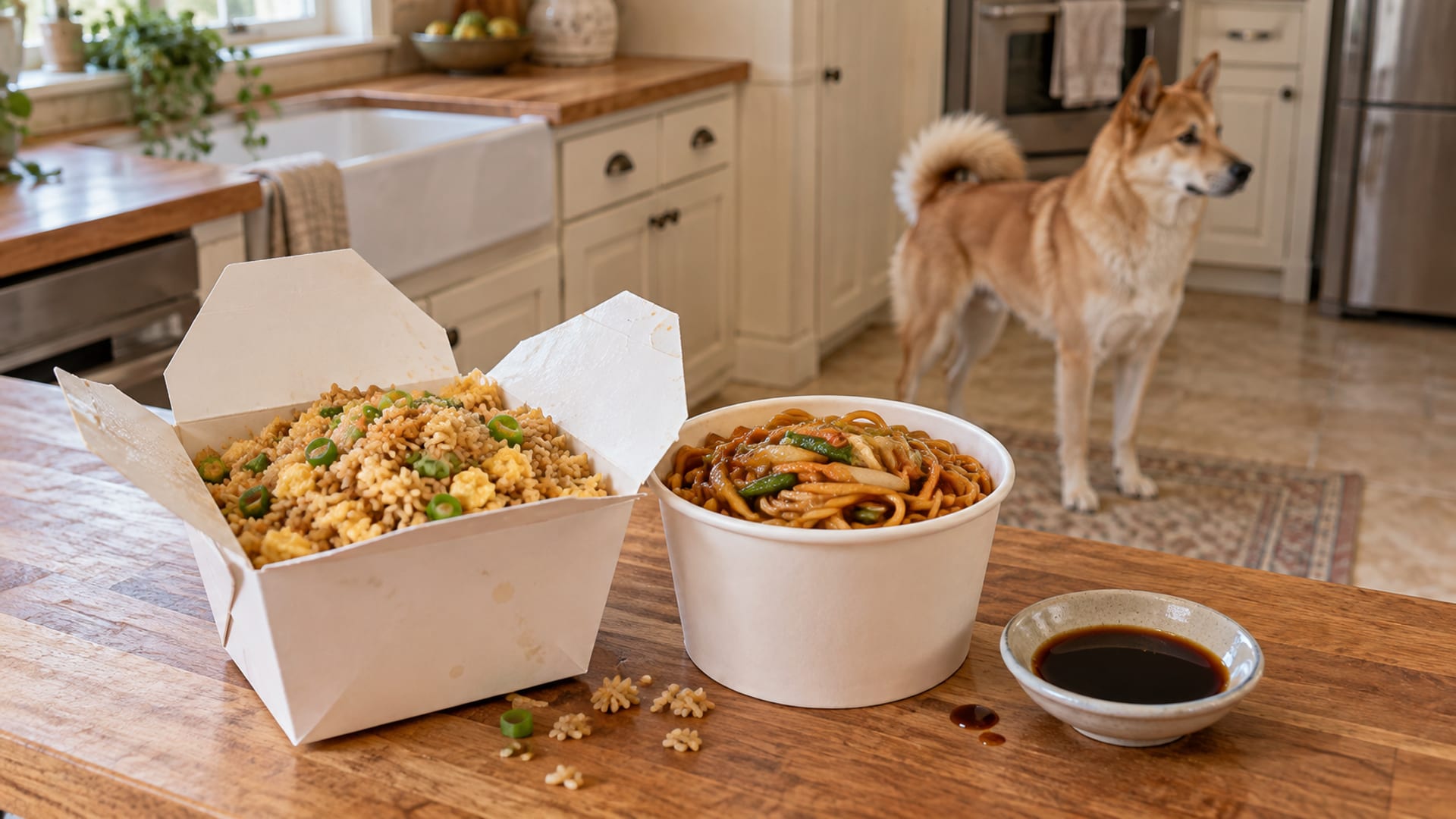
Only the plain parts, and only a little. A small amount of plain, fully cooked, unseasoned rice, meat, egg or tofu is lower risk, while restaurant dishes often carry onion, garlic, scallions, seasoning powders, salty sauces and heavy fat, and sometimes bones or alcohol, and those are what drive the risk.
If your dog already got into the leftovers, find the carton, work out which dish it was and how much is gone, and call your vet or a pet poison line now if it had onion or garlic powder, garlic sauce, scallions or bones, or if the amount is large or unknown. Make that call even if your dog looks normal tonight, because the Merck Veterinary Manual reports that onion and garlic damage to red blood cells commonly shows up 3 to 5 days later.
Key takeaways
Tap a card to bring it forward.
- A small amount of plain, fully cooked, unseasoned rice, meat, egg or tofu is the lower-risk part of a Chinese meal.
- Onion, garlic, scallions, chives and leeks can harm dogs raw, cooked or powdered, and powders are the most concentrated form.
- Call for garlic sauce, seasoning powder, bones, alcohol, xylitol, chocolate, a large or unknown amount, or any signs.
- A dog that seems fine tonight still needs watching for several days.
- Greasy dishes call for extra care in a dog that has had pancreatitis.
What to do if your dog already ate Chinese food
Work through these in order. Together they give the person on the phone what they need to judge how serious this is.
- Pull the carton, bag and receipt out of the trash. The dish name and any ingredient list show whether onion, garlic or a seasoning powder was in it, and Pet Poison Helpline says having the container or label in hand saves time on the call.
- Estimate how much is missing. A few grains of rice and half a carton of lo mein are very different exposures.
- Note the time and your dog's weight. The weight turns the amount into a dose, and the same bite is a bigger dose for a small dog.
- Call now for the higher-risk cases. Onion or garlic powder, garlic sauce, scallions, a large or unknown amount, bones, alcohol, xylitol, a chocolate dessert or any sign of illness all mean a call right away, before anything shows up.
- Keep watching for several days. Onion and garlic damage builds slowly, so a quiet first evening does not settle it.
Calling early matters because, per the Merck Veterinary Manual, treatment for onion and garlic poisoning starts with early decontamination of the gut.
Which parts of a takeout meal are lower risk and which are not
A Chinese meal is a mix of ingredients, each with its own risk. The ASPCA lists onion, garlic, chives, alcohol, salt, xylitol and fatty foods among the people foods to keep from pets, and many restaurant dishes hold more than one.
Tap or hover a row to highlight it.
| Item | Main concern | Risk level |
|---|---|---|
| ItemPlain steamed white rice | Main concernLittle, if nothing was added | Risk levelLower in a small amount |
| ItemPlain cooked chicken, pork, shrimp, egg or tofu | Main concernRestaurant cooking may add oil, salt, sauce or garlic | Risk levelLower only if truly plain |
| ItemFried rice, lo mein, chow mein | Main concernOil, salty sauce, scallions, possible onion or garlic | Risk levelCaution |
| ItemEgg rolls and dumplings | Main concernFried or fatty, fillings that may hold onion, garlic or chives | Risk levelCaution |
| ItemGeneral Tso's, orange or sweet and sour chicken | Main concernFried coating, salty sauce, possible garlic | Risk levelCaution |
| ItemSoy, hoisin, oyster and garlic sauces | Main concernSalt, possible onion or garlic | Risk levelAvoid |
| ItemSeasoning packets, onion or garlic powder | Main concernConcentrated onion or garlic | Risk levelCall a vet |
| ItemSpare ribs or wings with bones | Main concernChoking, gut injury or blockage | Risk levelCall a vet |
Onion, garlic, scallions, chives, leeks and shallots all belong to the onion family, called Allium. The Merck Veterinary Manual says raw, cooked, dehydrated and powdered forms can all poison dogs, that powders are more concentrated, and that garlic is 3 to 5 times more toxic than onion. The scallions on fried rice count too.The Onions and Garlic entries cover each one on its own.
Salt comes next. Soy sauce and the other brown sauces are heavy in sodium, and Pet Poison Helpline says too much salt can cause vomiting, diarrhea, thirst, tremors and seizures, with brain swelling and death possible after a large exposure. Fat is its own problem: the Merck Veterinary Manual names large amounts of table scraps among the common risk factors for pancreatitis, a painful inflammation of the pancreas.
Cooked poultry bones can choke a dog or block the gut (see Chicken bones). Alcohol and Chocolate cause their own poisonings, and the FDA warns that the sweetener xylitol is dangerous for dogs.
Sharing a plain bite, and how much of the risky part is a concern
If you want to share, the lower-risk bite is a small amount of plain, fully cooked, boneless food with nothing on it: a spoonful of steamed Rice, a bit of plain chicken, plain scrambled Eggs or a cube of plain tofu. No sauce, onion, garlic, scallions, seasoning powder or greasy pieces. Anything that sat in sauce counts as sauced, so take the bite from the plain rice before it touches the rest of the meal.
If your dog has ever had pancreatitis, skip greasy food entirely. The Merck Veterinary Manual says these dogs should not get fatty table scraps, and lo mein or egg rolls are exactly that. If your dog with that history already ate some, mention it when you call.
Tap or hover a row to highlight it.
| Ingredient | Amount reported | What the figure covers | Source |
|---|---|---|---|
| IngredientRaw onion | Amount reportedAbout 15 to 30 g per kg of body weight | What the figure coversClinical signs seen in dogs | SourceMerck Veterinary Manual |
| IngredientGarlic | Amount reported3 to 5 times more toxic than onion | What the figure coversRelative strength; no single dose given | SourceMerck Veterinary Manual |
| IngredientSalt | Amount reportedAbout 1.5 g per lb (about 3.3 g per kg) | What the figure coversSalt poisoning in general | SourcePet Poison Helpline |
None of these can be applied to a carton of fried rice, because every kitchen uses different amounts and some use powders. For a mixed dish, call with your dog's weight, the dish name, what you know of its ingredients and how much is gone, and let the vet or poison line work out the risk.
Signs to watch for over the next several days
Two timelines run at once. The stomach comes first: vomiting, diarrhea, nausea, poor appetite, belly discomfort and thirst. A fatty meal can lead to pancreatitis, with vomiting, belly pain, low energy and refusing food. Salt poisoning, per Pet Poison Helpline, can move from thirst and vomiting to tremors, wobbly walking and seizures.
Onion and garlic run slower. The Merck Veterinary Manual reports that red blood cell changes begin within about 24 hours and peak at about 72 hours, and that obvious signs commonly appear 3 to 5 days after eating:
- weakness, low energy or tiring quickly on walks
- pale gums
- fast breathing or a fast heart rate
- yellow gums, skin or eyes
- dark or red-brown urine
- collapse
Check your dog's gum color once a day during that stretch. Call right away for any of those signs, or for repeated vomiting, severe diarrhea, belly pain, tremors or seizures. At worst, the sources describe severe anemia, kidney injury, organ failure and death, while a small bite with nothing toxic in it may cause no signs at all.
My dog ate Chinese food before and was fine
Plenty of dogs have cleaned up a plate of leftovers and stayed well, and if that happened with your dog, it happened. It still can't predict this meal, because the details change every time.
The onion or garlic might have been a small amount spread through a big dish. A larger dog gets a lower dose per pound. Your dog might have eaten the plain rice and left the sauce. Pet Poison Helpline notes that amount, size, allergies and other factors all affect how toxic onion is for a given dog. A mild upset stomach can pass unnoticed, and because the anemia takes days to show, a dog that looks fine the next morning may not be there yet.
That earlier meal was real. It just doesn't carry over to a different dog, dish or amount.
Dishes, sauces and names that get mixed up
"Chinese food" can mean takeout, home cooking, dim sum, hot pot or a frozen entrée, and each has its own ingredients. A few names deserve a closer read.
- Green onion, scallion and spring onion are onion family members. Treat them as onion, even as garnish.
- Garlic sauce, garlic chicken and anything called "seasoning" may hold concentrated garlic or onion. Pet Poison Helpline has described a dog poisoned by food and cooking oil seasoned with onion and garlic powder.
- Chinese five-spice is a blend that varies by brand. Check the label for garlic or onion.
- Soy, hoisin, oyster, black bean and duck sauce are different products. Their shared concern is usually sodium, sugar or added ingredients.
- Rice wine may contain alcohol. Rice vinegar is a different product.
- Chinese sausage can be high in fat, salt, preservatives and seasoning, so it isn't the same as plain Pork.
- Fortune cookies vary by maker. Chocolate, xylitol, raisins or macadamia nuts in one bring a separate hazard.
- Hot pot can mean broth, raw meat, seafood, noodles or dipping sauces, and raw meat or seafood can carry germs that cause food poisoning.
Check what you learned
Three quick questions on what matters most tonight.
Quick check
Questions about dogs and Chinese food
These tend to come up once the first worry passes.
Does it matter if a puppy or small dog ate it?
Yes. One egg roll is a bigger dose for a Chihuahua than for a Labrador, and puppies and seniors may have less reserve, so mention your dog's age when you call.
Are some breeds more sensitive to onion and garlic?
Pet Poison Helpline says Japanese breeds such as Akitas and Shiba Inus are more sensitive. With one of these dogs, treat any takeout with onion or garlic as a reason to call.
What if my cat got into the same leftovers?
Cats are more sensitive than dogs. The Merck Veterinary Manual reports poisoning in cats after less than a teaspoon of cooked onion or 5 g per kg of raw onion, so a cat that ate onion or garlic dishes should be checked promptly.
Is plain chicken and rice from a Chinese restaurant safe?
It's lower risk than the sauced version, but "plain" on a menu doesn't always mean unseasoned. It may be cooked in oil flavored with garlic or onion powder, or carry extra salt, fat or small bones. If you can't confirm what went in, keep the portion tiny or skip it.
My dog licked up a little soy sauce. Is that an emergency?
A small lick is not a toxic salt dose. A bigger amount, like a knocked-over dish or several packets chewed open, is worth a call, and watch for vomiting, diarrhea and heavy thirst in the hours after.
Sources
Checked September 25, 2026.
- Merck Veterinary Manual, Garlic and Onion (Allium spp) Toxicosis in Animals
- Merck Veterinary Manual, Pancreatitis and Other Disorders of the Pancreas in Dogs
- ASPCA, People Foods to Avoid Feeding Your Pets
- Pet Poison Helpline, Top 10 Dog Poisons
- Pet Poison Helpline, Onions Are Toxic To Dogs
- Pet Poison Helpline, Should You Give Salt to Your Dog
- Pet Poison Helpline, Counter-Surfing Pooch Poisoned by Poultry Seasonings
- U.S. Food and Drug Administration, Paws Off Xylitol; It's Dangerous for Dogs