
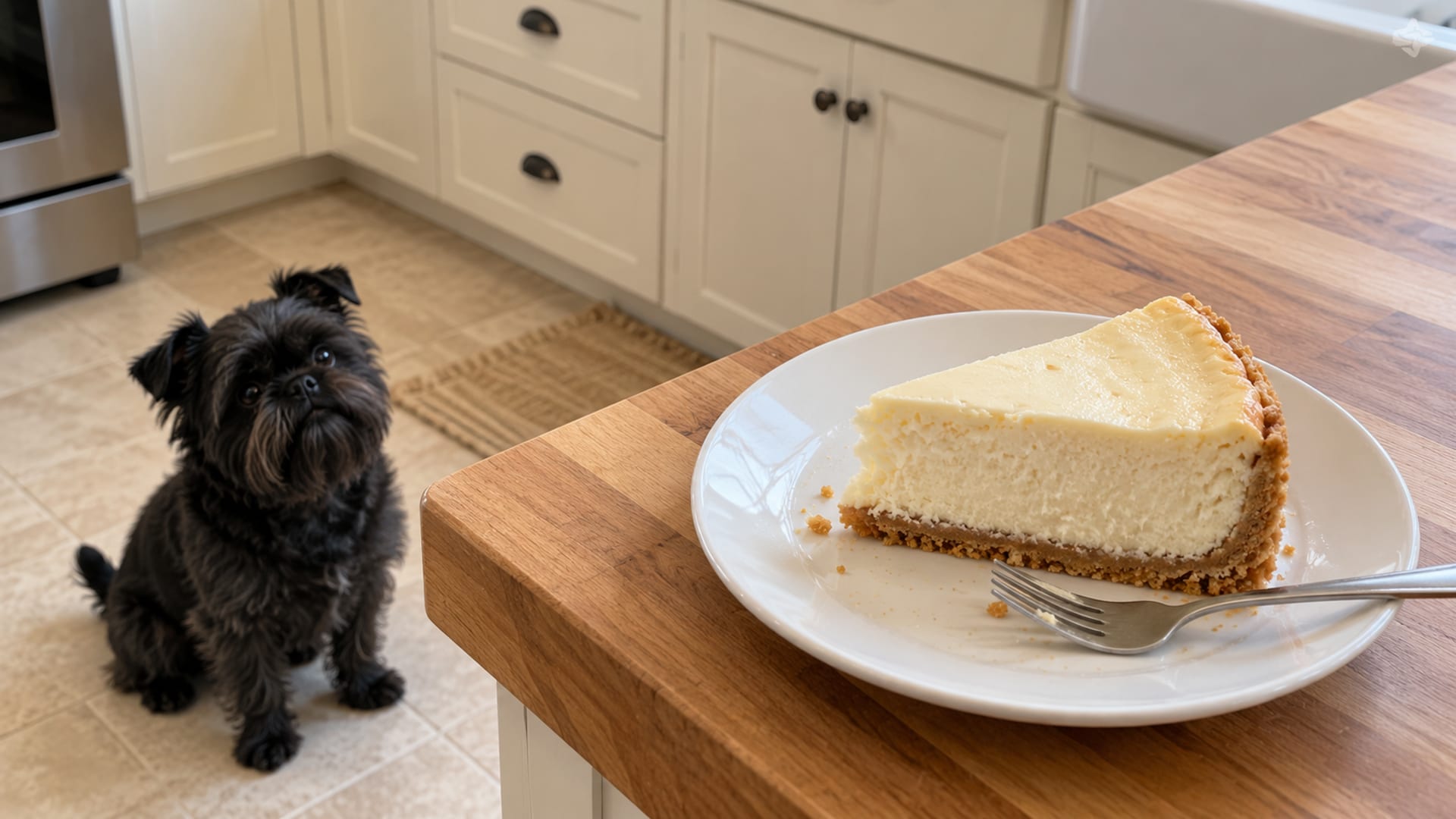
Cheesecake is a caution food for dogs: a small bite of plain cheesecake is usually not a poison, but it is heavy in fat, sugar and dairy, and the recipe decides how serious the night gets. If your dog just licked a plate or stole a slice, find the box, label or recipe first, because xylitol, chocolate, raisins or grapes, alcohol, macadamia nuts, or savory onion, garlic or chives make this a call-now situation.
If the cheesecake was plain, the piece was small and your dog is healthy, watching at home is usually reasonable. Call your vet or a pet poison line right away if a risky ingredient is in it, if you can't tell which sweetener was used, if a small dog ate a big share, or if your dog has had pancreatitis before. Keep watching for several days either way, since Pet Poison Helpline reports that vomiting after a fatty meal can start one to four days later.
Key takeaways
Tap a card to bring it forward.
- Plain cheesecake isn't a named dog poison, but its fat and dairy can cause vomiting, diarrhea or pancreatitis.
- Xylitol, chocolate, raisins, grapes, alcohol, macadamia nuts, onion or garlic in the recipe means calling a vet or poison line now.
- A large piece, a small dog, or a dog with past pancreatitis is reason to call even for plain cheesecake.
- Pancreatitis signs can appear one to four days after a fatty meal.
- Cheesecake is best kept off the dog's menu; it has no safe serving size.
What to do if your dog already ate cheesecake
The first few minutes are about gathering the facts a vet or poison line will ask for.
- Put the rest out of reach. That stops a second helping and shows you how much is missing.
- Find the label, box or recipe. Look for xylitol (also sold as birch sugar or wood sugar), chocolate or cocoa, raisins, grapes, alcohol or liqueur, macadamia nuts, and in savory versions onion, garlic or chives. The Merck Veterinary Manual explains that xylitol can cause a fast drop in blood sugar and liver injury in dogs, so a sugar-free label gets checked first.
- Write down how much, when, and your dog's weight. The ASPCA advises noting the amount before you call, and the weight lets the vet work out the dose for your dog's size.
- Call now if any red flag fits. That includes a risky ingredient, an unknown sweetener, a large piece for a small dog, past pancreatitis, or signs such as repeated vomiting, belly pain, weakness or tremors.
- Hold off on home treatment. Don't give medicine or home remedies unless told to, since the right step depends on the recipe.
- Keep watching for four days. Fatty-meal pancreatitis can arrive late.
Which cheesecakes carry the bigger risk
Every cheesecake shares the same base of fat, sugar and dairy. What gets added to that base is what can turn a stomach upset into a poisoning.
Tap or hover a row to highlight it.
| Form | What matters | What to do |
|---|---|---|
| FormPlain baked or no-bake | What mattersFat and dairy can cause vomiting, diarrhea or pancreatitis | What to doWatch four days; call if signs appear |
| FormGraham cracker crust | What mattersButter, sugar and sometimes nuts | What to doCheck for nuts; the extra fat adds risk |
| FormFrozen | What mattersStill fatty dairy; a big frozen chunk can be a choking concern | What to doWatch breathing, then treat it like plain |
| FormChocolate or cocoa | What mattersTheobromine and caffeine are toxic to dogs | What to doCall now with the type and amount |
| FormSugar-free | What mattersMay contain xylitol | What to doCall now if xylitol is listed or you're unsure |
| FormRaisin or grape | What mattersCan cause kidney injury | What to doCall now, whatever the amount |
| FormMacadamia nut | What mattersCan cause weakness, tremors and overheating | What to doCall now |
| FormLiqueur or Irish cream | What mattersMay contain real alcohol | What to doCall if the label lists alcohol |
| FormSavory cheese cake | What mattersMay contain onion, garlic, chives or a lot of salt | What to doCall now if any are in it |
| FormFruit-topped slice | What mattersDepends on which fruit | What to doConfirm the fruit before deciding |
Chocolate is the one people underestimate. The Merck Veterinary Manual says the risk depends on how concentrated the chocolate is, and dark and baker's chocolate carry more than milk chocolate. For raisins, Pet Poison Helpline notes that the amount that harms a dog's kidneys is unpredictable. The ASPCA lists alcohol, onions, garlic and chives among the people foods that can seriously harm pets. The entries on Chocolate, Grapes and raisins, Alcohol and Nuts go further on each add-in.
How much cheesecake is too much for a dog
The cautious answer is not to share cheesecake on purpose. The AKC suggests a small cube or a few shreds of plain cheese as an occasional treat, and still warns that too much fat can lead to obesity and pancreatitis. Cheesecake adds sugar, butter and eggs to cream cheese, so that guidance doesn't stretch to a slice. For a dairy treat, the Cheese and Cream cheese entries are the better starting point.
For the risky part, these published figures are for single ingredients, per kilogram of the dog's body weight. They apply to the ingredient itself, never to a gram or slice of cheesecake.
Tap or hover a row to highlight it.
| Ingredient | Figure for dogs | Source |
|---|---|---|
| IngredientXylitol | Figure for dogsDoses above about 100 mg/kg have been linked to low blood sugar | SourceMerck Veterinary Manual |
| IngredientChocolate (theobromine and caffeine) | Figure for dogsReported oral LD50 of 100 to 200 mg/kg; severe signs and death can occur at lower doses | SourceMerck Veterinary Manual |
| IngredientSalt | Figure for dogsSigns after about 2 to 3 g/kg; acute lethal dose about 4 g/kg | SourceMerck Veterinary Manual |
| IngredientFat in plain cheesecake | Figure for dogsRisk depends on the amount, how fast it was eaten and the dog | SourceJAVMA review, 2025 |
LD50 is the dose reported to kill half of exposed animals, and the Merck Veterinary Manual notes that dogs vary and can get very sick below it. The salt figures come from the Merck Veterinary Manual and matter mostly for savory cheese cakes. For plain cheesecake, a 2025 JAVMA review ties pancreatitis risk to the type and amount of fat, how quickly it was eaten, and factors in the dog such as obesity and blood fat disorders. The useful step is a phone call with your dog's weight and your best guess at the amount.
The same slice gives a small dog a much higher dose per kilogram than a large one. The Merck Veterinary Manual names Miniature Schnauzers, Yorkshire Terriers, Cocker Spaniels, Dachshunds, Poodles and sled dogs among the breeds that get pancreatitis more often. Dogs with past pancreatitis, extra weight, high blood fats or a prescribed low-fat diet have extra reason to skip cheesecake, and a diabetic dog shouldn't get it as a routine treat because of the sugar.
Signs to watch for and when they can show up
After plain cheesecake, the usual trouble is an unhappy stomach: vomiting, diarrhea, gas, belly discomfort, less appetite or a tired dog. Dairy upset tends to show fairly soon after eating.
Pancreatitis is the slower worry. Pet Poison Helpline reports vomiting one to four days after a fatty meal, and the Merck Veterinary Manual lists vomiting, belly pain, diarrhea, weakness, dehydration, tiredness and loss of appetite, with severe cases leading to organ failure.
Risky add-ins bring their own signs:
- Xylitol: vomiting, tiredness, wobbly walking, low blood sugar, seizures and possible liver damage, per the Merck Veterinary Manual.
- Chocolate: vomiting, diarrhea, extra thirst and urination, restlessness, a racing or irregular heartbeat, tremors and seizures.
- Alcohol: vomiting, poor coordination, depression, trouble breathing and tremors, as the ASPCA describes.
- Salt: vomiting, diarrhea, weakness, stumbling, tremors and seizures.
- Raisins or grapes: kidney injury, which may not be visible at first.
Call your vet the same day for repeated vomiting, severe diarrhea, belly pain, weakness, tremors, seizures, collapse, trouble breathing, loss of coordination or a dog much duller than normal.
My dog ate cheesecake before and was fine
That happened, and plenty of dogs have licked a cheesecake plate with nothing to show for it. It just doesn't carry over to the next slice or the next dog. A lick of filling is far less than half a piece with crust, a small dog takes in more per kilogram, and last year's plain slice says nothing about tonight's chocolate one.
Dogs differ, too. The AKC points out that some dogs handle dairy poorly, and the 2025 JAVMA review describes pancreatitis risk as varying from dog to dog. Because a fatty-meal reaction can start days later, a dog that looked fine that evening may not have been fine by the weekend. A past good outcome is still no reason to offer cheesecake again.
Cheesecake products and names that get mixed up
The name covers a lot of foods, so the label matters more than the word. Cheesecake filling, cheesecake bites, cheesecake-flavored Ice cream or Yogurt, and cheesecake-flavored dog treats each need their own ingredient check.
"Sugar-free" can mean the maker only removed table sugar, or that they used xylitol, so look for xylitol, birch sugar or wood sugar in the sweetener list. Chocolate cheesecake might use cocoa, baker's chocolate, dark or milk chocolate, or chips, each with a different amount of theobromine.
Strawberries and blueberries are a separate question from grapes and raisins; the Strawberries and Blueberries entries cover them. A savory cheese spread can hide Onions, Garlic or a lot of salt, and a crust of Graham crackers and butter adds more fat. All of this is why cheesecake is simplest kept for the people at the table.
Check what you learned
Three quick questions on the parts that matter most if it happens again.
Quick check
Questions about dogs and cheesecake
These cover the situations around the edges of a cheesecake mishap.
My puppy ate cheesecake. Is that different from an adult dog?
Puppies can dehydrate faster from vomiting or diarrhea, so a puppy that gets sick after cheesecake needs a call sooner. Their size also means a higher dose per kilogram from the same bite.
My cat got into the cheesecake too. Does the same advice apply?
Cats can get similar stomach trouble from the dairy and fat, and chocolate, xylitol products, alcohol, raisins, onions and garlic are hazards for them too. The dog figures here don't apply to cats, so call your vet about the cat separately.
Is homemade no-bake cheesecake with raw eggs riskier?
Raw eggs or unpasteurized dairy can carry bacteria, an extra concern on top of the fat and sugar. Skipping the oven doesn't lower the fat risk, so a no-bake slice gets the same watching.
My dog ate cheesecake from a restaurant box. How do I find out what was in it?
Call the restaurant and ask about the sweetener, chocolate, nuts, fruit and liqueur. If nobody answers quickly, call your vet and say the recipe is unknown.
Sources
Checked September 25, 2026.
- Pet Poison Helpline, Is Table Food Poisonous for Dogs?
- Pet Poison Helpline, What Happens if a Dog Eats Raisins?
- Merck Veterinary Manual, Pancreatitis and Other Disorders of the Pancreas in Dogs
- Merck Veterinary Manual, Xylitol Toxicosis in Dogs
- Merck Veterinary Manual, Chocolate Toxicosis in Animals
- Merck Veterinary Manual, Salt Toxicosis in Animals
- ASPCA, People Foods to Avoid Feeding Your Pets
- AKC, Can Dogs Eat Cheese?
- JAVMA, High fat, high risk? Evaluating the strength of evidence linking dietary fat and pancreatitis in dogs