

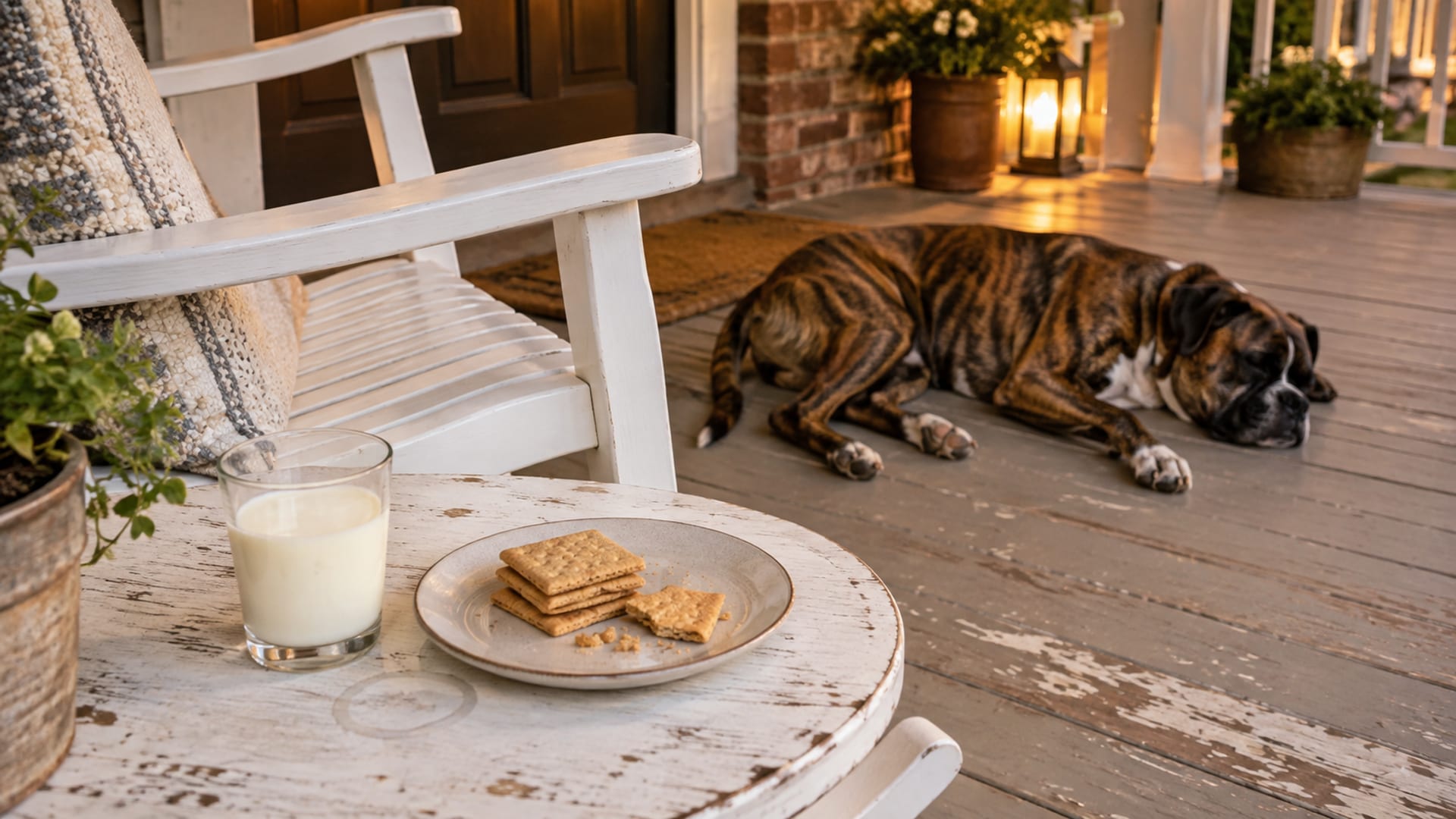
Yes. A small piece of a plain graham cracker is fine for most healthy dogs now and then. It is a sweet wheat cracker with sugar and some fat, so it adds calories without doing anything for your dog, and the label matters more than the cracker: some graham products carry chocolate, xylitol, raisins or macadamia nuts, and the ASPCA lists all four as foods to keep away from pets.
If your dog grabbed a piece of a plain honey or cinnamon graham and is acting normal, there is nothing to do but keep the box handy and watch for an upset stomach. If the crackers were chocolate-covered, sugar-free, part of a s'more or a pie crust, or had raisins or nuts in them, read the label and call your vet or a poison line if any of those four ingredients are there.
Key takeaways
Tap a card to bring it forward.
- A small piece of plain graham cracker is fine for most healthy dogs as a rare treat.
- Chocolate, xylitol, raisins and macadamia nuts change the answer. Read the label.
- Xylitol may be listed as birch sugar, wood sugar or birch bark extract.
- Treats of every kind should stay under 10% of your dog's daily calories.
- Skip them for dogs with diabetes, pancreatitis or a wheat allergy.
My dog ate graham crackers: what to do
Tap or hover a row to highlight it.
| What happened | What to do |
|---|---|
| What happenedA piece or two of plain graham cracker | What to doNothing urgent. Keep the box and watch for vomiting or loose stool. |
| What happenedA whole sleeve, or a small dog that ate several | What to doWatch closely. Call your vet if your dog vomits, has diarrhea or seems uncomfortable. |
| What happenedSugar-free grahams, or a label with xylitol, birch sugar or wood sugar | What to doCall your vet or a poison line now. |
| What happenedChocolate-covered or chocolate grahams, or a s'more | What to doCall now with the product and your dog's weight. |
| What happenedGrahams or a crust with raisins or macadamia nuts | What to doCall now. |
| What happenedPart of the plastic sleeve or box | What to doCall your vet. Watch for gagging, vomiting or belly pain. |
| What happenedAny amount in a dog with diabetes or a history of pancreatitis | What to doCall your vet today. |
For xylitol, the ASPCA advises calling a vet or its poison control center if your dog gets into anything that has, or might have, xylitol in it, so they can judge how serious it is, and going straight to a vet if signs have started. Photograph or bring the label, and note roughly how many crackers are gone and when.
Plain, chocolate, sugar-free: which grahams are a problem
Tap or hover a row to highlight it.
| Product | For your dog | Why |
|---|---|---|
| ProductPlain, honey or cinnamon graham crackers | For your dogA small piece, rarely | WhySugar and calories; no toxin |
| ProductGraham crumbs | For your dogSame as the crackers | WhyThey still count toward calories |
| ProductStale or dried crackers | For your dogA small piece, broken up | WhyHarder pieces can be a choking risk if gulped |
| ProductChocolate-covered or chocolate grahams | For your dogCall | WhyChocolate is toxic to dogs |
| ProductSugar-free or "no sugar added" grahams | For your dogRead the label | WhyMay contain xylitol |
| ProductGraham cracker pie crust | For your dogCheck the recipe | WhyOften butter, and sometimes chocolate, nuts or raisins |
| ProductS'mores | For your dogCall if chocolate was in it | WhyChocolate plus marshmallow on the cracker |
| ProductGrahams with raisins or macadamia nuts | For your dogCall | WhyBoth are toxic to dogs |
The chocolate risk comes from theobromine and caffeine, which the ASPCA says can cause vomiting, diarrhea, hyperactivity, an abnormal heart rhythm, tremors and seizures. Can dogs eat chocolate? has the amounts by weight. Raisins can injure a dog's kidneys; Can dogs eat grapes? explains. Macadamia nuts can cause weakness, vomiting, tremors and overheating, according to the ASPCA.
"Honey graham" means honey flavor, and "cinnamon" means an ordinary sprinkle of spice, neither of which is a concern in one cracker. Can dogs eat honey? and Can dogs eat cinnamon? cover those on their own.
How much graham cracker is okay
No vet source gives a graham cracker serving by dog size. The guide that does apply is from the UC Davis School of Veterinary Medicine: at least 90% of a dog's calories should come from a complete and balanced food, and treats and extras together should stay under 10%.
If you share:
- Use a plain cracker with nothing risky on the label.
- Break off a very small piece, and break it smaller for a small dog or a puppy that gulps.
- Count it as part of the day's treats.
- Skip it for a dog with diabetes, pancreatitis, a prescription diet or a wheat allergy, unless your vet says otherwise.
Signs to watch for, and when they start
After a bit of plain graham cracker, most dogs show nothing. Some get vomiting, diarrhea, gas, a sore belly, extra thirst or a smaller appetite.
The add-ins set their own clocks:
- Xylitol: low blood sugar can start within 30 minutes or be delayed up to 12 to 18 hours, with vomiting, weakness, wobbling, seizures or collapse, according to the Merck Veterinary Manual. Liver damage may not show for 24 to 48 hours or longer. Merck links doses above about 100 mg per kg to low blood sugar and doses above about 500 mg per kg to severe liver injury in some dogs. The amount in a snack is hard to work out at home, so treat any xylitol product as a call.
- Chocolate: restlessness, vomiting, a racing heart and tremors, depending on how much and what kind.
- Fatty toppings or crusts: vomiting, diarrhea, low energy, a poor appetite and belly pain can point to pancreatitis, according to the ASPCA.
- Raisins: vomiting early, and kidney injury over the next days.
- A swallowed wrapper or a hard chunk: gagging, repeated vomiting or belly pain can mean choking or a blockage.
"My dog gets a bite of my graham cracker every night"
Plenty of dogs do, and if yours has been fine, that is real. A small nightly bite of a plain cracker is exactly the kind of exposure that usually causes no trouble. What it cannot tell you is how the next box will go. A sugar-free box looks like the regular one on the shelf, and one with xylitol can drop a dog's blood sugar hours later. A s'more or a chocolate graham is a different food. A bite for a big dog is a bigger share for a small one, and dogs react to xylitol differently, as Merck notes. And a nightly bite still counts toward the 10% treat budget, which matters for a dog carrying extra weight.
S'mores, Teddy Grahams and other graham snacks
- S'mores: chocolate and marshmallow on a graham. Call about the chocolate. Can dogs eat marshmallows? covers the rest.
- Graham cracker crust and cheesecake: butter, cream and sugar, and sometimes chocolate or nuts. Check the recipe.
- Bear-shaped graham snacks and Goldfish Grahams: sweet crackers with their own flavors. Read the box for chocolate or other add-ins.
- Digestive biscuits and whole wheat crackers: similar idea, different recipes. The label decides.
- Salty crackers: see Can dogs eat Goldfish crackers? and Can dogs eat Cheez-Its?
Check what you learned
Quick check
Questions about dogs and graham crackers
My dog ate one plain graham cracker. Is that an emergency?
Usually not, if it was plain and your dog is acting normal. Check the label for chocolate, xylitol, raisins or nuts, and watch for vomiting or diarrhea.
Can dogs eat chocolate graham crackers?
No. Chocolate can cause vomiting, a racing heart, tremors and seizures in dogs. If your dog ate some, call your vet or a poison line with the box.
Can dogs eat sugar-free graham crackers?
Only after you have read the label. If it lists xylitol, birch sugar, wood sugar or birch bark extract, call your vet or a poison line now.
What if the graham crackers had raisins in them?
Call your vet or a poison line promptly. Raisins can cause kidney injury in dogs, and no dependable safe amount has been set.
How many graham crackers can a dog have?
Keep it to a very small piece of a plain cracker, and keep all treats under 10% of your dog's daily calories.
Sources
Checked September 24, 2026.
- ASPCA, Celebrate National Dog Biscuit Day with Pet-Safe Treats
- ASPCA, What to Do If Your Pet Gets into Chocolate
- ASPCA, Updated Safety Warning on Xylitol: How to Protect Your Pets
- ASPCA, Be On the Lookout at Your Cookout
- Merck Veterinary Manual, Xylitol Toxicosis in Dogs
- UC Davis School of Veterinary Medicine, Treat Guidelines for Dogs