
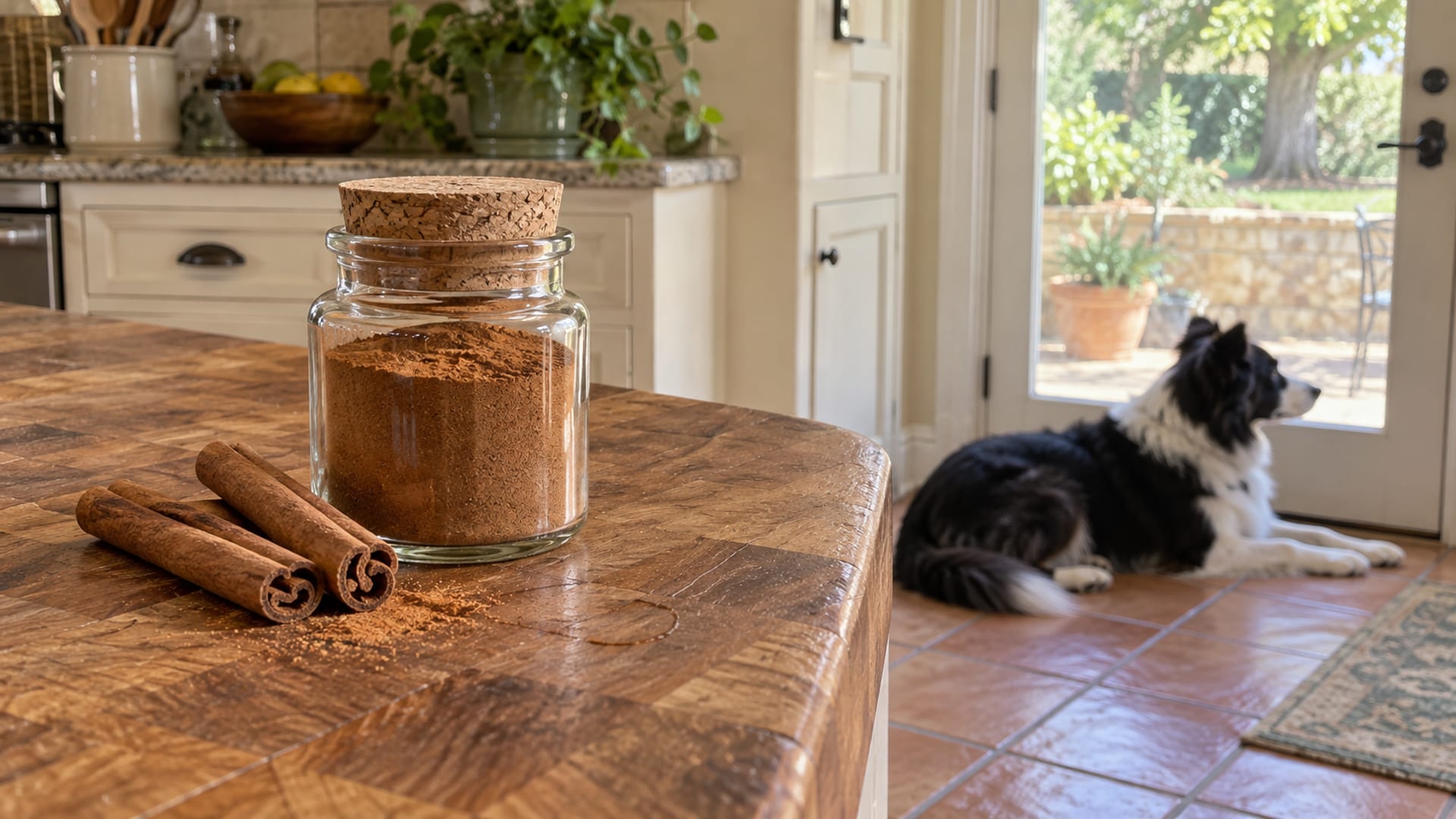
Yes, in small amounts. The ASPCA lists cinnamon (*Cinnamomum zeylanicum*) as non-toxic to dogs, and Pet Poison Helpline says it is generally well tolerated. The trouble starts with large amounts of powder, powder breathed in, and concentrated cinnamon oil.
If your dog licked a cinnamon-dusted plate or ate a bite of something with cinnamon in it, watch them and carry on. If they got into the spice jar, inhaled a cloud of powder, or touched or swallowed cinnamon oil, call your vet or a pet poison line.
Key takeaways
Tap a card to bring it forward.
- A sprinkle of plain cinnamon in food is low concern for most dogs.
- More than about 1 teaspoon of powder causes problems in most pets, and small dogs react to less.
- Breathing in loose powder can cause coughing, choking and trouble breathing.
- Cinnamon essential oil is far stronger than the spice and can harm the liver.
- Cinnamon rolls and pumpkin spice treats can hide xylitol, raisins, chocolate or nutmeg.
My dog ate cinnamon: what happens next
Start by working out which kind of cinnamon it was and how much. That decides almost everything.
Tap or hover a row to highlight it.
| What happened | Next step |
|---|---|
| What happenedA lick, a sprinkle on food, or a bite of a plain cinnamon food | Next stepWatch for mouth irritation or an upset stomach. No call needed if your dog acts normal. |
| What happenedA spoonful or more of ground cinnamon, or a chewed-open jar | Next stepCall your vet or a poison line with your dog's weight and a guess at the amount. |
| What happenedYour dog inhaled powder and is coughing, gagging or breathing hard | Next stepCall now. Breathing trouble cannot wait. |
| What happenedCinnamon essential oil, diffuser liquid or room spray, licked or on the skin | Next stepCall now, even if your dog seems fine. |
| What happenedA cinnamon roll, pie, cookie or pumpkin spice treat | Next stepRead the label or recipe for xylitol, raisins, chocolate, nutmeg or alcohol, and call if any are there. |
Pet Poison Helpline asks owners to call a vet or its line if they believe a pet ate a large amount of cinnamon, inhaled the powder, or had access to the essential oil. Keep the jar, bottle or packaging so you can read out what was in it.
Do not give any medicine or home remedy unless the vet or poison line tells you to.
Powder, sticks, oil: which forms matter
The spice in your cupboard and the oil in a diffuser are very different exposures.
- Ground cinnamon in a small amount: low concern, though it can irritate the mouth.
- A large amount of powder: Pet Poison Helpline puts the concern point at more than 1 teaspoon for most pets, and says smaller dogs may react to smaller amounts. That is a practical guide from a poison line, and no one has published a dose by body weight.
- Cinnamon sticks: not toxic by the ASPCA listing, but chewing one can irritate the mouth, and a swallowed piece could choke a dog or get stuck. Pet Poison Helpline mentions sticks left in holiday cider cups as one way dogs get hold of them.
- Cinnamon essential oil: concentrated and absorbed through the gut, skin, lungs and gums. The Merck Veterinary Manual lists cinnamon oil and cassia bark oil among essential oils that can injure the liver.
- Extracts, capsules, teas and syrups: strength and added ingredients vary, so read the label before deciding anything.
Ceylon ("true") cinnamon and cassia are different plants. An FDA document reports far more coumarin in cassia than in Ceylon cinnamon. Neither type comes with a dog serving size, so the small-amount rule applies to both.
Signs to watch for, and how soon
After a big mouthful of powder, Pet Poison Helpline lists:
- irritation in the mouth
- vomiting and diarrhea
- low blood sugar
- changes in heart rate
- possible liver disease with very large amounts
Powder that gets breathed in is its own problem. It can cause coughing, choking, spasm of the airways and trouble breathing.
With essential oil, Merck says signs can start within minutes to hours after a dog swallows it, gets it on the skin, or breathes it in. Watch for vomiting, drooling, tiredness, wobbling, tremors, a slow heart rate, a low body temperature, skin irritation and, in severe cases, seizures or liver and kidney failure. Merck adds that dogs with lung or airway disease are a bigger worry around inhaled oils.
"My dog has had cinnamon before and nothing happened"
That is common, and it makes sense. Usually what a dog gets is a little cinnamon mixed into food, and that is exactly the exposure the sources call low concern. A small dog that gets into the jar is a different situation from a big dog that licks a plate. So is a face full of loose powder, or a lick of oil from a diffuser. How much, in what form, the size of the dog and whether it has sensitive airways all change the outcome. Treat each new exposure on its own facts.
Cinnamon rolls, pumpkin spice and other cinnamon foods
The cinnamon is rarely the main problem in baked goods. The AKC points to xylitol, chocolate, raisins, and a lot of fat and sugar in cinnamon treats. Pumpkin spice blends often add nutmeg, which contains myristicin and is a different hazard from cinnamon.
- Cinnamon rolls, coffee cake, muffins: skip. Sugar, fat, and sometimes raisins or xylitol icing.
- Cinnamon raisin bread or bagels: call about the raisins. Can dogs eat grapes? explains why.
- Chai and pumpkin spice foods: skip. They can carry nutmeg, cloves, allspice, sugar and sometimes alcohol or xylitol.
Plants sold as "cinnamon jasmine" or "cinnamon ginger" are not the spice plant, so look up the actual plant name if your dog chewed one.
Check what you learned
Quick check
Questions about dogs and cinnamon
Can dogs eat a little cinnamon?
Yes. A small amount of plain cinnamon in food is generally tolerated, and the ASPCA lists the plant as non-toxic to dogs. It is not a regular supplement, so keep it to the odd sprinkle.
What if my dog ate cinnamon powder?
A little is usually low concern. More than about a teaspoon for most dogs, less for a small one, or any breathing trouble is a reason to call your vet or a poison line.
Is cinnamon essential oil safe for dogs?
No. Merck lists cinnamon oil among essential oils that can poison pets and may damage the liver. Keep oils and diffuser refills out of reach, and call if your dog gets into one.
Can dogs eat cinnamon rolls?
Better not. The roll may contain xylitol, raisins, chocolate or a lot of fat and sugar, which matter more than the cinnamon. If your dog ate one, check the ingredients and call if any of those are listed.
Is Ceylon cinnamon safer than cassia for dogs?
Cassia contains much more coumarin than Ceylon cinnamon, according to FDA material. No safe dog serving can be recommended for either, so keep any cinnamon to a small amount.
Is cinnamon toxic to cats?
The ASPCA lists the plant as non-toxic to cats too. Cinnamon essential oil is a bigger worry for cats than for dogs, because cats handle essential oils poorly.
Sources
Checked September 24, 2026.
- ASPCA Animal Poison Control Center, Cinnamon
- Pet Poison Helpline, Nutmeg and Cinnamon Toxicity
- Pet Poison Helpline, Pumpkin Spice Poisonous To Pets
- Merck Veterinary Manual, Toxicoses From Essential Oils in Animals (updated March 2025)
- American Kennel Club, Can Dogs Eat Cinnamon?
- U.S. Food and Drug Administration, GRAS Notice 1012