
How to Give a Dog a Pill: Hiding It, Giving It by Hand and When to Call the Vet
By Cal Hewitt · Published
Health
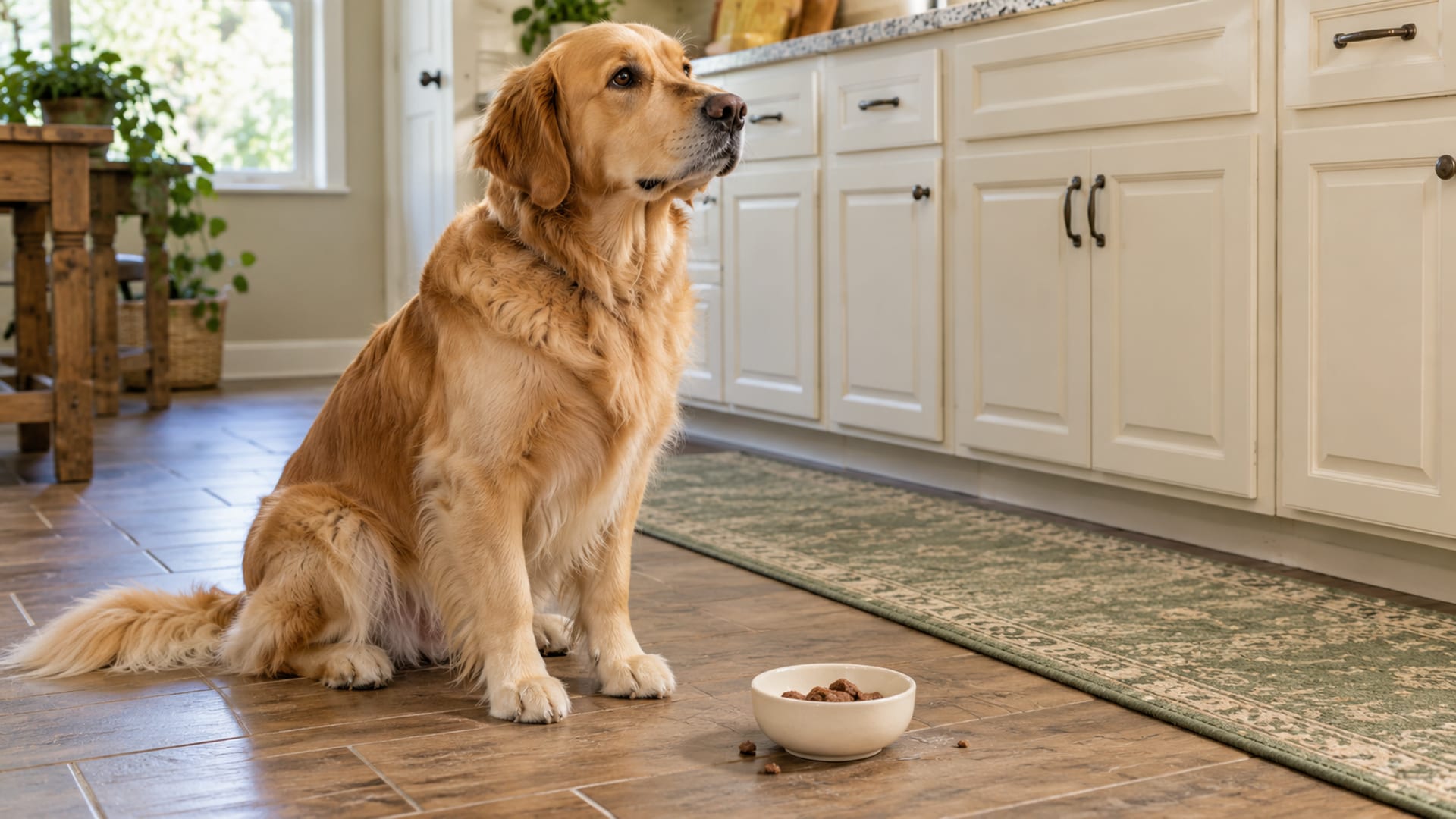
Start by checking whether the label allows food. If it does, hide the pill in a small amount of a safe soft treat or use a pill pocket, hand-feed it and watch for swallowing. Give a few plain treats before and after the medicated one.
If your dog spits it out, refuses food, clamps its mouth or may bite, stop repeating attempts and ask your veterinarian or pharmacist about giving it directly, a pill dispenser, a liquid or a flavored compounded form. Never crush, split, open or dissolve the medicine without their approval.
Key takeaways
Tap a card to bring it forward.
- Check the prescription label first. If it does not allow food, the food tricks below are off the table until your vet or pharmacist says otherwise.
- Hide the pill in one small, safe, hand-fed bite, then watch for a swallow. A full bowl of food is easy for a dog to eat around.
- Use the three-treat sequence: plain treats, the medicated treat, then another plain treat right away.
- If your dog spits, chews or vomits the medicine, call the prescribing team before giving more.
- Never crush, split, open or dissolve a pill without approval, and never push on if your dog may bite.
- Xylitol, grapes, raisins, onions, garlic and chives are never pill hiders.
What do I do when my dog spits out every pill?
I know this moment is tiring. You have a prescription, a dog that is better at spotting pills than you are at hiding them, and maybe a little fear of getting bitten. Take it one decision at a time.
The first decision is the label. Read it for any note about food, and if it is unclear, call the clinic or pharmacy that filled it. Some medicines can be given with food and some cannot, and your veterinarian or pharmacist is the one who knows which applies to your dog's medicine. Mixing a pill into food only helps if food is allowed and the dog eats every bit of it. That is why Cornell's veterinary pharmacy guidance treats food compatibility as something to confirm before you start.
If food is allowed, begin with the easy methods in the next section. If your dog has already beaten them, you are not doing it wrong. Many dogs can smell a pill, and that is a reason to change the plan, not to repeat the same trick ten times. Stop after a couple of failed attempts, because a dog that has been chased around the kitchen with a pill gets harder to medicate every time. Call the veterinarian or pharmacist and ask about three things: giving the pill directly, a pill dispenser, or another form of the same medicine, such as a liquid or a flavored version.
If your dog has spat the pill out, chewed it or vomited, that is a different situation, and I cover it further down. The short version is to call before you give any more.
What are the easiest food methods?
When the label allows food, hiding the pill is where most vets start, and Best Friends Animal Society also lists food hiding as the first option to try. Use a small amount of soft food, or a commercial pill pocket, and hand-feed the medicated piece. Do not stir the pill into a full meal. A dog can eat the dinner and leave the pill sitting in the bowl, and then you do not know how much medicine went in.
Cornell's guidance on medicating your dog names a few foods that may suit many dogs: a small amount of canned dog food, cooked sweet potato, plain cheese, plain yogurt, or lean cooked meat with no bones or seasoning. Check your dog's dietary limits first, and use one medication per treat.
The three-treat sequence works because it keeps a dog from becoming suspicious. It goes like this:
- Give a plain treat.
- Give another plain treat.
- Give the medicated treat.
- Give one more plain treat right away.
Vary the number of plain treats each time, and keep the pace quick. A dog that learns "two treats, then the pill" can start to wait for the pattern.
Then watch. Stay with your dog for a minute or so and look for the signs of a pill that was not swallowed: chewing that goes on too long, a dog that spits something onto the floor, or a pill tucked into a cheek like a squirrel hiding a nut. If you see a swallow or a nose lick, that is a good sign. If you are not sure, treat it as uncertain and see the section on spitting and vomiting below.
Which foods are unsafe for hiding pills?
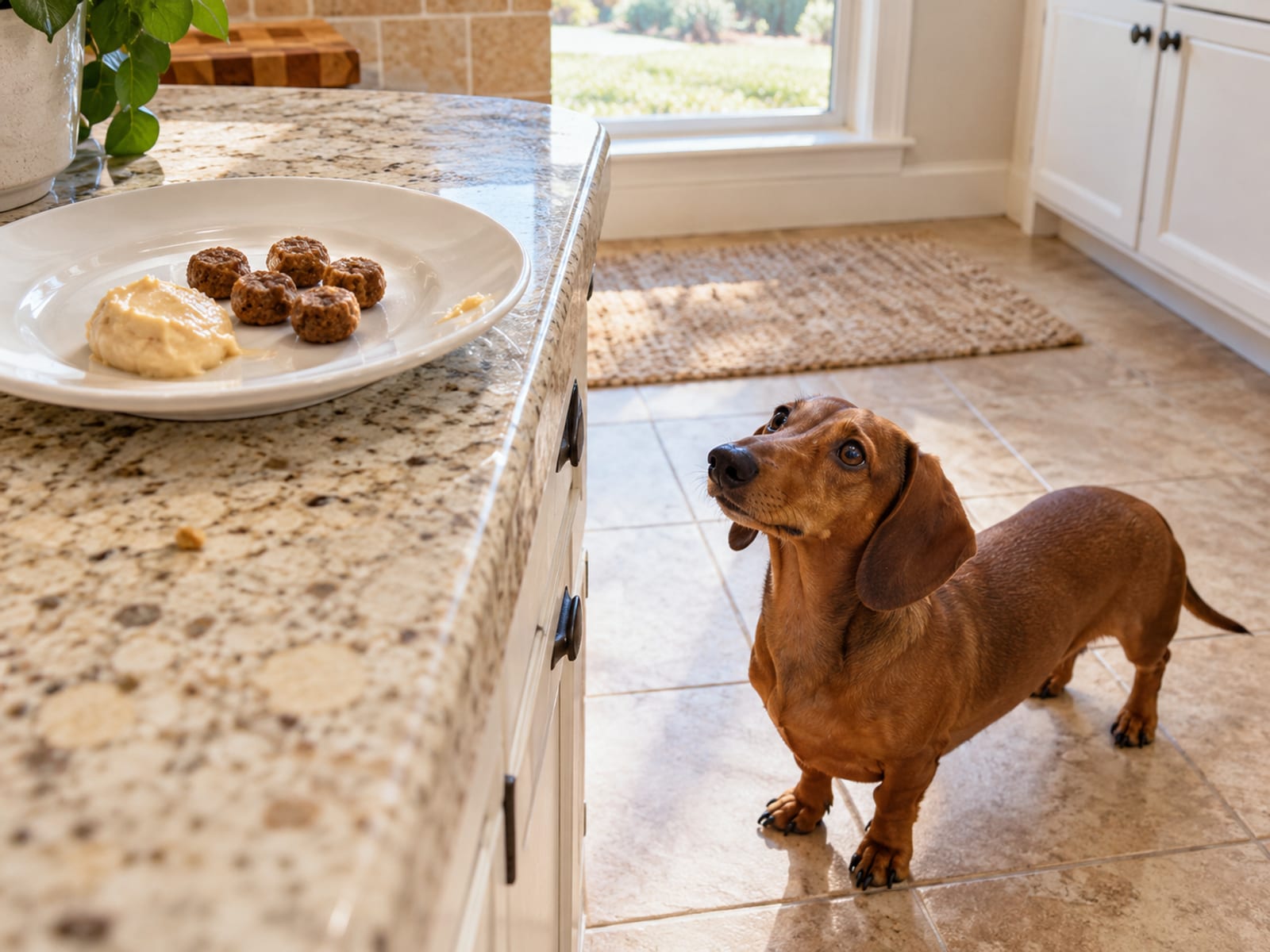
A food that is wrong for dogs does not become safe because it is wrapped around a pill. Do not use anything with xylitol, grapes, raisins, onions, garlic, chives, leeks or shallots. The ASPCA's list of people foods to avoid covers grapes, raisins, onions, garlic, fatty foods and xylitol, and it includes the poison-control contact for the times something goes wrong. Pet Poison Helpline adds that onion and garlic signs can show up anywhere from 24 hours to several days after a dog eats them, so a dog that seems fine the same evening is not necessarily in the clear.
Peanut butter is the one most owners ask about. It is fine for many dogs only if the label has no xylitol, and only in a small amount, because it is high in fat. The ASPCA says to check the label for xylitol before sharing it. If you want a closer look at specific foods, our pages on peanut butter, cheese and xylitol go through each one.
Very fatty foods and heavily salted processed meats are also poor choices. Fat can upset a dog's stomach, and in some dogs a rich food can trigger pancreatitis, so keep the bite small and plain. If your dog ate something it should not have, the Dog Toxin Dose Checker shows the published threshold for common toxins, and then your vet or poison control decides what to do.
How do I give a pill directly by hand?
When food does not work or the label rules it out, the next step is giving the pill by hand. This takes a little practice, and it is easier with a calm dog. If your dog may bite or is already panicking, skip this section and go to the one on a dog that panics. Ask your veterinary team to show you the technique in person first.
Get everything ready before you call your dog, and let your dog settle. Back a small or medium dog into a corner or against your legs so it cannot back away, or ask a second person to help. Then follow the steps in Cornell's hand-pilling guidance:
- Hold the pill between the thumb and index finger of your dominant hand.
- With your other hand, hold the muzzle from above, behind the canine teeth.
- Tilt the head up gently so the mouth begins to open.
- Use a finger of the hand holding the pill to lower the jaw if you need to.
- Place the pill toward the back of the tongue. Do not push your fingers so far back that your dog gags or chokes.
- Close the mouth and bring the head back to a normal position.
- Hold the muzzle gently closed.
- Watch for a swallow or a nose lick.
- Follow with a small amount of water from an oral syringe only if your veterinary team has said that is fine.
- Reward your dog calmly afterward.
The back-of-the-tongue placement matters because a pill left near the front is easy for a dog to spit. Even so, keep your fingers out of any spot that makes your dog fight you. A gentle, quick, confident try is better than a long struggle.
When should I use a pill dispenser or liquid medicine?
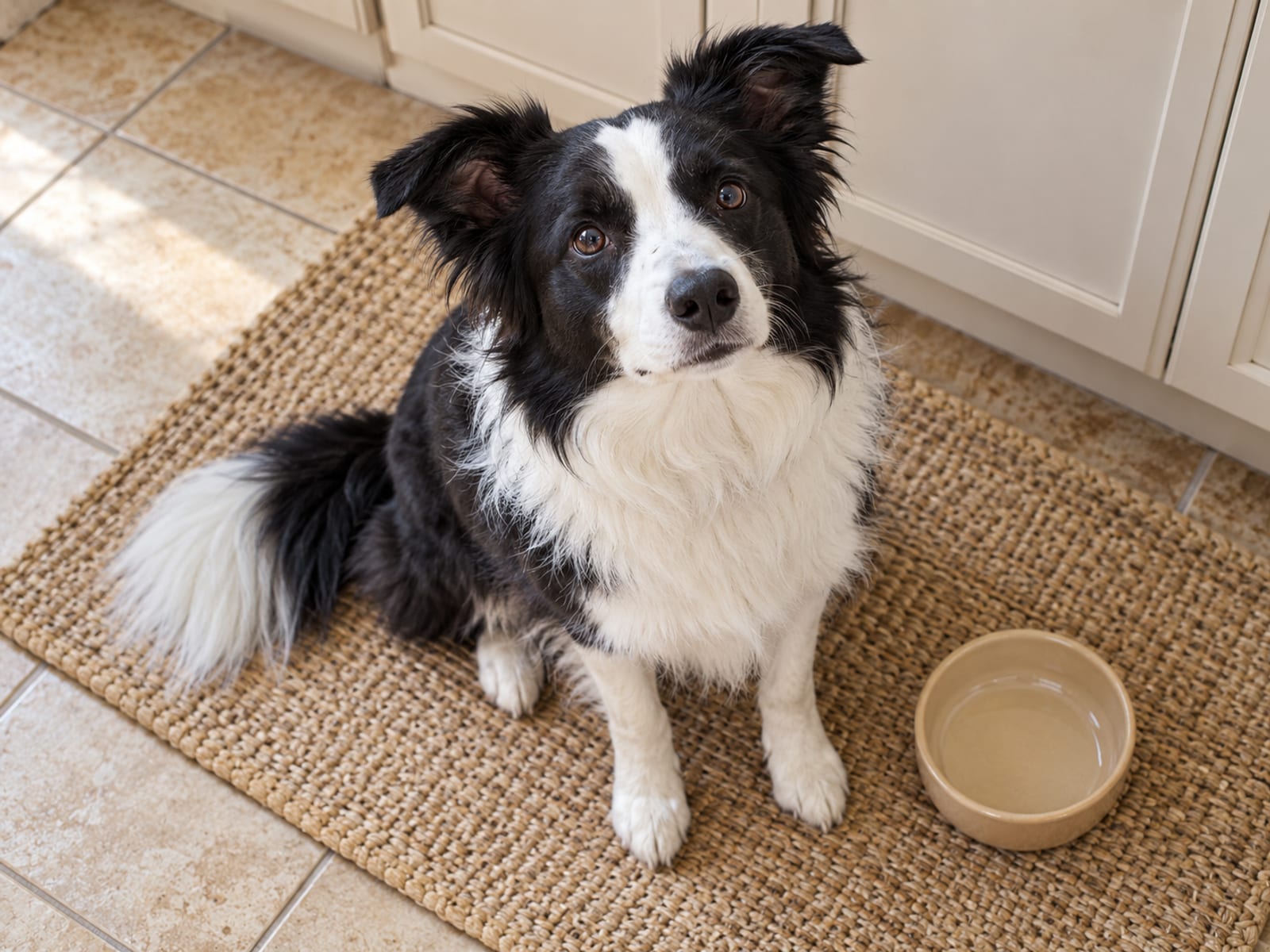
A pill dispenser, sometimes called a pill gun or pill popper, is a plastic tool that holds the tablet and lets you place it at the back of the mouth without putting your fingers in. It can help with a dog that bites at fingers or when your hand is too big for a small dog's mouth. Great Pet Care describes pill poppers along with direct pilling. A dispenser still needs a calm dog and a gentle hand, and your vet team can show you how to use one safely.
Some medicines come as a liquid, and your veterinarian or pharmacist can tell you whether yours is one of them. Liquid is not automatically easier. A dog can resist, cough or gag, and if the liquid goes in too fast it can end up in the airway. VCA's liquid medication guidance lays out the steps, and I would follow them in this order:
- Read the label and draw up the amount your vet or pharmacist prescribed in the oral syringe. Use the product and amount they give you, never a guess.
- Choose a calm place. If the medicine needs to be kept in the refrigerator, VCA says you can warm it in your hand for 1 to 2 minutes, and you should not microwave it.
- A second person can steady your dog. A small dog may sit in your lap or be wrapped in a towel if it tolerates that.
- For a long-nosed dog, slip the syringe into the cheek space outside the teeth. For a short-nosed dog, place it just behind a canine tooth.
- Aim toward the side of the tongue, not straight at the throat.
- Press the plunger slowly, in small amounts, and pause so your dog can swallow and breathe.
- If some liquid comes back out, do not give the full amount again unless your vet team tells you none was swallowed.
If liquid is still a fight, tell your vet. A flavored version may be possible.
Can I crush, split, open or dissolve the pill?
Not until your veterinarian or pharmacist says yes for that specific medicine. It is a tempting shortcut, because a crushed pill disappears into food so easily. But a coating can protect the stomach, control how fast the medicine is released, reduce bitterness, protect the person handling it, or help the drug reach the right part of the digestive tract. Crush it and you can change how well it works or how safe it is. Cornell and VCA both give this warning, and Great Pet Care repeats it for crushing and dissolving.
The same goes for stirring a pill into food. Ask first whether food is allowed and whether your dog needs to eat all of the portion for the dose to count.
If giving the pill stays difficult, ask whether the medicine comes as a liquid, a flavored liquid, a flavored chew, a paste or a powder. A veterinary compounding pharmacy may be able to prepare a flavored form, but your veterinarian decides whether that form is right for your dog. Ask the clinic or pharmacy what that costs before you book, since fees vary from place to place.
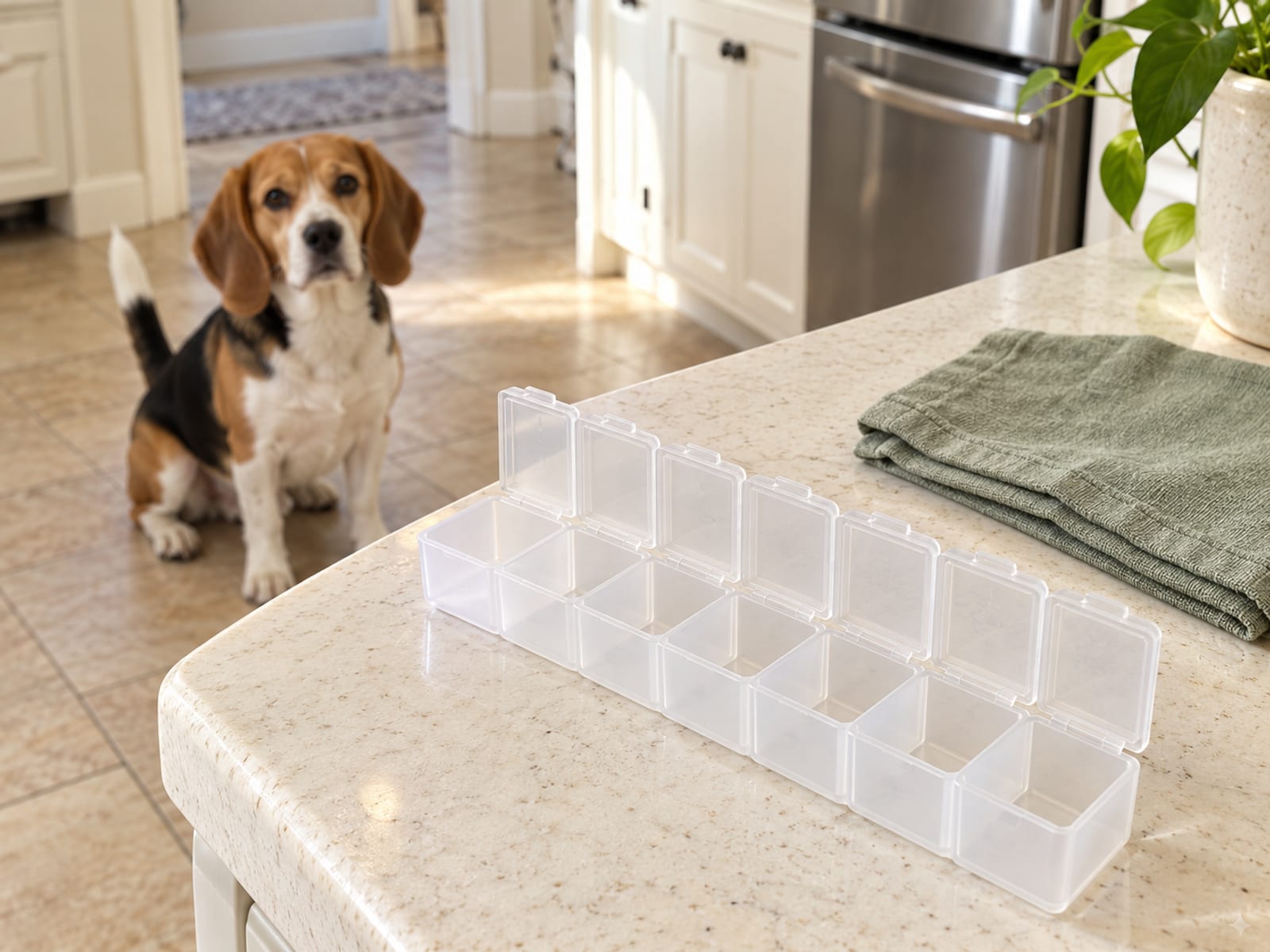
What if my dog spits, chews or vomits a pill, or does not take it?
Call the prescribing veterinary team before you give more. I would not repeat the pill on a guess, because the right answer depends on the medicine, the form and how much was kept down.
- Spit out, and the pill is whole. Do not assume the answer is always to try again. Ask your vet or pharmacist, who may tell you to repeat it.
- Chewed, partly dissolved, partly swallowed or mixed into vomit. Call before you give anything else. A chewed pill can taste terrible, and it can also release medicine differently than it should.
- Vomited soon after the dose. Call the prescribing team. Whether the medicine was absorbed depends on the drug, the form, the timing and how much stayed down. Our page on dog vomiting covers what to watch for in general.
- A missed dose. Follow the label if it gives instructions. If it does not, ask your vet or pharmacist, and do not double the next dose unless they tell you to.
Please do not try to make your dog throw up to get a pill back. The AVMA's pet first-aid guidance says not to induce vomiting or give medication unless a veterinarian or poison-control center directs you to. Our page on how to make a dog throw up explains why, and it is not a fix for a pill that was spat out.
Some signs mean you stop reading and get help now: trouble breathing, collapse, severe weakness, repeated vomiting, seizures, marked swelling, suspected poisoning, or a dog that ate xylitol, grapes, raisins, onions, garlic or any unknown medicine. Call an emergency vet or poison control right away, and tell them what your dog ate and when.
What if my dog panics or might bite?
Stop. A bitten hand helps nobody, and a dog that is scared of pill time will be harder to medicate tomorrow. Cornell says to stop if there is bite risk and ask the veterinary team about a safer plan. Best Friends also cautions that forcing medicine on a shy or nervous animal may be unsafe.
Here is what I would ask the clinic about:
- A second person. One person gently steadies the dog while the other gives the medicine.
- A towel for a small dog. VCA mentions a lap or a towel wrap for dogs that accept it. A towel is not for every dog, and you should drop it if it adds to the panic or makes your dog overheat.
- A demonstration. A technician, a veterinarian or a pharmacist can show you how in person, with your own dog or a plan for it.
- Another form of the medicine. A liquid or a flavored version may take away the fight completely.
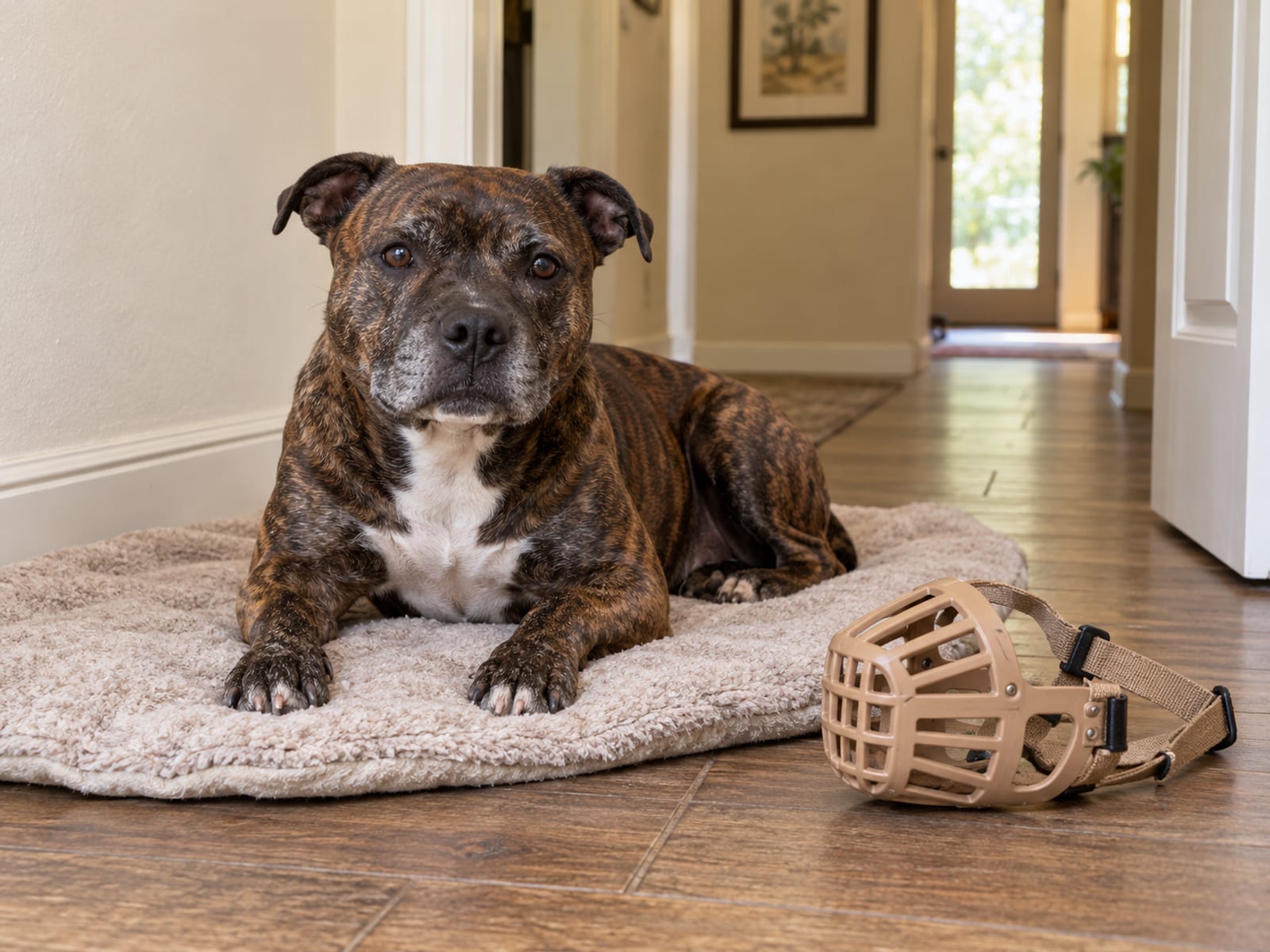
- Muzzle conditioning. AAHA's behavior guidelines and Fear Free are about low-stress handling. If a muzzle will be part of the plan, teach it slowly, with rewards, long before you need it.
If your dog snaps when you touch its mouth or its food, it helps to understand why. Our pages on dog body language and resource guarding cover the warning signs. A local trainer can help with handling practice, and your vet can tell you when to pause until you have a safer way.
How can I make future pills easier?
Calm preparation does more than any single trick. Put everything out before you call your dog: the pill, the treats, the syringe, the towel. Keep it short and predictable, use a happy voice, and reward right after the dose. Do not interrupt your dog while it is eating, drinking, grooming or heading outside to go to the bathroom.
For long-term medicine, practice when there is nothing to give. Touch the muzzle and lips, let your dog take an empty syringe and reward it, and offer a plain treat in the same way you will later offer a pill. The AAHA guidelines say all patients should be taught at an early age to take pills or liquid medicines in real or placebo form, and the same idea helps an older dog too. A syringe can be paired with a tiny taste of a safe liquid treat if your veterinarian permits it.
The tools that help most owners are simple: soft pill pockets, a moldable treat paste, a pill dispenser from your vet, an oral syringe from your vet team, a towel for a suitable small dog, a second person, and a muzzle your dog has learned to accept. None of them replaces the directions for your dog's specific medicine.
Tap or hover a row to highlight it.
| Step | What to do |
|---|---|
| StepBefore you start | What to doCheck whether food is allowed and check any food label for xylitol |
| StepPrepare | What to doSet out the medicine before you call your dog |
| StepHide | What to doUse one small safe treat or a pill pocket, then hand-feed it |
| StepWatch | What to doLook for a swallow, and check for spitting and cheek-pouching |
| StepLiquid | What to doPlace the syringe at the side of the mouth and give it slowly |
| StepStop | What to doStop if your dog may bite or is panicking |
| StepCall | What to doCall the vet team after vomiting, repeated refusal or a missed dose |
| StepPoison control | What to doCall right away if your dog may have eaten something toxic |
Quick check: giving a dog a pill
Questions people ask about giving a dog a pill
How do you give an unwilling dog a pill?
Start with the label, then try a small safe treat or a pill pocket if food is allowed. If your dog still refuses, ask your veterinarian or pharmacist about giving it by hand, a pill dispenser, a liquid or a flavored form. Do not keep repeating attempts that make your dog more anxious.
What if my dog keeps spitting out the pill?
Do not simply try again and again. Call the prescribing team and ask whether any medicine was likely swallowed and what to do next. They may suggest a different way to give it, or a different form of the same medicine.
Can you crush a pill to give to a dog?
Only if your veterinarian or pharmacist confirms that your dog's specific formulation can be crushed. Coatings and extended-release forms can change how the medicine works. Ask first, since the answer is different for different pills.
Can dogs smell pills in their food?
Many dogs seem to, and that is why they eat around a pill. Hand-feeding one small bite, using the three-treat sequence and mixing up the order can help. If it still fails, a different form of the medicine is worth asking about.
What can I mix my dog's pills with?
When the label allows food, a small amount of canned dog food, cooked sweet potato, plain cheese, plain yogurt, lean cooked meat or a commercial pill pocket may work. Peanut butter is fine only if it has no xylitol and the amount is small. Never use grapes, raisins, onions, garlic, chives or anything with xylitol.
What do I do with a dog that bites at pill time?
Do not put your fingers in the mouth. Ask your veterinary team about a safer plan, such as a second person, a pill dispenser, muzzle conditioning or a different form of the medicine.
Can I give liquid medicine with a syringe?
Yes, when your veterinarian or pharmacist prescribed a liquid, use the oral syringe they supplied or approved. Place it at the side of the mouth and give small amounts slowly so your dog can swallow and breathe. Do not squirt it toward the back of the throat.
What if my dog chews the pill?
Call the prescribing veterinarian or pharmacist before giving any more. A chewed pill can change how the medicine is absorbed, and some taste very bitter. They will tell you what to do for that specific drug.
What should I do next?
Read the label, and if the answer about food is unclear, call the clinic that prescribed it today. If your dog is a pill-spitter, ask them to show you the hand-pilling method or to look at a liquid or flavored form. If your dog has already swallowed something it should not have, get help from an emergency vet or poison control right now.
If you are looking for a clinic that will walk you through it, you can browse the veterinarians in our directory. I am Cal Hewitt, I run DogServ, and I am not a veterinarian or a trainer, so the plan for your dog's medicine always comes from your vet. I hope this makes the next dose a little less stressful, for you and your dog. Our contact page is open if you want to tell us what else would help.
Sources
- American Animal Hospital Association: AAHA's behavior guidelines
- American Veterinary Medical Association: The AVMA's pet first-aid guidance
- ASPCA: ASPCA says to check the label for xylitol
- ASPCA: ASPCA's list of people foods to avoid
- bestfriends.org: Best Friends Animal Society
- Cornell University College of Veterinary Medicine: Cornell's guidance on medicating your dog
- Cornell University College of Veterinary Medicine: Cornell's veterinary pharmacy guidance
- fearfree.com: Fear Free
- greatpetcare.com: Great Pet Care
- Pet Poison Helpline: Pet Poison Helpline
- VCA Animal Hospitals: VCA's liquid medication guidance