
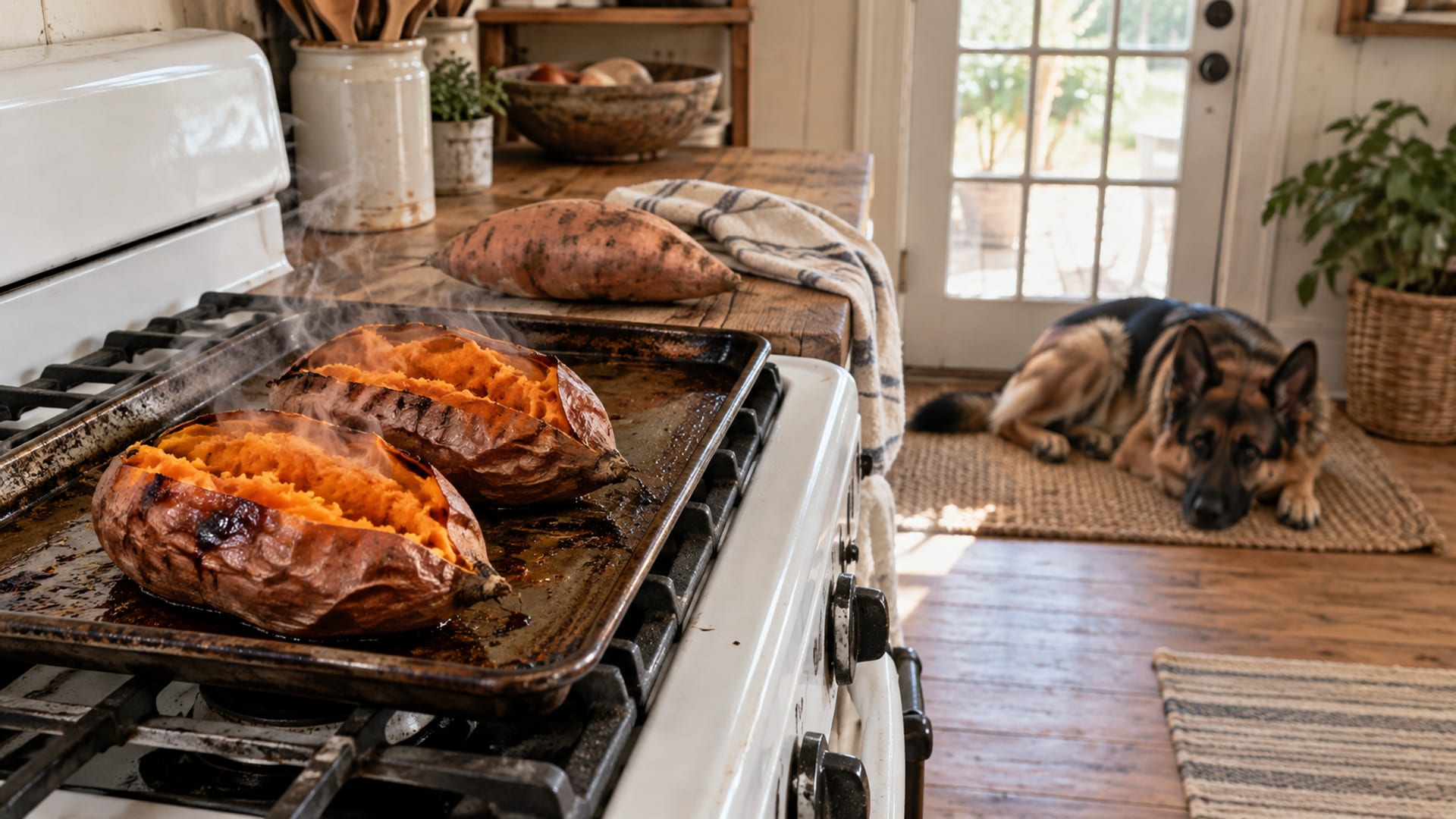
Yes. Sweet potato is not toxic to dogs; the ASPCA lists the plant, *Ipomoea batatas*, as non-toxic. The way you serve it is what matters: cooked, soft, peeled and plain, in small amounts.
If your dog ate a spoonful of plain cooked sweet potato, you do not need to do anything. If they gulped a big raw chunk, cleared a plate of sweet potato casserole, or got into pie or fries, the next section is for you.
Key takeaways
Tap a card to bring it forward.
- Plain sweet potato is non-toxic to dogs, according to the ASPCA and Pet Poison Helpline.
- Cook it soft and peel it; raw chunks are hard to chew and can cause choking or a blockage.
- Treats of every kind, sweet potato included, should stay under 10% of daily calories.
- Casseroles, pies, candied yams and fries bring butter, sugar, salt and sometimes onion or garlic.
- Dogs with diabetes or a weight problem should get less, or none until you ask your vet.
If your dog already ate sweet potato
Tap or hover a row to highlight it.
| What they ate | What to do |
|---|---|
| What they ateA little plain cooked sweet potato | What to doNothing |
| What they ateA lot of plain cooked sweet potato | What to doExpect a loose stool or gas. Call your vet if vomiting keeps up. |
| What they ateA large raw chunk, swallowed | What to doWatch for gagging, repeated vomiting, belly pain or no stool, and call your vet if any appear |
| What they ateCasserole, pie, candied yams or fries | What to doCheck the recipe for onion, garlic, xylitol, chocolate or alcohol. Call if any were in it. |
| What they ateA hard dried chew, gulped whole | What to doWatch for choking or vomiting, and call your vet if it seems stuck |
Plain sweet potato is not a poisoning case, and Pet Poison Helpline includes sweet potatoes on its list of foods that are safe for dogs. The calls that matter are about the form and the extras: a piece too big to swallow, or a dish made with something that is toxic on its own.
Get help right away if your dog is choking, struggling to breathe, collapses, is very weak, vomits again and again, or has a hard, swollen or painful belly.
Raw, cooked, skin and the rest of the plant
Tap or hover a row to highlight it.
| Form | Okay for dogs? | Why |
|---|---|---|
| FormCooked, peeled, plain | Okay for dogs?Yes, in small amounts | WhyThe form the AKC recommends |
| FormRaw | Okay for dogs?No | WhyHard to chew, can upset the stomach, and a chunk can cause choking or a blockage (AKC) |
| FormSkin | Okay for dogs?Better removed | WhyHarder to digest (AKC) |
| FormPlain canned puree | Okay for dogs?Yes, if sweet potato is the only ingredient | WhyCheck for sugar, salt, spices or xylitol |
| FormDried chews or jerky | Okay for dogs?Small pieces only | WhyHard pieces can be a choking risk if swallowed whole |
| FormLeaves and vine | Okay for dogs?Non-toxic | WhyListed as non-toxic by the ASPCA, though a big mouthful can still upset the stomach |
| FormPie, casserole, candied, fries, chips | Okay for dogs?No | WhyFat, sugar, salt and seasonings, and sometimes onion or garlic |
The AKC recommends cooking sweet potato and taking the skin off, and advises against raw sweet potato because it is hard to chew, can upset a dog's stomach and could block the intestine.
How much sweet potato, and how to serve it
A few small spoonfuls or cubes, as a treat, is a sensible amount for most dogs. The UC Davis School of Veterinary Medicine suggests at least 90% of a dog's daily calories come from complete, balanced dog food, leaving no more than 10% for treats and extras. Sweet potato has to fit inside that 10%, so give less on a day your dog has already had other treats.
- Bake, boil or steam the sweet potato until it is soft all the way through.
- Peel it.
- Mash it or cut it into small cubes.
- Serve it plain, with no butter, salt, sugar or spices.
- Start small the first time and stop if your dog's stool turns loose.
Sweet potato is rich in carbohydrate, and the AKC notes it has a high glycemic index. If your dog has diabetes, carries extra weight or does not get much exercise, ask your vet before making it a habit. Dogs with pancreatitis should never get the buttery or fried versions.
Signs to watch for after too much, or a raw chunk
Too much cooked sweet potato usually means gas, a loose stool or some vomiting, and it passes.
A raw or hard piece is the one to watch. Gagging, coughing or trouble swallowing right after eating can mean a piece is caught. Later, repeated vomiting, a painful or swollen belly, or straining without passing stool can mean a blockage, which the Merck Veterinary Manual treats as a problem for a vet to examine and sometimes image. Call your vet for any of these.
"My dog has eaten sweet potato for years with no trouble"
That fits everything the sources say, since plain sweet potato is a safe food. The caveats are about the details. A bite is different from half a casserole dish. A soft cooked cube is different from a raw chunk swallowed whole, and the same chunk is a bigger problem for a small dog. A dish made with butter, sugar, onion or garlic is a different food from plain sweet potato. And some dogs have health conditions, like diabetes, where the amount needs a vet's input.
Dog food with sweet potato, yams and holiday leftovers
- Grain-free dog food with sweet potato: the FDA looked into reports of a heart disease, dilated cardiomyopathy, in dogs eating certain diets high in peas, lentils, other legumes and potatoes. That investigation is about whole commercial diets fed over time and does not make a spoonful of plain sweet potato toxic. If you have questions about your dog's food, bring the bag to your vet.
- Yams: in US stores, some products labeled "yam" are really sweet potatoes. Plain, the same rules apply; candied yams are a dessert.
- Sweet potato pie, casserole and candied sweet potatoes: butter, sugar, salt and spices, and sometimes ingredients that are toxic to dogs. Skip them.
- Sweet potato fries and chips: fried, salted and often seasoned. Skip them.
- Sweet potato dog chews and jerky: choose a size your dog cannot swallow whole, and check the bag for added ingredients.
- Regular potatoes: a different plant, *Solanum tuberosum*, with its own concerns about green skin and sprouts. Can dogs eat potatoes? covers them.
- Pumpkin: another orange vegetable owners reach for. Can dogs eat pumpkin? has the details.
Check what you learned
Quick check
Questions about dogs and sweet potatoes
Can dogs eat raw sweet potato?
Better not. It is not toxic, but the AKC advises against raw sweet potato because it is hard to chew, can upset the stomach and could cause choking or a blockage.
Can dogs eat sweet potato skin?
Peel it off. The AKC recommends removing the skin because it is harder for dogs to digest.
Can puppies eat sweet potato?
A small amount of plain, cooked, mashed sweet potato is fine. Keep the pieces small, because puppies are more likely to choke or get an upset stomach.
Can diabetic dogs eat sweet potato?
Only with your vet's advice. The AKC says diabetic dogs should get sweet potato with caution because of its high glycemic index.
Is sweet potato in grain-free dog food dangerous?
The FDA investigated reports of heart disease in dogs eating certain diets heavy in peas, lentils, other legumes and potatoes. That is about complete diets, not an occasional plain treat. Ask your vet about your dog's specific food.
Is the sweet potato vine poisonous to dogs?
No. The ASPCA lists sweet potato vine, *Ipomoea batatas*, as non-toxic to dogs and cats.
Sources
Checked September 24, 2026.
- ASPCA Animal Poison Control Center, Sweet Potato Vine
- Pet Poison Helpline, Learn Which Human Food Is Safe For Dogs
- American Kennel Club, Can Dogs Eat Sweet Potatoes?
- UC Davis School of Veterinary Medicine, Treat Guidelines for Dogs
- Merck Veterinary Manual, Gastrointestinal Obstruction in Small Animals
- U.S. Food and Drug Administration, FDA Investigation into Potential Link between Certain Diets and Canine Dilated Cardiomyopathy