
How Often to Bathe a Dog: Coat Type, Skin Signs and a Safe Bath Routine
By Cal Hewitt · Published
Health
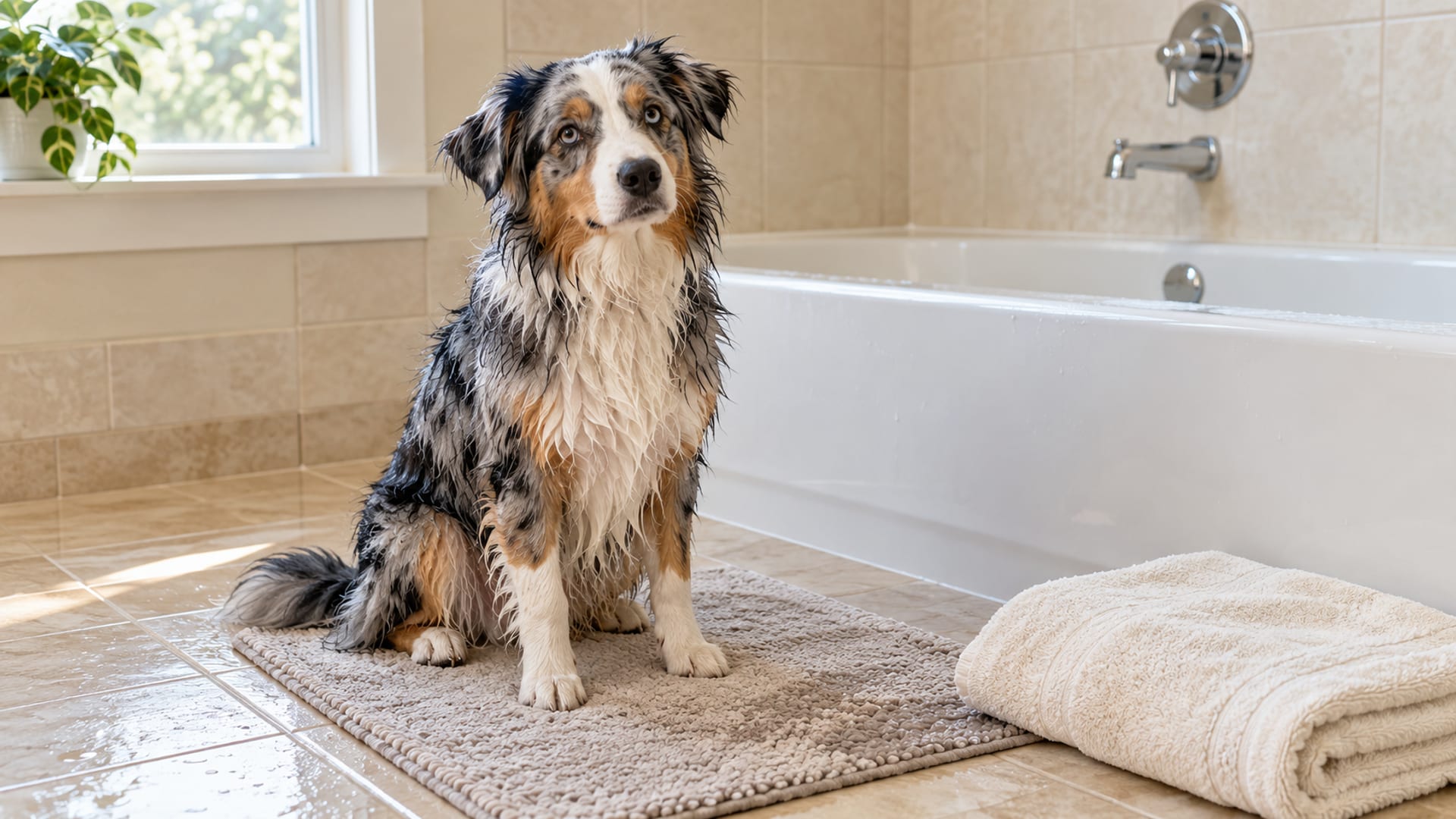
Most dogs do not need a fixed weekly bath. Bathe your dog when the coat is dirty, smelly, contaminated or hard to keep clean, then adjust for coat type, lifestyle, age and skin condition. Short-haired dogs often need fewer baths, oily-coated or hairless dogs may need more, and thick double coats usually need more brushing than bathing.
The ASPCA gives once every three months as a general minimum, but outdoor activity and skin problems can call for more. Use a shampoo made for dogs, rinse completely, and ask a veterinarian about itching, redness, sores, discharge or odor that keeps coming back.
Key takeaways
Tap a card to bring it forward.
- There is no single schedule for every dog. Coat, activity and skin decide the interval.
- Bathe for visible dirt, contamination, swimming residue or a coat you cannot keep clean with brushing.
- Use shampoo made for dogs. Skip human shampoo, dish soap, laundry soap and essential oils.
- Brush first, use lukewarm water, keep water out of the ears, rinse until no residue is left, and dry the coat completely.
- Odor that returns fast, or itching, redness, sores and discharge, needs a veterinarian, not another bath.
- Check the label of any flea product before the bath, because timing differs by product.
If you came in wondering whether your dog is overdue, or whether you are washing too much, you are asking the right question. It is easy to feel embarrassed about a smell or worried about hurting the skin. Here is how I would sort it out, in the order you need it.
Does my dog need a bath today?
Look at the dog before you look at the calendar. A bath makes sense when you can see dirt, mud, feces or urine on the coat, when something foul has been rolled in, when the coat feels greasy, or when ordinary coat odor sticks around after brushing. It also makes sense when the coat has built up so much that brushing alone cannot keep it comfortable.
Not every messy moment needs a full bath. If the dirt is limited, a damp cloth, a wipe made for pets or a plain water rinse may be enough. Rinse after swimming too, since the AKC advises getting chlorine out of the coat and drying it well, and the AAHA covers rinsing and drying after water play.
A bath is not the main answer when the dog is itching hard, has red or crusted skin, or smells bad again a day or two after washing. I come back to that below.
How often should I bathe my dog by coat type?
The AKC describes intervals ranging from weekly for some oily or hairless dogs to every four to six weeks for some maintained medium or long coats. Those are ranges, not rules. Here is how they play out by coat.
Tap or hover a row to highlight it.
| Coat or situation | Range | Source |
|---|---|---|
| Coat or situationGeneral minimum | RangeAt least once every three months | SourceASPCA |
| Coat or situationMedium to large coats, well maintained between baths | RangeWeekly to every four to six weeks | SourceAKC |
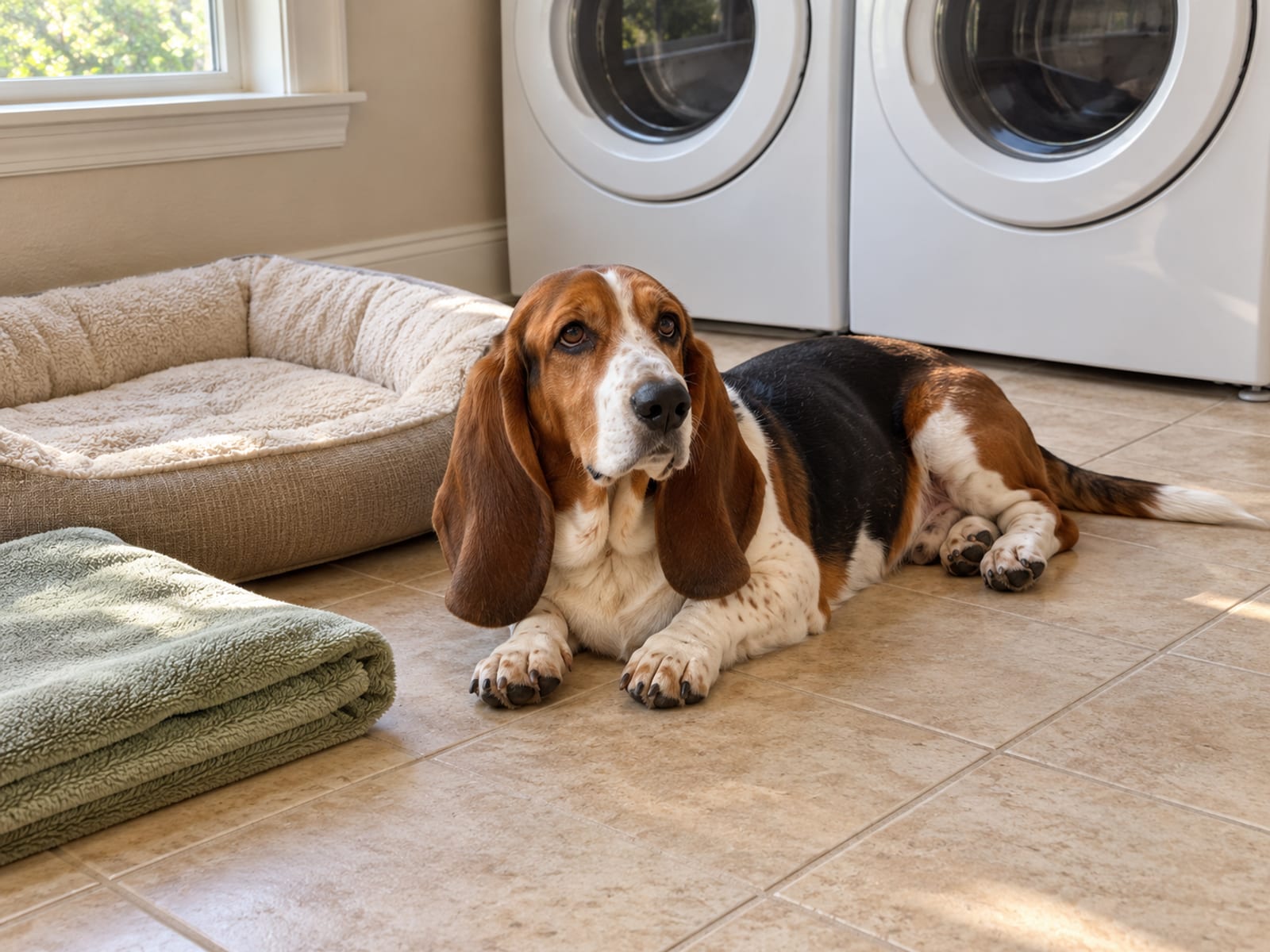
| Coat or situationOily coat (a Basset Hound is the AKC example) | RangeAs often as once a week | SourceAKC |
| Coat or situationHairless dog | RangeWeekly bathing | SourceAKC |
| Coat or situationAllergic skin disease | RangeWeekly to biweekly, only when a veterinarian directs it | SourceMerck Veterinary Manual |
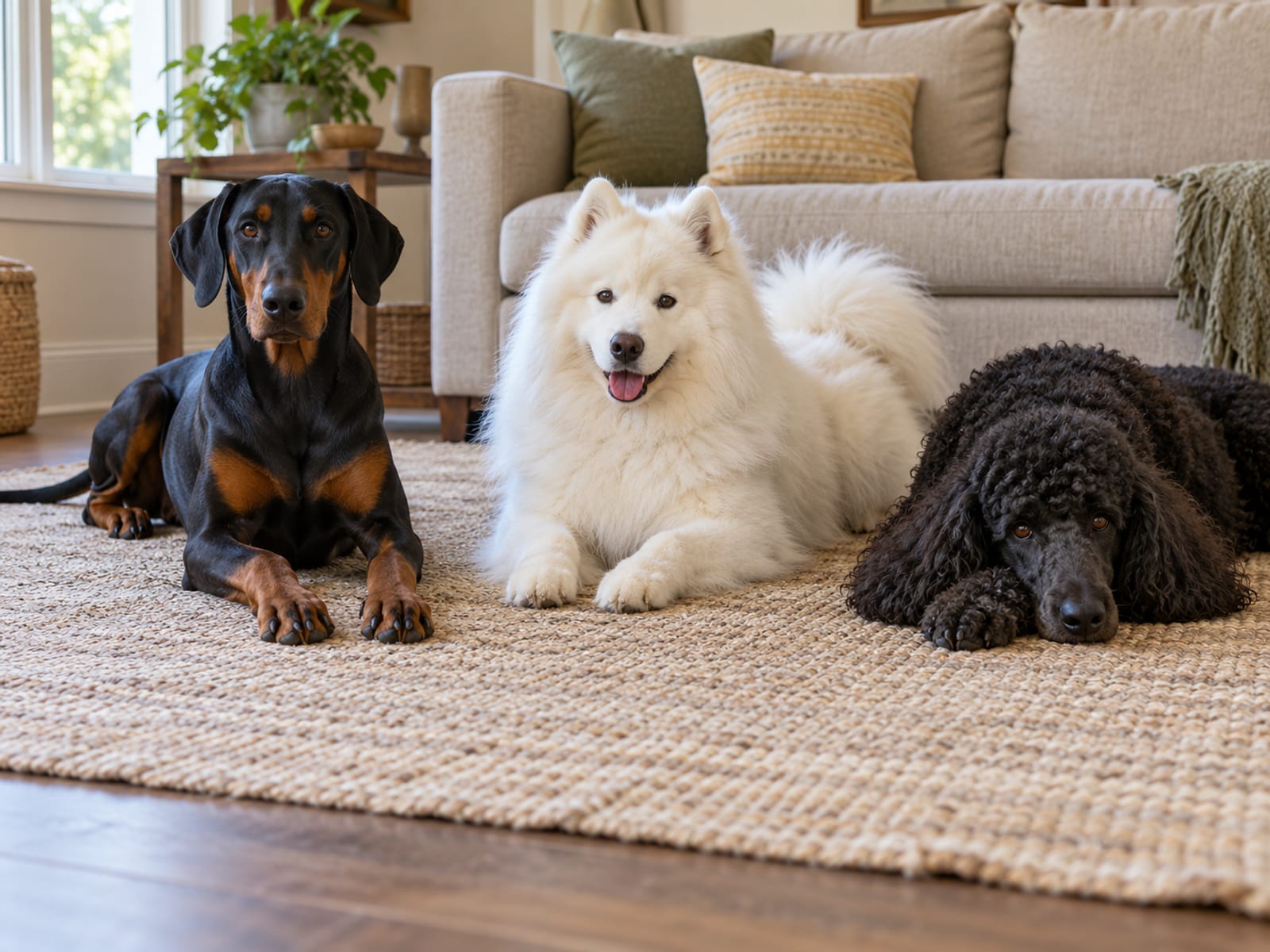
Short coats. Short-haired dogs generally need fewer baths. The AKC gives Weimaraners and Beagles as examples. A good brushing and a wipe-down often cover the time between washes.
Long coats. Long coats trap dirt and moisture, so they do better with regular brushing and a bath that fits how dirty the dog gets.
Double coats. Thick double coats, such as an Alaskan Malamute's, need fewer baths and much more brushing, according to the AKC. Washing a double coat often to get rid of shedding mostly strips the oils the coat relies on. Brush instead.
Curly and continuously growing coats. These coats mat easily and hold moisture. Many owners lean on a groomer for them, and the right interval depends on coat length, how well you brush between visits and the haircut, not on a breed rule.
Oily coats and hairless dogs. A dog with a greasy coat may need a bath as often as weekly. Hairless dogs may need weekly bathing too, because there is no coat to take up skin oils. A naturally water-repellent, oily coat like a Golden Retriever's is the other side of this: it should generally be bathed less often.
Puppies and seniors. Puppies need a gentle, positive start, and frequent baths can dry their skin. Older dogs may need help with footing, warmth, mobility and drying, and a groomer or veterinarian can help if home baths are hard on them. My senior dog care guide covers comfort and handling.
What happens if I bathe too often, or not often enough?
Too many baths can strip natural oils and dry the skin. The VCA says weekly bathing can dry out the skin and coat in some pets, leading to irritation and itchiness. The AAHA also warns against overbathing.
Too few baths has no universal number. A dog needs cleaning when dirt, waste, mud, a contaminant or greasy buildup cannot be handled by brushing or spot cleaning. Long or matted coats can trap moisture and debris, and the ASPCA notes that poorly groomed, matted, dirty coats, along with swimming or rain, can contribute to hot spots. If your dog has a red, wet, painful patch, read my guide to hot spots on dogs.
Itchy skin changes the schedule, and it is a place where a bath can feel like the fix but is not. Bathing may lower the allergens on the skin or support a prescribed plan, but itching has many causes. The Merck Veterinary Manual lists weekly to biweekly baths for allergic skin disease, and the VCA says the frequency of a medicated bath depends on the condition and on what the veterinarian says. So, when there is itching or redness, let your veterinarian set the schedule. I am not going to give you a treatment plan here, because that is not mine to give. For allergy-related itching, see dog allergies.
What should I use to wash my dog?
Use a shampoo made for dogs. The VCA gives human skin a pH of 5.2 to 6.2 and dog skin a pH of 6.2 to 7.5, and explains that human shampoo can disrupt the skin's protective acid layer and strip its oils. The VCA advises against human shampoo, including baby shampoo. The ASPCA says human shampoos are not necessarily toxic, but they may contain fragrances or ingredients that irritate the skin. Either way, the practical answer is the same: a dog-formulated product.
A few things people reach for tonight, and what to do instead:
- Dish soap. It is not a routine shampoo. The AAHA explains that dish detergent can strip a topical flea or parasite product off the skin and coat. The AVMA mentions mild dish detergent only for emergency decontamination after certain acid or alkali skin exposures, which is a different situation from grooming.
- Laundry soap, such as Zote. Do not use it as dog shampoo. Reach for a dog-formulated shampoo, and call your veterinarian if your dog has a skin reaction or has swallowed any soap.
- Essential oils and tea tree oil. Keep them off your dog. The ASPCA says concentrated oils can cause health problems and recommends avoiding direct application, and Pet Poison Helpline says higher concentrations of tea tree oil can be toxic, including through the skin. Do not use them to make a dog smell better either.
Medicated shampoo is for a specific skin problem that a veterinarian has identified. The Merck Veterinary Manual says it may need dilution, may need about 10 minutes of contact depending on the product, and must be rinsed off thoroughly. Do not start one on your own, and follow your veterinarian's instructions and the product label. If your dog swallowed shampoo, soap or an essential oil, call your veterinarian or a poison hotline right away.
How do I bathe my dog step by step?
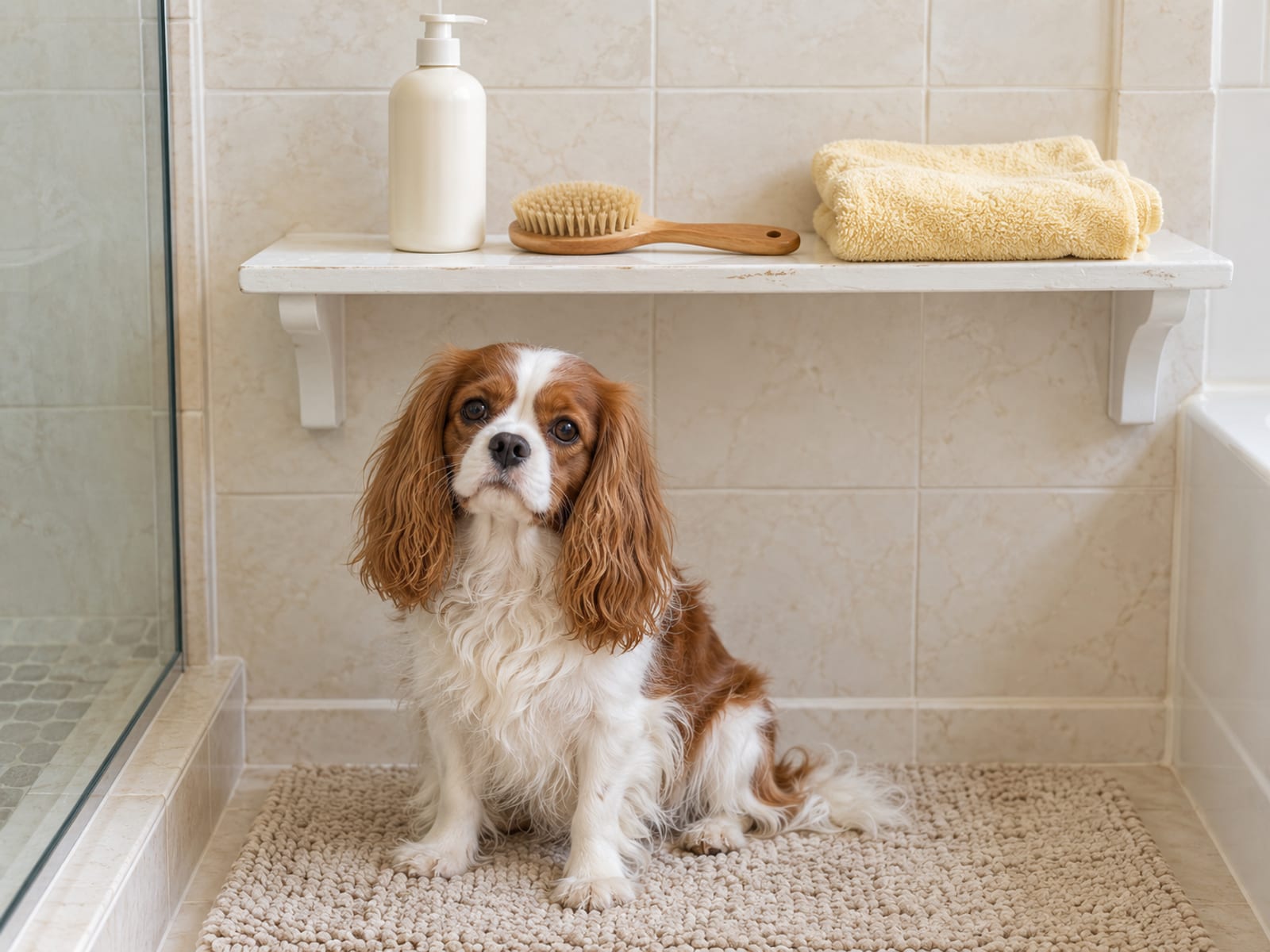
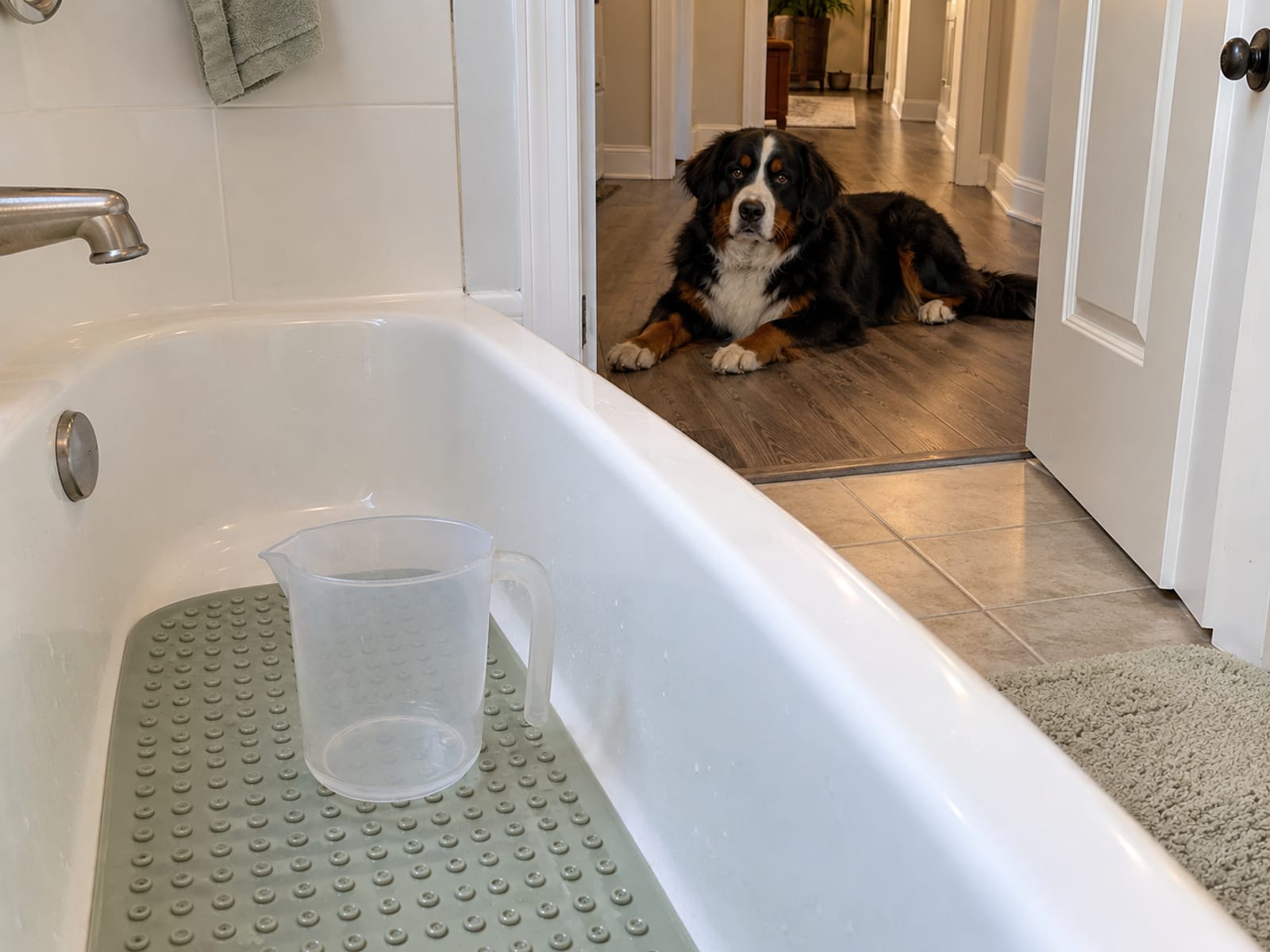
- Gather dog shampoo, towels, a brush, a nonslip mat and a pitcher or gentle sprayer. Cotton balls are optional for the ears.
- Brush first. Take out loose hair and dirt, and find mats before water tightens them.
- Set the dog on the nonslip mat and keep things calm and secure without a struggle.
- Use lukewarm water. A Spanish-language veterinary handout from Dechra notes that water that is too hot or too cold can irritate the dog and make bathing unpleasant.
- Wet the coat down to the skin without spraying hard at the face or into the ears.
- Wash the body, paws, belly, under the tail, skin folds and around the ears with dog shampoo. Wipe the face with a damp cloth.
- Keep shampoo and water out of the eyes, nose, mouth and ear canals.
- Rinse until no residue is left. The Merck Veterinary Manual names shampoo residue as a common cause of skin irritation.
- Let your dog shake, then towel dry well.
- Finish drying the coat completely in a warm, safe spot. If you use a dryer, follow its safety directions and avoid hot air or close heat. Brush long coats as they dry, but stay away from painful mats and sore skin.
For water in the ears and ear odor, my guide on how to clean your dog's ears safely goes further. The AKC bath guide is a good second read on the same sequence.
What if my dog hates baths?
Fear of water, slipping and shower spray are common. The AAHA recommends a consistent sequence with a predictable cue, nonslip footing, small amounts of water, rewards, and a pitcher in place of a shower spray when the spray is what scares the dog. End each bath with a clear release cue, so your dog learns when it is over.
Keep the whole routine short. If your dog panics or might bite, stop. A qualified groomer or your veterinarian can take over from there, and that is a fine decision, not a failure.
How do I keep my dog clean between baths?
Brushing does a lot of the work. It removes dirt, loose hair and tangles, and spreads the natural oils through the coat. After walks, wipe the paws, coat and exposed skin with a damp cloth. The AAHA suggests a wet rag or fragrance-free grooming wipes after time outdoors, which also helps dogs with allergies. My dog paw problems guide covers what to do when paws stay irritated.
After swimming, rinse chlorine or salt water out of the coat and dry the ears, paws, folds and coat well. Wash bedding, blankets, collars and harnesses when they hold dirt or odor, since they often carry the smell you notice on the dog. If you use a dry or waterless product, pick one made for dogs and follow its label.
Why does my dog still smell after a bath?
If the smell is back quickly, the coat may not be the source. Check these:
- Ears. An ear infection often smells. See dog ear infections.
- Mouth. Teeth and gums can cause bad breath that seems to come from the whole dog.
- Skin. Infection, yeast overgrowth, greasy skin and hot spots all carry an odor. See yeast infections in dogs.
- Skin folds. Folds that stay damp can smell.
- Anal sacs. Disease in these small glands can cause a strong odor.
- Fleas or a flea allergy. Both can bring itching and smell.
- Leftover moisture or residue. A thick coat that was not dried all the way, or shampoo left in the coat, can smell too.
The ASPCA says anal gland infection, flea allergy, skin disease and stress-related licking can add to these problems, and advises a veterinary exam when you see skin abnormalities or excessive scratching, licking or biting. Call your veterinarian if the odor keeps returning, or if it comes with itching, redness, pustules, crusts, sores, hair loss, discharge or pain. My signs of a healthy dog page helps you tell normal from not normal.
When should a groomer or a veterinarian help?
Use a groomer for severe mats, a hard curly or double coat, drying that needs special equipment, a dog too big or too difficult to handle at home, or a dog that gets distressed during home baths. A groomer does not diagnose skin disease. Find one in the groomer directory.
Use a veterinarian soon for itching, redness, flakes, sores, pustules, odor, hair loss, discharge or licking that persists or returns quickly. Find one in the veterinarian directory. Get urgent care for severe pain, fast-spreading lesions, collapse, trouble breathing, a poisoning exposure, or a dog you cannot safely handle.
Prices vary by city, but Whole Dog Journal published these figures in November 2024: basic grooming averages $30 to $50 for small dogs, $50 to $80 for medium, $80 to $120 for large and $120 to $200 for giant. Dematting adds about $10 to $100, a flea bath about $10 to $45, and a medicated or specialized skin treatment about $15 to $45. Ask your groomer for a price before you book.
Flea products need their own timing. Check the exact label for the product you use, because it controls. Elanco says Advantage II is waterproof after 24 hours and recommends bathing before application, with the dog dry when it goes on. UC Davis says some spot-ons are applied one to two days after a bath and that timing varies by product. Do not carry one product's timing over to another. My guide to getting rid of fleas covers the rest of the plan.
Questions about bathing a dog
These are the questions worried owners ask most, with short answers.
Is it okay to bathe a dog once a week?
Sometimes. Weekly bathing can strip natural oils and cause dryness or itching, but some oily-coated and hairless dogs, and some dogs on a veterinary skin plan, do need weekly baths. If you are not sure, ask your veterinarian before settling on weekly.
How do I know when my dog needs a bath?
Look for visible dirt, contamination, greasy buildup, or ordinary coat odor that brushing does not fix. If the smell returns fast, or you see itching, redness or discharge, call your veterinarian.
Is it okay to never bathe a dog?
Dirt, waste, mud and coat buildup do need to be cleaned off, and the ASPCA gives once every three months as a general minimum. A dog that stays clean with brushing and spot cleaning may need few baths, but a dog that gets dirty, swims or has skin trouble will need more.
Can I use wipes between baths?
Yes, for limited dirt. The AAHA suggests a wet rag or fragrance-free grooming wipes for paws, skin and coat after time outdoors. Pick wipes made for pets, and skip anything scented with essential oils.
What is the best time of day to bathe a dog?
Pick a time when you are not rushed and the house is warm enough for your dog to dry completely. A calm, unhurried bath, with the same routine each time, goes better than one squeezed in.
What is my next step?
Check your dog's coat type against the ranges above, then bathe when the coat tells you to, not when the calendar does. Brush first, use a dog shampoo, rinse until it is gone and dry all the way. If something does not look or smell right, or itching keeps coming back, book a visit with a veterinarian near you, and use a groomer for the coats and moods that are too much for home. DogServ gives practical information and does not replace a veterinary exam.
Sources
- American Animal Hospital Association: AAHA
- American Animal Hospital Association: AAHA
- American Animal Hospital Association: AAHA
- American Animal Hospital Association: AAHA
- American Kennel Club: AKC bath guide
- American Kennel Club: AKC
- American Kennel Club: AKC
- American Kennel Club: AKC
- American Kennel Club: AKC
- American Veterinary Medical Association: AVMA
- ASPCA: ASPCA
- ASPCA: ASPCA
- dechra-us.com: Dechra
- Merck Veterinary Manual: Merck Veterinary Manual
- Merck Veterinary Manual: Merck Veterinary Manual
- Pet Poison Helpline: Pet Poison Helpline
- UC Davis School of Veterinary Medicine: UC Davis
- VCA Animal Hospitals: VCA
- VCA Animal Hospitals: VCA
- VCA Animal Hospitals: VCA
- whole-dog-journal.com: Whole Dog Journal