
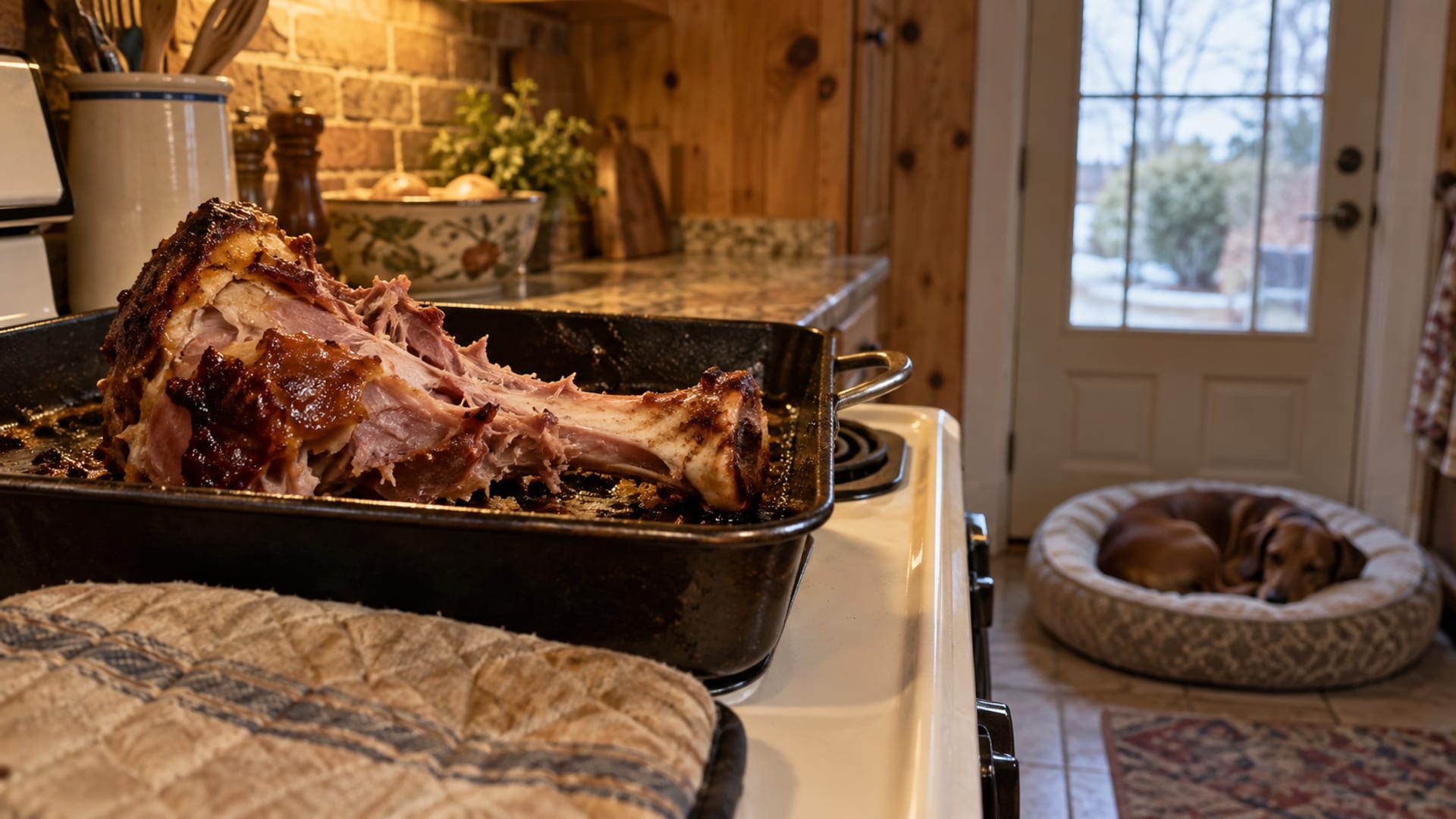
No. Keep ham bones away from your dog, whether the bone came off a baked holiday ham or out of a raw pork leg. Cooked bones "splinter into shards," says the American Kennel Club, and Pet Poison Helpline names ham bones among the carved-meat leftovers that can fracture teeth, tear or puncture the intestines, block the gut or bring in disease-causing bacteria.
If your dog swallowed some of a ham bone, call your vet promptly for advice, even when your dog is bouncing around as usual. Go straight to an emergency clinic for choking, trouble breathing or retching that will not stop.
Key takeaways
Tap a card to bring it forward.
- Ham bones are off the menu, raw or cooked. Cooking makes them splinter; any bone can choke or block.
- A holiday ham bone is cooked, cured and usually salty and fatty, which stacks three problems on one bone.
- Smoked ham hocks and shanks count as cooked, cured bones too.
- If a piece went down, call your vet promptly even if your dog looks fine.
- Vomiting, belly pain, straining without stool, tiredness or refusing food after a ham bone means call now.
What to do if your dog got into the ham bone
Tap or hover a row to highlight it.
| What your dog got | What to do |
|---|---|
| What your dog gotLicked or chewed meat off the bone; the bone is whole | What to doTake the bone away and watch for vomiting, diarrhea or a sore belly. Call if they appear. |
| What your dog gotA piece of cooked or smoked bone | What to doCall your vet promptly, even if your dog is acting normal. |
| What your dog gotThe whole bone, or you cannot find it | What to doCall your vet now. |
| What your dog gotA ham hock or ham shank | What to doCall your vet. It is bone plus fat plus cure. |
| What your dog gotA raw pork or ham bone that was swallowed | What to doCall your vet or a pet poison line. |
| What your dog gotChoking, gagging, labored breathing | What to doEmergency vet now. |
The vet will want to know your dog's weight, what exactly was eaten (spiral ham bone, hock, shank, raw pork bone), whether it was raw, cooked or smoked, how big the missing piece is, roughly when it happened, whether there was glaze or seasoning on it, and any signs so far. Cornell University's College of Veterinary Medicine stresses that fast veterinary help gives a blocked dog the best chance, and that imaging, an endoscope or surgery may be needed.
Leave the throat alone unless a vet walks you through it. Laxatives, oils, bread and medicines are also for your vet to decide on, since none of them is an accepted home treatment for a swallowed ham bone.
Ham bone, hock, shank or raw pork bone?
Owners use "ham bone" for several different things. All of them are best kept from dogs, but they bring different extras along.
Tap or hover a row to highlight it.
| What it is | Usually | For dogs |
|---|---|---|
| What it isHoliday or spiral ham bone | UsuallyBaked, cured, salty, fatty, sometimes glazed | For dogsAvoid |
| What it isSmoked ham hock | UsuallyThe lower leg joint, cured and smoked, with skin and fat | For dogsAvoid |
| What it isHam shank | UsuallyThe lower part of the ham, often cured and smoked, with meat and fat | For dogsAvoid |
| What it isRaw pork or fresh ham bone | UsuallyUncooked butcher bone | For dogsAvoid as the cautious answer |
| What it isDried "ham bone" dog chew | UsuallyProcessed commercial product | For dogsAvoid unless your vet has looked at the product |
| What it isHam bone broth | UsuallyLiquid made by simmering the bone | For dogsA separate question from the bone |
Smoking counts as cooking. A smoked hock or shank has been heated and usually cured, so treat it like the leftover bone from a baked ham.
The bone, the fat and the salt
A ham bone rarely arrives bare. Three separate things can go wrong.
The bone itself. Cornell lists bones among the objects that can block a dog's gut, and cooked bone adds sharp shards that can injure the mouth, throat and intestines, per the AKC. Any bone, raw or cooked, can also break a tooth or pack into the colon and leave a dog straining.
The fat. Ham and its rind and drippings are rich. The Merck Veterinary Manual names large amounts of table scraps as a risk factor for pancreatitis, a painful inflammation of the pancreas that can cause vomiting, weakness, belly pain, dehydration, diarrhea, loss of appetite and sometimes fever.
The salt. Cured ham is high in sodium, and the AKC's page on ham notes the sodium-based preservatives used in it. Too much salt can bring on vomiting, diarrhea, heavy thirst and urination, tiredness and fluid buildup, and in serious cases kidney damage, seizures, coma or death. How much sodium a given bone carries depends on the ham, so there is no way to count it from the bone. For more on the meat itself, see can dogs eat ham.
Raw ham and pork bones: where the sources land
Sources disagree about raw bones in general, and none of them makes a case for raw ham or pork bones in particular.
- AKC reports that some vets suggest raw meat bones, advises asking your own vet first because raw bones can carry Salmonella and break teeth, and in its steak bone article records the opposing view that dogs should get no bones, raw or cooked.
- Pet Poison Helpline's holiday advice against ham bones carves out no exception for raw ones.
- A 2025 review of raw meat diets in the journal Animals says that intact bones can fracture teeth and injure, block or puncture the esophagus and gut, and that the claim raw bones cause fewer problems than cooked ones has not, to the authors' knowledge, been tested by research.
- The FDA warns that raw animal food can carry Salmonella and Listeria, a risk to the dog and the people handling it, per its raw pet food fact sheet.
The cautious answer is to skip ham bones in every form. Cooking raises the splinter risk, and raw leaves the swallowing, blockage, broken tooth and bacteria risks in place.
Signs to watch, and when to go in
Tap or hover a row to highlight it.
| What you see | What it can point to |
|---|---|
| What you seeChoking, gagging, coughing, repeated swallowing, drooling, pawing at the mouth | What it can point toA piece stuck in the mouth, throat or esophagus |
| What you seeVomiting, not eating, a tender belly, diarrhea, dehydration, tiredness | What it can point toA blockage, or pancreatitis from the fat |
| What you seeStraining, only small amounts of stool or none | What it can point toBone packed in the gut, or a blockage lower down |
| What you seeHeavy thirst and peeing, vomiting, unusual tiredness | What it can point toToo much salt from cured ham |
| What you seeDiarrhea, poor appetite, fever after a raw bone | What it can point toBacterial illness |
VCA Animal Hospitals and Cornell both list vomiting, loss of appetite, belly pain, diarrhea, dehydration, tiredness and straining as signs of a blockage. How soon they show depends on where the piece stops and how completely it blocks the way, so no one can name a safe waiting period after a ham bone. Cornell calls a blocked gut an emergency, and warns that a leak into the belly can lead to peritonitis or sepsis.
Go now, day or night, for choking, trouble breathing, retching over and over, vomiting that keeps coming, a swollen belly, collapse, blood in vomit or stool, or straining with nothing to show for it.
"Every Christmas our dog got the ham bone and was fine"
Plenty of dogs have had a ham bone at the holidays and nothing came of it. That story is true, and it still is not a rule.
Several things changed each time, even if it felt like the same bone. How much the dog chewed and swallowed. Whether a piece broke off sharp. The size of the dog next to the size of the bone. How much fat and salt this year's ham carried, since cures and glazes vary from brand to brand. How the dog's own pancreas handled a rich meal. VCA puts the chance element plainly: some swallowed objects pass without trouble, and not all of them do.
Some trouble also takes time to appear. A blockage can take time to show, and a dog can carry Listeria or Salmonella from a raw bone while looking healthy, according to the FDA. Good holidays past are good news. They cannot vouch for this year's bone.
Dogs that need more care around ham
- Small dogs and puppies. A fragment that a big dog passes can stick in a small one. Cornell advises keeping easily swallowed items, small bones included, out of reach.
- Dogs prone to pancreatitis. Merck reports pancreatitis is more common in Miniature Schnauzers, Yorkshire Terriers, Cocker Spaniels, Dachshunds, Poodles and sled dogs, among others, and high blood fats raise the risk. Fatty ham scraps are a poor gamble for them.
- Seniors and dogs with dental disease. Cornell notes that hard objects, bones included, can wear down or fracture teeth.
- Dogs on a low-salt diet prescribed by their vet. Cured ham is a lot of sodium; ask your vet what applies to your dog.
- Cats. Pet Poison Helpline's warning about carved-meat bones covers cats too.
Holiday tables, barbecues and ham bone look-alikes
Holiday meals are the classic time for a ham bone to vanish, and Pet Poison Helpline's holiday guidance singles out the bones left after carving. Summer barbecues are another; Cornell's barbecue advice says leftover bones should not go to dogs. Wrap the bone and put it in a covered trash can as soon as the carving is done.
- Ham bone broth. Pet Poison Helpline suggests using leftover bones for broth only if it is left unseasoned. Broth made with onion, garlic, lots of salt, drippings or glaze is a different matter.
- Bone meal. This garden and supplement powder is not a ham bone, and Pet Poison Helpline warns that a large amount can block the gut or cause pancreatitis.
- Other pork and holiday bones. See pork bones, pork rib bones and turkey bones, plus beef bones and lamb bones for other roasts. The complete guide to bones puts them side by side.
Check what you learned
Quick check
Questions about dogs and ham bones
My dog swallowed a cooked ham bone fragment. Is it an emergency?
Call your vet promptly, even if your dog seems normal. The AKC advises a call after any cooked bone, because a fragment can choke, cut or block. Choking, breathing trouble or repeated vomiting means go in now.
Are raw ham bones safer than cooked ones?
Raw bones splinter less, but that does not make them safe. They can still break teeth, block the gut and carry Salmonella and Listeria, and vets disagree about raw bones in general. The cautious choice is no raw ham bone either.
Can my dog have the meat left on the ham bone?
Ham is salty and often fatty. A small scrap may not upset every dog, but it adds digestive, pancreatitis and salt risks, and it never makes the bone safe. Cut a small plain piece off the bone if you share at all.
Can I give my dog a ham hock or smoked ham shank?
No. It is a bone-in piece of cured, smoked, fatty ham that can splinter or block the gut, and it is salty on top of that.
Can I make broth for my dog from the ham bone?
Pet Poison Helpline suggests leftover bones can go into a broth if it is kept unseasoned. Strain out every piece of bone, and skip it if the ham was glazed or the pot has onion, garlic or a lot of salt.
Cooking with hocks? See can dogs eat ham hocks.
Sources
Checked September 24, 2026.
- American Kennel Club, Can Dogs Eat Bones? Be Careful Before Giving Your Pup a Bone
- American Kennel Club, Is It Safe for My Dog to Eat Steak Bones?
- American Kennel Club, Can Dogs Eat Ham?
- Pet Poison Helpline, Holiday Party Dangers
- Pet Poison Helpline, Bone Meal and Blood Meal
- Cornell University College of Veterinary Medicine, Gastrointestinal Foreign Body Obstruction in Dogs
- Cornell University College of Veterinary Medicine, Dental Disease and Home Dental Care
- Cornell University College of Veterinary Medicine, Dogs and Barbeques
- Merck Veterinary Manual, Pancreatitis and Other Disorders of the Pancreas in Dogs
- VCA Animal Hospitals, Ingestion of Foreign Bodies in Dogs
- U.S. Food and Drug Administration, Get the Facts! Raw Pet Food Diets can be Dangerous to You and Your Pet
- U.S. Food and Drug Administration, Get the Facts About Listeria
- Animals (journal), Current Evidence on Raw Meat Diets in Pets: A Natural Symbol, but a Nutritional Controversy