
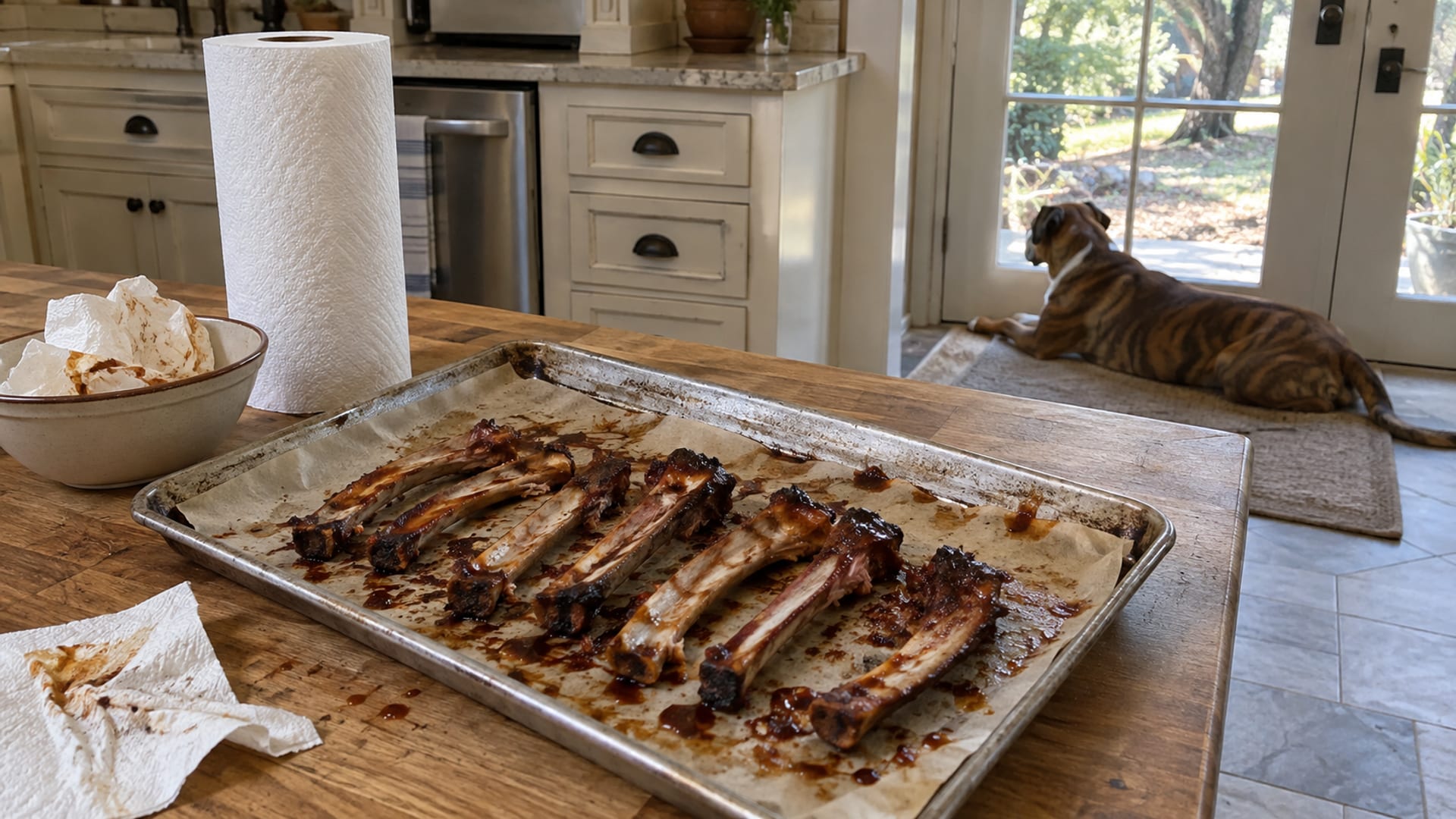
No. Pork rib bones, raw or cooked, can splinter, lodge in the throat, block the intestines or cut the gut on the way through. The American Kennel Club warns that pork bones are likely to splinter and crack, and that because they are fairly small, even a big dog may try to swallow one whole. The meat, grease and sauce left on ribs add a second risk: pancreatitis.
If your dog swallowed a rib bone, call your vet promptly, even if your dog is acting normal. Choking, trouble breathing or collapse means an emergency clinic now.
Key takeaways
Tap a card to bring it forward.
- Rib bones of every kind, raw or cooked, can splinter, choke and block. Never share them.
- Smoked, grilled and barbecue ribs are cooked bones, and cooked bones are the most brittle.
- Rib bones are small enough that large dogs try to gulp them whole.
- Fatty rib meat and drippings can trigger pancreatitis, which can be severe.
- Signs can take days. A normal-looking dog after a rib bone still needs a call to the vet.
My dog ate a rib bone: what to do now
- Stop the buffet. Take away the plate, the rack, the foil and the trash bag. Rib feasts rarely leave one bone behind.
- Check for choking. Coughing, gagging, pawing at the mouth, drooling, distress or struggling to breathe is an emergency. VCA Animal Hospitals says choking needs immediate veterinary attention.
- Call your vet. The AKC advice after a cooked bone is to call your vet or book an appointment to rule out serious outcomes. A whole bone, several bones, a small dog or a puppy all make the call more urgent.
- Do not make your dog vomit. The AKC advises against it after a bone, since sharp pieces can do damage coming back up. The same goes for bread, oil or laxatives unless your vet asks for them.
- Read the sauce label, or remember the rub. If it had onion, garlic, xylitol or alcohol, mention it. A pet poison line becomes useful for those ingredients.
Have ready: raw or cooked, how many bones, whole or chewed, how much meat and fat came with them, when it happened, and your dog's weight.
Raw and cooked pork rib bones
Tap or hover a row to highlight it.
| Cooked rib bones | Raw rib bones | |
|---|---|---|
| Includes | Cooked rib bonesBarbecue, smoked, grilled, baked, braised, boiled, fried and pressure-cooked ribs | Raw rib bonesRaw spare ribs, baby backs and rib tips |
| Splintering | Cooked rib bonesBrittle; prone to splintering | Raw rib bonesCan still splinter and crack, per the AKC |
| Choking, blockage, tears in the gut | Cooked rib bonesYes | Raw rib bonesYes |
| Broken teeth | Cooked rib bonesYes | Raw rib bonesYes |
| Fat | Cooked rib bonesMeat, drippings and grease left on | Raw rib bonesFatty meat on the bone |
| Other extras | Cooked rib bonesSauce, rub, salt, onion, garlic | Raw rib bonesSalmonella, Listeria and E. coli |
| Verdict | Cooked rib bonesNever | Raw rib bonesAvoid |
VCA's feeding advice says it in capital letters: "NEVER feed cooked bones to pets." That page explains that cooked bones are brittle and can splinter, block and perforate the gut.
Dried, smoked or packaged pork rib chews are still hard animal bone that can fracture teeth, break apart and be swallowed. A "natural" label or a spot on a pet store shelf does not make one safe.
Signs to watch in the days after
If a piece is in the mouth or throat: coughing, gagging, choking, heavy drooling, pawing at the mouth, trouble swallowing or trouble breathing.
If it moved on into the stomach or intestines: vomiting, diarrhea, a tender or painful belly, eating less, straining to poop or passing only small amounts, tiredness, or acting differently when you touch the belly, as listed by VCA. A piece stuck in the stomach can cause vomiting that keeps coming back, and fragments in the colon can cause painful constipation.
If the fat is the problem: vomiting, tiredness, diarrhea and not eating can also mean pancreatitis. The AKC notes it ranges from mild to severe, and severe cases can be deadly.
Blockages can take time to show. In a study of 181 dogs who needed surgery for something stuck in the small intestine, signs had been going on for an average of 2.7 days before the operation. That figure describes those dogs and does not set a waiting period for yours. Bones were also the most common thing found stuck in the esophagus in a University of Minnesota review of 114 dogs.
Ribs and fat: the pancreatitis side
Rib bones rarely come clean. The AKC singles out pork rib bones as high in fat, and says too much fat can cause pancreatitis. Pet Poison Helpline lists ribs among the fatty foods that raise that risk, next to its warning that cooked bones can splinter and cause internal cuts, blockage and choking.
A dog that has had pancreatitis before, or one on a low-fat diet prescribed by a vet, should not get rib leftovers of any kind, bone or no bone.
What sources say about raw rib bones
On cooked rib bones, every source here agrees. Raw bones get more debate. The AKC's broader bones article tells owners to ask a vet before giving any raw meat bone, and its pork article says no to pork bones raw or cooked. It does allow that large raw cow or bison bones, too big to swallow and given under supervision, may be acceptable, and that exception does not reach pork ribs. A 2016 study of raw beef bones in lab Beagles found less tartar, while its authors still listed bacteria, blockages, broken teeth and digestive problems as risks. The cautious answer is no raw pork rib bones either, and a talk with your vet before trying any raw bone.
"My dog has eaten rib bones at every cookout"
Some dogs have, and some of those dogs never had a single problem. That is a real outcome. It depended on the piece that got swallowed that day, where it went, whether it was cooked, how big the dog was, and how much fat came along with it. A small piece may pass while a larger one sits in the stomach or lodges in the bowel. The AKC's point about large dogs gulping pork bones whole means size is no shield either. And the signs of a problem can show up days after the party is over. Last summer's luck does not carry over to this summer's ribs.
Barbecue sauce, rubs and other rib leftovers
- Barbecue sauce and dry rubs: often salty, and some contain onion or garlic. See Can dogs eat onions? and Can dogs eat garlic?
- Boneless country-style ribs: sometimes cut from the shoulder with no bone. No bone means no splinters, but the fat, sauce and salt still count.
- Rib meat pulled off the bone: a small bite of plain, lean, well-cooked pork is covered in Can dogs eat pork?. Fatty, sauced rib meat is a different story.
- Pork chop, shoulder and knuckle bones: covered in Can dogs eat pork bones?
- Beef ribs: see Can dogs eat beef bones?
Tailgates and cookouts are where most dogs find ribs. Pet Poison Helpline's tailgating tips warn about cooked bones and fatty grilled food at exactly these events. A lidded trash can and a clear plate before the dog wanders over go a long way. More on every kind of bone is in Can dogs eat bones?
Check what you learned
Quick check
Questions about dogs and pork rib bones
Can dogs eat raw pork rib bones?
Avoid them. The AKC says raw and cooked pork bones are likely to splinter and crack, with choking, blockage and injury to the esophagus or intestines as the risks. Raw bones can also carry Salmonella, Listeria and E. coli.
Can dogs eat smoked or barbecue rib bones?
No. Smoking, grilling and barbecuing all cook the bone, which makes it brittle. The fatty meat, salt, rub and sauce add risks of their own.
My dog swallowed a rib bone but seems fine. Do I need to call?
Yes, call your vet for advice. Some bones pass without trouble, but others block or injure the gut, and signs can take days to show. Go in right away for choking, trouble breathing, collapse, repeated vomiting, severe pain or straining.
Is a rib bone safe if I watch my dog chew it?
Watching does not make a pork rib bone safe. A piece can break off and go down in a second.
Is it the rib meat or the bone that causes problems?
Both can. The bone brings choking, splinters, blockage, tears and broken teeth. The meat and drippings bring fat, and the sauce or rub can bring salt, onion or garlic.
Sources
Checked September 24, 2026.
- American Kennel Club, Can Dogs Eat Pork Bones?
- American Kennel Club, Can Dogs Eat Bones? Be Careful Before Giving Your Pup a Bone
- VCA Animal Hospitals, Why Bones Are Not Safe for Dogs
- VCA Animal Hospitals, Nutrition, Natural Approaches to Feeding
- VCA Animal Hospitals, Ingestion of Foreign Bodies in Dogs
- Pet Poison Helpline, Toxic and Hazardous Food Guide for Pets
- Pet Poison Helpline, Tailgate Alert: Keeping Your Furry Friends Safe Amidst the Festivities
- Veterinary Medicine and Science, Associations of abdominal discomfort and length of clinical signs with surgical procedure in 181 cases of canine small intestinal foreign body obstruction
- Australian Veterinary Journal, Raw beef bones as chewing items to reduce dental calculus in Beagle dogs, 2016
- University of Minnesota Veterinary Medical Center, Retrospective evaluation of dogs presenting with esophageal foreign bodies, 2004 to 2014: 114 cases