

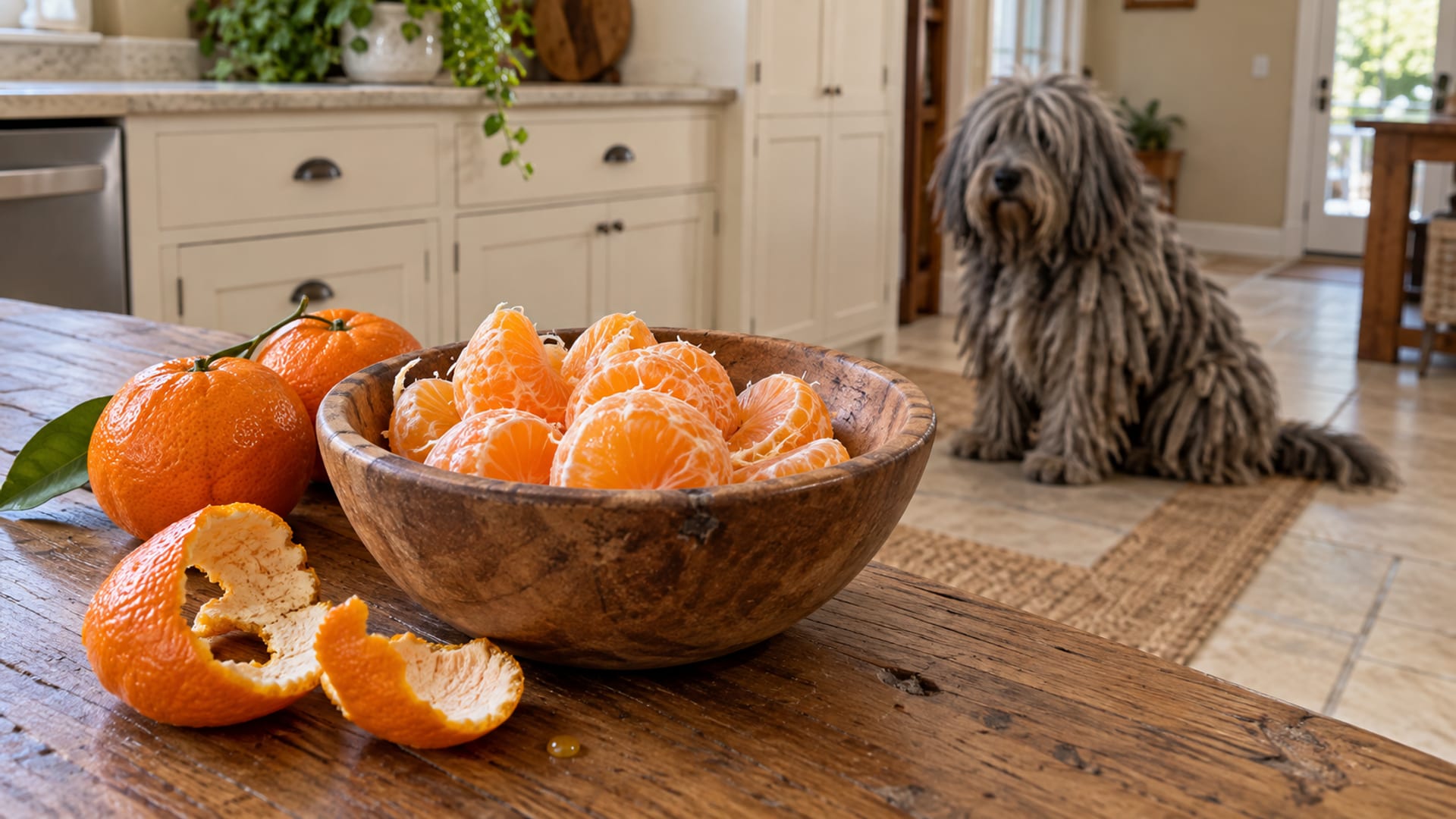
Yes, most dogs can have a small amount of peeled clementine flesh, about a segment or two depending on how big your dog is. The parts to keep away from your dog are the peel, seeds, leaves and stems, plus any clementine oil or extract.
If your dog already got into one, what was actually swallowed decides your next move. A few segments of flesh and a dog acting like themselves usually means you watch at home. A pile of peel, citrus oil, or a dog vomiting again and again is a reason to call. I'd rather you call and hear "that's fine" than sit and wonder.
Key takeaways
Tap a card to bring it forward.
- A segment or two of peeled clementine is a fine treat for most dogs; the amount depends on your dog's size.
- Peel, seeds, leaves and stems stay out, because they can block the gut or carry irritating oils.
- Citrus oil, extracts and unknown citrus products call for a prompt call to a vet or poison line.
- Repeated vomiting, heavy drooling, tremors, wobbliness or choking mean call now.
- Treats of every kind, clementines included, should stay under 10 percent of your dog's daily calories.
What to do if your dog already ate a clementine
Take these steps in order, whether your dog swiped a segment, a whole fruit or the peel from the trash.
- Take away whatever is left and check your dog's mouth. Peel and seeds can get stuck, and moving the fruit away stops a second helping.
- Work out what was eaten. Was it flesh only, or did peel, seeds, leaves or a stem go down too? Peel can cause choking or a blockage.
- Note your dog's weight. The same piece of peel is a bigger exposure for a small dog than for a large one.
- If it was a small amount of peeled flesh and your dog is acting normally, watch them over the next several hours and offer water.
- If it was peel in quantity, leaves, stems, juice in a large amount, citrus oil, extract or a product with other ingredients, call your vet or a pet poison line right away. Have the product, amount, weight and time ready. The ASPCA advises calling poison control or your local vet as soon as possible if you suspect a potentially toxic substance was swallowed.
- If your dog is choking, gagging hard or cannot keep water down, go to a vet or emergency clinic without waiting.
Which parts of a clementine are fine and which are not
Kew's Plants of the World Online lists clementine, mandarin, satsuma and tangerine as common names for *Citrus reticulata*. The ASPCA entry is written for sweet orange; it says the fruit is edible while the skins and other plant material can cause problems, because of essential oils and psoralens. The AKC says small amounts of orange flesh are fine and recommends removing the peel and seeds. For a clementine, that makes the flesh the treat and the rest a pass.
Tap or hover a row to highlight it.
| Part or form | Fine for dogs? | What to know |
|---|---|---|
| Part or formPeeled flesh | Fine for dogs?Yes, in small amounts | What to knowSugar, acid and fiber can upset the stomach if a dog eats too much |
| Part or formPeel or rind | Fine for dogs?Avoid | What to knowHolds citrus oils and is hard to digest; it can cause choking or a blockage |
| Part or formSeeds | Fine for dogs?Remove them | What to knowThe AKC recommends taking seeds out because of choking risk |
| Part or formLeaves and stems | Fine for dogs?Avoid | What to knowCan cause irritation or depression in significant amounts |
| Part or formJuice | Fine for dogs?Not recommended | What to knowMore concentrated, acidic and sugary than the flesh |
| Part or formDried clementine | Fine for dogs?Use caution or skip | What to knowDrying concentrates the sugar and leaves chewy pieces |
| Part or formPowder, zest, extract or essential oil | Fine for dogs?Avoid | What to knowConcentrated citrus oil needs a call to a vet or poison line |
The oil is behind most of the worry. The Pet Poison Helpline links citrus oil exposure to skin irritation, heavy drooling, lethargy, tremors and loss of coordination. A segment of peeled fruit carries far less oil than the peel, an extract or a bottle of essential oil.
How much to give and how to serve it
The AKC says one or two small orange segments a day is typically enough, depending on the size of the dog. That advice is for oranges; clementines are mandarin-type citrus prepared the same way, so the same small serving is a sensible start. A tiny dog does well with part of a segment.
This is how I'd serve it:
- Peel the fruit completely and split off one segment.
- Take out any seeds and loose white strings.
- Cut it small if your dog gulps food.
- Give one piece first and see how your dog handles it before offering more.
- Keep the whole treat budget under 10 percent of daily calories, as the AKC advises.
If your dog gets loose stools or vomits after a segment, stop offering clementines; some dogs do not handle acidic fruit well. If your dog has diabetes, ask your vet first, because sugar is the main thing clementine flesh brings to the bowl.
There is no per-kilogram toxic dose for clementines, so the amounts above are a serving suggestion. When a dog eats far more than a segment or two, or anything other than flesh, a poison line or your vet can compare your dog's size with what was eaten.
Signs to watch for and when they show up
After a small amount of peeled flesh, most dogs show nothing at all. Too much flesh can cause vomiting, diarrhea, belly discomfort or a dip in appetite, because of the sugar, acid and fiber.
Peel can lodge in the throat or the gut. Watch for gagging, pawing at the mouth, a tight or painful belly, repeated retching and refusing food and water.
Oil and large amounts of plant material bring the signs that need a faster response. The Merck Veterinary Manual describes vomiting after dogs swallow d-limonene, the compound in citrus rind, and says signs from exposure can begin within a few hours. I'd keep watching your dog through the rest of the day after a peel or oil exposure, even if the first hour looks quiet.
Call your vet or a poison line promptly if you see any of these:
- Repeated vomiting or diarrhea
- Marked tiredness or a flat, low mood
- Drooling far more than normal
- Tremors, stumbling or a wobbly walk
- Trouble breathing, collapse or choking
- Belly pain, or a dog who cannot keep water down
My dog ate one before and was fine
That story is true, and it happened in that dog on that day. Plenty of dogs eat a segment, or even a bit of peel, and never show a sign. It just does not predict the next time, or a different dog. A few things change the outcome:
- Amount. A segment of flesh is a different exposure from a whole fruit's worth of peel or a splash of oil.
- Form. Peeled flesh holds far less concentrated oil than peel, extract or essential oil.
- Size. The same amount is a larger dose per kilogram in a small dog than in a big one.
- The individual dog. The AKC suggests introducing orange slowly and watching the reaction.
- Timing. Signs from d-limonene can start a few hours later, so a quiet first few minutes settles little.
- What was really swallowed. Owners often cannot tell how much peel or how many seeds went down.
So, if a neighbor's dog ate a whole clementine last winter and was fine, that is good news for that dog. Your dog gets the serving and the checks above.
Products and look-alikes
Clementine, mandarin, tangerine and satsuma are overlapping names, and Cuties and Halos are marketing names for mandarin-type fruit, so the same rules cover all of them. Related fruit have their own pages: tangerines, oranges, lemons, limes and grapefruit.
Some products that carry the clementine name are not fruit at all:
- Clementine or mandarin essential oil. Concentrated. Keep diffusers and bottles out of reach, and call if your dog licked, chewed or got oil on their skin.
- Extracts, powders and zest. These concentrate peel oils, so treat them like the oil.
- Marmalade, candy, baked goods and drinks. Read the label; some contain xylitol, alcohol, caffeine or chocolate, each a separate risk.
- Supplements. The Merck Veterinary Manual points out that bitter orange, a different citrus from an ordinary clementine, shows up in some supplements as synephrine. Keep the label handy if your dog got into a pill bottle.
The dog answer does not carry over to cats. The ASPCA lists orange as toxic to cats too, and the Pet Poison Helpline flags citrus oil for them, so peel and oil stay away from cats even when a dog can have a segment.
Check what you learned
Quick check
Questions about dogs and clementines
Short answers to questions owners ask often.
Can puppies have clementines?
A puppy can try a tiny piece of peeled flesh, with the seeds out, once you are sure they are eating solid food well. Puppies tend to gulp, so cut the piece small, and stop if it gives them loose stools. Even a modest amount of peel counts for more in a small puppy than in an adult.
Can dogs eat mandarins and tangerines too?
Yes, in the same small, peeled amounts, with seeds out. They belong to the same group of citrus, so the peel, oil and extract cautions apply the same way.
Can dogs drink clementine juice?
I'd skip it. Juice is more concentrated, more acidic and sugarier than a segment, and it loses the fiber that comes with the fruit. A splash is unlikely to be an emergency, but water is the better drink.
My dog licked clementine essential oil from my diffuser. What now?
Call your vet or the Pet Poison Helpline and describe what your dog got into, including the brand, the ingredients on the label, and how much may have been licked or spilled. The Pet Poison Helpline asks owners to seek prompt veterinary care when a dog has swallowed, inhaled or had skin contact with an essential oil. Move your dog away from the source while you call.
Sources
Checked September 29, 2026.
- ASPCA, Orange
- American Kennel Club, Can Dogs Eat Oranges?
- Pet Poison Helpline, Essential Oils 2
- Merck Veterinary Manual, Insecticide Poisoning
- Merck Veterinary Manual, Toxicoses in Animals From Human Multivitamins and Supplements
- Kew Science, Plants of the World Online, Citrus reticulata Blanco