

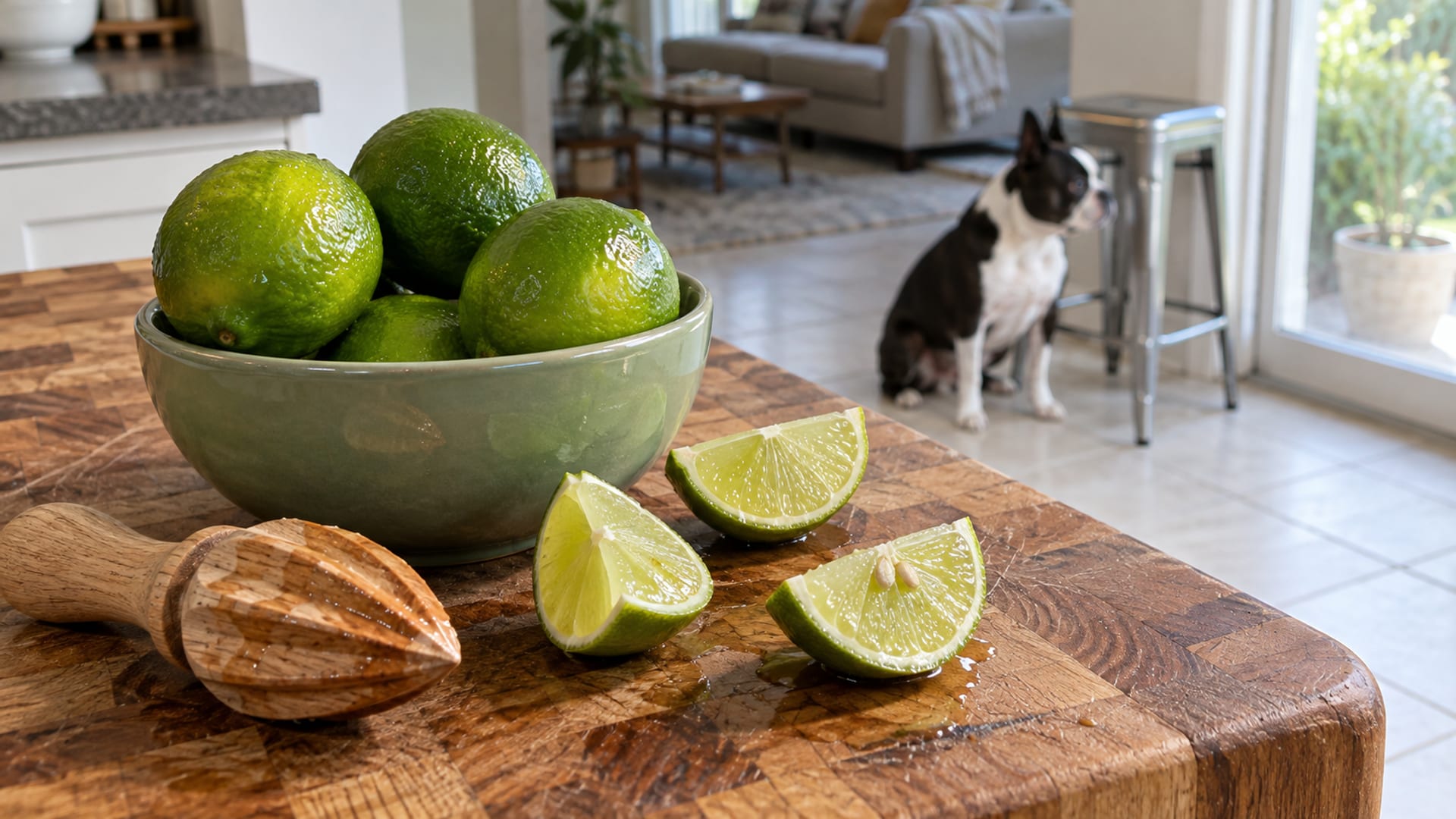
Skip limes as a treat for your dog. The ASPCA lists the lime plant as toxic to dogs because it contains essential oils and psoralens, and it says the skin and plant material are where the problems come from. A small bite of peeled flesh is a much smaller exposure, and the ASPCA's citrus guidance says that amount is unlikely to cause more than a minor stomach upset.
If your dog licked a wedge or ate a nibble of the pulp, watch them for the rest of the day. If they chewed the peel, swallowed a whole lime, ate leaves from a lime tree, or got into lime essential oil, call your vet or a pet poison line now.
Key takeaways
Tap a card to bring it forward.
- The ASPCA lists lime as toxic to dogs because of its essential oils and psoralens.
- A small bite of peeled flesh usually causes, at most, a mild upset stomach.
- Peel, zest, leaves and stems carry the oils, and a whole lime or chunk of rind can block the gut.
- Lime essential oil is the most serious form; call right away if your dog licked or swallowed any.
- Vomiting, diarrhea, drooling, a low mood, wobbliness or tremors after lime are reasons to call.
My dog ate a lime: what to do now
Tap or hover a row to highlight it.
| What happened | What to do |
|---|---|
| What happenedA lick of a wedge or a bite of peeled flesh | What to doWatch for vomiting, diarrhea or drooling today. Call if they show up. |
| What happenedPeel, rind or zest | What to doCall your vet or a poison line. |
| What happenedA whole lime | What to doCall. The peel's oils and the size of the fruit both matter. |
| What happenedLeaves or stems from a lime tree | What to doCall, and take a photo of the tree or a sprig. |
| What happenedLime essential oil, a diffuser spill or a concentrated flavoring | What to doCall now. |
| What happenedLime juice, a lime drink, candy or popsicle | What to doRead the label for xylitol, alcohol and caffeine. If any is listed, call now. |
Before you call, find out which part of the lime your dog ate, roughly how much, and when, and have their weight ready. The ASPCA asks owners to note the amount eaten and then contact their vet or poison control.
Get your dog to a vet right away for seizures, collapse, trouble breathing, or vomiting that will not stop.
Flesh, peel, juice and oil: which part matters
Tap or hover a row to highlight it.
| Part | How concerning | Why |
|---|---|---|
| PartPeeled flesh, a small amount | How concerningLow | WhyUsually no more than a minor stomach upset (ASPCA) |
| PartJuice | How concerningAvoid | WhyThe AKC calls lime juice concentrated and says not to give it |
| PartPeel, rind and zest | How concerningHigher | WhyHolds the essential oils and psoralens; rind can also cause a blockage |
| PartSeeds | How concerningRemove | WhyNo toxic amount is known, but they can irritate or add to a blockage |
| PartLeaves and stems | How concerningHigher | WhyPlant material the ASPCA names as a source of problems |
| PartDried lime or lime powder | How concerningAvoid | WhyDrying concentrates the fruit and peel |
| PartCooked lime or zest in baking | How concerningAvoid | WhyCooking does not reliably remove the oils |
| PartLime essential oil or extract | How concerningHighest | WhyConcentrated oil; risk rises with strength |
The oils in lime include d-limonene and linalool, and psoralens are compounds that can make skin more sensitive to light and cause dermatitis. The American Kennel Club advises against feeding limes at all, points to the sourness and citric acid, and flags the rind as a blockage risk if a dog eats a lot of it.
Is there a safe amount of lime?
No toxic dose of lime has been published for dogs, whether for the flesh, the peel, the juice or the oil. That means you cannot work out safety from your dog's weight, so let the form decide:
- A lick or a small bite of peeled flesh: watch at home, and call if signs appear.
- Any peel, zest, leaves, stems or a whole lime: call your vet or a poison line.
- Any lime essential oil: call right away. The Merck Veterinary Manual says essential oil poisoning depends on the type of oil, how concentrated it is, and whether it was swallowed, inhaled or put on the skin.
A small dog gets a bigger dose from the same wedge than a large dog does, so call sooner for a small dog or a puppy. Merck also notes that breathing in essential oil mist is a bigger concern for a dog that already has breathing problems.
Signs of lime poisoning, and how soon they show
For lime, the ASPCA lists vomiting, diarrhea, depression (a quiet, flat, low-energy dog) and possible skin irritation. Other signs owners may see:
- drooling or not wanting to eat
- tiredness
- wobbly walking
- tremors
After essential oil, Merck says signs can start within minutes to hours. In serious cases they can include seizures, low body temperature, low blood pressure, and liver or kidney failure. A chunk of rind stuck in the gut shows up differently: repeated vomiting, belly pain, not eating, or straining with nothing coming out.
Call your vet if you see any of these after your dog got into lime.
"My dog chews lime wedges and has never been sick"
That can be true for your dog. Plenty of dogs lick a wedge from a plate or chew a spent lime and nothing happens. It still is not proof that lime is safe for every dog or in every form. A lick of pulp is a tiny amount; a chewed rind or a drop of lime oil is a far stronger dose, and Merck ties the risk to how concentrated the oil is. Size changes the math, since the same wedge is a bigger share for a Yorkie than for a Labrador. Dogs also vary in how they react, and a bit of drooling or one soft stool is easy to miss. Keep the spent wedges in a covered bin.
Lime juice, lime oil, garden lime and other look-alikes
- Key limes and Persian limes: both are culinary limes, with the same flesh, peel and oil concerns.
- Lime drinks, margarita mixes and limeade: check for xylitol, alcohol, caffeine and a lot of sugar.
- Lime candy, popsicles and lime-flavored snacks: the other ingredients usually matter more than the lime. Read the label.
- Lime seasoning and chili-lime blends: can contain dried peel, salt and spices.
- Lime essential oil and diffusers: keep bottles closed and out of reach, and wipe up spills right away.
- Garden lime, quicklime and hydrated lime: these are construction and garden chemicals with nothing to do with the fruit. They are corrosive, so call your vet right away if your dog got into a bag.
- Lyme disease: a tick-borne illness caused by *Borrelia* bacteria, according to the CDC, and unrelated to the fruit.
- Lemons and oranges: lemon carries the same kinds of oils, so see can dogs eat lemons? Orange flesh has a different answer: can dogs eat oranges?
Cats are even more sensitive to essential oils than dogs, according to Merck, so treat a cat's contact with lime oil as urgent.
Check what you learned
Quick check
Questions about dogs and limes
Can dogs eat lime flesh?
A small bite of peeled flesh is usually a low-risk accident, and the ASPCA says a little citrus fruit is unlikely to cause more than a minor stomach upset. It still is not a good treat.
Is lime peel dangerous for dogs?
It is more of a concern than the flesh. The peel holds the essential oils and psoralens, and a big piece can block the gut. Call your vet if your dog ate peel or a whole lime.
Can dogs have lime juice or lime water?
Don't offer it. The AKC calls lime juice concentrated and advises against giving it to dogs. Plain water is the better drink.
What if my dog licked lime essential oil?
Call your vet or a pet poison line right away. Merck says essential oil signs can begin within minutes to hours and can include vomiting, drooling, wobbliness and tremors.
What signs should I watch for after lime?
Vomiting, diarrhea, drooling, low energy, not eating, wobbliness, tremors or skin irritation. Call your vet if you see any of them.
Sources
Checked September 24, 2026.
- ASPCA Animal Poison Control Center, Lime
- ASPCA Animal Poison Control Center, People Foods to Avoid Feeding Your Pets
- American Kennel Club, Can Dogs Eat Limes?
- Merck Veterinary Manual, Toxicoses From Essential Oils in Animals (updated March 2025)
- Centers for Disease Control and Prevention, About Lyme Disease