

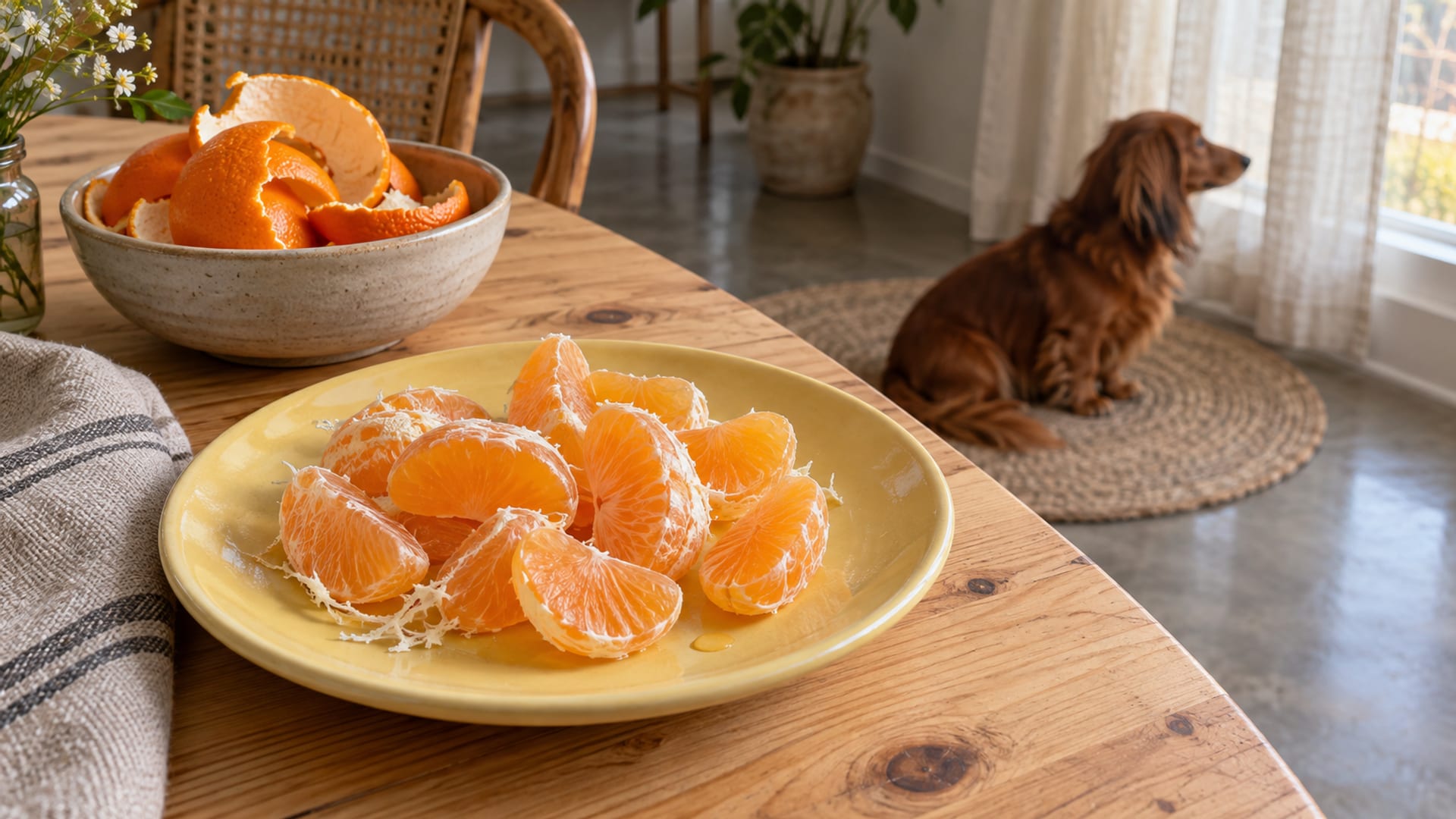
Yes. A segment or two of peeled, seedless orange is a fine treat for most dogs, and the AKC says that amount is typically enough for a day, depending on your dog's size. The peel is where the trouble sits: the ASPCA calls the fruit edible, but says the skin and the rest of the plant hold essential oils and psoralens that can cause vomiting, diarrhea and depression.
If your dog snapped up a segment that fell on the floor, let it go and keep an eye on their stool. If they chewed through the peel of a whole orange, licked up orange essential oil, or found a bitter orange supplement, call your vet or a pet poison line.
Key takeaways
Tap a card to bring it forward.
- Peeled orange flesh is safe for most dogs in small amounts, about one or two segments.
- Peel, leaves and stems carry citrus oils and psoralens that upset a dog's stomach.
- A lot of peel is also tough to digest and can get stuck in the gut.
- Orange essential oil and bitter orange supplements are separate and more serious exposures.
- Juice, candied peel and orange-flavored sweets bring sugar, and some bring xylitol.
Your dog ate orange: sort out which part
Tap or hover a row to highlight it.
| What went down | Next step |
|---|---|
| What went downA segment or two of peeled flesh | Next stepNothing to do. Some dogs pass a soft stool afterward. |
| What went downA whole orange, peel and all | Next stepCall your vet. The peel can irritate the stomach, and a large piece may not pass. |
| What went downA few seeds along with the flesh | Next stepWatch for gagging, vomiting or a sore belly, and call if you see any of them. |
| What went downOrange essential oil or orange extract | Next stepCall your vet or a poison line now, even if your dog is acting normal. |
| What went downA bitter orange weight-loss or pre-workout supplement | Next stepCall now, with the bottle in your hand. |
| What went downCandy, soda or baked goods with orange flavor | Next stepRead the label for xylitol, chocolate, caffeine, raisins or alcohol, and call if any are there. |
When you call, say which parts your dog ate (flesh, peel, seeds or oil), roughly how much, when it happened, and what your dog weighs. That lets the vet tell a sticky-fingered snack apart from a real exposure.
Call right away, whatever the source, if your dog is choking, vomiting again and again, weak, trembling, struggling to breathe, or has a painful, swollen belly.
Which parts of an orange are safe
Tap or hover a row to highlight it.
| Part | Okay for dogs? | Why |
|---|---|---|
| PartPeeled flesh | Okay for dogs?Yes, a segment or two | WhyThe AKC lists small amounts as a treat |
| PartPeel and rind | Okay for dogs?No | WhyCitrus oils and psoralens, and it is hard to digest |
| PartThick white pith | Okay for dogs?Pull most of it off | WhyStringy and harder on digestion |
| PartSeeds | Okay for dogs?Take them out | WhyCitric acid and oils, plus a choking risk for small dogs |
| PartLeaves and stems | Okay for dogs?No | WhyThe same oils as the peel |
| PartJuice | Okay for dogs?Skip it | WhyAcidic, concentrated and often sweetened |
The ASPCA says citrus stems, leaves, peels, fruit and seeds all contain varying amounts of citric acid and essential oils, and that eating a significant quantity can cause irritation and even depression of the nervous system. The flesh has the least of it, which is why a segment is fine and a pile of peel is not. The AKC adds that orange peel is rough on a dog's digestive system and belongs in the trash.
Citrus plant material can also irritate the skin. The ASPCA lists dermatitis among the possible effects, so a dog who rolled in or chewed a pile of peels may come away with red, itchy patches around the mouth.
How much orange to share, and how to cut it
The AKC puts a day's share at one or two small segments, sized to the dog, and says all treats together should stay under 10 percent of daily calories.
- Peel the orange at the counter, and drop the peel into a bin with a lid.
- Pick out every seed and pull off the thick white layer.
- For a small dog, split each segment into two or three pieces.
- Offer one piece the first time and see how your dog's stomach takes it. The acid bothers some dogs more than others.
Oranges bring natural sugar along with the acid. If your dog is diabetic, overweight, or has a sensitive stomach or a gut condition, ask your vet before orange becomes a habit.
Signs to watch for after peel, oil or a big helping
Too much flesh usually means a short bout of digestive upset: a soft stool, some gas, maybe vomiting once. The AKC links that to the sugar and to overfeeding.
Peel and plant parts bring the signs the ASPCA lists for the orange plant:
- vomiting
- diarrhea
- depression, where your dog seems flat, quiet or unusually sleepy
- irritated skin around the mouth or face
A large wad of peel adds a blockage risk. Gagging, repeated vomiting, a sore belly, straining with nothing coming out, or refusing food all point that way, and a stuck piece can take longer to show than an upset stomach does. A dog who looks fine an hour after eating peel still needs watching through the rest of the day.
Essential oil is its own case. Pet Poison Helpline lists citrus oils, orange included, among the essential oils that can poison pets, so any lick of the concentrated oil is a reason to call.
"My dog eats orange peels off the floor and has never been sick"
That can be true, and plenty of dogs have done it without trouble. It still does not hold for every dog or every peel. A strip of peel is very different from the peel of three oranges. A small dog takes in more per pound than a big one. Oil on the peel, a dried or candied peel, or a stomach that reacts to acid can all change the outcome. And a piece that lodges in the gut often shows up later, well after the moment seemed to pass. Peel the orange away from your dog, and treat a peel feast as a reason to call.
Juice, oil, bitter orange and other orange products
- Orange juice: more acidic and concentrated than the fruit, and store-bought juice often has added sugar. Fresh water is the better drink.
- Dried orange slices: the decorative kind keep the peel on, so treat them like peel. Dried flesh alone packs more sugar per bite than fresh.
- Candied peel: peel plus a lot of sugar. Keep it out of reach.
- Orange essential oil and extract: concentrated oil from the peel, and extract can also contain alcohol. Call if your dog gets into either.
- Bitter orange: a different species from the eating orange. The NCCIH notes that it contains p-synephrine, a stimulant, and turns up in weight-loss and pre-workout supplements that may also contain caffeine. A dog that chewed one of these needs a call now.
- Mandarins, tangerines, clementines and satsumas: close relatives, and the same care applies. A small piece of peeled flesh at most, and the peel stays away.
- Orange-flavored candy, soda and baked goods: the flavor tells you little. The ingredient list may include sugar, caffeine, chocolate, raisins, alcohol or xylitol.
Check what you learned
Quick check
Questions about dogs and oranges
Is an orange toxic to dogs?
The flesh is not. The ASPCA lists the orange plant as toxic to dogs because of the oils in the peel, leaves and stems, and in the same entry calls the fruit itself edible. A segment of peeled orange is a treat; the peel is what makes dogs sick.
Can dogs eat orange peel?
No. It holds citrus oils and psoralens, and it is tough enough to cause a blockage if your dog swallows a lot of it.
Can dogs drink orange juice?
Skip it. Juice is more concentrated and acidic than the fruit and often has sugar added. If your dog lapped a little from a spill, watch for an upset stomach.
Can puppies eat oranges?
A tiny piece of peeled, seedless flesh is fine to try. Puppies and small dogs choke more easily, so cut it small and keep seeds and peel well away.
Can dogs eat mandarins or clementines?
A small piece of peeled flesh, yes, handled the same way as orange. Peel them away from your dog and throw the peels out.
What fruit should dogs never eat?
Grapes and raisins top the list, because they can cause kidney failure. Can dogs eat grapes? covers what to do if your dog ate some.
Sources
Checked September 24, 2026.
- ASPCA Animal Poison Control Center, Orange
- ASPCA Animal Poison Control Center, People Foods to Avoid Feeding Your Pets
- American Kennel Club, Can Dogs Eat Oranges?
- Pet Poison Helpline, Essential Oils
- National Center for Complementary and Integrative Health, Bitter Orange: Usefulness and Safety