

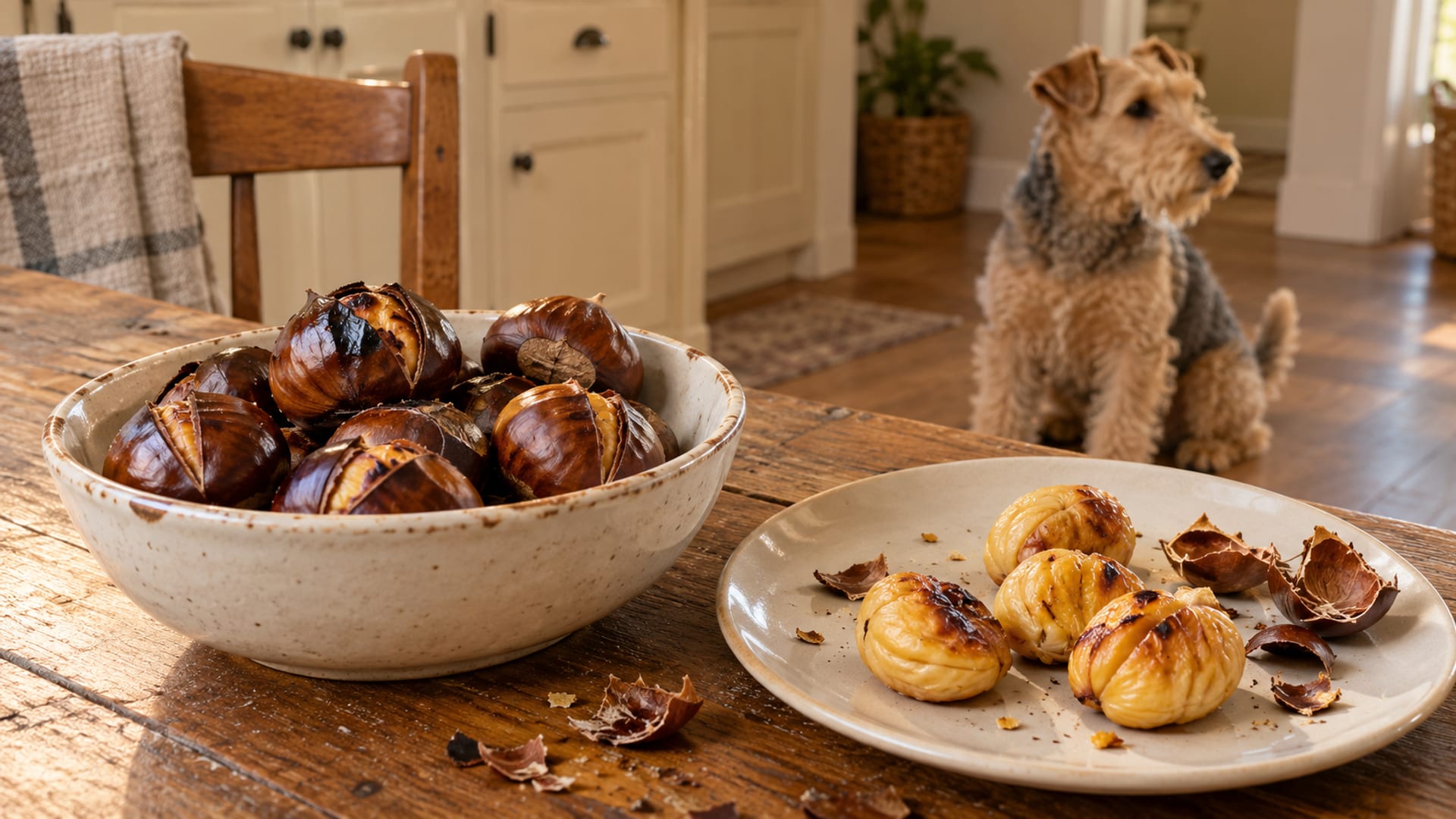
Yes, when it is an edible chestnut, the roasted or boiled kind that grows on a *Castanea* tree. The ASPCA dog plant list includes American chestnut, *Castanea dentata*, as a plant that is not toxic to dogs, while horse chestnuts, conkers and buckeyes grow on a different tree, *Aesculus*, which the ASPCA lists as toxic to dogs.
If your dog snatched a peeled roasted chestnut off the holiday table, that is a small worry: watch for gagging or an upset stomach. If the nut came off the ground and nobody can say which tree dropped it, treat it as a possible horse chestnut and call your vet or a pet poison line now. Call right away as well if your dog swallowed a shell or spiky burr, ate more than one nut, or starts vomiting, having diarrhea, wobbling, trembling or collapsing.
Key takeaways
Tap a card to bring it forward.
- Edible chestnuts (*Castanea*) are not toxic to dogs. Horse chestnuts, conkers and buckeyes (*Aesculus*) are a different tree, and they are toxic.
- An unidentified nut your dog found outdoors calls for a phone call to your vet or a poison line.
- Shells, spiky burrs and whole nuts can cause choking or a blockage, whichever tree they came from.
- Signs of horse chestnut poisoning can start within hours, but they often take about two days to appear.
- If you share an edible chestnut, make it plain, cooked, peeled, cut small and kept to a small amount.
What to do if your dog already ate a chestnut
Each step answers a question your vet will ask. If I couldn't name the tree with confidence, I would make the call first and gather the rest while on hold.
- Work out where the nut came from. A chestnut from a bag you roasted at home is a known edible chestnut, while one from a park, yard or sidewalk could be a horse chestnut or buckeye, and people mix the two up easily.
- Take photos of whatever is left. Photograph the nut, any shell or husk pieces, and the tree it fell from if you can get back to it, because identifying the plant is what decides how urgent this is.
- Count what is missing and check for shell. More nuts means a bigger exposure, and the hard shell or spiky burr can cause choking or an intestinal blockage, according to the AKC.
- Note your dog's weight and the time it happened. The same number of seeds is a larger dose for a small dog, and Clinical Veterinary Toxicology reports that one or two buckeyes or horse chestnut seeds may be enough to cause poisoning in small animals.
- Call now if it could be toxic or went down hard. That means a suspected horse chestnut or buckeye, an unidentified outdoor nut, more than one nut, a swallowed shell or burr, or any sign of illness; Pet Poison Helpline says to call a poison line or get veterinary care right away when a pet may have eaten something toxic.
- Skip home remedies and medicine. What helps depends on which plant it was and how your dog is doing, so let the vet decide on treatment.
- Keep watching for two days. Poisoning signs can show up late, and a blockage from a whole nut may not be obvious at first.
Which chestnuts and which parts are safe
The name "chestnut" covers two unrelated trees, and that is where most of the risk comes from. Edible chestnuts, also called sweet, Spanish, American, Chinese or European chestnuts, belong to *Castanea*. Horse chestnuts, conkers, Ohio buckeyes (*Aesculus glabra*) and other buckeyes belong to *Aesculus*.
Tap or hover a row to highlight it.
| What your dog ate | Where it stands | Main concern |
|---|---|---|
| What your dog atePlain, cooked, peeled edible chestnut | Where it standsNot toxic | Main concernAn upset stomach if your dog eats too much |
| What your dog ateRaw edible chestnut | Where it standsNot listed as toxic | Main concernWhole or hard pieces can cause choking or a blockage |
| What your dog ateDried chestnut or chestnut flour | Where it standsNot listed as toxic | Main concernHard, dry pieces add stomach, choking and blockage risk |
| What your dog ateChestnut shell, burr or husk | Where it standsDo not feed | Main concernChoking or intestinal blockage |
| What your dog ateHorse chestnut, conker or buckeye seed | Where it standsToxic | Main concernAesculin and other saponins |
| What your dog ateBuckeye or horse chestnut leaves, bark or flowers | Where it standsToxic | Main concernYoung leaves and flowers are especially toxic, and bark has the most aesculin |
| What your dog ateChestnut stuffing, spread, desserts or candied chestnuts | Where it standsDepends on the recipe | Main concernChocolate, xylitol, alcohol, onion, garlic, salt, sugar or fat |
For the *Aesculus* tree, the ASPCA names aesculin and other saponins as the toxic compounds, and Pet Poison Helpline says triterpenoid saponins are found in the seeds and leaves. Campbell and Chapman's Handbook of Poisoning in Dogs and Cats reports that horse chestnut seeds contain roughly 3% to 5% aesculin, that young leaves and flowers are especially toxic, and that bark holds the highest concentration. Edible chestnuts carry no dog-toxic compound in those sources; their risks are physical.
How to share a cooked chestnut with your dog
If you know the chestnut is the edible kind and you want to give your dog a taste, keep it plain. Cook it fully, peel away every bit of shell and the papery skin under it, and cut it into small pieces. Leave out salt, sugar, butter, oil, chocolate, alcohol, onion, garlic and any seasoning. There is no published serving size for dogs, so a few small pieces as an occasional treat is the cautious way to do it. Buttered, salted or stuffing-bound chestnuts from the holiday table don't qualify.
The AKC links high-fat nuts with stomach upset and pancreatitis, so if your dog has had pancreatitis, or lives with diabetes, kidney disease or another condition, ask your vet first. Puppies chew everything and have small airways, which makes choking and blockages more likely; cut their pieces smaller still. For other nuts, see our entry on Nuts.
Signs to watch for over the next two days
Horse chestnut and buckeye poisoning mostly shows up in the stomach and the nervous system. The ASPCA lists severe vomiting and diarrhea, depression or excitement, dilated pupils, an unsteady gait, convulsions and coma. Pet Poison Helpline lists vomiting, diarrhea, a staggering walk, tremors, collapse and seizures.
Timing matters here. According to Campbell and Chapman's Handbook of Poisoning in Dogs and Cats, signs began within 1 to 6 hours in some cases, but in most cases they appeared after about 2 days. That comes from limited case experience, so a dog who seems normal the evening of the walk still needs watching for two days.
With an edible chestnut, a whole nut can catch in the throat, and a blockage lower down may not show until later. The AKC notes that hard nuts and shells can block the intestines and that a blockage may need a vet to treat it.
Call your vet if you see any of these, whichever chestnut it was:
- vomiting, diarrhea or drooling
- weakness, wobbling or tremors
- collapse or a seizure
- trouble breathing
- a painful belly, or straining without passing stool
At the serious end, a nut can block the airway or the intestines, and horse chestnut poisoning can lead to seizures, coma, toxic shock and death.
My dog ate chestnuts before and was fine
Plenty of dogs have crunched a chestnut on a fall walk and been fine. That happened, and it was good news for that dog on that day. It still can't predict next time, because a lot changes from one chestnut to the next.
The tree can change: last year's edible chestnut may be this year's conker. The amount changes too, and size matters, since the same number of seeds hits a small dog harder. The form matters, because a peeled, cooked piece is nothing like a whole nut in its shell. Dogs differ as well; Pet Poison Helpline names the amount eaten, the animal's size and allergies among the things that change how a dog reacts. Some signs arrive about two days later, long after the walk is forgotten, and sometimes a dog chewed a nut and spat most of it out. Your dog's past experience was real; it just can't stand in for a check of what was eaten this time.
Chestnut foods and look-alikes to check
Chestnut shows up in a lot of foods, especially around the holidays: chestnut flour, puree, spread, candied chestnuts, stuffing and desserts. None of these is the same as a plain cooked chestnut. Read the full ingredient list, looking for chocolate, xylitol, alcohol, onions, garlic, plenty of salt, sugar or fat. If the label includes any of those, the problem is that ingredient, and its own entry will tell you what to do.
A few other names get tangled up with chestnuts:
- Water chestnuts are usually *Eleocharis dulcis*, a vegetable that grows in water. They are not true chestnuts and not horse chestnuts.
- Conkers is the common British name for horse chestnut seeds, and buckeye is the common American one. Both mean *Aesculus*.
- Castaña de Indias is the Spanish name for horse chestnut, while plain "castaña" usually means the edible kind.
Check what you learned
Three quick questions on telling safe chestnuts from the toxic kind.
Quick check
Questions about dogs and chestnuts
These come up once the first scare has passed.
How many horse chestnuts does it take to make a dog sick?
There is no published toxic dose per pound or kilogram for dogs. Clinical Veterinary Toxicology says one or two seeds may be enough in small animals. Campbell and Chapman's handbook describes a 10 kg dog that ate at least eight horse chestnuts, collapsed with heavy vomiting, dehydration and toxic shock, and later died after possibly eating more. Treat any amount as a reason to call.
Can cats get sick from buckeyes too?
Yes. The ASPCA lists buckeye and horse chestnut as toxic to cats as well as dogs, for the same reason: aesculin and other saponins. If you have both pets and the tree is in your yard, keep the nuts picked up.
When are dogs most likely to find horse chestnuts?
Fall, when the seeds drop along sidewalks and in parks. A report on human horse chestnut poisoning by Kim and colleagues describes fallen seeds as an autumn exposure and separates horse chestnut from the edible species. Keep a shorter leash under those trees.
Are raw edible chestnuts okay for dogs?
Raw edible chestnut has no known poisoning compound for dogs. The concern is texture: a raw nut is hard, and a whole or large piece can cause choking or a blockage, so cooked is the cautious choice.
Sources
Checked September 25, 2026.
- ASPCA, Toxic and Non-Toxic Plant List, Dogs
- ASPCA, Toxic and Non-Toxic Plants: Buckeye
- Pet Poison Helpline, Horse Chestnut Is Toxic To Dogs
- Campbell and Chapman, Handbook of Poisoning in Dogs and Cats
- Clinical Veterinary Toxicology, Horse chestnut section
- American Kennel Club, Intestinal Blockage in Dogs
- American Kennel Club, Can Dogs Eat Nuts?
- American Kennel Club, Can Dogs Eat Acorns and Other Tree Nuts?
- Kim et al., Poisoning due to consumption of horse chestnut seed