
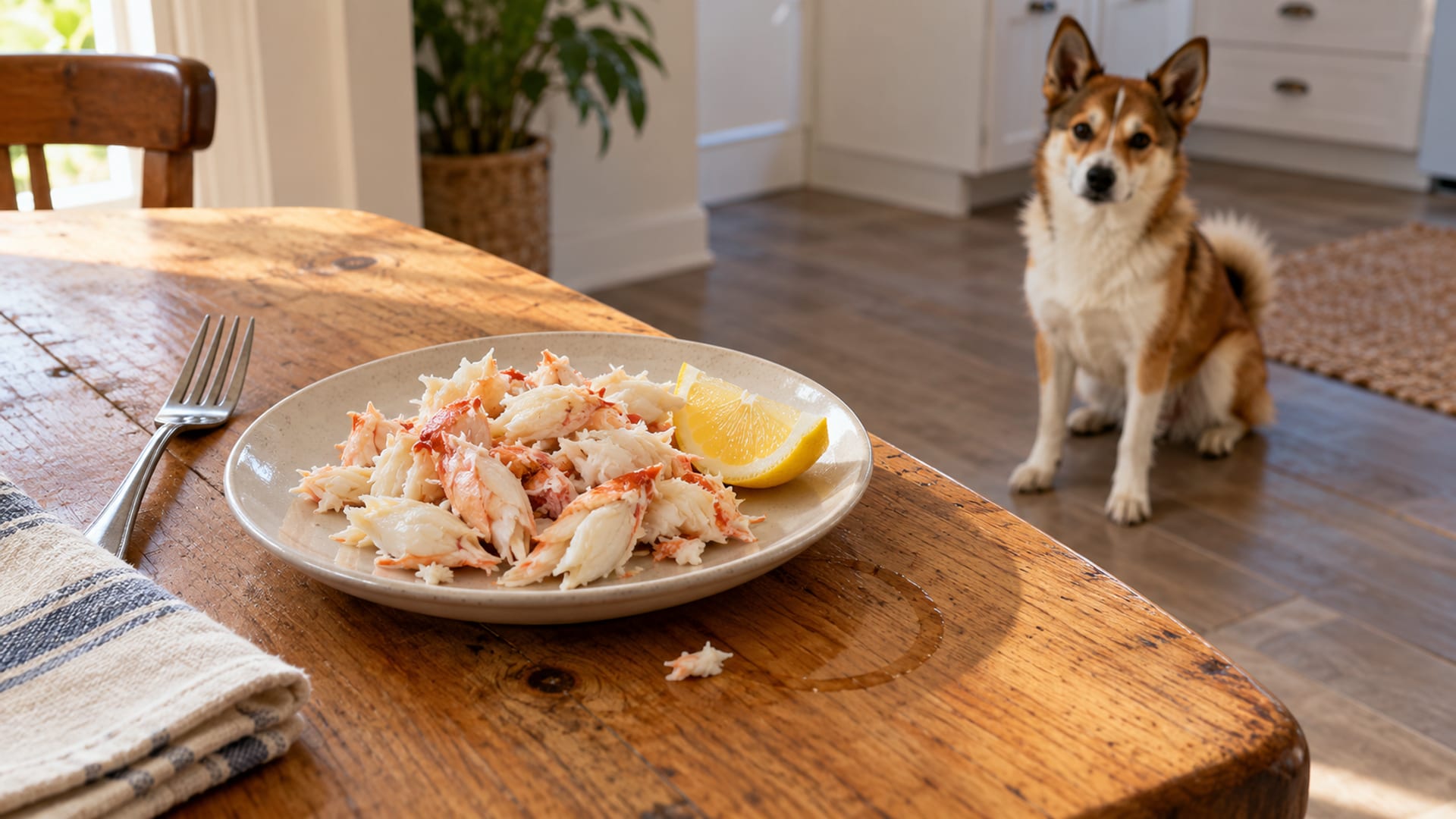
Crab falls in the caution group. A small amount of plain, fully cooked crab meat with every piece of shell removed is generally fine for a healthy dog. Raw or spoiled crab, shell, and fried or heavily seasoned crab are where the trouble starts. If your dog just got into crab at a seafood boil, a restaurant or the beach, the first job is to work out which kind it was: meat or shell, raw or cooked, plain or seasoned, and how much. Then read the call-the-vet list below, because a few signs mean you should not wait.
Key takeaways
Tap a card to bring it forward.
- Plain, fully cooked, shell-free crab meat in a small amount is generally fine for a healthy dog.
- Shell, legs, claws and cartilage can cause choking, stomach and gut irritation, a blockage or an injury.
- Raw or spoiled crab can carry harmful germs, and fried, buttery, salty or seasoned crab adds fat, salt, onion and garlic.
- Call right away for choking, trouble breathing, collapse, repeated vomiting, severe belly pain, blood or a suspected blockage.
- Do not make your dog vomit or give home treatments unless a vet or poison line tells you to.
What to do if your dog already ate crab
Work through these steps in order.
- Take away whatever crab is left. The amount eaten is the first thing a vet will ask about, so stop it growing. Clear the plate, the trash and the shell pile.
- Work out what was eaten. Meat or shell, raw or cooked, plain or seasoned, fried or buttered, and roughly how much, plus your dog's weight. The ASPCA says to gather this kind of exposure information and pass it to a veterinary professional, because the risk depends on the animal, the amount and the substance.
- Call right now for the urgent signs. These are choking, trouble breathing, collapse, seizures, unconsciousness, repeated vomiting, severe belly pain, marked weakness, blood in vomit or stool, or a suspected blockage. The ASPCA calls for immediate care with severe signs like these.
- Call promptly, even with no signs, if it was shell, raw or spoiled crab, a large amount, a salty or seasoned dish, or your dog has had pancreatitis or another serious illness. The same ASPCA page says not to wait for signs to worsen after something potentially hazardous.
- Skip the home remedies. The Pet Poison Helpline says not to give home antidotes and not to induce vomiting unless a vet or the helpline tells you to.
- If it was plain, shell-free, cooked crab and your dog seems normal, write down the amount and what was in it, keep your dog away from more, and watch closely. I would still pick up the phone if anything about it bothers me.
When you call, have three things ready: your dog's weight, what form of crab it was, and how much. That is what turns a general answer into one for your dog.
Which forms of crab are fine and which are not
Crab rarely reaches a dog as a tidy bowl of meat, and each form carries different risks.
Tap or hover a row to highlight it.
| Form | Risk level | What to know |
|---|---|---|
| FormPlain, fully cooked, shell-free meat | Risk levelLower | What to knowFine in a small amount for many healthy dogs, occasionally |
| FormRaw crab meat | Risk levelAvoid | What to knowRaw shellfish can carry harmful microorganisms |
| FormShell, legs, claws, cartilage, fragments | Risk levelAvoid | What to knowChoking, irritation, blockage or injury |
| FormSoft-shell crab | Risk levelAvoid | What to knowPeople eat the shell, which is still a hard-fragment risk for a dog |
| FormCanned crab | Risk levelOnly if plain and low in sodium | What to knowBrine, oil, spices, onion, garlic and sauces are out |
| FormImitation crab and surimi | Risk levelNot a routine treat | What to knowUsually processed with starch, salt, sugar and flavorings |
| FormCrab cakes, fried and restaurant crab | Risk levelAvoid | What to knowAdded fat, salt, sauces, onion, garlic, and possible shell |
| FormCrab butter or tomalley | Risk levelAvoid | What to knowInternal crab material, not ordinary muscle meat |
Crab has not been identified as a dog toxin by the ASPCA, Pet Poison Helpline or the Merck Veterinary Manual. The trouble comes from raw food, shell and the way it was cooked.
How to serve crab meat, and how much of the risky forms is a concern
If your vet agrees that a bit of crab fits your dog's diet, the cautious way is a small amount of fully cooked, plain meat with all shell, legs, claws and fragments picked out. Keep raw, fried, breaded, salted, seasoned and sauced crab off the menu. The AKC gives the same general advice for shellfish: cook it, remove the shell, skip fried or breaded versions and keep portions modest. Plain cooked crab is animal protein, and the AKC points out that human foods are extras next to a complete dog diet.
There is no weight-based serving chart for crab that I could hand you honestly, so I will not make one up. What works instead is asking your vet what small means for your dog's size and health, and treating crab as an occasional extra. Shrimp follows similar rules.
Raw crab. The USDA does not recommend eating raw shellfish because it can contain harmful microorganisms. The CDC has investigated an outbreak of Vibrio parahaemolyticus infections linked to crabmeat, which is a reminder that crab needs proper cooking and clean handling afterward.
Shell. Hard fragments can cause choking, irritation, a blockage or an injury. The AKC says shrimp shells can choke or block a dog, especially a small breed A dog that swallowed shell deserves a call to the vet, even if the dog seems fine right now.
Fried, salty and rich crab. Sodium in brine, fat in fried food and onion or garlic in seasoning are the added problems. The Merck Veterinary Manual lists dietary indiscretion and inappropriate food among the risk factors for pancreatitis in dogs, which is why a big, rich serving is worth a call. Merck reports pancreatitis more often in Miniature Schnauzers, Yorkshire Terriers, Cocker Spaniels, Dachshunds, Poodles and sled dogs, and a dog with that history or a controlled diet is a reason to ask first. Small dogs and puppies have less room for error, since the same bite is more food for them.
Signs to watch for and when they show up
Vomiting, diarrhea, belly discomfort, less interest in food and tiredness are the usual signs of an upset stomach after crab. They can show up within hours after the gut is irritated or the food was contaminated. A contaminated crab product can cause foodborne illness, and the AKC lists vomiting and diarrhea among its signs.
A stuck piece of shell looks different. Watch for gagging, repeated vomiting, trouble swallowing, belly pain, not keeping food or water down, tiredness and no stool. Any of those means a call to the vet that day.
Pancreatitis, which a rich serving can set off in a dog that is prone to it, can bring loss of appetite, vomiting, weakness, belly pain, dehydration and diarrhea. The Merck Veterinary Manual says severe cases can lead to organ failure and death, so a dog that looks worse by the hour needs to be seen.
My dog ate crab before and was fine
I believe you, and it is a common story. Plenty of dogs have had a bite of crab meat off the table and gone on with their day. That happened, in that instance. It does not make crab safe for every dog every time, because a few things decide the outcome.
- The amount. One small bite and half a plate are different exposures.
- The form. Cooked meat is a different thing from raw crab, shell or a buttery crab cake.
- The dog's size. A given amount is more food per pound for a small dog, and a shell fragment is a bigger problem in a smaller throat and gut.
- The individual dog. Sensitivity varies from dog to dog.
- Timing. Mild illness can look like nothing, and the Merck Veterinary Manual says pancreatitis can be subclinical or show up with vague signs. The ASPCA also warns that some harmful ingestions have delayed effects, and a blockage can take time to become obvious.
So, a dog that was fine last time may still get sick this time if the shell, the raw crab or the seasoning is different.
Crab products and look-alikes
Names cause mix-ups at the store and on the menu, so check what is actually in front of your dog.
- Crab meat means the edible meat of true crabs such as blue, Dungeness, king and snow crab. Some households call crab by other names, such as jaiba or juey.
- Imitation crab, surimi and seafood sticks are processed seafood made mostly from fish, starch, salt, sugar and flavorings. Read the label and skip any product with onion, garlic or a lot of salt, and do not make it a regular treat.
- Crab cakes may hold onion, garlic, salt, butter, mayonnaise, breadcrumbs and frying oil. See also garlic.
- Crab butter or tomalley is internal crab material. Leave it out.
- Crab-flavored dog treats may only use crab as a flavor or a minor ingredient, so read the full label.
- Crab apples are fruit from a tree and have nothing to do with seafood. They have their own page, crab apples.
- Crabgrass is a lawn grass and has nothing to do with seafood either.
Check what you learned
Quick check
Questions about dogs and crab
These are questions that come up after the first panic has passed.
Can puppies eat crab?
Puppies and small dogs have less margin for shell fragments and for rich food, since the same portion is a bigger share of what they eat. A crab-specific amount for puppies has not been set, so ask your vet before sharing any.
What about crab I caught myself?
The USDA talks about keeping shellfish alive until cooking, and raw shellfish is something it does not recommend eating. Cook a fresh catch fully before any of it goes near the dog's bowl, and take out all the shell.
My dog has had pancreatitis. Can I share crab?
Ask your vet first. Fatty, fried or buttery crab is the worry, and large portions can add to it, so a dog with that history is better served by whatever your vet recommends.
Can cats eat crab too?
The same broad concerns apply to cats: raw seafood germs, shell fragments, too much fat or salt, and an upset stomach. Pancreatitis happens in both dogs and cats, according to Merck, and a vet can tell you what fits your cat.
Sources
Checked September 30, 2026.
- ASPCA, Emergency Care for Your Pet
- ASPCA, My Pet Ate Something! When Should I Seek Help?
- ASPCA, What to Do if Your Pet Is Poisoned
- Pet Poison Helpline, Emergency Instructions
- Merck Veterinary Manual, Pancreatitis in Dogs and Cats
- Merck Veterinary Manual, Pancreatitis and Other Disorders of the Pancreas in Dogs
- American Kennel Club, Can Dogs Eat Shrimp?
- American Kennel Club, People Foods Dogs Can and Can't Eat
- American Kennel Club, Food Poisoning in Dogs
- USDA Food Safety and Inspection Service, When fishing, how do I keep my catch safe to eat?
- CDC, An Outbreak Investigation of Vibrio parahaemolyticus Infections in the United States Linked to Crabmeat Imported from Venezuela