

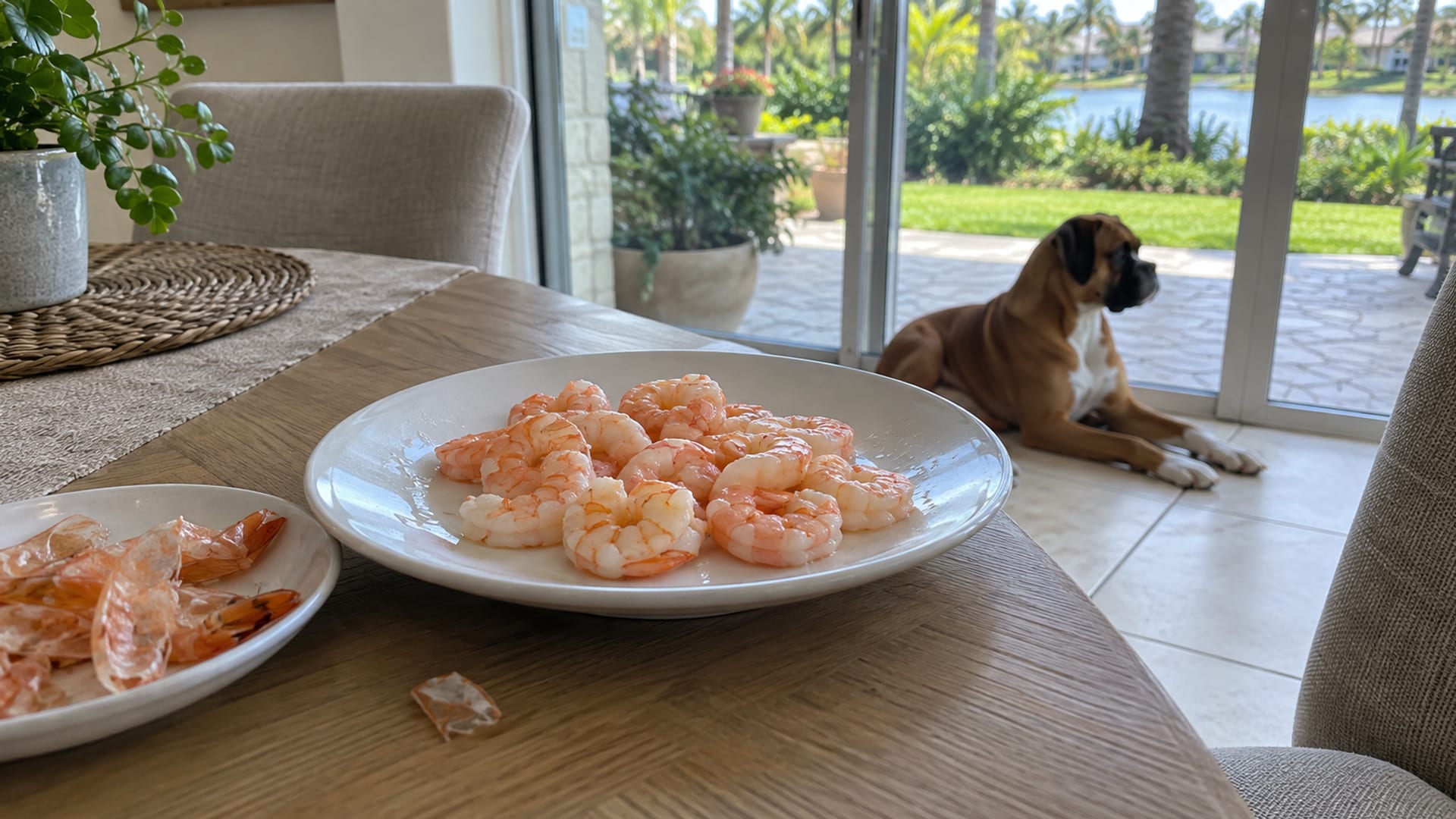
Yes. A piece or two of plain shrimp that is fully cooked and completely peeled is fine for most dogs, according to the American Kennel Club. Take off the shell, tail, head and legs, skip the butter and seasoning, and keep it an occasional treat.
If your dog grabbed a peeled, cooked shrimp off a plate, there is nothing to do. If they ate raw shrimp, a pile of shells or tails, fried or breaded shrimp, or a seasoned dish, the steps below tell you what to watch and when to call.
Key takeaways
Tap a card to bring it forward.
- Plain, fully cooked, fully peeled shrimp is a fine occasional treat for most dogs.
- One or two pieces is usually enough, and a small dog gets part of one (AKC).
- Shells, tails, heads and legs can choke a dog or block the gut, especially small dogs.
- Raw or undercooked shrimp can carry bacteria such as *Vibrio*. Cook it through.
- Fried, buttered, garlicky or salty shrimp dishes bring their own problems.
My dog ate shrimp: what to do next
What to do depends on how it was cooked and what came with it.
Tap or hover a row to highlight it.
| What they ate | What to do |
|---|---|
| What they ateA piece or two of plain, cooked, peeled shrimp | What to doNothing. |
| What they ateShells, tails or heads | What to doWatch for gagging, coughing, repeated vomiting, belly pain, not eating or straining. Call your vet if any show up, or right away for a small dog that ate several. |
| What they ateRaw or undercooked shrimp | What to doWatch for vomiting, diarrhea, fever or low energy over the next several days, and call your vet if they appear. |
| What they ateFried, breaded or buttered shrimp | What to doWatch for vomiting, diarrhea or belly pain; call if they appear, or if it was a large amount. |
| What they ateShrimp in garlic butter, scampi or a spicy sauce | What to doCheck the recipe. Garlic, onion or a lot of salt is a reason to call. |
| What they ateShrimp that had gone bad, from the trash | What to doCall your vet for advice. |
Get help right away for choking, trouble breathing, a swollen face, collapse, severe weakness, bloody diarrhea or vomiting that keeps coming back.
When you call, say how the shrimp was cooked, roughly how much your dog ate, whether shells went down too, and your dog's weight. Pet Poison Helpline asks owners to call before trying any home treatment.
Shells, tails and heads
The meat is the easy part. The hard outer shell is what causes trouble. The AKC names shells as a choking hazard and a blockage risk, most of all in small breeds, and its people food guide says to remove the tail, head and legs as well.
A blockage can take a while to show. The AKC's cookout safety guide lists the signs: vomiting again and again, not keeping food or water down, not eating, weakness, a sore or swollen belly and straining. A blocked gut can be life-threatening if it is not treated, so call when you see them.
Peel shrimp away from the dog, and bag the shells before they go in a trash can your dog can reach.
Raw and undercooked shrimp
Raw shrimp is the form to avoid. The FDA links raw and undercooked seafood, shrimp included, to *Vibrio parahaemolyticus*, a bacterium that thorough cooking kills. The FDA's timing figures come from people: its foodborne illness chart lists symptoms starting anywhere from 4 to 96 hours after eating, with watery diarrhea, cramps, nausea, vomiting and fever.
For a dog that ate raw shrimp, that means the gut trouble may not start the same evening. Watch for several days, and call your vet if vomiting, diarrhea, fever or low energy shows up.
Cook shrimp all the way through before sharing any with your dog.
How much shrimp to give, and how to cook it
The AKC's guidance is simple: one or two pieces is usually enough for most dogs, and small dogs should get part of a piece. Plain shrimp is low in fat, calories and carbohydrates and contains phosphorus, vitamin B12 and niacin, but the AKC also points out that it is high in cholesterol. Keep it to treat size.
To serve it:
- Steam or boil the shrimp plain. Steaming is the AKC's pick.
- Peel it fully: shell, tail, head and legs.
- Let it cool, then cut it into bites that fit your dog.
- Offer one small piece the first time and watch for any reaction.
Leave out butter, oil, garlic, salt, cocktail sauce and breading. If your dog has pancreatitis, kidney disease or a prescription diet, ask your vet first.
Shrimp allergy and other signs
Dogs can react to shrimp differently, the AKC notes, and a study of dogs with skin allergies by Lee and others found that sensitivity to foods, seafood among them, varies from dog to dog. Signs of a reaction to watch for after a first taste:
- itching, hives or red skin
- a swollen face or muzzle
- vomiting or diarrhea
- trouble breathing, weakness or collapse, which is an emergency
If your dog reacted to shrimp before, skip it and check dog food and treat labels for shrimp or crustacean meal.
"My dog has eaten shrimp tails for years"
That can be true, and plenty of dogs crunch a tail or two with no trouble afterward. It is still not a promise for the next tail or the next dog. A shell that a Labrador passes can lodge in a dachshund. A single tail is a different load from a plate of shells pulled out of the trash. Cooked shrimp is a different food from raw, and a shrimp that sat out on a cookout table is different again. Dogs vary in how their bodies handle shellfish. And both a blockage and a bacterial upset can take a day or more to show, long after the plate is cleared. Peel it, cook it, and keep it to a piece or two.
Prawns, shrimp chips and other look-alikes
- Prawns: the same answer as shrimp. Cooked, peeled, plain, and only a piece or two.
- Shrimp cocktail, scampi and shrimp in sauce: check for garlic and onion, which damage red blood cells. Can dogs eat garlic? explains the risk.
- Shrimp chips, crackers and shrimp-flavored ramen: salty, oily, and often seasoned with onion or garlic powder. The label decides.
- Dried or freeze-dried shrimp: concentrated shrimp that may still carry shell, salt or seasoning. Read the label, and give less.
- Brine shrimp: tiny aquarium food, a different product from table shrimp.
- Shrimp cactus: a houseplant that only shares the name. The ASPCA lists it as non-toxic to dogs.
- Salmon and other fish: cooked salmon is fine, but raw salmon from some rivers carries its own disease. Can dogs eat salmon? covers it.
Check what you learned
Quick check
Questions about dogs and shrimp
Can dogs eat cooked shrimp?
Yes. Plain, fully cooked shrimp with the shell, tail, head and legs removed is fine as an occasional treat. One or two pieces is enough for most dogs.
Can dogs eat raw shrimp?
Better not. Raw or undercooked shrimp can carry bacteria such as *Vibrio*, which cooking kills. If your dog ate some, watch for stomach trouble over the next few days.
Can dogs eat shrimp tails or shells?
Remove them. They are hard to digest and can cause choking or a blockage, especially in small dogs. If your dog ate several, call your vet.
Can puppies eat shrimp?
The same rules apply to puppies: a small bite of plain, cooked, peeled shrimp, cut to fit, and none at all after any sign of a reaction.
Can dogs be allergic to shrimp?
Yes, some dogs react to shrimp. Watch for itching, hives, a swollen face, vomiting or diarrhea, and get help right away for trouble breathing.
Sources
Checked September 24, 2026.
- American Kennel Club, Can Dogs Eat Shrimp?
- American Kennel Club, People Foods Dogs Can and Can't Eat
- American Kennel Club, Summer Barbecue and Grilling Safety Tips for Dog Owners
- U.S. Food and Drug Administration, Bad Bug Book: Vibrio parahaemolyticus
- U.S. Food and Drug Administration, What You Need to Know About Foodborne Illnesses
- Pet Poison Helpline, Top 10 Things to Remember for Pet Poisonings
- ASPCA, Toxic and Non-Toxic Plant List: Dogs
- Lee and others, Detecting common allergens in dogs with atopic dermatitis in South Korean provinces using a serological immunoglobulin E-specific allergen test