
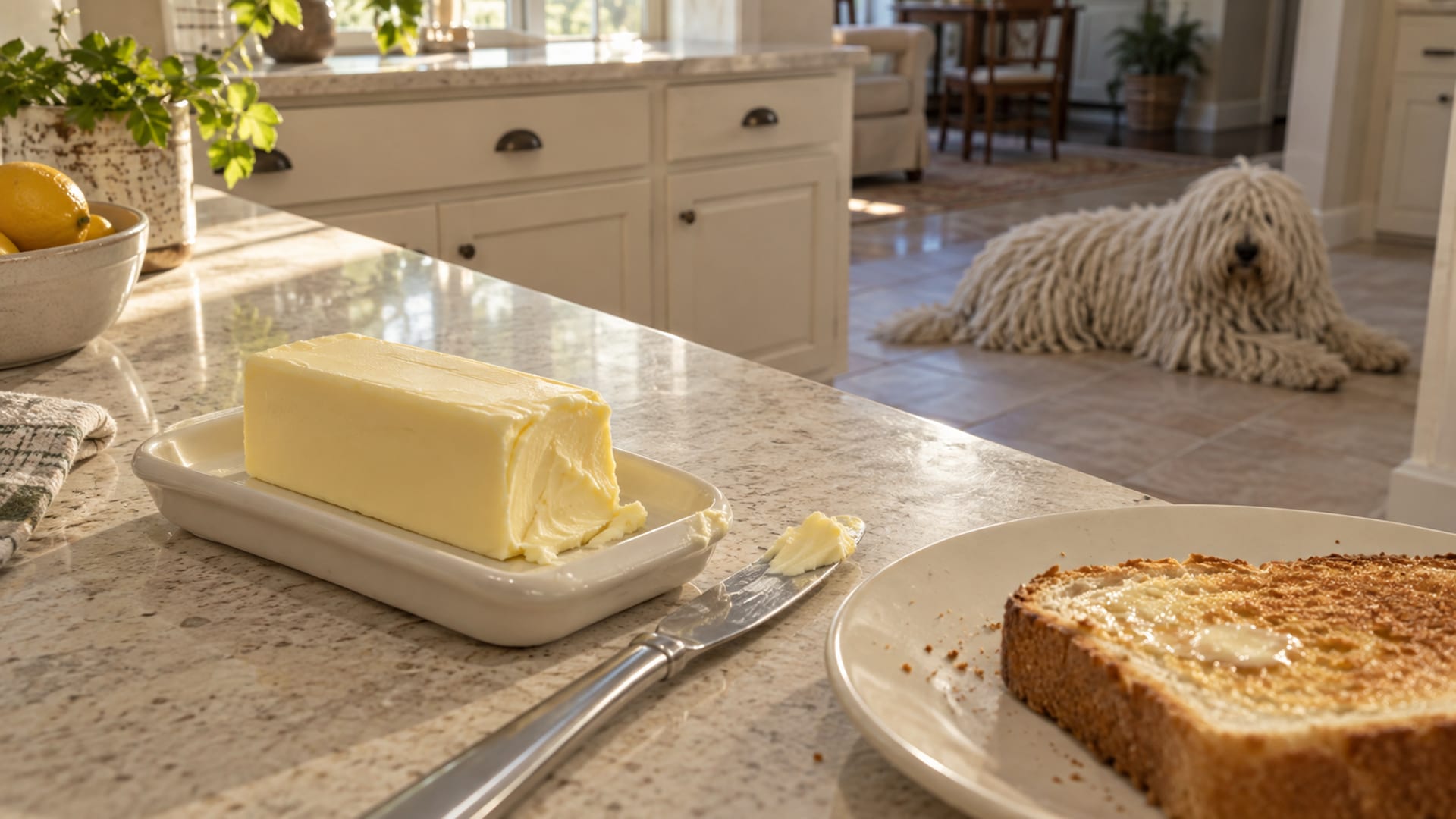
Butter is a caution food for dogs, and how worried to be depends mostly on how much went down. A small lick of plain butter is usually not a poisoning emergency, but butter is concentrated dairy fat, and a large amount can cause vomiting, diarrhea or pancreatitis, which can be severe.
If your dog already ate some, start with two questions: roughly how much is gone, and what was in it. Garlic, onion or chive butter, or butter mixed into something with xylitol or chocolate, is a different situation from plain butter. A stick or more, an amount you can't pin down, a very small dog, a swallowed wrapper, or a dog that has had pancreatitis before all mean a prompt call to your vet.
Key takeaways
Tap a card to bring it forward.
- A lick or a crumb of plain butter is usually lower risk. The concern grows with the amount, because the problem is the fat.
- Added ingredients change the answer. Garlic, onion, chives, xylitol and chocolate each carry their own risk.
- Call your vet promptly for a stick or more, an unknown amount, a very small dog, compound butter, a swallowed wrapper, or a dog with past pancreatitis or on a low-fat diet.
- Signs can show up 1 to 4 days after a fatty meal, so a dog who seems fine tonight still needs watching.
- Plain or salted, butter doesn't belong on your dog's food.
What to do if your dog just ate butter
These steps follow the order your vet will ask about.
- Move the rest of the butter and the packaging out of reach. It stops a second helping, and it keeps the wrapper or tub in your hands so you can read it.
- Check what kind of butter it was. Plain salted or unsalted butter is a fat problem, while garlic butter, herb butter or a spread with other ingredients may add a toxic plant or sweetener.
- Work out how much is missing and when it happened. A lick off the dish and a whole stick are very different exposures, and your vet will also ask your dog's weight.
- Look for the wrapper, foil or tub. If it's gone, your dog may have swallowed it, and packaging can cause choking or a blockage in the gut.
- Call your vet or a pet poison line for the higher-risk cases. Pet Poison Helpline lists butter among the fatty foods that can trigger pancreatitis, so a large or unknown amount deserves a call before any signs appear.
- Leave home remedies to your vet. Pet Poison Helpline's first aid guidance says to contact your veterinarian before inducing vomiting at home, and it warns that a dog vomiting oily material can inhale some of it into the lungs, a problem called aspiration pneumonia. The same source advises against giving butter, oil, grease, salt, hydrogen peroxide or medicine on your own.
- Watch your dog for the next several days. Signs can be delayed, so a calm evening doesn't settle it.
Which kinds of butter change the risk
The table below pulls together what Pet Poison Helpline, the ASPCA and the AKC say about the forms butter comes in.
Tap or hover a row to highlight it.
| Form | What it adds | What to do |
|---|---|---|
| FormPlain unsalted butter, cold, soft or melted | What it addsConcentrated dairy fat | What to doJudge by amount; call for a large or unknown amount |
| FormSalted butter | What it addsFat plus sodium; the sodium depends on the label | What to doCheck the label; call for a large amount |
| FormCooked or brown butter | What it addsHeat leaves the fat in place; browned solids may irritate the gut more | What to doSame as plain butter |
| FormGhee or clarified butter | What it addsLess water and fewer milk solids, still concentrated fat | What to doSame as plain butter |
| FormGarlic, onion, chive, leek or shallot butter | What it addsThese plants can damage a dog's red blood cells | What to doCall your vet |
| FormButter mixed with xylitol, chocolate, raisins, macadamia nuts or alcohol | What it addsThe added ingredient's own hazard | What to doCall and name the ingredient |
| FormWrapper, foil or tub | What it addsChoking or intestinal blockage | What to doCall your vet |
| FormButter flavoring or butter powder | What it addsIngredients and strength vary | What to doRead the ingredient list and call if unsure |
Compound butter often sits out next to bread or a roast, so the garlic and onion row is the one to check first. The Garlic, Onions and Garlic Bread entries cover that plant family.
How much butter is too much for a dog
A grams-per-pound line between fine and not fine would be handy, but butter doesn't work that way. The Merck Veterinary Manual treats eating something fatty as a risk factor for pancreatitis, and how a dog reacts depends on its size, its health, how much fat it took in overall, and its own sensitivity. With no reliable weight chart to lean on, the practical move is to call and give your vet the facts: your dog's weight, the product, the amount, and the time.
Size still matters. The same pat of butter is a larger share of a small dog's body weight, which is why a very small dog belongs on the call-promptly list even after a modest amount.
Some dogs deserve extra caution with any fatty food. Merck names a history of pancreatitis, very high blood fats (hypertriglyceridemia), hyperadrenocorticism (an adrenal gland disorder) and diabetes as risk factors or related conditions. Pet Poison Helpline notes that Miniature Schnauzers are more likely than some other breeds to develop pancreatitis. If your dog is on a low-fat diet for any reason, treat even a moderate butter theft as a reason to call.
As for serving butter on purpose, there's no amount to recommend. The AKC advises leaving butter out when you prepare human foods for a dog and limiting high-fat foods even when they aren't toxic. A complete and balanced dog food should stay the main meal. If you've been using a bit of butter to get pills down, ask your vet for another way.
Signs to watch for over the next few days
Fat trouble in dogs tends to show up in the gut first. Watch for vomiting, diarrhea, belly pain, a poor appetite, lethargy and signs of dehydration. Pet Poison Helpline says signs after a fatty food can be delayed 1 to 4 days, so keep an eye on your dog through that whole window, not only the first evening.
Mild upset may pass sooner. Get your dog to a vet urgently if you see any of these:
- vomiting more than once, or diarrhea that keeps coming back
- belly pain
- marked lethargy or weakness
- collapse or trouble breathing
- not being able to keep water down
- blood in the vomit or stool
At its worst, severe pancreatitis can mean a hospital stay, damage to other organs, and in some dogs death, according to Merck. Most butter licks never come near that, which is why the amount and your dog's history guide the decision.
My dog ate butter before and was fine
That happened, and plenty of dogs lick a butter dish with no trouble afterward. It still doesn't set a rule for the next time or another dog, for a few reasons.
- The amount. A lick or a crumb carries far less fat than a stick or a buttery plate of scraps.
- The dog's size. The same amount is a bigger dose relative to body weight in a small dog.
- The form. Plain butter last time and garlic butter this time are two separate situations.
- The individual dog. Miniature Schnauzers and dogs with past pancreatitis or diabetes carry a higher pancreatitis risk.
- The timing. Signs can take 1 to 4 days to appear, so a dog who was fine that night may not have stayed fine.
- Chance. Not every fatty meal leads to pancreatitis, but some do, and there's no way to tell ahead of time which one will.
That good day was real. The same checks still apply today.
Butter look-alikes and foods that hide butter
Plenty of things carry the word butter without being dairy butter, and plenty of foods carry butter without saying so.
Peanut butter and other nut butters are a separate question. Some peanut butter products contain xylitol, so the label matters more there than the fat does. Cocoa butter comes from cacao, and products made with it can also contain cocoa solids, chocolate or caffeine; our Chocolate entry covers that. Body butter and shea butter are skin products that may also contain fragrances, essential oils or preservatives. Buttermilk is a cultured dairy drink. Buttercup and butterweed are plants, unrelated to dairy, and the Merck Veterinary Manual's list of plants poisonous to animals is the place to check a specific species.
On the food side, butter shows up in Popcorn, buttercream frosting, butter cookies, toast and holiday tables. Pet Poison Helpline points to holiday meals as a common source of fatty table food, including butter, gravy, turkey skin and grease, and the AKC's holiday safety sheet also warns against buttered dishes for dogs. If butter came along with Bacon grease or Turkey skin, add those to the total fat when you describe it to your vet.
Check what you learned
Three quick questions on the points that change what you'd do.
Quick check
Questions about dogs and butter
These come up often after a butter theft or a buttery meal.
Is salted butter worse than unsalted for dogs?
Salted butter adds sodium, and how much depends on the brand, so check the label. The fat is still the main concern with either kind. If your dog ate a large amount of salted butter, mention the salt when you call.
What exactly is pancreatitis?
Pancreatitis is inflammation of the pancreas, the organ that helps digest food. The Merck Veterinary Manual lists dietary indiscretion and high-fat food among its risk factors in dogs. It ranges from mild to severe, and the severe form can be life-threatening.
Is ghee safer than regular butter?
Ghee has less water and fewer milk solids than butter, which leaves it even more concentrated as a fat. There's no safe ghee amount to go by, so treat an accidental ghee spill the same way you'd treat butter, and skip it as a food topper.
My dog ate butter two days ago and seems fine. Are we clear?
Not quite yet. Signs after a fatty meal can take 1 to 4 days to show, so keep watching through day four. If vomiting, belly pain or a sudden drop in energy shows up, call your vet then.
Sources
Checked September 25, 2026.
- Pet Poison Helpline, Is Table Food Poisonous for Dogs?
- Pet Poison Helpline, Pet Poison First Aid Misconceptions
- Merck Veterinary Manual, Pancreatitis in Dogs and Cats
- Merck Veterinary Manual, Plants Poisonous to Animals
- ASPCA, People Foods
- American Kennel Club, Which Human Foods Can Dogs Eat and Which Are Dangerous?
- American Kennel Club, Puppies Are Not Stocking Stuffers