
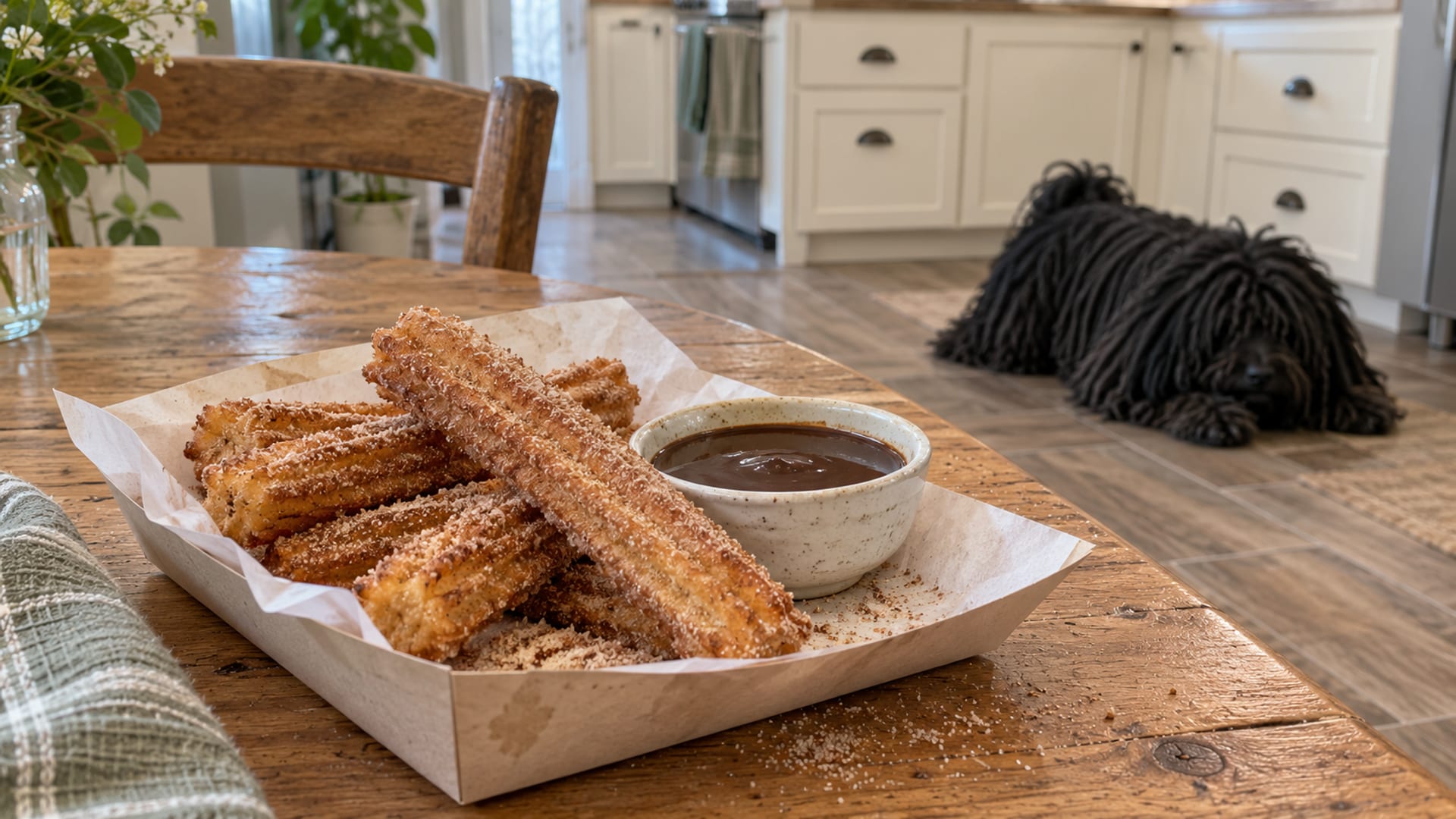
Plain churros are not a treat to share with your dog, so the answer is caution. The fried dough, the sugar and the cinnamon are not established poisons, but the fat can upset a dog's stomach and may contribute to pancreatitis. A small plain bite is usually a question of amount and ingredients, and it is not proof of poisoning.
What changes the answer is what came with the churro. Chocolate dip or filling, a sugar-free version, raisins, macadamia nuts, an unknown amount or any sign of illness means calling your vet or a pet poison line right away. If you are standing over the empty wrapper right now, start with the steps below.
Key takeaways
Tap a card to bring it forward.
- A small bite of a plain churro is not automatically an emergency, but plain churros are still not a recommended treat.
- Chocolate, xylitol, raisins and macadamia nuts turn a churro into a call-now situation.
- Xylitol signs can start in about 20 minutes, and chocolate signs commonly start within 6 to 12 hours, so do not wait for symptoms.
- Have the label or menu, the amount, the time and your dog's weight ready before you call.
What to do if your dog already ate a churro
Take these in order. They give the person you call what they need, and they take a few minutes.
- Find out what was on it. Check for a chocolate dip, chocolate or cajeta filling, raisins, macadamia nuts and any sauce. Then check whether the churro was sugar-free, because the FDA says xylitol is also sold as birch sugar or wood sugar, and it is toxic to dogs.
- Work out how much is missing and when. Count the churros, bites or the length of the stick, and note the time. Poison-control and veterinary advice starts from what was eaten, how much and when.
- Write down your dog's weight. The same amount is a bigger dose for a small dog than for a large one, according to the ASPCA.
- Call promptly if any of these apply. The churro had chocolate, cocoa, xylitol, raisins, grapes, macadamia nuts or any ingredient you are unsure about. The amount was unknown or large. Your dog is very young, elderly, pregnant, has a known illness or already seems unwell. Or you see repeated vomiting, diarrhea, weakness, belly pain, tremors, seizures, odd behavior, breathing trouble or trouble standing. Chocolate and xylitol should not wait for signs.
- Pick up the wrapper, paper and any skewer. The FDA lists items like these as a choking and blockage concern, and a swallowed wrapper or skewer is a reason to call as well.
- Hold off on home fixes. Treatment, including whether your dog needs to be seen, is a decision for a vet or a poison-control professional.
A small bite of a plain churro in an otherwise healthy adult dog may only need advice or a watchful eye. I can't tell you it is always safe, though, so if you are unsure, call.
Which parts of a churro matter
A churro is fried dough rolled in cinnamon sugar, and it often arrives with a sauce, a filling or both. The Food Network Kitchen recipe for churros with chocolate sauce shows how typical that pairing is. Each part means something different for a dog.
Tap or hover a row to highlight it.
| Part or form | What it means |
|---|---|
| Part or formPlain cooked churro | What it meansFried fat, sugar and possible stomach upset; no known toxin in the basic dough |
| Part or formCinnamon-sugar coating | What it meansCulinary cinnamon is listed as non-toxic; large amounts can still irritate the mouth, throat and stomach |
| Part or formChocolate dip or filling | What it meansTreat as a chocolate exposure; the active toxicants are theobromine and caffeine |
| Part or formSugar-free churro or sauce | What it meansCheck for xylitol; exposure is an emergency |
| Part or formRaisins or grapes | What it meansSeparate toxic-food risk, with possible kidney injury |
| Part or formMacadamia nuts | What it meansNeurologic and stomach toxicity |
| Part or formRaw dough | What it meansMay hold uncooked flour, eggs or yeast, depending on the recipe |
| Part or formDried or stale churro | What it meansStill sugary and fatty, and harder or more crumbly, which adds a choking concern |
| Part or formWrapper, paper, skewer | What it meansChoking or blockage risk |
Culinary cinnamon, *Cinnamomum zeylanicum*, is listed by the ASPCA as non-toxic to dogs, so the coating is not the reason to worry. The ASPCA also notes in its pumpkin spice guidance that larger cinnamon exposures can irritate the mouth and stomach, and that nutmeg in a spice blend is a separate concern. Read more about cinnamon on its own page.
The fat is the everyday problem. The ASPCA and the AKC both advise against fatty and fried human food, and the Merck Veterinary Manual names dietary indiscretion as a pancreatitis risk. A single churro is not shown to cause pancreatitis. A review in the Journal of Veterinary Internal Medicine describes dietary fat as one factor among several, with the individual dog and any underlying disease also shaping the risk.
How much of a churro is a concern
There is no churro serving size to aim for, so skip it as a treat. Churros differ in size, oil, sugar and filling, and that is why no single number fits them all.
Body weight and the added ingredient set the risk. The numbers below are for the ingredients, not for churros, and they show why a call is worth making when chocolate or xylitol is involved.
Tap or hover a row to highlight it.
| Ingredient | Amount and what it means |
|---|---|
| IngredientXylitol | Amount and what it meansAbove about 100 mg per kg of body weight, low blood sugar in dogs |
| IngredientXylitol | Amount and what it meansAbove about 500 mg per kg, concern for liver injury and monitoring |
| IngredientMilk chocolate | Amount and what it meansAbout 62 g per kg is potentially lethal |
The Merck Veterinary Manual gives the two xylitol figures, and its chocolate page gives the milk chocolate figure and notes that darker chocolate and cocoa powder carry more of the toxic compounds. Nobody can turn those into a safe amount of churro, so give your weight and the amount to the vet or poison line and let them work it out.
If you want to share a snack next time, a lower-fat, unsweetened treat is a better choice than a bite of a churro.
Signs to watch for and when they show up
After a small amount of plain churro, the possible signs are vomiting, diarrhea, belly discomfort, extra thirst and tiredness. How soon and how long depends on the amount, the fat and the individual dog.
Added ingredients run on their own clocks. The Merck Veterinary Manual says chocolate signs commonly begin within 6 to 12 hours and can include vomiting, diarrhea, more thirst and urination, restlessness, a fast or abnormal heart rate, tremors and seizures. The FDA says xylitol poisoning can begin in about 20 minutes, with vomiting, weakness, trouble walking or standing, tremors, seizures and liver failure. A dog that looks normal right after eating is not necessarily out of danger.
High fat can lead to pancreatitis, which may show as persistent vomiting, belly pain, no appetite, tiredness and dehydration, according to the Merck Veterinary Manual. Severe pancreatitis can be life-threatening, so persistent vomiting is a reason to call.
My dog ate a churro before and was fine
That probably happened just as you remember it. A plain bite off a paper tray at a fair may not have caused any visible illness.
It still does not settle the next time. The amount matters, since a small bite and a whole stick are different doses. Size matters too, because the ASPCA notes that a smaller dog can be at greater risk from the same amount of chocolate. The form matters, since a cinnamon-sugar churro is a different thing from a dark-chocolate-filled, sugar-free or raisin-filled one. Individual dogs differ, and a dog with past pancreatitis, obesity or diabetes has more reason for concern. Timing plays a part as well, because chocolate signs can take hours to show. And mild vomiting or a sore belly is easy to miss or blame on something else.
Churros, porras and look-alikes
The name covers more than one product, and the label or menu matters more than the word.
A porra is a thicker fried dough related to churros, and it may hold more flour, leavening or oil, according to Spanish Wikipedia. In Spain, churros and porras are commonly served with chocolate for dipping, and in Mexico you find churros filled with cajeta or served with chocolate. Around the Caribbean and parts of Central and South America, fillings include chocolate, guava, dulce de leche, cajeta, arequipe or sweetened condensed milk. A buñuelo is a related fried dough that is not always the same product.
Churro-flavored cereal, cookies, protein bars, ice cream, syrups and candy can contain chocolate, xylitol, raisins or caffeine that a plain pastry does not. See the pages for cereal, ice cream and chocolate if that is what your dog got into. A sugar-free or keto churro may use xylitol, erythritol, stevia or another sweetener, so the ingredient label decides. A raisin-filled one brings in the risk covered on the grapes and raisins page, and macadamia nuts fall under nuts.
Check what you learned
Quick check
Questions about dogs and churros
Can a puppy or an older dog have a plain churro bite?
Both are best treated more cautiously. Pet Poison Helpline recommends immediate consultation for very young, elderly, pregnant or medically compromised dogs after chocolate exposure. If your dog has had pancreatitis, or has obesity or diabetes, ask your vet before it eats any fried or sugary food.
Does a cajeta or dulce de leche filling matter?
Fillings can include chocolate, dulce de leche, cajeta, caramel, fruit preserves, cream, vanilla or sweetened condensed milk. Ask what is inside before you decide, since chocolate is the one that changes the plan.
What about cats in the house?
Plain churro ingredients are not established cat poisons, but cats should not be given fried, sugary food. The Merck Veterinary Manual notes that cats are not at risk for the low blood sugar or liver injury described with xylitol, though cats are sensitive to the chemicals in chocolate.
What if my dog ate raw churro dough?
Raw dough may hold uncooked flour, eggs or yeast, depending on the recipe, and yeast dough can expand. Tell your vet what the dough contained and roughly how much is gone.
Sources
Checked September 29, 2026.
- ASPCA, People Foods to Avoid Feeding Your Pets
- ASPCA, Cinnamon
- ASPCA, When Pumpkin Spice Is Not So Nice
- ASPCA, What to Do If Your Pet Gets into Chocolate
- ASPCA, Is This Safe? Our Top Five Most Commonly Asked Questions about Pets
- Merck Veterinary Manual, Pancreatitis in Dogs and Cats
- Merck Veterinary Manual, Chocolate Toxicosis in Animals
- Merck Veterinary Manual, Xylitol Toxicosis in Dogs
- FDA, Paws Off! Xylitol Is Toxic to Dogs
- FDA, Potentially Dangerous Items for Your Pet
- Pet Poison Helpline, Chocolate Is Poisonous to Dogs
- Pet Poison Helpline, Chocolate Is Poisonous to Dogs
- American Kennel Club, 7 Foods Dogs Should Not Eat
- Journal of Veterinary Internal Medicine, New insights into the etiology, risk factors, and pathogenesis of pancreatitis in dogs
- Food Network Kitchen, Churros with Chocolate Sauce
- Wikipedia, Churro
- Wikipedia, Porra
- Wikipedia, Buñuelo