
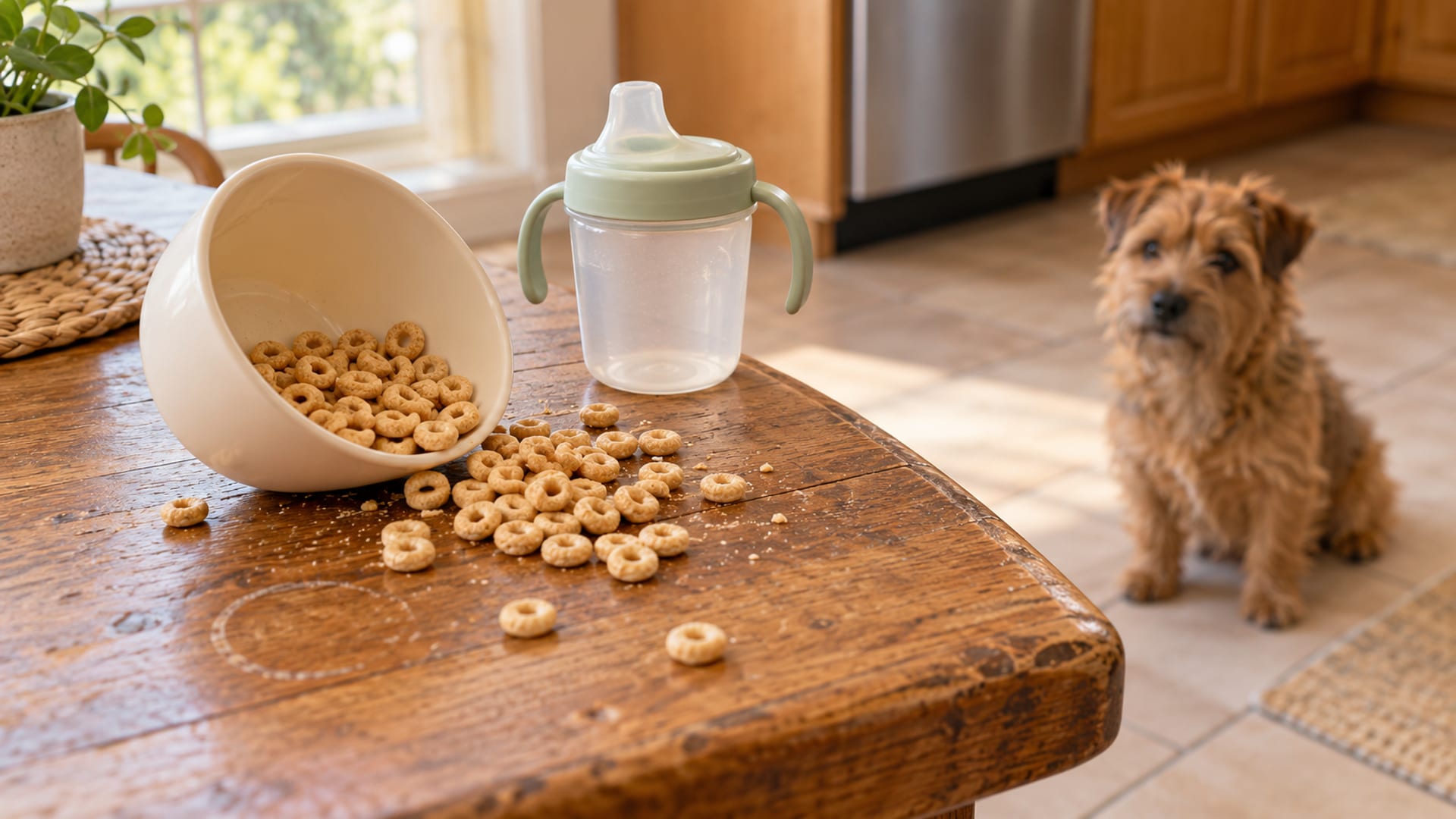
A few plain original Cheerios are low risk for most dogs, and the ASPCA lists Cheerios among the simple, minimally prepared snacks pets can have in moderation. The kind of Cheerios matters more than the count, so if your dog just cleaned off a high chair tray or a spilled bowl, pick up the box and read the flavor name and the ingredient list first.
If the box says plain or original and your dog ate a small handful, you can usually watch for an upset stomach at home. If it was a chocolate kind, a cereal or bar with raisins, anything with xylitol, or a large amount such as most of a box, call your vet or a pet poison line now with the package in your hand.
Key takeaways
Tap a card to bring it forward.
- A few plain original Cheerios are low risk for most dogs and can serve as an occasional small treat.
- Chocolate Cheerios, and any cereal, bar or mix with raisins or xylitol, mean a phone call to your vet or a poison line right away.
- Honey Nut, Frosted and other flavors are sweeter and less suited to dogs, so read the label for nuts, chocolate or sweeteners.
- A whole box of plain Cheerios can still upset a dog's stomach, and a dog that gulps dry cereal can choke on it.
- Cheerios count toward your dog's daily treat calories and never replace dog food.
What to do if your dog just ate Cheerios
Once you know which kind it was and roughly how much went down, you know whether this is a watch-at-home day or a phone-call day.
- Move the rest out of reach. A dog that found a few pieces will go back for the bowl, and the amount is what turns a snack into a stomach problem.
- Find the package and read it. The flavor name and ingredient panel tell you whether this is plain oat cereal or something with chocolate, cocoa, raisins or xylitol, all foods the ASPCA warns pet owners about.
- Note how much and when. A rough count of pieces and the time it happened are the first things a vet will ask.
- Check the call-now list. Call if the cereal contains chocolate, cocoa, raisins, grapes, xylitol or a sweetener you don't recognize, if your dog ate a large amount, if your dog is very small, very young, medically fragile or has had pancreatitis, or if the product was homemade or has no ingredient list.
- Call with the details in front of you. The product name, ingredients, amount, time and your dog's weight let the person on the phone judge the risk for your dog, and the ASPCA advises calling right away whenever you suspect your pet ate something potentially toxic.
- Watch a low-risk dog for the rest of the day. After a little plain cereal, look for vomiting, diarrhea, choking, weakness or odd behavior, the signs that turn a quiet afternoon into a vet visit.
If it were my dog and the box said chocolate or listed raisins, I would make that call before reading another word online.
Which Cheerios are low risk and which are not
Cheerios is one brand name covering many recipes, and the risk follows the ingredients in the box your dog got into.
Tap or hover a row to highlight it.
| What your dog ate | How it rates | What to do |
|---|---|---|
| What your dog ateA few plain original Cheerios, dry | How it ratesLow risk | What to doWatch for an upset stomach |
| What your dog atePlain Cheerios softened in water | How it ratesLow risk, easier to swallow | What to doSame as dry |
| What your dog ateCheerios soaked in milk | How it ratesLow risk from the cereal; dairy can cause gas or diarrhea | What to doWatch for loose stool |
| What your dog ateHoney Nut, Frosted, Apple Cinnamon, Multi Grain | How it ratesSweeter; depends on the label | What to doRead the ingredients and call if anything on the call-now list is there |
| What your dog ateChocolate or cocoa Cheerios | How it ratesHarmful | What to doCall now |
| What your dog ateAny cereal, bar or mix with raisins or grapes | How it ratesHarmful | What to doCall now, even if your dog seems fine |
| What your dog ateAnything with xylitol, birch sugar or wood sugar | How it ratesEmergency | What to doCall now |
| What your dog ateMost of a box of plain Cheerios | How it ratesStomach upset and extra calories | What to doCall if your dog is small, young, unwell or vomiting repeatedly |
Plain original Cheerios are processed oat rings. The concerns with them are calories, added sugar, an upset stomach from a sudden change in diet and, in some dogs, a wheat or oat allergy. Poured into a bowl of milk, they add dairy, which gives some dogs gas or diarrhea; the milk entry covers that side.
Honey Nut Cheerios are sweeter. Honey alone doesn't make them toxic, and the honey entry covers honey itself, but the cereal carries more added sugar and may include nut ingredients, so read the label. Frosted, Apple Cinnamon and Multi Grain get the same check.
Chocolate or cocoa Cheerios count as a chocolate product. Chocolate contains theobromine and caffeine, and the Merck Veterinary Manual describes how those compounds poison dogs; the chocolate entry covers it in depth. Raisins in a cereal blend, bar or trail mix are also a call, because the ASPCA warns that grapes and raisins can cause kidney failure in dogs, and the risky amount can't be judged by counting cereal pieces. The grapes and raisins entry has more. Xylitol, also listed as birch sugar or wood sugar, can crash a dog's blood sugar and lead to seizures and liver failure, according to the American Kennel Club.
How to share plain Cheerios as a treat, and when the amount matters
A few plain Cheerios can work as an occasional small reward, such as during a short training session. They aren't a complete food and your dog doesn't need them, so count them as treats and never as a meal.
The Merck Veterinary Manual recommends keeping all treats under 10% of a dog's daily calories, and a few plain pieces now and then fits inside that for most dogs. If your dog is on a prescribed diet or has obesity, diabetes, pancreatitis, a food allergy or inflammatory bowel disease, ask your vet first.
Serve them dry, or softened in water for a dog that gulps, with nothing added. The American Kennel Club advises the same for human foods generally: plain, in moderation, and checked for added salt, sugar and fat. Read the label on every new box.
For the risky kinds, what matters is how much chocolate, raisin or xylitol went down, and plain Cheerios have no published toxic amount to compare against. Rather than working out a number yourself, call with your dog's weight and your best guess at the amount. Size matters here too. The same handful is a bigger share of a small dog's diet, so a toy breed that emptied a bowl deserves a faster call than a large dog that grabbed three pieces.
Signs to watch for after the cereal is gone
After a few plain Cheerios, most dogs show nothing. When there is a reaction, it tends to be vomiting, diarrhea, gas, belly discomfort or a short change in appetite, which may start within hours and usually settles as the food passes. A dog that inhaled dry cereal can also cough or choke.
When the cereal had a harmful ingredient, the signs depend on which one:
- Chocolate: vomiting, diarrhea, restlessness, tremors, an abnormal heart rhythm and, in serious cases, seizures, according to the Merck Veterinary Manual.
- Raisins or grapes: vomiting, low energy, more thirst or urination, and kidney injury, which may not be obvious right away.
- Xylitol: a fast drop in blood sugar, weakness, collapse and seizures, with liver failure possible.
Whatever kind of Cheerios it was, call right away if your dog is choking, vomiting again and again, weak, collapsed, trembling, having a seizure, unusually restless or struggling to breathe.
My dog ate Cheerios before and was fine
That happens a lot, and it's real. Plenty of dogs have eaten a few plain Cheerios off the floor with nothing to show for it. It tells you how that dog handled that cereal on that day, and a few things can make the next time different:
- The amount. More cereal means more calories and more chance of an upset stomach.
- The dog's size. The same handful is a larger share of a small dog's food, and the Merck Veterinary Manual notes that calorie needs vary with size, age, activity and health.
- The kind of Cheerios. Plain cereal is a different product from a chocolate flavor, a raisin blend or a bar with xylitol.
- The dog. Some dogs are sensitive to new foods, dairy, wheat or oats.
- Timing. Kidney injury from raisins may not show up the same day.
None of that means your dog was in danger last time. It means the box gets checked every time.
Cereals and products that get confused with Cheerios
The name on the front of the box is only part of the answer. In the United States and Canada, General Mills sells Cheerios, while Nestlé and Cereal Partners sell cereals under the Cheerios name in many other countries. In Mexico, Nestlé Cereals México sells boxes labeled Cheerios Avena or Cheerios con miel, and its Cheerios Avena y Más Granos uses a different recipe from the U.S. box.
Store-brand oat rings and toasted oat cereal look just like Cheerios in a bowl, and the ingredient panel decides their risk too.
Raisin bran, fruit and nut cereals and trail mixes often end up in the same bowls. They can contain raisins, grapes, macadamia nuts, a lot of fat or a lot of salt, so judge them, and any cereal bar or homemade treat made with Cheerios, ingredient by ingredient.
Check what you learned
Three quick questions on the points that matter most if this happens again.
Quick check
Questions about dogs and Cheerios
These are the questions that tend to come up once the first worry has passed.
Can puppies eat Cheerios?
A few plain pieces are not a known toxin for puppies, but puppies need a complete, balanced diet to grow and are more easily upset by changes in what they eat. If you use Cheerios in early training, keep the numbers small and count them as part of the day's food. Flavored kinds are best kept away from a puppy entirely.
Can my dog have Cheerios every day?
A few plain pieces a day can fit, as long as all treats together stay under that 10% calorie line. Daily treats add up fast, so trim other snacks on Cheerios days.
Are Cheerios a good treat for an older or overweight dog?
Older or less active dogs often need fewer calories, so their treat allowance shrinks too. With obesity or diabetes, sugary cereal works against the plan; ask your vet about a lower-calorie reward.
Can cats eat Cheerios too?
The ASPCA lists plain Cheerios as a minimally prepared snack for cats as well as dogs. Cats have different nutritional needs, though, so cereal should stay a rare nibble for them, and the same chocolate, raisin and xylitol warnings apply.
Sources
Checked September 25, 2026.
- ASPCA Animal Poison Control Center, Game Day Snacks for Your Furry Friends
- ASPCA Animal Poison Control Center, People Foods to Avoid Feeding Your Pets
- Merck Veterinary Manual, Nutrition in Disease Management in Small Animals
- Merck Veterinary Manual, Nutritional Requirements of Small Animals
- Merck Veterinary Manual, Chocolate Toxicosis in Animals
- American Kennel Club, People Foods Dogs Can and Can't Eat
- American Kennel Club, Artificial Sweeteners: Which Ones Are Safe for Dogs?
- Nestlé Cereals México, Cheerios
- Nestlé Cereals México, Cheerios Avena y Más Granos