
North Carolina Rabies Law for Dog Businesses: Vaccine Rules, Proof at Intake and What to Record
By Cal Hewitt · Published
Business guides
A dog is at your front desk and the owner can't find the paperwork. Here is where North Carolina stands. Under G.S. 130A-185, the owner of a dog over four months old must keep that dog vaccinated against rabies, using a USDA-licensed vaccine approved by the Commission. Only a North Carolina licensed veterinarian, a registered veterinary technician under direct supervision, or a certified rabies vaccinator may give it.
The state recognizes no legal rabies exemption or waiver for dogs. The law puts the duty on the owner, so your certificate rule is your own intake policy, and the best policy says what proof you accept and keeps a record of what you checked.
Key takeaways
Tap a card to bring it forward.
- A dog over four months old must be vaccinated against rabies, and the duty sits with the owner under G.S. 130A-185.
- Only a licensed veterinarian, a registered veterinary technician under direct supervision, or a certified rabies vaccinator may give the vaccine.
- A three-year interval needs a USDA-licensed three-year vaccine given by a licensed veterinarian, and a local board of health can require annual shots.
- North Carolina Division of Public Health guidance says there is no legally accepted rabies exemption or waiver for dogs.
- Write your own certificate policy, apply it the same way every time, and keep the proof and dates you relied on.
Does a dog over four months old have to be vaccinated?
Yes, and the rule is simple to state. G.S. 130A-185 says the owner of a dog over four months old shall have the dog vaccinated against rabies. Only a rabies vaccine licensed by the United States Department of Agriculture and approved by the Commission may be used.
The North Carolina Division of Public Health adds that owners must keep the vaccination current throughout the animal's lifetime. That matters at your counter, because a dog that was vaccinated once as a puppy and never again is not current.
Your first intake question is age. If the dog is over four months old, you need proof. If the dog is a young puppy, the owner's veterinarian is the one to say when the first vaccine is planned, and your written policy should say whether you take puppies at all before that shot.
The law does not, by itself, say every groomer, sitter or daycare must demand a certificate. The state duty belongs to the owner. What you require from clients is your own policy, unless another rule covers your kind of facility, and a later section covers those.
Who may give the rabies vaccine, and what the record should show
G.S. 130A-185 limits who may give the vaccine to three people: a licensed veterinarian, a registered veterinary technician under the direct supervision of a licensed veterinarian, and a certified rabies vaccinator. Under G.S. 130A-186, certified rabies vaccinators are appointed by the local health director and certified after state public-health training.
The NC Division of Public Health vaccination guidance says a vaccine given by an owner, an unauthorized person, or a veterinarian not licensed in North Carolina is not recognized as a legal North Carolina vaccination. So, a shot a client gave at home, or a certificate from a clinic that has no North Carolina license behind it, does not meet the state standard.
For your record, look for the vaccination date, the vaccine product or duration if it is shown, the due or expiration date, and the name of the veterinarian or vaccinator. The vaccinator's professional number may be required on the certificate, so check whether it is there.
Is the rabies shot yearly or every three years?
It depends on who gave it and which vaccine was used. 10A NCAC 41G .0101 sets it out:
- When a certified rabies vaccinator gives the vaccine to a dog or cat, revaccination is annual.
- When a licensed veterinarian gives a USDA-licensed three-year vaccine, revaccination is one year later and then every three years.
- Vaccines other than the USDA-licensed three-year vaccine need annual revaccination.
- A local board of health may require annual vaccination whatever the vaccine type.
That last point is why I'd never turn every certificate into a three-year approval. Read the dates on the paper. Record the real vaccination date, the next-due date, the vaccine duration if it is stated, and who gave it. If your county health rules call for yearly shots, ask the local health department before you accept a three-year interval for dogs living there.
Medical notes and exemptions: what the state recognizes and how to word your policy
You need a clear answer ready for this one. The NC Division of Public Health rabies Q&A for veterinarians says there is no legally accepted exemption or waiver from rabies vaccination for dogs, cats or ferrets. A veterinarian's opinion that a vaccine may be medically risky does not create a state-law exemption. A rabies titer is also not treated as a substitute for current vaccination in the North Carolina guidance.
So, a veterinary note is not a North Carolina rabies exemption, and you shouldn't describe it as one. What you do with a note is your call as a business. You can defer service, ask for more documentation, or send the client to the local public-health or animal-control office. That is an operating choice, not a legal exemption you have granted.
Here is policy wording you could adapt:
> "North Carolina requires current rabies vaccination for dogs over four months old. We do not treat medical notes, titers or personal exemptions as substitutes for the documentation required by our policy. If your dog cannot be vaccinated, contact your veterinarian and the appropriate local public-health or animal-control office before requesting service."
Put it in your booking terms and your intake form, and say it the same way to every client.
Certificate, tag and local license: what each one proves
These three get mixed up all the time, and a client may hand you any one of them and call it "the rabies paper."
- The certificate. G.S. 130A-189 covers rabies certificates. This is the document that carries the vaccine details, so it is the one to ask for when you need the product, date, expiration and vaccinator information.
- The tag. G.S. 130A-190 covers tags. A tag shows the dog has been vaccinated, but it doesn't give you every detail you may need at intake.
- The local license. Counties and cities may add their own dog-license or tag rules on top of state law. A local tag and the state rabies requirement are not the same thing.
Local rules differ, so ask the office. The Wake County code provides for an inoculation tag and requires an owner or custodian to give written proof of current rabies inoculation when Animal Control demands it. For Mecklenburg, the county's rabies and zoonosis control page points to Animal Care and Control and the health department, so confirm any tag or license rule with them or your municipal office. For Durham County, ask Durham County Animal Services or the city animal-control office. For Guilford County, ask Guilford County Animal Services about tags and licensing.
When you call, five questions cover it:
- Is a current rabies tag required?
- Is a separate dog license required?
- Does the rule differ inside a municipality?
- Must the tag be worn at all times?
- Which office handles replacement tags?
What a boarding, daycare, grooming or sitting intake should collect
Here is a record that holds up when a client disputes something or an inspector asks. Gather it before the dog's first visit, not at the door.
- The dog's name and a short identifying description.
- The owner's name, address, phone and email.
- An emergency contact, and the owner's authority to approve emergency veterinary care.
- The current rabies certificate or official veterinary record.
- The vaccination date, the due or expiration date, the vaccine duration if stated, and the veterinarian or vaccinator with a professional number.
- The veterinarian's name and contact details.
- The owner's authorization for release of the dog.
- Medication instructions, original containers and written permission, if you give medication.
- Contacts for a bite, exposure, illness or other incident.
- The date you reviewed the record and the initials of the staff member who did.
- A local tag or license number, where one applies.
Run the same short check every time: confirm the dog is over four months old, match the dog to the record, read the vaccination date and the due date, and confirm who gave the vaccine. Then write down what you decided.
Your written policy should also answer a few things plainly: what proof you accept, how far ahead of the visit it is due, what happens when it is expired, missing, unreadable or inconsistent, whether you accept electronic copies, and how the client can reach their veterinarian or local animal-control office. A policy that covers those points lets any staff member give the same answer.
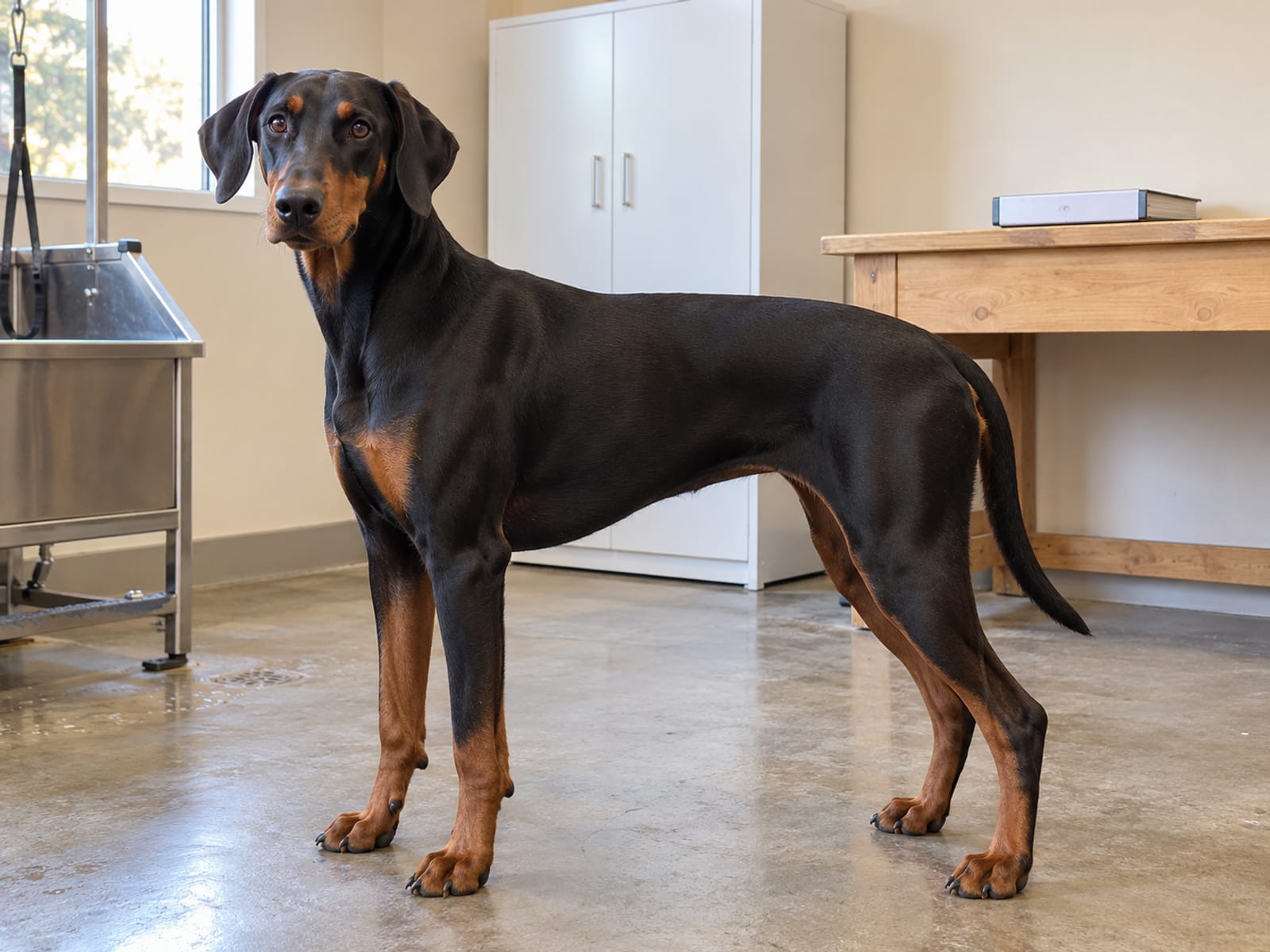
Licensed kennels and covered facilities: 02 NCAC 52J and 21 NCAC 66
Two sets of rules sit beside the state vaccination law, and they are not interchangeable.
02 NCAC 52J concerns the NCDA&CS Animal Welfare Act and its licensing and records. 02 NCAC 52J .0103 applies to facilities including animal shelters, pet shops, boarding kennels, public auctions and dealers. Required records must be available to NCDA&CS on request, each animal must be matched to its record, and boarding-kennel records must be kept for one year after the animal is released.
The NCDA&CS Animal Welfare Section lists boarding kennels, pet shops, dealers and shelters as its license categories, and it says the boarding-kennel license requirement also applies to in-home boarding of dogs or cats. If you board dogs in your home, call that office before you take a booking. The NCDA&CS boarding application also requires a written disaster (continuity-of-care) plan under 02 NCAC 52J .0201(r). For the license itself, see our guide to the North Carolina boarding kennel license.
21 NCAC 66 concerns facilities under the Veterinary Medical Board's rules. 21 NCAC 66 .01109 requires a written Program of Veterinary Care at each covered facility. The program covers disease control and prevention, vaccination, euthanasia, disposition of diseased or injured animals, and routine and emergency veterinary care. It also says all animals in the facility must comply with the North Carolina Rabies Law, G.S. 130A, Article 6, Part 6.
The same rule handles medication at a boarding kennel. A kennel may not give prescription medication, tranquilizers, sedatives or similar drugs unless a veterinarian directed or prescribed it and the owner gave written permission. Medication stays in its original container, and giving it must be documented. Confirm the current rule text with the North Carolina Veterinary Medical Board before you build your forms around it.
Grooming has no separate North Carolina state license, and ordinary grooming, walking, client-home pet sitting and private breeding are not automatically boarding kennels. If your service doesn't fit a license category, your intake record is still the thing that protects you. To check your own situation, read our guide to North Carolina dog business license requirements.
When proof is expired, missing or disputed
This is the moment that tests your policy. Keep it calm and keep it written down.
- Tell the owner what is missing and why you need it: the date has passed, the paper is unreadable, or the dog doesn't match the record.
- Pause admission or service if your policy says so. Say that you will take the dog as soon as the proof is confirmed.
- Point the owner to the veterinarian who gave the shot. The clinic can usually confirm or reissue a lost record.
- If the owner disputes the date, or has a medical note or titer in place of a certificate, repeat your policy wording. For anything about the law itself, send the owner to the local public-health office or animal-control office.
- Write down what you saw, what you decided and when, and who you spoke to.
If the dog was vaccinated in another state, remember the Division of Public Health's position that a vaccine from a veterinarian not licensed in North Carolina is not recognized as a legal North Carolina vaccination. Ask the local health department how it treats that dog.
Bites and possible exposures need their own steps. Call the owner and the local animal-control or public-health office right away, and keep the vaccination record at hand, because the office will ask for it. For the legal side of a bite, read our guide to North Carolina dog bite law for dog businesses.
Low-cost rabies clinics, with the dated Guilford County examples
Clients with a lapsed vaccination often just need a cheap, close option. You can point them to the county before you refuse service.
Guilford County Animal Services lists one-year rabies vaccines at its county clinics free of charge. Residents who qualify and cannot safely bring an animal to a clinic may apply for an at-home rabies vaccination for $10 per animal. The county also says many local veterinarians offer low-cost rabies clinics from time to time, commonly in February, May, August and November. Clinic schedules can change, so check the page before you promise anyone a date.
Prices elsewhere in the state vary by clinic, vaccine duration, exam requirement, county and eligibility. Ask your county animal-services office, local health department, a humane society or a veterinary clinic for its current price and schedule before you quote one to a client. You can also add the DogServ veterinarian directory to your list of places for clients to look.
Questions North Carolina dog businesses ask about rabies proof
Short answers on proof, timing and records at intake.
Is the rabies shot yearly or every three years in North Carolina?
It depends. A licensed veterinarian giving a USDA-licensed three-year vaccine sets revaccination one year later and every three years after that. Other vaccines, and shots from a certified rabies vaccinator, are annual. A local board of health may require annual vaccination no matter which vaccine was used.
Can I refuse the rabies vaccine for my dog?
North Carolina Division of Public Health guidance says there is no legally accepted exemption or waiver for dogs. If an owner says their dog can't be vaccinated, the veterinarian and the local public-health or animal-control office are the ones to ask. A business can then decide whether to defer service under its own policy.
Do dogs need to be vaccinated to stay in kennels?
At the state level, the duty to vaccinate rests on the owner. A kennel's certificate rule is its own policy unless another rule applies, and 21 NCAC 66 says animals in a covered facility must comply with the North Carolina Rabies Law. Ask the facility or the North Carolina Veterinary Medical Board which rules cover the kennel in question.
What is the fine for not having a rabies vaccine for a dog in North Carolina?
For a penalty amount, ask the county animal-control office or the local health department, since local rules and enforcement differ. What you can rely on is the state duty: a dog over four months old must be vaccinated under G.S. 130A-185. A business can also set its own consequence, such as declining service until proof arrives.
Where can I get a low-cost rabies shot in North Carolina?
Start with your county animal-services office or health department, a humane society or a local veterinary clinic. Guilford County, for one, lists free one-year clinics and a $10 at-home option for qualifying residents. Dates and prices change, so confirm before you go.
Your next step this week
Write your rabies policy in plain words and put it on your booking page and intake form. Use the wording above if it helps. Make a one-page intake sheet from the field list, and train every person who answers the phone to follow it the same way.
Then make four calls: NCDA&CS if you board dogs in your home, your county animal-control office about tags and licenses, your city planning office about zoning, and your local health department about annual-vaccination rules. Ask for the answers in writing for your exact address. I build websites and marketing for dog businesses, and I am not a lawyer or a veterinarian, so those offices have the final word on the law.
When your paperwork is in order, a free listing on DogServ puts your business in front of dog owners in your area, and you can claim your listing if it is already there. For the cost side of running a dog business, see dog business insurance.
Sources
- codelibrary.amlegal.com: Wake County code
- epi.dph.ncdhhs.gov: NC Division of Public Health rabies Q&A for veterinarians
- epi.dph.ncdhhs.gov: NC Division of Public Health vaccination guidance
- guilfordcountync.gov: Guilford County Animal Services
- health.mecknc.gov: rabies and zoonosis control page
- law.cornell.edu: 10A NCAC 41G .0101
- law.cornell.edu: 21 NCAC 66 .01109
- ncagr.gov: 02 NCAC 52J .0103
- ncagr.gov: NCDA&CS Animal Welfare Section
- ncleg.gov: G.S. 130A-185
- www3.ncleg.gov: G.S. 130A-186