
Opening a Dog Daycare in North Carolina: When Daycare Falls Under Kennel Rules
By Cal Hewitt · Published
Business guides
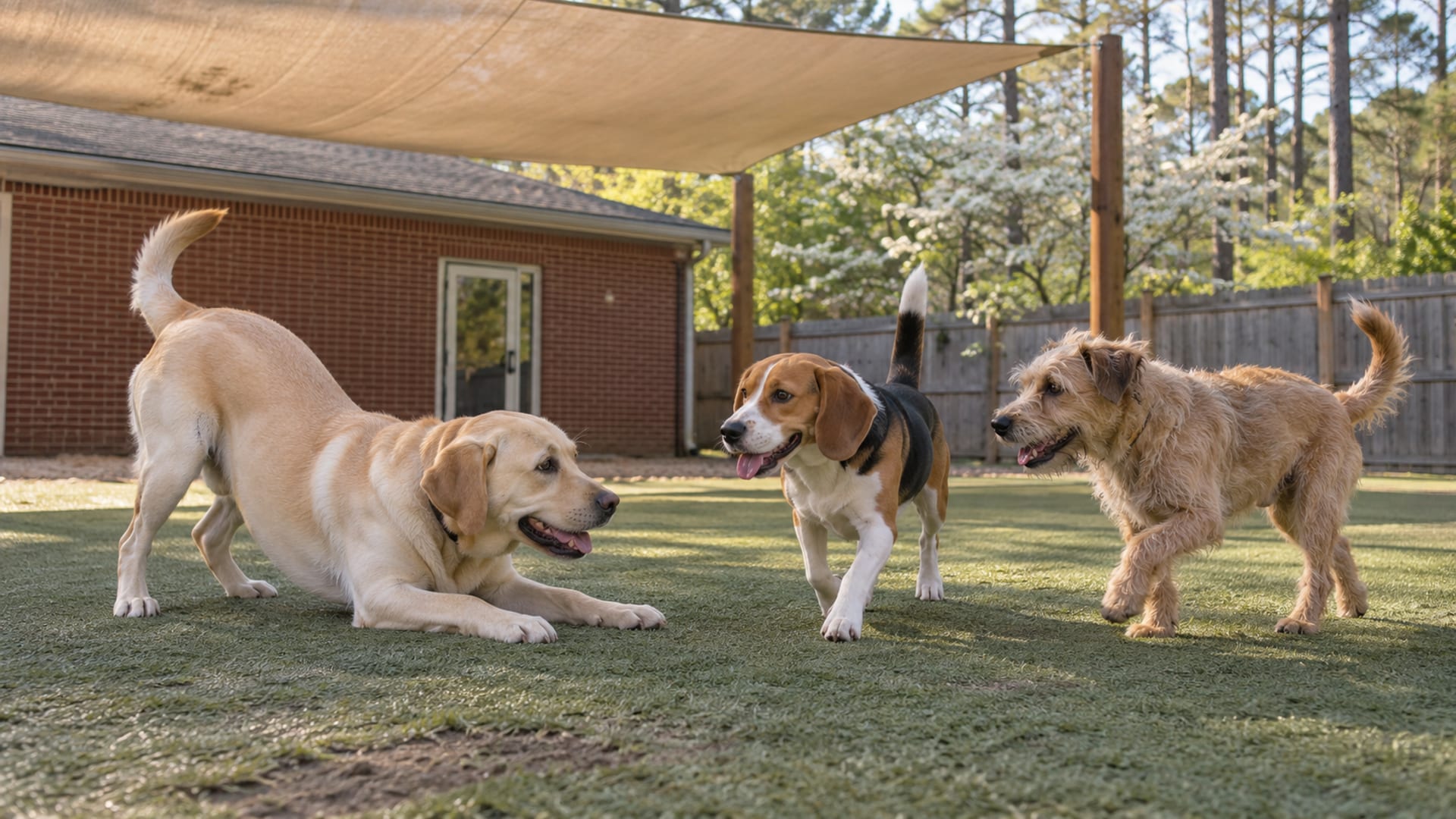
Before you sign a lease, ask the North Carolina Department of Agriculture and Consumer Services (NCDA&CS) Animal Welfare Section whether your daycare needs a boarding-kennel license. State law says a boarding kennel that offers dog daycare with no more than 10 dogs per employee or supervisor is not subject, for those daycare services, to rules that limit the number of dogs in a primary enclosure.
That language is not a recommended staffing ratio, and it does not remove the facility standards. Zoning, building, fire, occupancy, wastewater, business registration, insurance and local animal-control rules are separate questions for your exact address.
Key takeaways
Tap a card to bring it forward.
- Call the NCDA&CS Animal Welfare Section at (919) 707-3280 and describe your operation, especially if dogs never stay overnight, before you sign anything.
- G.S. 19A-24 is a limited exception about dogs per primary enclosure. It is not a safe staffing ratio.
- The 02 NCAC 52J rules still set indoor temperatures, ground cover, shade, drainage and five-foot enclosures where they apply to you.
- A state license does not replace zoning, building, fire or occupancy approval from your city or county.
- North Carolina law requires rabies vaccination for dogs over four months. Spay-neuter, Bordetella and canine influenza rules are yours to write.
I know the order of operations is what worries you most. If you take a lease first and learn about the license or the zoning second, you may pay rent on a building you can't use. So, I've put the steps in the order the approvals tend to come, and I name the office that decides each one. I'm not a lawyer, accountant, vet or kennel owner, so treat this as a map to the official offices, not a ruling.
Does a daycare with no overnight stays need a boarding-kennel license?
NCDA&CS says a person may not operate a boarding kennel without a license. It describes a boarding kennel as a facility that regularly offers boarding of dogs or cats for a fee, and its Animal Welfare Section says the license requirement applies to in-home boarding too. The agency has also noted that the Animal Welfare Act was written before online boarding services and modern doggie daycare became common, and it continues to inspect facilities and issue penalties for unlicensed operations.
The word "daycare" alone does not settle the question for a business with no overnight stays. That is why the first call goes to the state. Phone the Animal Welfare Section at (919) 707-3280 or email AGR.AWS@ncagr.gov and describe the exact operation: hours, whether any dog ever stays overnight, how many dogs you expect at once, whether the daycare sits inside a grooming or training business, and whether it is at a commercial building or a home. Ask them to classify it, and ask what happens next if a license applies.
If you are licensed as a boarding kennel, the NCDA&CS licensing page lists a $75 fee for each license period, or part of a period, beginning July 1. The boarding kennel application asks for the maximum number of dogs on site and your enclosure information, so have those numbers ready. If you also plan overnight stays, our guide to the North Carolina boarding kennel license covers that side in full.
What does G.S. 19A-24 say about 10 dogs per employee?
Here is the statute, G.S. 19A-24, word for word: "A boarding kennel that offers dog day care services and has a ratio of dogs to employees or supervisors, or both employees and supervisors, of not more than 10 to one, shall not as to such services be subject to any regulations that restrict the number of dogs that are permitted within any primary enclosure."
Read it slowly, because it is narrower than it sounds. It relieves a qualifying daycare of regulations that cap how many dogs may be in a primary enclosure. It does not say every daycare may run ten dogs per worker. It does not set a recommended staffing ratio, and it does not remove the other requirements of 02 NCAC 52J. A ratio that is legal for the enclosure question can still be too thin for a group of excited adolescent dogs, so set your staffing with your insurance professional, not with this one sentence.
The rules also speak to supervision directly. Under 02 NCAC 52J .0204, if more than four dogs are housed or confined in an exercise area or primary enclosure, at least one person must constantly supervise each ten dogs in that enclosure or area, with immediate access to the animals. Ask the Animal Welfare Section how that applies to your layout.
What do the 02 NCAC 52J yard and building rules require?
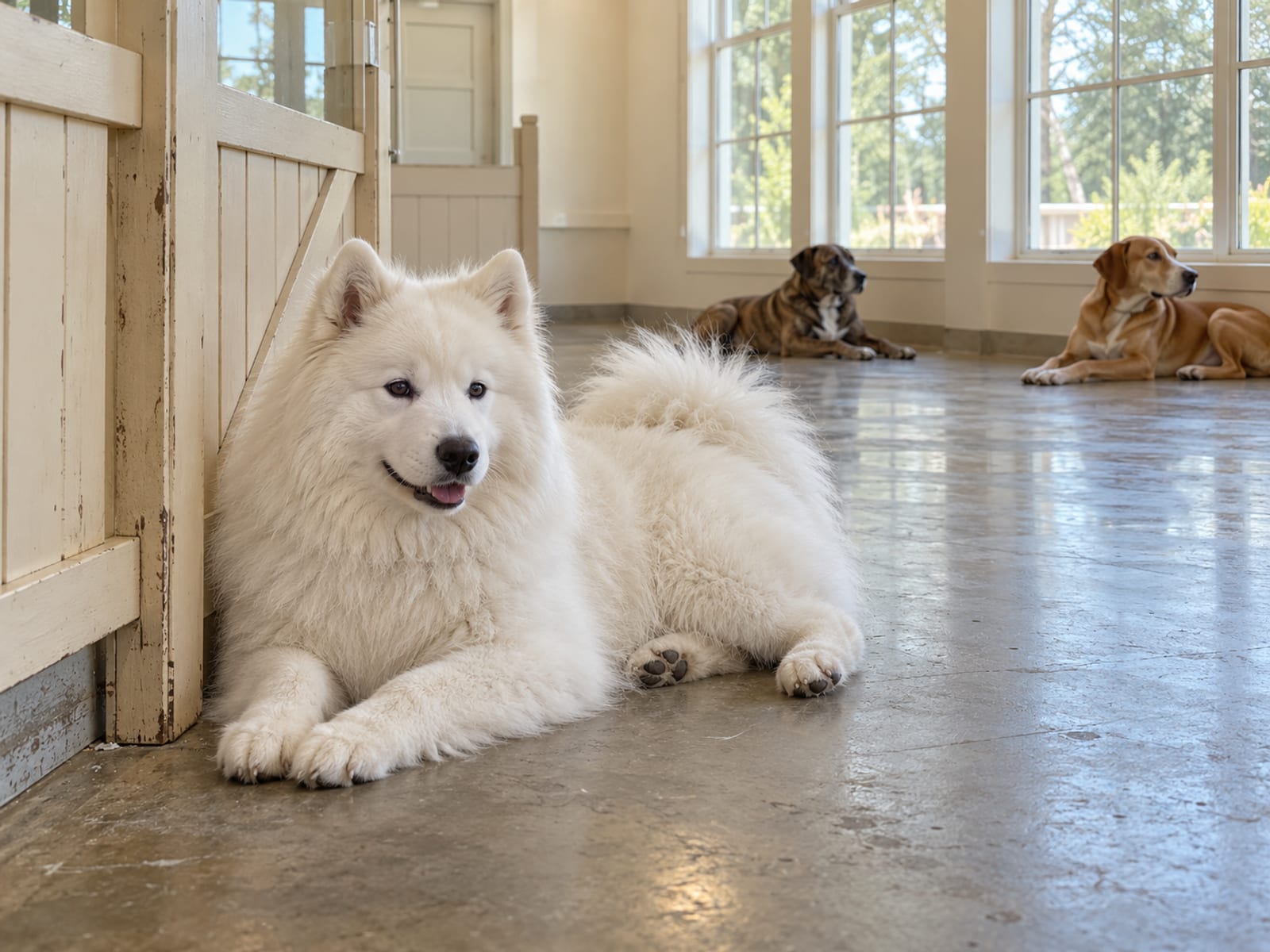
These are the facility rules an inspector will look at, so build to them from the start. The rules say facilities and exercise areas must be inspected and compliant before animals are confined in them, and NCDA&CS employees may review all areas during normal business hours.
Outdoors, 02 NCAC 52J .0203 allows these ground covers in exercise areas: sealed concrete or another moisture-impervious surface, gravel maintained at least six inches deep, properly maintained artificial turf, or properly maintained grass without bare dirt. Sand, mulch, pine straw and similar materials may not be used as ground cover in exercise areas or walkways. Outdoor areas need protection from sun and bad weather large enough for all the animals at the same time, and drainage must prevent standing water. Common areas must be cleaned and sanitized.
Enclosures are covered by 02 NCAC 52J .0204. Exercise areas must be at least five feet high, prevent escape, and give the dogs adequate space for natural play.
Indoors, 02 NCAC 52J .0202 requires heating and cooling that keep the temperature from dropping below 50 degrees Fahrenheit or rising above 85. The space must be ventilated and lit well enough for inspection and cleaning, with moisture-impervious interior surfaces and suitable drainage. 02 NCAC 52J .0201 adds structurally sound buildings, protected electrical equipment, and safe storage of food and bedding. The same rule requires a written disaster (continuity-of-care) plan for the boarding application, so draft one early. Our heat safety guide for dog businesses pairs well with the 85-degree limit.
Tap or hover a row to highlight it.
| Item | Figure | Source |
|---|---|---|
| ItemBoarding-kennel license fee | Figure$75 per license period or part of a period beginning July 1 | SourceNCDA&CS licensing |
| ItemIndoor temperature | FigureNot below 50°F and not above 85°F | Source02 NCAC 52J .0202 |
| ItemGravel ground cover, where used | FigureAt least six inches deep | Source02 NCAC 52J .0203 |
| ItemExercise area or enclosure height | FigureAt least five feet | Source02 NCAC 52J .0204 |
| ItemDaycare enclosure provision | FigureNo more than 10 dogs per employee or supervisor | SourceG.S. 19A-24 |
| ItemDeath or escape notice | FigureWithin 48 hours, where the rule applies | Source02 NCAC 52J .0102 |
What do zoning, change of use and building approval look like in Charlotte, Raleigh and Durham?
A state license and a local approval are two different things. Neither replaces the other, and a landlord saying "dogs are fine" does not count as a use approval. Ask the local planning office these questions before you sign:
- Does the city or county classify dog daycare as animal care, animal boarding, a kennel, a personal service or something else?
- Is that use allowed at this address, and is a zoning verification, use permit, special-use permit or change-of-use approval required?
- Are there limits on outdoor yards, fencing, noise, setbacks, drainage, parking or hours?
- Is a building permit, fire inspection or certificate of occupancy required?
- Does animal wastewater need county health or environmental approval?
- Are there local animal-control or dog-number limits?
In Charlotte, start with the Planning, Design and Development Department and the CLT Development Center for zoning, site, building and occupancy questions. In Raleigh, the city's personal-service use standards cover animal boarding, kennels and doggy daycare, and the city lists change-of-use approval for relevant work. In Durham, contact City-County Planning and City-County Building and Safety; Durham's limited-use standards cover kennel uses, including separation requirements for outdoor areas.
Outside city limits, the county planning, building, environmental-health and animal-control offices decide. Fire alarms, detectors and occupancy are handled by your local building and fire authorities, so ask them what alarms, detectors and equipment your building needs. If you are thinking of running the daycare from your house, the same offices decide. North Carolina has no single statewide home dog-count limit, so local zoning, home-occupation, nuisance and animal-control rules are what apply.
How do you set up the business, and what does it cost to register?
For a business entity, the Secretary of State lists a $125 fee for Articles of Organization for a domestic LLC. The state's business launch guide walks through the other options, such as an assumed name. An attorney or accountant can tell you which structure fits you.
The IRS issues an employer identification number free, directly to the business, and you need one if you will hire staff or open a business bank account under the entity. The North Carolina Department of Revenue says there is no fee to apply for a sales-tax certificate of registration. Ask NCDOR which of your services, if any, are taxable before you set prices, since daycare, grooming, retail and training can be treated differently.
Those are the fixed fees: $75 if licensed, $125 for the LLC, and nothing for the EIN or the NCDOR registration. Lease, build-out, fencing, insurance and wages depend on your site, so collect written quotes. For labor, the Bureau of Labor Statistics put the national median annual wage for animal caretakers at $35,360 in May 2025, and its May 2023 state data show a $30,480 annual mean wage in North Carolina. Those are occupational wage figures, not a promise about what your daycare will charge or earn. For insurance, ask a licensed professional about coverage for animal-care operations; our dog business insurance guide explains the kinds of questions to ask.
What admission policy should you write: rabies, spay-neuter, Bordetella and canine influenza?
Start with the one rule that is the state's. G.S. 130A-185 requires owners of dogs over four months old to have them vaccinated against rabies, so ask for current proof at intake. Our North Carolina rabies law guide for dog businesses covers it in detail.
Everything else here is your own written policy. The statewide statute and the 02 NCAC 52J rules do not create a general spay-neuter requirement for daycare dogs. They do address grouping: under 02 NCAC 52J .0209, a female in estrus may not be housed in the same primary enclosure or exercise area with intact or neutered males, except for planned breeding. So, decide in writing how you treat intact dogs, females in heat, puppies, and dogs that are sick or poorly matched to a group, and apply the policy the same way every time.
Bordetella and canine influenza are also policy questions. The AAHA canine vaccination guidance treats them as risk-based vaccines, with the decision depending on exposure, including boarding and commingling at daycare. That gives you a reason to require them, but it does not make them a state rule. A daycare can accept a dog without Bordetella only if its own written policy allows it. Decide whether you require proof, accept a veterinary exemption, keep unvaccinated dogs apart, or decline them, and post that policy before enrollment. Have a veterinarian and an attorney read it first.
What does a daycare day include?
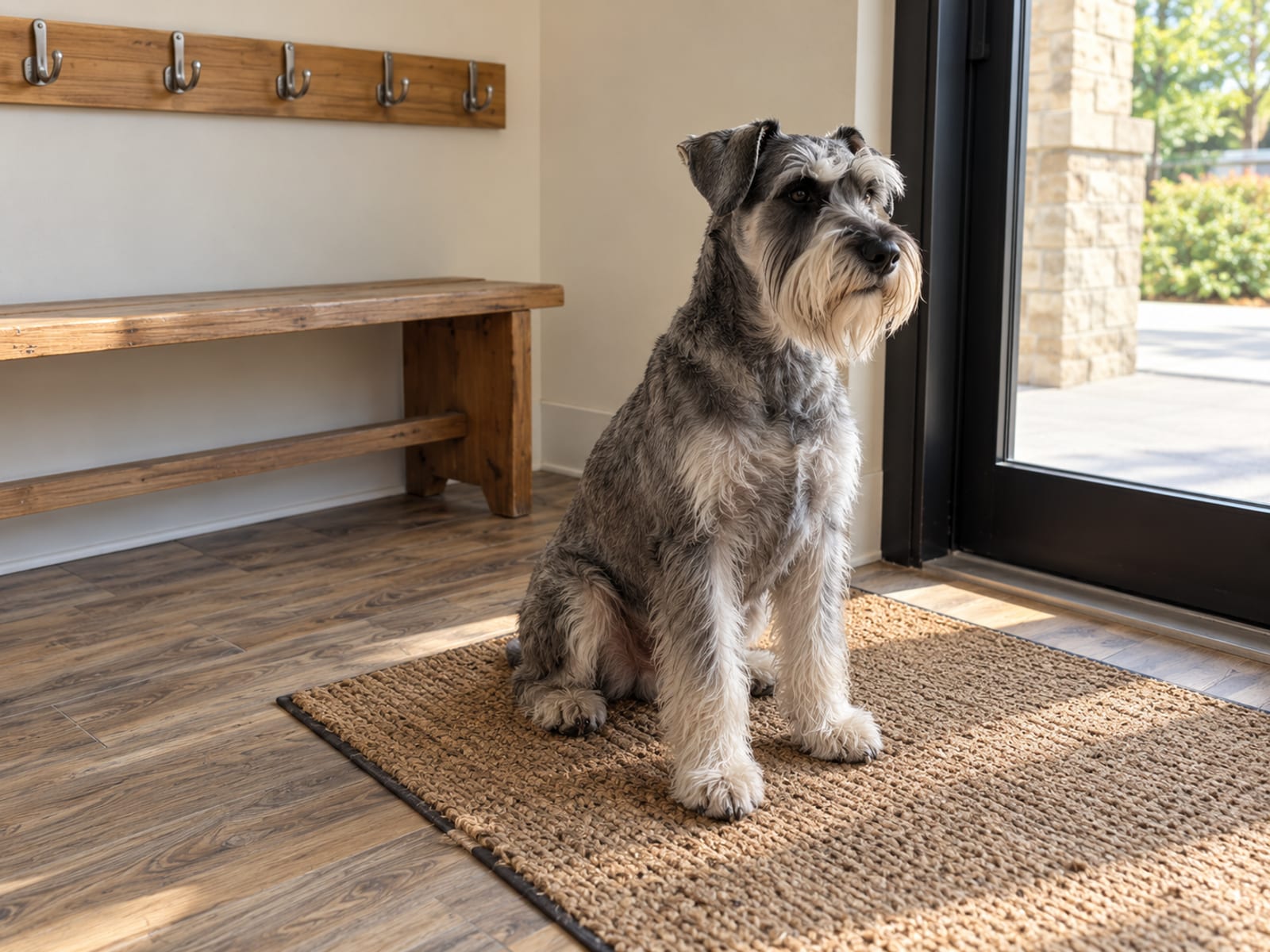
Customers want to know what they are paying for, and the answer is easiest to give when the list is short and honest. A daycare may include arrival screening and owner instructions, a temperament or compatibility check, supervised playgroups separated by size, age, activity level or behavior, water access, elimination breaks, scheduled rest, feeding by written owner instructions, toys and individual attention. Webcams, walks, baths, grooming, training and pickup and drop-off are extras, and they belong in the agreement only if you offer them.
IBPSA publishes questions pet owners can ask any provider, such as whether dogs are separated by size, age and temperament, whether staff are on site, what the fire-safety plan is, how staff are trained, what the provider-to-pet ratio is, and how often dogs are exercised. It is voluntary trade guidance, not North Carolina law, but it tells you what your customers will ask. Have those answers ready.
Here is a plain description in English you can adapt: "Daycare includes supervised play, water, scheduled rest, elimination breaks, and group placement based on compatibility. Feeding, medication, grooming, training, walks, webcams, and transportation are included only when listed in your service agreement."
And in Spanish: "La guardería canina incluye juego supervisado, agua, descansos programados, salidas para hacer sus necesidades y grupos según la compatibilidad. La comida, los medicamentos, el baño, el entrenamiento, los paseos, las cámaras y el transporte solo están incluidos cuando aparecen en el acuerdo de servicio."
Keep the two services apart in Spanish so a family doesn't mistake you for child care or a hotel. A useful line is: "La guardería canina cuida a los perros durante el día. El hospedaje incluye la noche." Other terms people search are "guardería para perros" and "cuidado de perros durante el día"; use "hospedaje" or "residencia canina" only when dogs stay overnight.
What records, agreements and liability rules apply?
The state requires incident files. Under 02 NCAC 52J .0102, you keep a file for an injury or illness that needs veterinary care, an animal death and an escape. Each record includes the date, animal information, owner contact information, a description of what happened and what you did. Deaths and escapes are reported to the Animal Welfare Section within 48 hours where the rule applies. Keep client records, written permissions and veterinary-care records in the same organized system.
On liability, G.S. 67-4.4 makes the owner of a dangerous dog strictly liable for civil damages the dog causes to a person, property or another animal, and local dangerous-dog rules may also apply. That is one reason intake questions about bite history matter. Claims against a daycare can also involve injury, illness, death, escape, negligence, contract disputes and misrepresentation.
Have an attorney prepare or review your paperwork:
- The service agreement and payment terms.
- Owner statements about health, behavior, bite history and vaccination.
- Permission for group play, separation, feeding, grooming, transport and emergency veterinary care.
- Pickup and release authorization, and emergency contacts.
- Your illness and exclusion policy.
- Risk disclosures for group play.
- Release or indemnity language, where the law allows it.
- Cancellation, dispute and abandoned-animal terms.
- Privacy terms for webcams and photographs.
A waiver allocates risk; it is not a guarantee against a claim, and it doesn't replace insurance or safe handling. Your attorney and insurance professional can tell you how far yours goes.
What is the week-one opening checklist, in the order approvals come?
Open only after the required approvals are done. This is the order I'd work in:
- Call the NCDA&CS Animal Welfare Section and describe the operation. Ask whether a boarding-kennel license applies.
- Confirm zoning and use at the exact address with the city or county planning office.
- Confirm building, fire, occupancy and wastewater requirements with the local authorities.
- Form the business entity if that suits you, then get your EIN.
- Ask NCDOR which registrations you need.
- Get insurance quotes from a licensed professional and have an attorney review your agreement.
- Design the indoor and outdoor areas to the 02 NCAC 52J rules.
- Write your intake, vaccination, behavior, illness and emergency policies, including the disaster plan.
- Prepare incident-record forms and your escape and death notification steps.
- Schedule the inspections and approvals, and wait for them before you accept dogs.
Questions owners ask about opening a dog daycare in North Carolina
Short answers on the points that decide whether you can open.
Do you have to have a license to run a dog daycare?
Ask the NCDA&CS Animal Welfare Section to classify your exact operation, especially if dogs never stay overnight. If a boarding-kennel license applies, the listed fee is $75 per license period.
Can you run a dog daycare out of your house?
Local zoning, home-occupation, animal-control, nuisance and building rules decide whether your address can be used. The state license requirement applies to in-home boarding, so ask the Animal Welfare Section about that side as well.
Do dogs have to be fixed to go to daycare?
No statewide rule requires it, so it is your own written policy. Keep in mind the 02 NCAC 52J .0209 rule on females in heat.
Can a daycare accept a dog without the Bordetella vaccine?
Only if your written admission policy allows it. North Carolina law requires rabies vaccination for dogs over four months, while Bordetella and canine influenza are facility policies.
What should you do next?
Make the phone call to the Animal Welfare Section this week, before you tour another building or sign anything. Write down the name of the person you spoke to, the date and what they told you, then take the same description of your operation to your city or county planning office. When you are ready to open, our guide to how to start a dog boarding business covers the overnight side, and you can list your business in the DogServ directory or claim your listing if it is already there. I can't promise any approval or result, but asking the right office first keeps you from paying for a space you can't use.
Sources
- American Animal Hospital Association: AAHA canine vaccination guidance
- bls.gov: May 2023 state data
- bls.gov: national median annual wage for animal caretakers at $35,360 in May 2025
- charlottenc.gov: Planning, Design and Development Department and the CLT Development Center
- durhamnc.gov: City-County Building and Safety
- ibpsa.com: IBPSA
- irs.gov: employer identification number
- ncagr.gov: boarding kennel application
- ncagr.gov: NCDA&CS licensing page
- ncagr.gov: North Carolina Department of Agriculture and Consumer Services (NCDA&CS) Animal Welfare Section
- ncdor.gov: North Carolina Department of Revenue
- ncleg.gov: G.S. 130A-185
- ncleg.gov: G.S. 19A-24
- ncleg.gov: G.S. 67-4.4
- raleighnc.gov: change-of-use approval
- reports.oah.state.nc.us: 02 NCAC 52J .0102
- reports.oah.state.nc.us: 02 NCAC 52J .0201
- reports.oah.state.nc.us: 02 NCAC 52J .0202
- reports.oah.state.nc.us: 02 NCAC 52J .0203
- reports.oah.state.nc.us: 02 NCAC 52J .0204
- reports.oah.state.nc.us: 02 NCAC 52J .0209
- sosnc.gov: Articles of Organization
- sosnc.gov: business launch guide
- udo.durhamnc.gov: limited-use standards
- udo.raleighnc.gov: personal-service use standards