
Starting a Pet Sitting Business in North Carolina: Where Sitting Ends and Licensed Boarding Begins
By Cal Hewitt · Published
Business guides
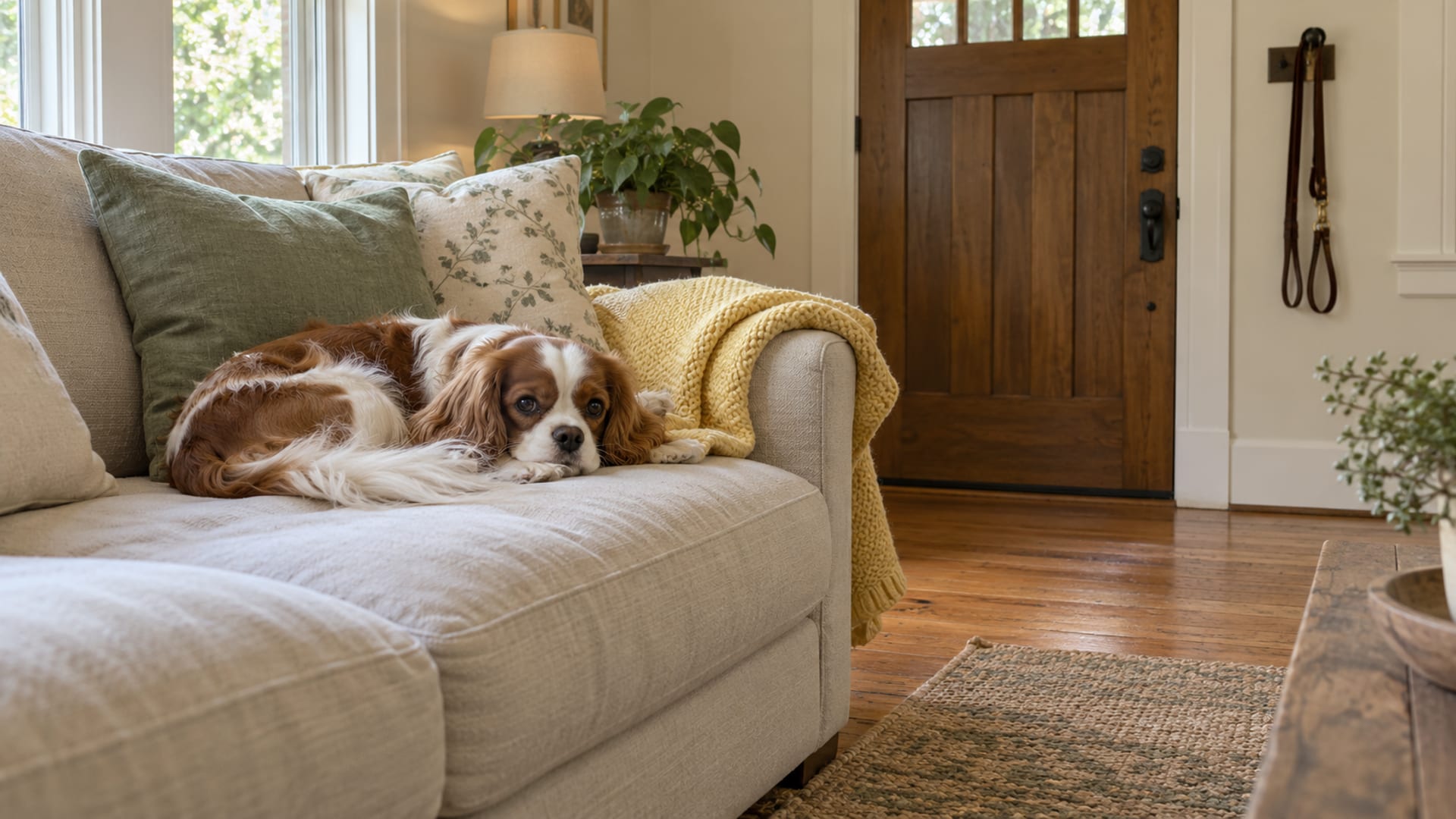
The line in North Carolina comes down to where the dog sleeps. WRAL quoted the state's Animal Welfare Division describing pet sitting as care in the animal's own home and boarding as care outside that home for a fee.
The state agency, NCDA&CS, also says its boarding-kennel license applies to in-home boarding services, including services advertised through online pet-care companies. So, if you visit dogs at the owner's house, you are on one side of that line. If dogs stay at yours, you are on the other.
Key takeaways
Tap a card to bring it forward.
- Client-home sitting and paid care in your own home are treated differently, and the dividing question is where the dog stays.
- NCDA&CS says the boarding-kennel license applies to in-home boarding, and the license costs $75 for the fiscal year, expiring June 30.
- Rover does not verify North Carolina boarding licenses, so a platform profile is not proof of one.
- Raleigh, Durham and Charlotte each handle home businesses differently, so ask your own planning office before you advertise.
- Ask your insurer whether the policy includes care, custody and control coverage; ordinary general liability can leave pets out.
- Write the service agreement, the key log and the emergency authorization before you accept your first booking.
I'm Cal. I build websites and run marketing for dog businesses. I am not a lawyer, accountant, insurance agent or vet, so treat this as a map of who to call, not a ruling on your situation. If you want to start fast without stepping into an unlicensed boarding business by accident, the sections below are in the order I would work through them.
Where does sitting in the client's home end and boarding begin?
Most new sitters start with some mix of visits, walks and drop-ins. A walk, a feeding visit, a midday companionship visit or an overnight stay inside the client's house all keep the dog in its own home. WRAL reported that the Animal Welfare Division's director, Dr. Patricia Norris, described pet sitting that way, and said the Animal Welfare Act does not define pet sitting.
Boarding is the other half. When a dog leaves its owner's home and stays at yours, even for a weekend, you are offering care outside the animal's home for a fee. NCDA&CS states that "the requirement for a boarding kennel license from the Animal Welfare Section also applies to in-home boarding services for dogs and/or cats."
Daycare at your house belongs in the same conversation, because the dogs are at your residence. If you plan to take dogs in, or if clients would drop dogs off at your door, treat it as a boarding question first and a marketing question second. Before you advertise overnight care, daycare or boarding at your home, ask NCDA&CS Animal Welfare Section about your exact service.
NCDA&CS also says complaints may go to your local sheriff's office, police department, animal control or an animal cruelty investigator. Local offices can be part of the picture even when the state license is not the issue.
What does the boarding-kennel license cost, and when does it expire?
North Carolina's Animal Welfare Act is Chapter 19A, Article 3. G.S. 19A-23 defines a boarding kennel as "a facility or establishment which regularly offers to the public the service of boarding dogs or cats or both for a fee." G.S. 19A-28 says no person may operate a boarding kennel without a license. You can read both in Chapter 19A, Article 3.
The current NCDA&CS boarding-kennel application lists a new license at $75. The license runs on the fiscal year and expires June 30. The application tells you to speak with an inspector before you submit it. It asks for:
- the facility address
- the maximum number of dogs and cats
- the enclosures
- cleaning times
- a veterinary-care program
- an emergency or disaster plan
That last item is a current requirement, not a suggestion. The boarding application requires a written continuity-of-care or evacuation plan under 02 NCAC 52J, the Animal Welfare administrative rule. If you think you might ever board, start thinking about where the dogs go in a hurricane or a house fire now.
A phone call to an inspector is free and comes before any money. Ask whether your exact plan counts as licensed boarding, then write down the date and who answered. For the wider licensing picture, see our guide to the North Carolina boarding kennel license.
What did WRAL report about Rover boarders?
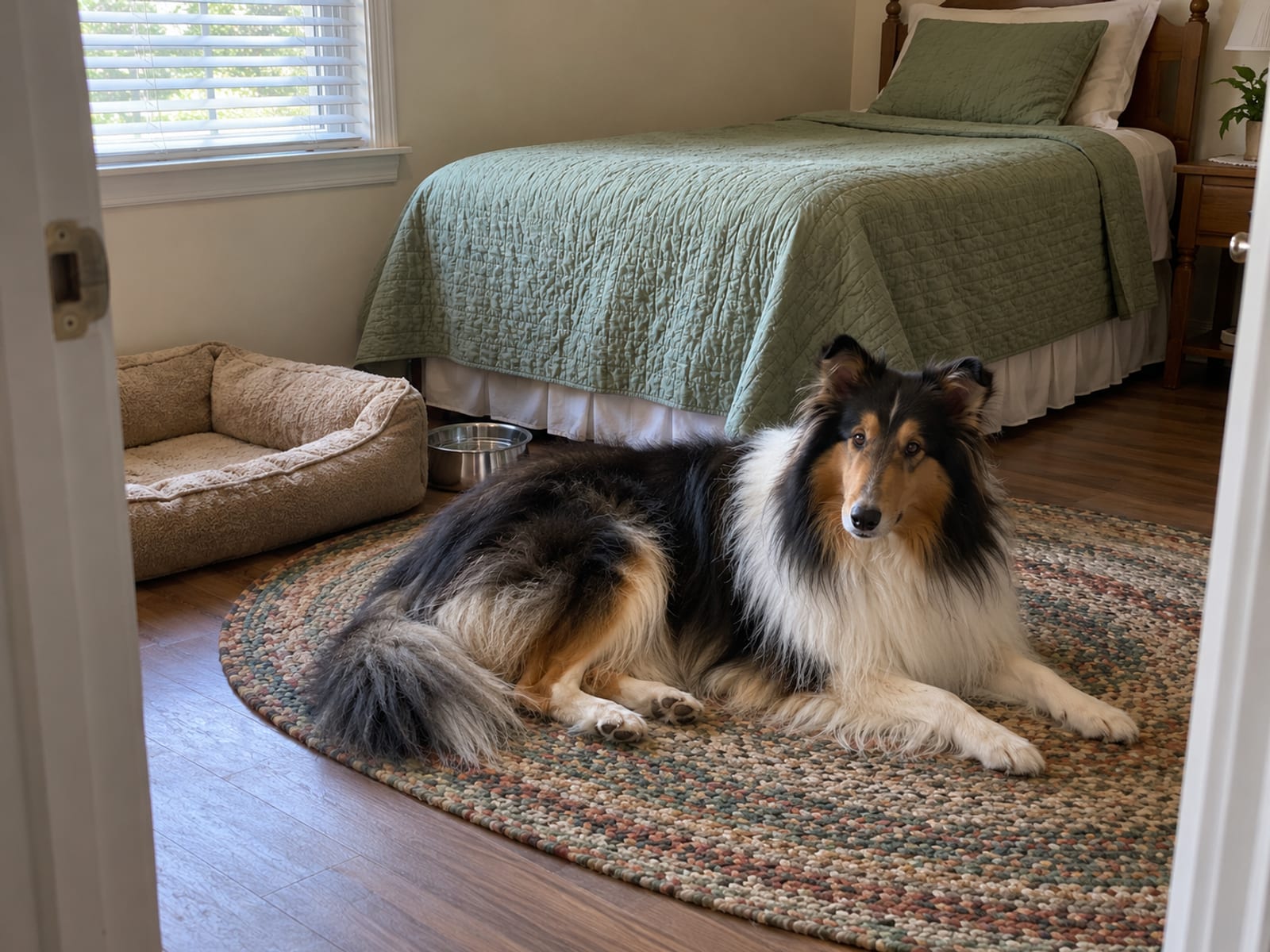
WRAL published "Unlicensed pet boarding: What Rover users need to know to avoid legal risks" on February 3, 2025, and updated it February 4, 2025. It reported that many Rover providers may unknowingly violate the Animal Welfare Act by offering unlicensed home boarding.
The story also described a Charlotte investigation involving dogs boarded in a home, including an escaped dog that later died after being struck by a vehicle. The couple was reported as having been fined $1,000. Rover told WRAL that providers must follow applicable laws, and WRAL reported that Rover does not verify North Carolina boarding licenses.
For you, the takeaway is practical. A profile on a booking app is not a government approval, and an app's rules do not replace the state's. Before you list overnight care at home, check the NCDA&CS requirement, confirm your local zoning position, and ask the platform what it verifies. The WRAL piece also advised pet parents to find out where their pet will be kept, so expect smart clients to ask you the same thing.
What do Raleigh, Durham and Charlotte say about home businesses?
Local rules sit on top of the state license, and they differ from city to city. Three examples show the spread.
- Raleigh. The city says a Home Occupation is conducted wholly within a dwelling and does not allow nonresident employees or clients, customers, patients or visitors to visit the premises. A Live-Work use allows customers or clients to visit. If you plan to take dogs into your residence, ask Raleigh Planning and Development whether your activity is a prohibited Home Occupation, a Live-Work use or another regulated use.
- Durham. A Home Occupation Permit is required for a home occupation primarily conducted in a residence. The current page lists a $55 fee plus a processing fee, and Durham says your business must be registered with the Secretary of State before you apply.
- Charlotte. Charlotte's home-business materials say zoning approval and a Customary Home Occupation Permit are required for a business run from a residence. The application materials allow clients or business-related visitors by appointment between 7:00 a.m. and 8:00 p.m., subject to the ordinance.
Whatever your city, take this list to the planning and zoning office:
- Is my property inside city limits?
- Is my service client-home only, or will dogs stay at my residence?
- May clients drop off or pick up animals?
- Is a home-occupation, live-work, zoning-use, kennel or special-use permit required?
- Are there animal-count, noise, parking, nuisance, waste or setback rules?
- Does the county rule differ from the municipality's?
- Does my lease, HOA or deed restrict the activity?
North Carolina has no single statewide home dog-count limit that settles the question, so ask your planning office and your local animal control about count, nuisance and rabies rules at your address.
How do I register the business and handle taxes?
Registration is mostly paperwork, and it is cheap compared with the other steps.
If you will operate under a name other than your own legal name, you file an assumed-name certificate through your county Register of Deeds. The Secretary of State lists the filing fee at $26 on the current form. That filing does not create exclusive rights to the name, so it is not a substitute for checking that nobody else is using it.
You choose between a sole proprietorship and an LLC. A sole proprietorship is the simplest to start. An LLC is a separate registered entity, which is a decision to talk through with an accountant or attorney who knows your finances. If you plan to apply for a Durham permit, remember the Secretary of State registration comes first.
An EIN, issued free by the IRS, identifies a business entity, and the IRS also stresses keeping records of income, expenses and deductions. Keep a separate account and a simple spreadsheet from day one.
For sales tax, NCDOR states that "there is NO fee to apply for a certificate of registration in North Carolina." Ask NCDOR whether your services fall under a tax type you must register for. Our guide to North Carolina sales tax on pet services covers it in depth, and the North Carolina dog business license requirements guide covers the rest of the paperwork map.
Tap or hover a row to highlight it.
| Item | Figure | Source |
|---|---|---|
| ItemBoarding-kennel license | Figure$75 for the fiscal-year license period | SourceG.S. 19A-28 |
| ItemBoarding-kennel license expiration | FigureJune 30 | SourceNCDA&CS |
| ItemDurham Home Occupation Permit | Figure$55 plus a processing fee | SourceCity of Durham |
| ItemAssumed business name filing | Figure$26 | SourceNC Secretary of State |
| ItemNCDOR registration | FigureNo application fee | SourceNCDOR |
| ItemRover provider fee | Figure20 percent, sitter keeps 80 percent | SourceRover |
What insurance does a pet sitter need?
Start with general liability, then check that it includes care, custody and control coverage, often shortened to CCC. PSI warns that ordinary general liability can exclude property in your care, which includes pets. A sitter who assumes it covers a dog that slips out of a gate can learn otherwise at the worst time.
Bonding is a separate thing. PSI describes a bond as a guarantee related to theft, covering clients against theft by covered owners, employees or contractors depending on the bond's wording. It is not insurance for an injured or lost dog.
The trade group NAPPS publishes its member policy details, which show what a sitter-focused policy can look like:
- $1 million per occurrence and $2 million aggregate general liability limits
- CCC coverage as mandatory under that policy
- veterinary medical coverage options from $10,000 to $200,000
- a $100 per-claim deductible
- a home-pet-care endorsement for pets kept in the sitter's or an employee's home
- workers' compensation as a separate need for injuries to the sitter, employees or contractors
If you plan to keep dogs at your home, ask the insurer directly whether the policy covers that activity. Third-party provider summaries published in 2026 report roughly $175 to $600 a year for basic or bundled solo-sitter coverage, but those are published quotes and starting prices, not guarantees. Get a written quote based on your services, location, capacity, employees and transport.
What paperwork and safety steps come before the first booking?
These steps are recommended practice, not state law, except where noted. They protect the dog, the home, the keys and your income.
- A meet and greet before the first booking.
- A written service agreement covering services, dates, access instructions, emergency contacts, veterinary authorization, cancellation terms, fees, keys, medication instructions the owner supplies, and incident reporting.
- Owner and emergency contact information, plus the primary veterinarian and the emergency veterinary hospital.
- Written authorization for emergency veterinary care.
- Rabies certificate and vaccination records where required by your service, insurer, platform or local rule. For the state rules, see the North Carolina rabies law for dog businesses.
- Feeding, water, exercise, medication, allergy and medical-history details from the owner.
- Behavior, escape, bite and dog-to-dog interaction disclosures.
- Key, alarm, gate and garage instructions, plus a key log and a return procedure.
- Daily visit or overnight records, and an incident report form.
- An evacuation, shelter, transport and client-notification plan. If hurricanes are a concern, see hurricane planning for dog businesses in North Carolina.
- A written capacity and supervision policy.
On capacity, there is no universal dog-per-sitter or dog-per-home number for ordinary pet sitting. For a licensed boarding facility, the approved capacity on its license controls. The 10-to-1 dogs-per-employee figure in the statute is a condition of a limited exception for certain licensed dog-daycare services, not a staffing rule for sitters. Set your own limit in writing and check it against local rules and your insurance.
Quick check: sitting versus boarding in North Carolina
How do I find my first clients?
This sequence works for a one-person service:
- Define the service: client-home sitting, dog walking, drop-ins, overnight sitting or licensed home boarding.
- Confirm the state and local requirements for that exact service.
- Get insurance with CCC coverage before the first assignment.
- Register the business name or entity as appropriate.
- Prepare the written agreement and intake form.
- Set up a Google Business Profile as a service-area business.
- Claim or create a DogServ listing on the relevant North Carolina city page.
- Ask veterinarians, groomers, trainers, shelters, apartment communities, friends and past clients for referrals.
- Use Rover or Wag only with accurate service descriptions and an understanding of their fees and terms.
- Ask for honest reviews after completed bookings.
Google's service-area rules say to use one profile per business, define your area accurately, and hide your residential address when customers are not served there. If you only visit clients at their homes, hiding your address is the right setup. Google also allows up to 20 service areas, with guidance of roughly two hours from your base as a boundary.
On platforms, Rover's help page says it takes a 20 percent service fee per booking from providers, so the sitter receives 80 percent of earnings, though the page notes some U.S. pilots may differ. For Wag, ask Wag directly for its current provider fee schedule before you plan your pricing around it. When you are ready to set your own rates, see dog service prices in North Carolina.
How should I describe my service in English and Spanish?
Your wording should match what your approvals allow. If you are not licensed for boarding, say so plainly in both languages, because many local owners search in Spanish and will read exactly what you write.
An English description for a client-home sitter reads like this:
"I provide insured pet sitting and dog walking in [cities]. I visit dogs in their own homes for scheduled walks, drop-in care, feeding, companionship, and overnight sitting. I do not accept dogs into my home unless the required boarding approvals are in place."
And the Spanish version:
"Ofrezco cuidado de mascotas y paseos para perros en la casa del cliente en [ciudades]. Visito a los perros para paseos, alimentación, compañía y cuidado durante la noche. No alojo perros en mi casa salvo que tenga las licencias y permisos correspondientes."
Use the same terms on your Google profile, your listings and your agreement, and offer the agreement in both languages. Spanish speakers search phrases such as "cuidador de perros bilingüe," "paseador de perros en [ciudad]" and "contrato para cuidar mascotas," so those words belong on your page. Durham also publishes a bilingual Home Occupation Permit application, where it applies. The CDC has a Spanish rabies page you can point owners to for vaccination basics.
Questions new pet sitters ask
Short answers on the kennel license, insurance and finding clients.
Can you run a business from home in NC?
Yes, many people do, but your city or county decides what is allowed at your address. Raleigh, Durham and Charlotte all use different home-business rules, and a lease, HOA or deed can add limits. Ask your planning office before you take on clients at your residence.
Do I need a license to watch dogs in my home?
NCDA&CS states that its boarding-kennel license applies to in-home boarding services. Paid overnight care, daycare or boarding at your residence is the higher-risk category, so speak with an NCDA&CS inspector about your exact service before you advertise it.
What qualifications do I need to pet sit?
The NCDA&CS boarding license covers dogs boarded at your place, including your own home; sitting in the client's home is a different service, though local zoning and business rules still apply. What clients look for is insurance with CCC coverage, a written agreement, vaccination and emergency records, and a clear meet and greet.
What are the red flags in a pet sitter?
Watch for a sitter who cannot say where your dog will stay, has no insurance with CCC coverage, offers no written agreement or emergency authorization, or points only to a platform profile as proof of approval. Rover does not verify North Carolina boarding licenses, so that profile is not a license.
How much money do you need to start a pet sitting business?
Fixed costs from the state are small: $26 for an assumed-name filing, no NCDOR registration fee, and $55 plus processing for a Durham Home Occupation Permit. Insurance is the larger item, and published 2026 provider summaries run roughly $175 to $600 a year for basic solo coverage, so get a written quote.
How many pets can you legally have in NC?
No single statewide number answers it for a home-based sitter. Ask your planning office and local animal control about animal-count, nuisance and zoning rules at your address, and if you plan to board, ask NCDA&CS about the capacity on a license.
What should I do this week?
Start with one phone call to NCDA&CS Animal Welfare Section, and tell the inspector exactly where the dogs will stay. Then call your city or county planning office with the seven questions above. Once those two answers are in hand, get an insurance quote that includes care, custody and control coverage, write your service agreement, and set up your listing.
If you are ready to be found, you can claim or create a listing in DogServ's North Carolina directory and keep your service wording accurate in both languages. I wish you a clean, confident start.
Sources
- cdc.gov: Spanish rabies page
- charlottenc.gov: application materials
- durhamnc.gov: Home Occupation Permit
- irs.gov: IRS
- napps.petsitterinsurance.com: NAPPS
- ncagr.gov: 02 NCAC 52J
- ncagr.gov: in-home boarding services
- ncagr.gov: NCDA&CS boarding-kennel application
- ncdor.gov: NCDOR
- ncleg.gov: Chapter 19A, Article 3
- petsit.com: PSI
- raleighnc.gov: Raleigh Planning and Development
- Rover: Rover
- sosnc.gov: NC Secretary of State
- sosnc.gov: Secretary of State
- support.google.com: Google's service-area rules
- support.google.com: guidance of roughly two hours
- wral.com: "Unlicensed pet boarding: What Rover users need to know to avoid legal risks"