

Mobile Pet Services in Florida: City vs Unincorporated County, Tax Receipts, Van Parking and Client Files
By Cal Hewitt · Published
Business guides
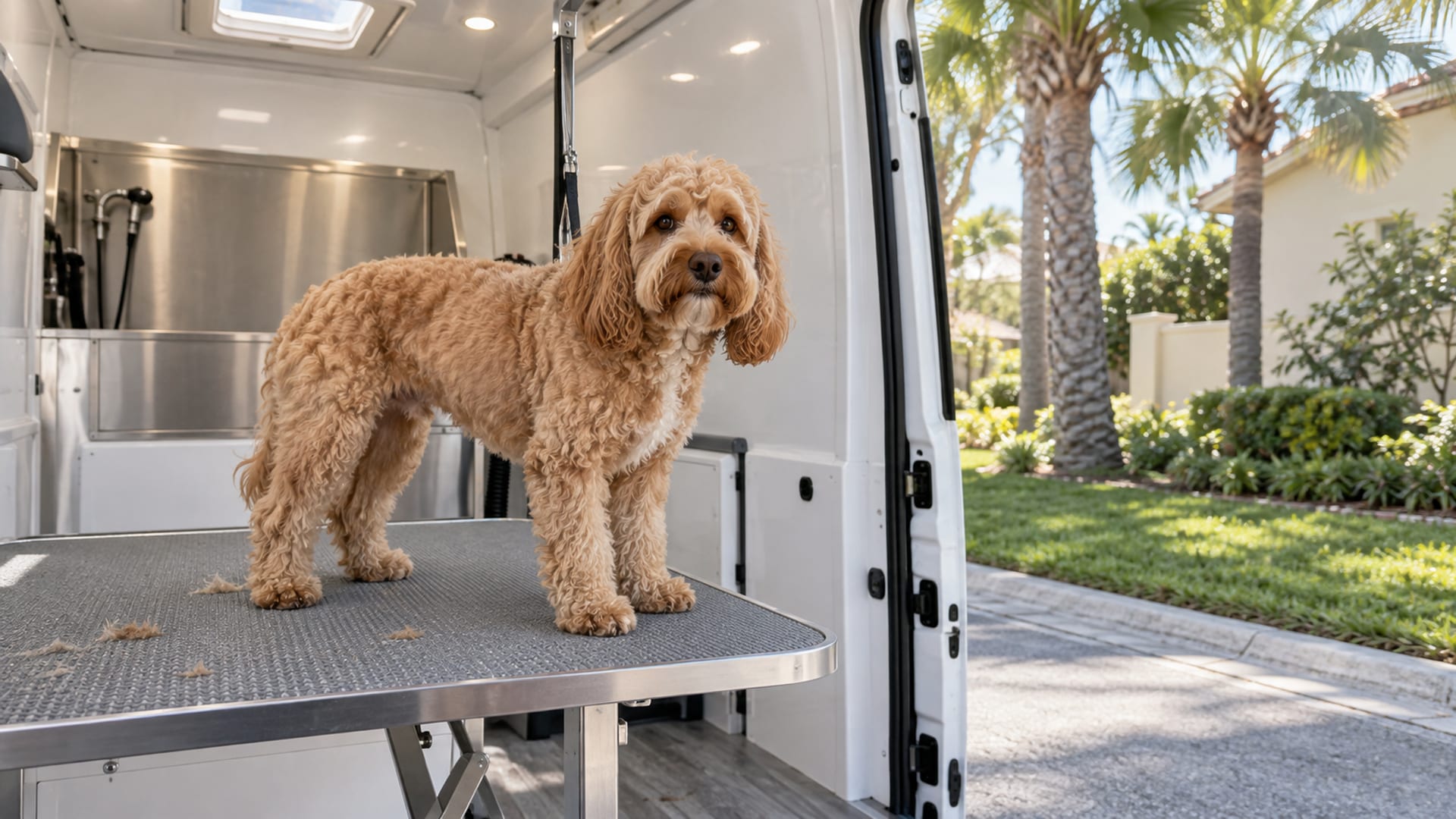
Mobile pet services in Florida are usually services performed at the customer's home or location, including mobile grooming, dog walking, pet sitting and in-home training. The first licensing question is not whether you have a van. It is where your business is based: inside a city or in unincorporated county. If your base is inside city limits, call the city business-tax or zoning office. If it is in unincorporated county, call the county tax collector and the county zoning or planning office. Some places require both a city and a county receipt, and parking, home-occupation, water and wastewater rules are set locally too.
Key takeaways
Tap a card to bring it forward.
- Your base address decides your first call: the city office inside city limits, or the county tax collector and zoning office in unincorporated county.
- Orlando lists pet sitting, including training, walking and grooming-related services, as mobile services with no location limit when done at the customer's home by appointment.
- Orlando says "All businesses must have both city and county business tax receipts," and Miami-Dade requires a receipt from each jurisdiction, even for one-person and home-based businesses.
- Florida Rule 12A-1.0215 says grooming charges are not subject to sales tax, but the supplies you buy for grooming are taxable.
- A home address does not automatically allow overnight van parking; ask your zoning office, HOA or landlord about your exact van.
- Ask insurers about care, custody and control coverage, the part that covers pets in your care.
Is your base inside a city or in unincorporated county, and who do you call first?
I build websites and marketing for dog businesses, not legal or tax advice, so treat this as a map of which office decides what. Even a van-based business has a base: the address where the van sleeps and the business is registered. That address decides which local government classifies you.
The Orange County Tax Collector tells new applicants to start by working out whether the address is in a city or in unincorporated Orange County. From there the path splits:
- Base inside a city: contact that city's business-tax, zoning or permitting office first. The county may also require its own receipt.
- Base in unincorporated county: contact the county tax collector and the county zoning or planning office.
- Customers in other cities or counties: ask each one whether it adds its own receipt or operating requirement.
Palm Beach County's Tax Collector works the same way. A mailing address that says "Orlando" does not always mean you are inside city limits, so ask the tax collector or zoning office for a written classification of your exact address and service model, and keep it with your records.
What counts as a mobile pet service in Orlando's Mobile Business Guide?
The City of Orlando Mobile Business Guide lists "Pet Sitter," including training, walking and grooming-related services, among its mobile-service uses. When those services are provided at the customer's residence or location on an appointment basis, there is no limitation on the location. That covers going into a client's home to sit, walk or train, and grooming in a van parked at the client's address.
The line Orlando draws is between going to the customer and having customers come to you. A business set up at a designated location that attracts customers is a fixed commercial site, and it must meet the zoning rules for that site, including intensive-retail or conditional-use requirements where they apply. So, if you start having clients drop dogs off at your driveway or a rented space, you are no longer only a mobile business in Orlando's eyes. Outside Orlando, ask your own city or county how it classifies customer-location pet services.
Do you need a city receipt, a county receipt or both?
It depends on where you are based. The City of Orlando Business Tax Receipt page says a business operating within city limits must pay a city Business Tax Receipt, and states: "All businesses must have both city and county business tax receipts." Orlando receipts expire on September 30, so plan your renewal around that date. The table sets Orlando beside the rules from the Orange County Tax Collector, the Broward County Tax Collector and the Miami-Dade Local Business Tax FAQ.
Tap or hover a row to highlight it.
| Jurisdiction | What it requires |
|---|---|
| JurisdictionCity of Orlando | What it requiresCity receipt inside city limits; city and Orange County receipts both required; city receipts expire September 30 |
| JurisdictionOrange County | What it requiresListed cities, including Orlando, require the city receipt before the county receipt; in unincorporated areas, county zoning approves the business first |
| JurisdictionBroward County | What it requiresA county receipt for businesses operating in the county; most cities require their own receipt inside city limits |
| JurisdictionMiami-Dade County | What it requiresA business in a city needs a receipt from both the county and the city, including one-person and home-based businesses |
The harder question for mobile work is whether the receipt follows your base or every city you drive into. Ask each office the same thing: "Is my physical business base inside your jurisdiction, and do you require a business-tax receipt for the base, for services performed within your jurisdiction, or both? If I work from a van or client homes, which address and activity classification should I use?" Write down who you spoke with and the date, and do not rely on a receipt issued for a different city, county or activity category.
Can you run the business from home and park the van there?
A business tax receipt and permission to park a work van at home are two different things, and there is no single Florida-wide answer on overnight parking.
In Orlando, the home-occupation rules require the business to be in your principal residence or a permitted accessory structure, limit business traffic to two vehicles at once and ten a day, and require a home-occupation application where it applies. The City of Orlando code guide adds that commercial-vehicle parking is prohibited on public streets, private driveways and property in residential or office districts, except for loading and unloading.
Orange County's home-occupation ordinance allows a home occupation only when its conditions are met: the business is limited to residents of the home, no customers come to the home, no commercial vehicles are used for the home occupation, and equipment and nuisance impacts are restricted. Miami-Dade has its own home office rules on size, parking, vehicle trips and certificates.
On certificates of use, Orlando's business-tax page says mobile businesses do not require a Certificate of Use, though a Business Tax Receipt is still required inside city limits. Other jurisdictions may use different rules.
Before you buy or wrap a van, ask your city or county zoning office:
- May this exact van be stored overnight at my address?
- Does its size, commercial marking or equipment change the answer?
- Do I need a home-occupation approval or a special parking approval?
An HOA, deed restriction or lease can ban a commercial van or home business even where the city allows it, so ask your HOA or landlord too.
What should you register with Florida?
At the state level, the main registration is your business name and structure through Sunbiz, run by the Florida Department of State. If you operate under a name different from your legal name, Florida Statute section 865.09 requires you to register a fictitious name before you conduct business. The Florida Department of State lists the filing fee at $50, and the registration lasts through December 31 of the fifth year. An LLC or corporation is also registered through Sunbiz.
Decide on an EIN in the same step, especially if you plan to hire or form an entity. Then set up records from day one. The IRS says business records should clearly show income and expenses, supported by sales slips, paid bills, invoices, receipts, deposit slips and canceled checks.
Does Florida sales tax apply to mobile grooming?
Florida treats the grooming service and the things you buy or sell differently. Florida Administrative Code Rule 12A-1.0215, administered by the Florida Department of Revenue, says in subsection (2)(a), effective February 17, 2015: "Charges for boarding animals or for grooming animals are not subject to tax."
Subsection (2)(b) goes the other way for supplies. Items you purchase for use in grooming are taxable, including clippers, shears, brushes, combs, soaps, detergents, deodorizers, colognes and disinfectants.
Selling products is a third category. The Florida Department of Revenue says taxable sales require registration, and the general state rate is 6%, with a county discretionary surtax in many counties. If you sell shampoo, treats or collars from the van, list them separately from grooming charges.
Take these questions to the Department of Revenue or a qualified tax professional:
- If I sell products, do I need dealer registration?
- If I buy supplies out of state, or tax-free for resale, and use them in the business, is Florida use tax due?
- Which county surtax applies to a taxable product sale?
What belongs in the van and the client file?
A good client file protects the dog, the client and you. For each client, keep:
- A current signed service agreement and your business contact details.
- The client's address, access instructions and emergency contacts.
- The primary veterinarian, the nearest emergency clinic and written authorization for emergency veterinary care, with the owner's instructions on costs and contact attempts.
- Current rabies information when the service, facility or local rule calls for it.
- Pet identification and handling notes, plus medication information only as the owner supplies it and within what your business may lawfully do.
- Proof of insurance if the client asks, a blank incident-report form, and weather or disaster contacts.
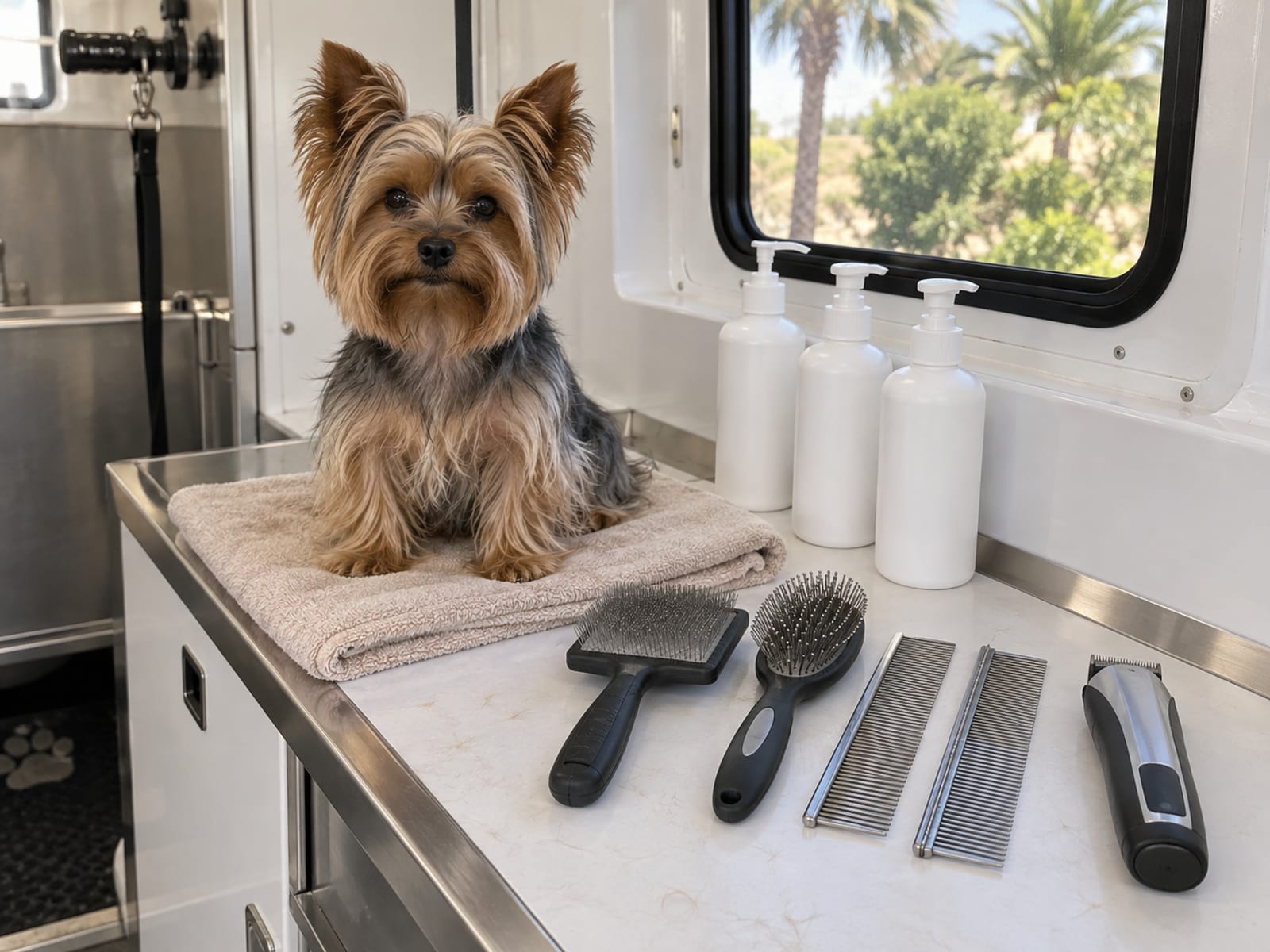
In the van, keep the vehicle registration, auto insurance and roadside-emergency details, and for grooming, the equipment and sanitation inspection records that fit how you work.
Florida Statute section 828.30 requires dogs, cats and ferrets four months of age or older to be vaccinated against rabies by a licensed veterinarian or other authorized person, subject to exceptions in the statute. Ask the facility, city or county you work with whether you must keep or show a copy.
Water and wastewater rules for grooming vans are local. Ask your county environmental or utilities office where grooming wastewater may be discharged and whether your tank setup needs approval. Pet Sitters International (PSI) standards also call for documented contingency plans, so write down what happens to a booked dog when a hurricane warning, heat emergency or van breakdown hits, and who your backup provider is.
Which insurance and trainer credentials should you ask about?
General liability alone may not cover a dog in your care. PSI says pet sitters need service-specific liability insurance with care, custody and control coverage for pets and client property in their care. When you ask for quotes, ask whether the policy covers:
- The services you actually offer: grooming, walking, sitting or training.
- Care, custody and control of pets and client property.
- Vehicle use, including transporting a dog.
- Employees and independent contractors, theft or bonding, and workers' compensation where it applies.
Read the exclusions before you sign. The NAPPS insurance FAQ describes care, custody and control coverage, pet taxi coverage, workers' compensation exclusions and optional non-owned auto coverage for its own policy; other insurers' terms can differ.
For training, the CCPDT states: "Certification is not a legal requirement to become a dog trainer." Credentials are still a way to show tested knowledge and ethics. IAABC credentials include Certified Dog Behavior Consultant and Accredited Dog Trainer, with exams in English and Spanish, and the APDT standards call for humane, reinforcement-based methods, truthful advertising and no guarantees of training results.
What can you do this week?
Work in this order, because each step depends on the one before it:
- Confirm whether your base address is inside city limits or in unincorporated county.
- Call the zoning office about home occupation, van parking and whether a Certificate of Use applies.
- Register your entity or fictitious name on Sunbiz, and decide on an EIN.
- Apply for the city receipt, county receipt or both, and ask each city you plan to serve the receipt question above.
- Ask the Department of Revenue about product sales and grooming supplies.
- Get insurance quotes that name care, custody and control and your vehicle use.
- Draft your service agreement, emergency veterinary authorization and intake form, with a place for rabies information.
- Ask about water and wastewater, and write a weather, heat, hurricane and backup-care plan.
- Publish your service area, how you price, and how to reach you in English and Spanish.
When you set prices, start from your own costs and local rates, not national wage figures. The Bureau of Labor Statistics publishes what employees in this field are paid. These are wages, not business earnings or service prices:
Tap or hover a row to highlight it.
| Occupation | Median annual wage | Lowest 10% earned less than | Highest 10% earned more than |
|---|---|---|---|
| OccupationAnimal caretakers | Median annual wage$35,360 | Lowest 10% earned less than$27,250 | Highest 10% earned more than$50,060 |
| OccupationAnimal trainers | Median annual wage$39,990 | Lowest 10% earned less than$29,600 | Highest 10% earned more than$75,490 |
For step 9, Spanish-speaking customers search "peluquería canina móvil," "cuidado de perros a domicilio" and "paseador de perros," and many type the English word "grooming," so use both "peluquería canina móvil" and "mobile dog grooming" on your service page.
Questions Florida mobile pet business owners ask
These answers cover licensing for grooming, what you need to start, receipts across several cities, and emergency vet releases.
Do I need a license to groom dogs in Florida?
Licensing for a mobile grooming business runs through local business-tax receipts and zoning, set by the city or county that governs your base address. Orlando, for example, requires a city receipt and an Orange County receipt for a business inside city limits. Ask your city or county which activity category fits mobile grooming.
What do I need to start a mobile grooming or pet service in Florida?
Start with a written classification of your base address, then the local receipts, a Sunbiz entity or fictitious-name registration, and insurance with care, custody and control coverage. Have a service agreement and emergency veterinary authorization ready before your first booking. If you plan to sell products, register with the Florida Department of Revenue first.
How do business tax receipts work when I serve several cities?
Each city and county sets its own rule, so one receipt may not cover every place you work. Broward County, for example, issues a county receipt, while most of its cities require their own receipt for businesses inside city limits. Ask each jurisdiction whether it taxes your base, the services you perform there, or both.
Will a vet treat a client's dog if I have a signed release?
Not always. PSI recommends veterinary notification and emergency authorization forms, but clinics may have their own policies and may still require confirmation from the owner. Call the client's clinic when you sign them up and ask what it needs on file.
Your next step
Look up your base address today and find out whether it sits inside city limits or in unincorporated county. That one answer tells you which office to call, which receipts to ask about, and whose rules govern the van in your driveway. Make that call before you pay for a van wrap. If you want help showing customers your service area and how to book you, in English and Spanish, that is the work we do at DogServ.
Sources
- apdt.com: APDT standards
- bls.gov: Bureau of Labor Statistics
- browardtax.org: Broward County Tax Collector
- Certification Council for Professional Dog Trainers: CCPDT
- dos.fl.gov: Florida Department of State
- floridarevenue.com: Florida Department of Revenue
- flrules.org: Florida Administrative Code Rule 12A-1.0215
- IAABC: IAABC credentials
- irs.gov: IRS
- flsenate.gov: Florida Statute section 828.30
- napps.petsitterinsurance.com: NAPPS insurance FAQ
- octaxcol.com: Orange County Tax Collector
- orangecountyfl.net: Orange County's home-occupation ordinance
- orlando.gov: City of Orlando Business Tax Receipt page
- orlando.gov: City of Orlando code guide
- orlando.gov: City of Orlando Mobile Business Guide
- orlando.gov: home-occupation rules
- pbctax.gov: Palm Beach County's Tax Collector
- petsit.com: Pet Sitters International (PSI) standards
- petsit.com: PSI
- secure.miamidade.gov: Miami-Dade Local Business Tax FAQ
- wwwx.miamidade.gov: home office rules