

Dog Heat Safety for Florida Dog Businesses: Walks, Daycare Play, Grooming and Flooded Yards
By Cal Hewitt · Published
Business guides
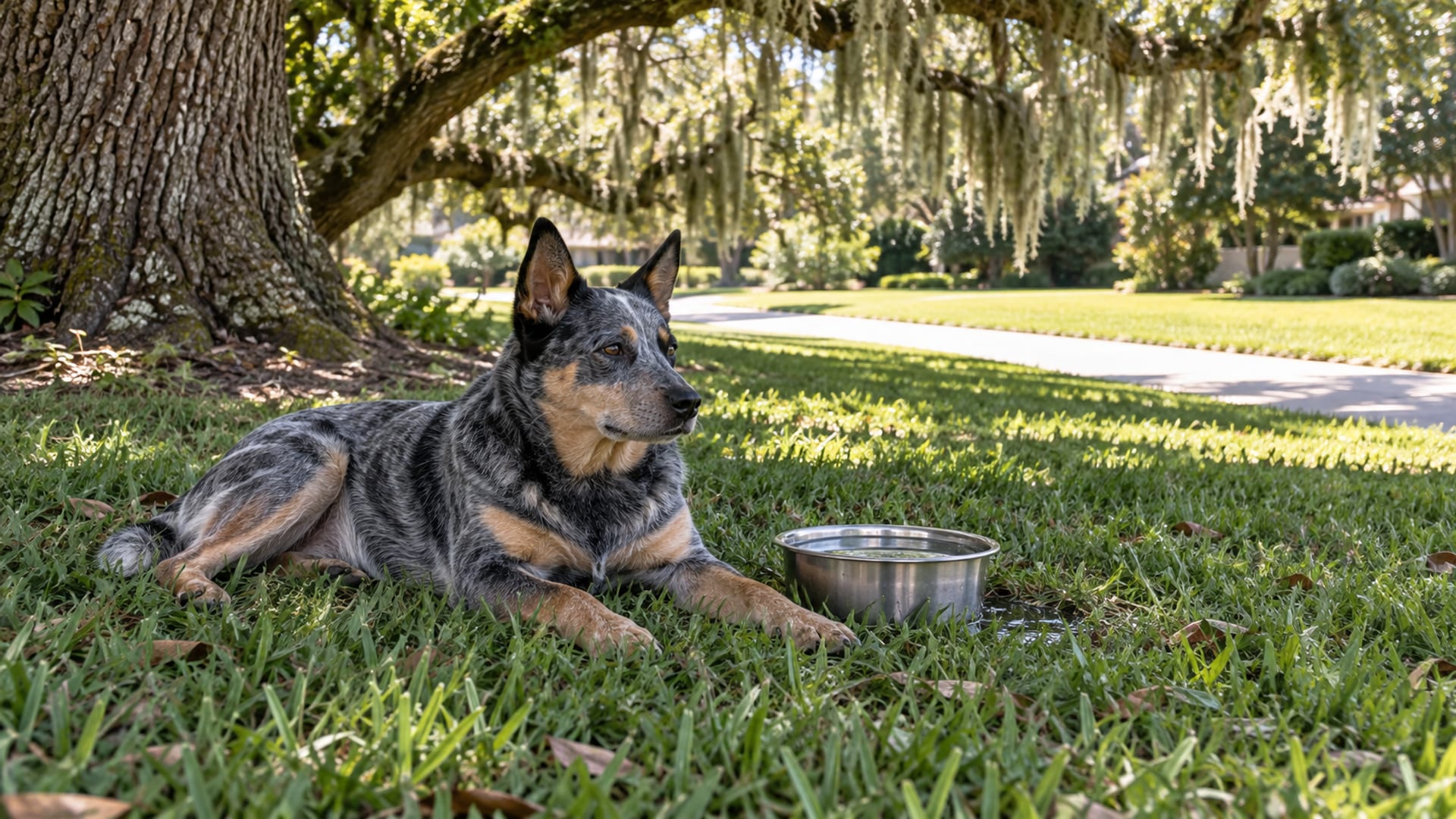
On a hot, humid Florida day, treat every outdoor service as a decision you make that morning, not a habit. Check each dog's risk, shorten or replace outdoor exercise, give shade, water and moving air, and bring dogs inside when their breathing, the pavement or the weather makes outdoor time unsafe. No single Florida temperature cutoff fits every dog. Excessive panting, trouble breathing, weakness, vomiting, confusion, seizures or collapse mean you call a veterinarian now. When heavy rain floods a yard or floor, close it, keep dogs away from standing water and electrical hazards, and follow your local emergency-management office before you reopen.
I build websites and do marketing for dog businesses; I'm not a veterinarian, lawyer or insurance agent, so confirm each safety and permit point below with the office or organization named beside it.
Key takeaways
Tap a card to bring it forward.
- No one temperature cutoff fits every dog; decide by heat, humidity, pavement, exertion and the individual dog.
- Humidity cuts the cooling a dog gets from panting.
- Pet Sitters International recommends most walks before 10 a.m. or after 4 p.m. where possible.
- Breathing trouble, heavy panting, weakness, vomiting, confusion, seizures or collapse: stop, cool spot, call a veterinarian.
- Close flooded yards and floors and reopen on local emergency-management instructions.
- Get a written weather policy accepted before summer service starts.
What to do today when heat, humidity or flooding makes outdoor time unsafe
This sequence draws on Pet Sitters International's hot-weather precautions and the Florida Division of Emergency Management, and it works for a solo walker or a daycare.
- Check heat, humidity, thunderstorm and flash-flood alerts before the first dog goes out.
- Screen each dog for age, breed, body condition, health and how used to the heat it is.
- Use the coolest practical part of the day and shorten the route.
- Carry water and know where the shade or cool rest spot is.
- Check the walking surface and pick grass when you can.
- Stop right away for heavy panting, breathing trouble, weakness, collapse, vomiting or confusion.
- Switch to indoor play or a potty-only visit when outdoor conditions are unsafe.
- Close any flooded yard, parking area or floor until someone has inspected it.
- Write down what you decided and tell the client the way your policy says you will.
A one-line note with the time, conditions and what you did instead protects everyone.
Why Florida humidity changes a dog's heat risk, and why one temperature does not fit every dog
VCA Animal Hospitals says panting is a dog's primary way of controlling body temperature; dogs have relatively few sweat glands, mostly in their footpads. Panting cools by evaporation, and Texas A&M veterinary guidance explains that humidity reduces evaporation. At about 85 percent relative humidity, it says, evaporative cooling is almost totally inhibited. That is a veterinary explanation, not a Florida legal limit, but it shows why a sticky 8 a.m. walk can go wrong when the thermometer looks fine.
Cornell University College of Veterinary Medicine calls heatstroke a life-threatening emergency caused by prolonged exposure to hot or humid temperatures or by strenuous exercise, and says all dogs are susceptible. Risk shifts with humidity, exertion, ventilation, shade, water, acclimation, breed, age and health, which is why one cutoff does not work.
Screen harder for higher-risk dogs: flat-faced (brachycephalic) dogs, which VCA says may show heat signs when temperature and humidity are only moderately raised, plus older dogs, puppies, obese dogs and dogs with heart or breathing disease. Put that on each dog's profile where every staff member sees it.
Tap or hover a row to highlight it.
| Figure | What it means | Source |
|---|---|---|
| FigureMost walks before 10 a.m. or after 4 p.m., where possible | What it meansScheduling advice, not Florida law | SourcePet Sitters International |
| FigureAbout 85% relative humidity | What it meansEvaporative cooling almost totally inhibited | SourceTexas A&M Veterinary Medicine |
| FigureBody temperature above 103°F | What it meansAbnormal; not a walking cutoff | SourceVCA Animal Hospitals |
| FigureBody temperature above 106°F | What it meansCommonly associated with heatstroke | SourceVCA Animal Hospitals |
When a walker should shorten, move or cancel a walk
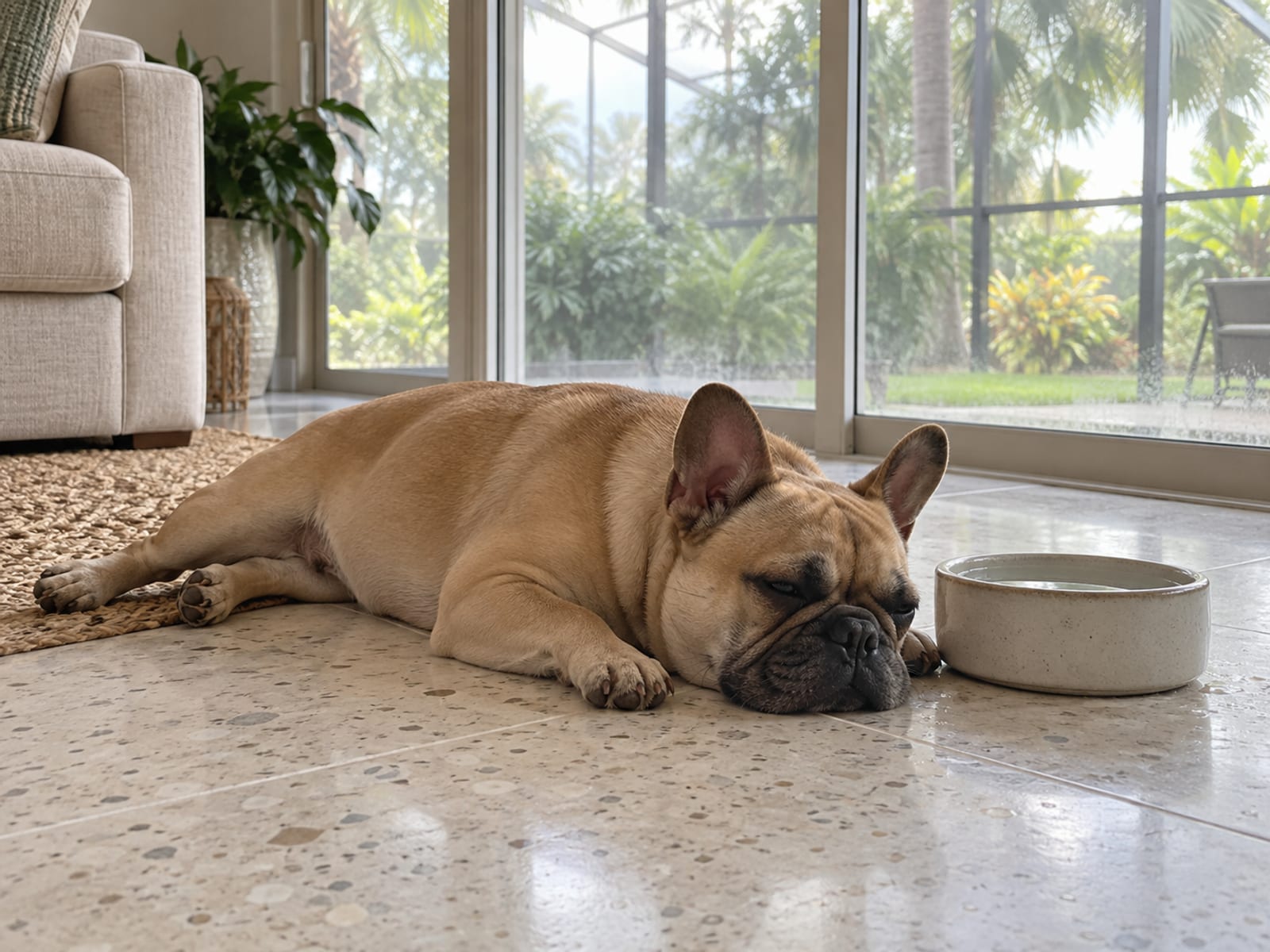
Timing is your first and cheapest tool. Pet Sitters International recommends that, where possible, you finish most walks before 10 a.m. or after 4 p.m., and replace walks with quick potty breaks and indoor play on the hottest days. Its July 2, 2025 summer guidance says walks may need to be shortened, replaced or rescheduled as temperatures rise. That is trade guidance, not state law, and it gives you a clear standard to point to when a client asks why the walk changed.
Then look down. The Florida Department of Health says asphalt can get hot enough to burn paws, recommends grass where possible, and calls shade and water essential. The five-second hand-on-pavement check is a practical habit, not a Florida legal standard. Our page on dog paw problems covers what to watch for afterward.
Watch the dog more than the clock. VCA says vigorous exercise and excitement can create heat risk even when the weather does not seem extreme, so a dog who wants to keep going is not a reason to keep going. For normal walk lengths, see how often to walk a dog.
One rule has no exceptions: no dog waits in a parked vehicle. The Florida Department of Health warns that cars heat quickly and that heatstroke can be fatal, and shade or cracked windows do not change that.
The signs that mean calling a veterinarian now, and what to do while you call
Cornell, VCA and PSI name these as signs that need immediate veterinary contact:
- Excessive or heavy panting, or trouble breathing
- A racing heart rate or excessive drooling
- Bright red, pale or otherwise abnormal gums
- Weakness, sluggishness or stumbling
- Vomiting or diarrhea, including bloody diarrhea
- Confusion, seizures, collapse or unconsciousness
When you see one, stop the activity, move the dog to a cool, shaded or air-conditioned spot and offer water. Call the veterinarian and the owner, then follow the veterinarian's instructions, including how to cool the dog and whether to drive in now. Your job is to get the dog to someone who can treat it, fast.
Before summer, collect each client's veterinary hospital and the nearest emergency hospital to your route or facility. The DogServ directory of veterinarians can help.
How a daycare runs outdoor play through a Florida summer
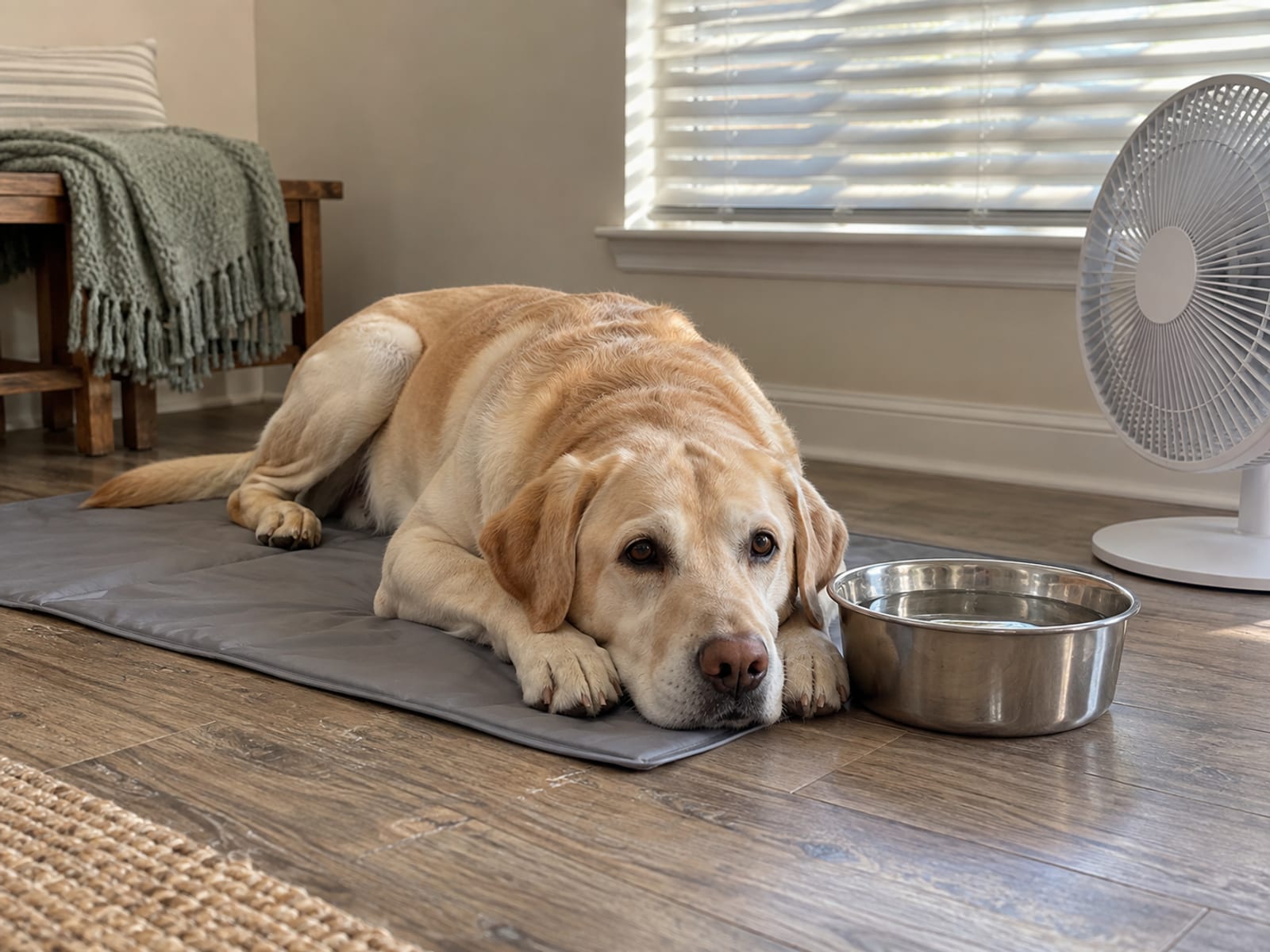
Daycare adds groups of excited dogs and long stretches outdoors, and VCA's point about excitement applies directly. Build the summer play policy around five things:
- Screening. Give higher-risk dogs shorter, calmer sessions, or keep them inside on hot days.
- Rest cycles. Schedule rest in shade or indoors, with water, instead of waiting for dogs to stop.
- Indoor play. Keep a climate-controlled room ready so moving inside is routine.
- Staff observation. Someone watches breathing, not just scuffles, and can end outdoor time.
- Ratios. Fewer dogs per handler means trouble gets noticed sooner.
The International Boarding and Pet Services Association encourages pet parents to ask whether premises are climate-controlled, whether staff are trained and on site, what the provider-to-pet ratio is and what emergency plans exist. Its heat-stress training manual covers heatstroke, heat exhaustion, cramps and sun safety. Answer those questions on your website, and log each day's call: the weather check, how long outdoor play ran and any dog pulled early.
What a grooming salon or mobile van changes in heat and humidity
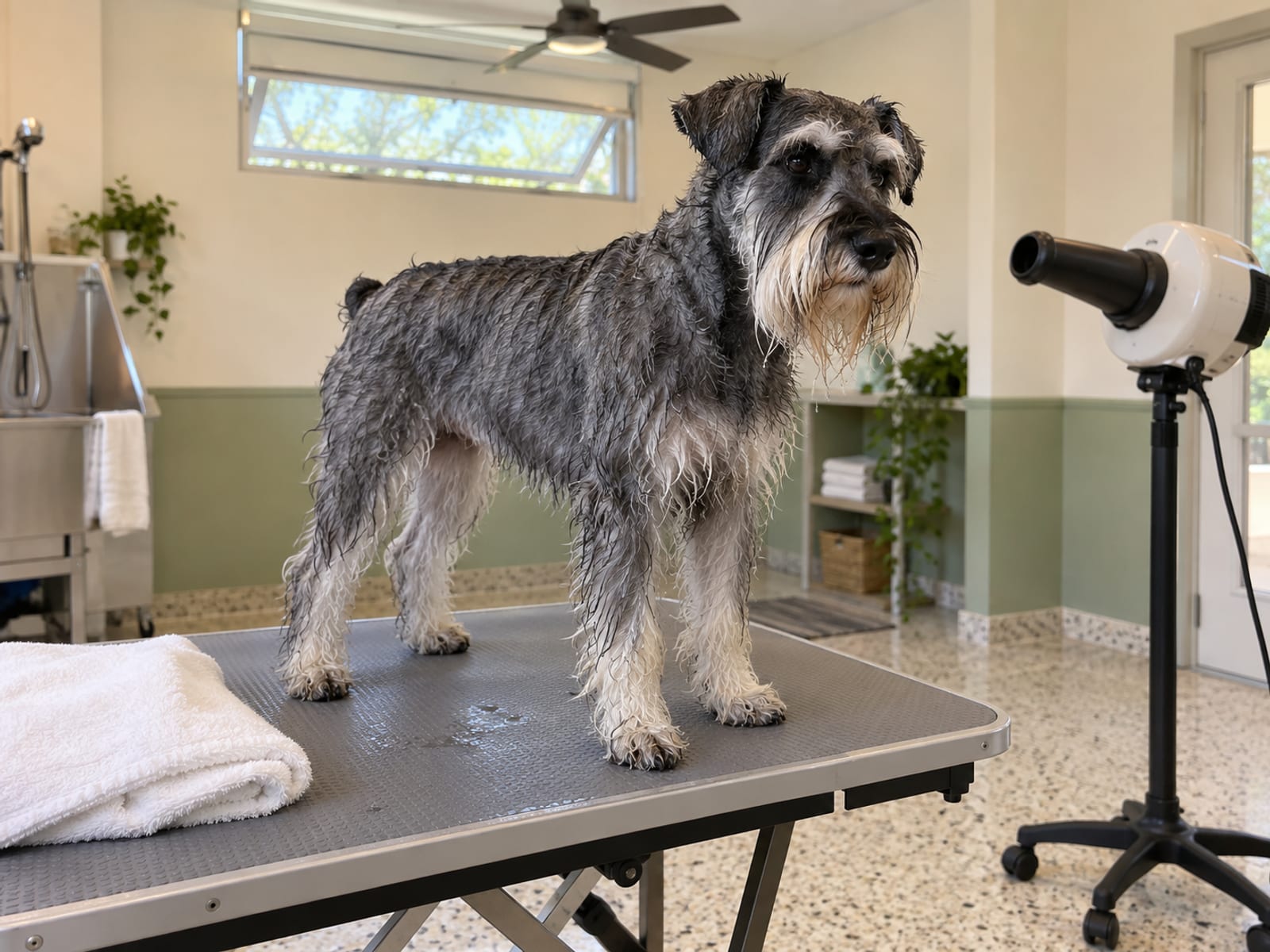
The AKC's National Core Professional Dog Grooming Educational Standards, reflecting standards developed by the Professional Pet Groomers and Stylists Alliance, say to run dryers at low heat, avoid concentrating heated air on one area, keep airflow moving, check pets often, check pets in drying enclosures every five to seven minutes, and keep a pet first-aid kit and emergency veterinary contacts on hand. The AKC's drying advice adds that heat can burn skin and that crate dryers call for caution, and VCA lists prolonged dryer exposure and poor ventilation among heatstroke risks.
Florida humidity slows drying, so a dog spends longer in a warm room or van. Improve ventilation, towel-dry first, avoid adding heat, keep air moving and stop if the dog shows distress. No dryer setting or drying time is safe for every dog, so do not promise one to a client.
Flooded yards, parking areas and floors, and lost power on a hot day
The Florida Division of Emergency Management lists floods and thunderstorms among the state's hazards, and its alerts include high heat, humidity, heavy rain and flash-flood risk. Heavy rain can make a yard unsafe while the building stays dry, cut off a parking lot or access road, and leave floors slippery. Floodwater can hide electrical, structural, sewage, debris and contamination hazards.
So, close the flooded area, keep dogs out of standing water, keep everyone away from wet electrical equipment, and check drainage before outdoor areas reopen. FDEM's business planning page says safety comes first on re-entry, businesses should follow local emergency-management instructions, and damage should be documented before repairs. Save your county emergency-management office and utility contacts now.
Lost power hits boarding and daycare hardest, because indoor cooling is the backup for unsafe outdoor conditions. The Florida Department of Environmental Protection says flooding and outages can damage equipment and disrupt service, recommends pre-staging supplies, equipment and fuel, and says to protect electrical panels from flooding. Treat backup power as a planning decision for your site, and ask your local building office whether a generator needs a permit. Have ready:
- A cooled, ventilated indoor area with water, bowls and fans
- A backup-power assessment for air conditioning, ventilation, lighting and phones
- Staff assignments for dog watch, owner calls and inspection
- A relocation plan, with the point at which dogs go home or move if cooling fails
Keep receipts for weather repairs and equipment; the IRS says business records should be backed by invoices and receipts. Ask your insurance agent whether your policy covers flood damage, business interruption and injury to a dog in your care; the Florida Department of Financial Services storm page explains limits on those coverages, and our dog business insurance page has more questions. Hurricane evacuation is a separate plan and is not covered here.
What your client weather policy should say, and how to get it agreed before summer
Give the policy before service starts and get written acceptance through your booking form, an emailed agreement or a signed page. A starting draft:
> Weather and facility-safety policy: Outdoor walks and play may be shortened, moved to a cooler time, replaced with a brief potty break and indoor activity, rescheduled or canceled when heat, humidity, pavement, thunderstorms, flooding, unsafe access, power loss or facility conditions make outdoor service unsafe. The business makes the safety decision using current conditions and the individual dog's age, breed, health, acclimation and behavior. The business will contact the client using the agreed method. The client agrees in advance to the listed indoor, rescheduling and cancellation options and provides an emergency contact and veterinarian. If a dog shows signs of heat-related illness, the business will stop activity, contact the client and seek veterinary guidance or emergency care as appropriate.
Add your notice method, the indoor service, your rescheduling window, refund or credit terms, the preferred veterinary hospital, permission to move the dog to a cool area, and flood closure terms. This is sample language, not legal advice; have a Florida lawyer review your version.
If some clients read Spanish first, offer the same policy in Spanish. The AVMA's Spanish pet first-aid brochure helps with vocabulary, and the Florida Department of Health offers Spanish emergency materials on flooding and electrical hazards.
Tap or hover a row to highlight it.
| English | Spanish |
|---|---|
| EnglishHeatstroke | SpanishGolpe de calor |
| EnglishHeat stress | SpanishEstrés por calor |
| EnglishShort potty break | SpanishPaseo corto para hacer sus necesidades |
| EnglishIndoor play | SpanishJuego dentro de casa |
| EnglishStanding water | SpanishAgua estancada |
| EnglishEmergency veterinarian | SpanishVeterinario de emergencia |
Which Florida office checks your business location
Location rules come from your city or county, not one statewide license, and they differ between cities and unincorporated county areas, zoning districts, and home-based and commercial sites.
Miami-Dade says a Certificate of Use confirms a business is allowed in its zoning district and must be obtained before opening in unincorporated Miami-Dade County; the business process letter may need to state boarding kennel numbers and grooming square footage. Its residential animal rules cap adult dogs on residential property.
Tap or hover a row to highlight it.
| Property size | Adult dogs allowed |
|---|---|
| Property sizeUnder 1 acre | Adult dogs allowed4 |
| Property size1 to 2 acres | Adult dogs allowed6 |
| Property size2 acres or more | Adult dogs allowed8 |
Orlando's mobile business guide treats pet sitting, walking and some grooming as mobile services, handled differently from a fixed site customers visit; zoning and the city's business tax receipt still need confirming. Both are local examples. Ask your own planning and zoning office:
- Is this activity allowed at this address, and do I need a certificate of use or a business tax receipt?
- Is my business a kennel, pet-care center, grooming salon, home occupation or mobile service?
- Are there limits on dog numbers, outdoor runs, noise or hours?
- Are drainage, floodplain or fire reviews required, and does a generator need a permit?
Questions about heat, humidity and flooding for Florida dog businesses
These answers cover walking temperatures, daycare on stormy days, flooded streets and permits.
What temperature is too hot to walk a dog in Florida?
Florida sets no single number for every dog. Judge heat and humidity together with sun, pavement, walk length and the dog's age, breed and health. If staff need a written trigger, tie it to conditions and dog risk.
How should a daycare handle heat and flooding on the same day?
Keep play indoors in a cooled, ventilated room and close any yard with standing water. If the power fails, switch to the cooling plan and its set point for calling owners or relocating dogs.
What should a walker do after a storm floods the streets?
Keep the dog out of standing water and skip flooded roads and lots. Offer a potty-only visit or indoor play, tell the client what changed, and follow local emergency-management notices before returning to the normal route.
Does Florida have one statewide permit for a dog daycare?
No. Zoning, certificate-of-use, business-tax and occupancy rules depend on your city or county, so ask the local planning office before you sign a lease.
Your next step
This week, write your weather policy, decide which calls staff can make on their own, and send it to every client for acceptance before the next heat wave.
When it is done, add your business to the DogServ directory and say plainly how you handle Florida heat and storms.
Sources
- American Kennel Club: AKC's drying advice
- American Kennel Club: AKC's National Core Professional Dog Grooming Educational Standards
- American Veterinary Medical Association: AVMA's Spanish pet first-aid brochure
- Cornell University College of Veterinary Medicine: Cornell University College of Veterinary Medicine
- floridadep.gov: Florida Department of Environmental Protection
- floridadisaster.org: business planning page
- floridadisaster.org: Florida Division of Emergency Management
- floridahealth.gov: Florida Department of Health
- floridahealth.gov: Florida Department of Health
- ibpsa.com: International Boarding and Pet Services Association
- irs.gov: IRS
- learn.ibpsa.com: heat-stress training manual
- miamidade.gov: Certificate of Use
- miamidade.gov: residential animal rules
- myfloridacfo.com: Florida Department of Financial Services storm page
- orlando.gov: business tax receipt
- orlando.gov: mobile business guide
- petsit.com: July 2, 2025 summer guidance
- petsit.com: Pet Sitters International's hot-weather precautions
- Texas A&M College of Veterinary Medicine: Texas A&M veterinary guidance
- VCA Animal Hospitals: VCA Animal Hospitals