
How to Start a Pooper Scooper Business: Equipment, Disposal Rules, Pricing and First Customers
By Cal Hewitt · Published
Business guides
Starting a pooper scooper business usually means choosing a small service area, checking your state and local registration and disposal rules, buying scoops, bags, gloves and leak-proof containers, arranging insurance, setting recurring and initial-cleanup prices, and finding customers close enough to form efficient routes. I'd begin with one neighborhood or ZIP-code cluster, confirm where commercial pet waste may be discarded, and check zoning, business-license, tax and insurance requirements with the offices that set them. Published weekly residential prices run from the high teens to the mid-$30s per visit, but those are customer charges, not what you take home.
Key takeaways
Tap a card to bring it forward.
- Start with one compact service area, so your drive time stays short and your routes stay tight.
- No single national license covers this work. The SBA says licenses, permits and fees depend on your activity and location.
- Household trash is not automatically a commercial disposal route. Ask your solid-waste authority before your first pickup.
- Weekly visits are priced at about $18 to $36 in published examples, with initial cleanups priced separately. Those are customer prices, not earnings.
- Wear gloves, wash your hands, and clean tools between yards. Never diagnose a dog or call a yard disease-free.
- General liability is commonly the first policy owners buy. Ask an insurer what else your operation needs.
What does it take to get started?
You need five things in place before the first customer: a small, workable service area, the local rules for your business, basic equipment, insurance, and a plan for finding your first neighbors who will pay for weekly service. The work is route-based and needs little equipment compared with a storefront, which is why many people look at it. It is also outdoor, repetitive, and physically unpleasant on some days, so be honest with yourself about that.
I'm not a lawyer, accountant, or insurance agent, so I point you to the office that decides each question instead of guessing. The SBA lists the startup-cost categories to plan for: equipment and supplies, licenses and permits, insurance, advertising, printed materials, a website, salaries and professional services. It does not publish one national startup total for a pooper scooper business, so build a local cost sheet with real quotes from your area.
What should you do this week?
Here is a first-week order that keeps you from buying things you can't use yet:
- Pick one compact service area, a neighborhood or a cluster of ZIP codes.
- List the local competitors and write down their published prices.
- Call your city or county licensing office.
- Contact the solid-waste authority and the sewer utility about disposal.
- Choose a business structure.
- Check DBA, EIN, state tax and zoning requirements.
- Get insurance quotes.
- Buy basic equipment.
- Write your service and access policies.
- Contact nearby prospects.
Equipment comes eighth on purpose. Calls to the licensing, zoning and solid-waste offices can change what you buy, where you park, and where the bags go.
On structure, the IRS says your business structure determines your federal tax treatment, and it names sole proprietorships, partnerships, corporations, S corporations and LLCs as common choices. An LLC is created under state law, and the IRS may treat a single-member LLC as a disregarded entity for federal income tax unless you make an election. Talk to a qualified tax professional before you choose. An EIN is required in some situations, including when you have employees, and a sole proprietor may still get one for banking or state tax purposes.
What equipment do you need?
The essentials are short: scoops, a rake, bags, gloves, sanitizer, handwashing supplies, leak-proof transport containers, vehicle liners, and weather protection. Quality, your vehicle, and your location change what you pay, so price each item locally.
Two choices matter more than the brand of scoop. First, containers: waste has to stay contained in the vehicle without leaks or odor, so use dedicated containers with liners and keep them away from your clean supplies. Second, separation: keep clean and used equipment apart from the first day, because that habit is hard to add later.
Where can pet waste go?
Plan around this default: collect waste in a leak-proof bag, put it in an approved trash receptacle or disposal facility, and keep it out of storm drains, recycling, compost and yard-waste carts unless your local authority gives a different route in writing. Rules differ from place to place, so three documented examples follow. They are examples, not national rules.
- New York City: the Department of Sanitation says dog or animal waste may go in household trash, be flushed down the toilet, or go in a tied bag in a public litter basket. It does not allow animal waste in curbside composting or recycling.
- Seattle: Seattle Public Utilities says to scoop, bag and trash dog waste, and not to compost or bury it. That includes waste in a compostable or biodegradable bag.
- King County, Washington: the county's solid-waste page allows animal waste in a securely wrapped, leak-proof bag in household or public garbage. It says flushing depends on your sewer connection and local sewer rules, and it is not recommended for septic systems. It also notes that home composting and burial may not destroy pathogens or parasite worms.
Here is the part that matters most for a business. Household trash is not automatically a commercial disposal authorization. Ask your county or city solid-waste office and your disposal facility whether a commercial operator may use residential containers, public cans, transfer stations or landfill services. Get the answer in writing if you can, and turn it into a written disposal procedure for your business.
Storm drains are never a disposal route. Pet waste can carry pathogens and nutrients into waterways. If a customer has a septic system, ask the county environmental health or onsite-sewage office before anyone flushes anything.
How do you keep contamination from spreading between yards?
The CDC says animal feces can carry germs, and animals can look healthy while carrying them. It says Giardia can spread through contaminated feces, soil, water, surfaces and objects, and it recommends washing your hands after touching pets or their feces and bagging and discarding poop. Here is what that looks like on a route:
- Wear disposable or washable gloves.
- Keep contaminated gloves away from your face, food, phone, vehicle controls and clean supplies.
- Bag waste securely and keep it contained during transport.
- Wash your hands after handling feces, pets, tools, bags or dirty supplies.
- Clean and disinfect reusable tools between yards, following the product label.
- Keep clean and used equipment separate, and use dedicated waste containers with liners.
- Clean contaminated equipment outdoors where practical.
One caution from the CDC: bleach and quaternary ammonium products will not kill Giardia in soil or grass, so don't treat a customer's lawn with them as a Giardia control.
If a customer tells you the dog has diarrhea, known Giardia, parvo or another infectious illness, ask the owner to follow the veterinarian's instructions, then decide whether to postpone the visit or follow a specialized sanitation protocol. Don't diagnose a dog, and never tell a customer their yard is disease-free. If you see an unusual hazard, tell the owner and write down the limit on your service. For the health side, point customers to Giardia in dogs and dog diarrhea.
How should you price the service?
Price by how often you visit, the dog count, the size of the yard, how much waste has built up, how easy the access is, and what disposal costs you. Published price pages from pet waste services in the US give you a market snapshot. They are customer prices, not earnings.
Tap or hover a row to highlight it.
| Data point | Published figure | Limitation |
|---|---|---|
| Data pointWeekly service, one dog | Published figure$18 to $25 in examples | LimitationCustomer prices from individual businesses |
| Data pointWeekly service, multiple dogs | Published figureAbout $20 to $35 in examples | LimitationLocal pricing varies |
| Data pointInitial-cleanup fee | Published figure$10 to $45 in examples | LimitationDepends on accumulation and scope |
| Data pointOne-time cleanup | Published figureAbout $60 to $129 starting prices | LimitationStarting prices, not national averages |
| Data pointBLS animal care and service workers | Published figure$17.06 mean hourly, $35,490 mean annual (May 2024) | LimitationEmployee occupation data, not business income |
| Data pointBLS animal caretakers | Published figure$16.71 mean hourly, $34,750 mean annual (May 2024) | LimitationEmployee occupation data, not business income |
Look at the BLS rows again. The Bureau of Labor Statistics numbers describe employees in occupational categories. They are not a forecast of what a self-employed scooper clears after fuel, insurance, disposal, taxes, supplies and unpaid drive time.
Services commonly sell weekly, twice-weekly, every-other-week, monthly, one-time and initial-cleanup service, with add-ons such as deodorizing, sanitizing and pet-waste stations. Quote an initial cleanup separately when heavy buildup adds real labor. Set a minimum charge for isolated stops, and before you set your own rates, compare two or three local ones. Then work out your real cost per route: visit time, travel, disposal, supplies, insurance, taxes, and the margin you need.
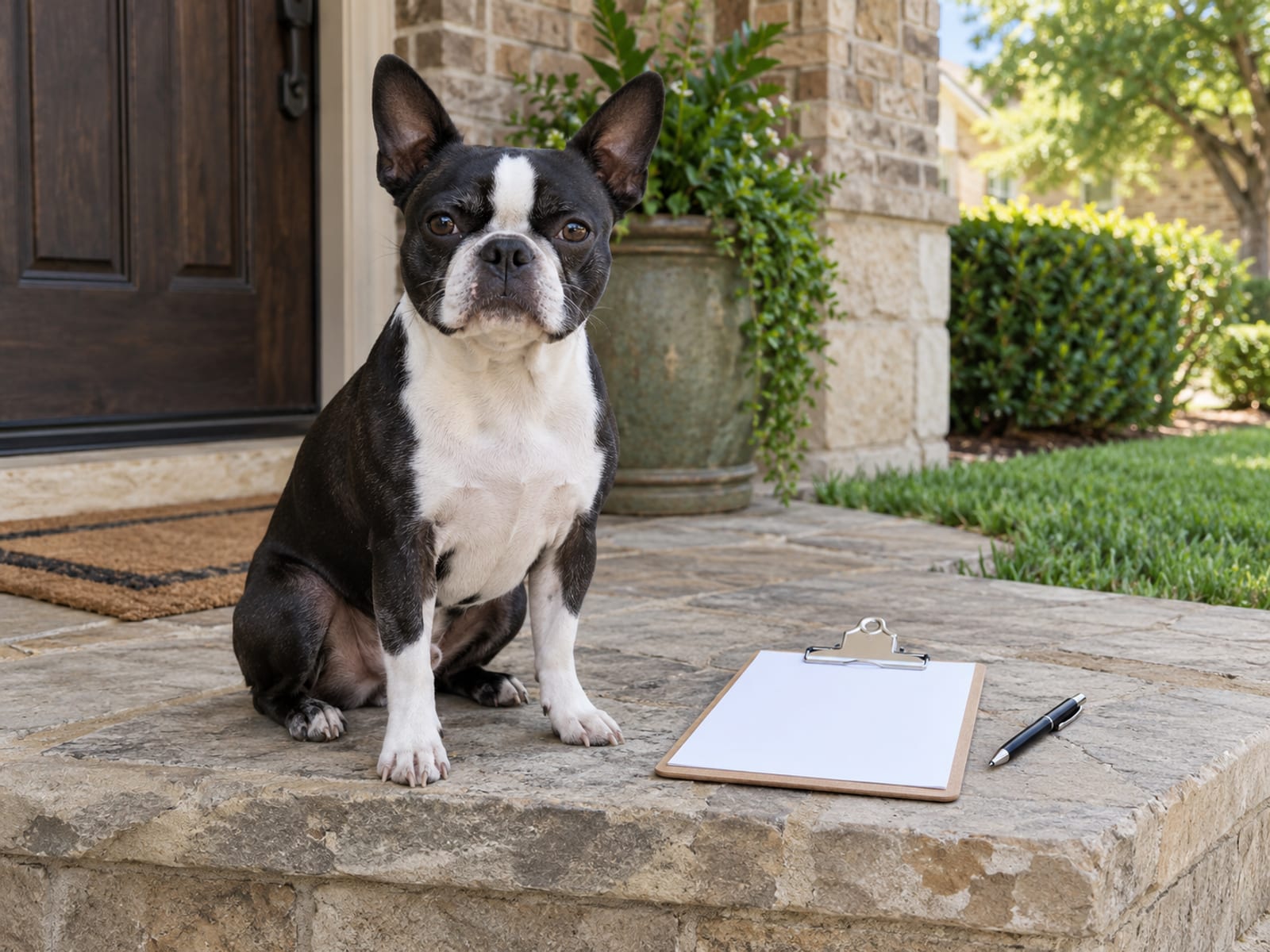
Which licenses, taxes, zoning and insurance apply, and who sets them?
It depends on where you live, so ask the office that sets each rule. The SBA says your location affects taxes, zoning and regulations, local governments determine many registration, licensing and permitting requirements, and fees vary by activity and location. These are the calls to make:
- State Secretary of State: entity and assumed-name (DBA) registration.
- State department of revenue or taxation: state tax registration, and whether your service is taxable.
- City clerk or business-license office: your local business license.
- City or county planning and zoning office: home occupation, storage, vehicle parking and signage rules.
- County or city solid-waste department: commercial disposal, trash-container use, transfer stations and landfill acceptance.
- Sewer utility: flushing rules.
- County environmental health or onsite-sewage office: septic restrictions.
- State labor department: workers' compensation and employee requirements.
- Licensed insurance agent or insurer: coverage and certificates of insurance.
On insurance, one insurer's pet care page describes general liability as the coverage pet-service businesses commonly buy first, for risks such as injury to a non-employee and property damage, subject to each policy's limits and exclusions. Depending on how you operate, you may also ask about commercial auto if you use a vehicle for work, tools and equipment coverage, workers' compensation when you have employees, and professional liability. Apartment, HOA and other commercial contracts often ask for a certificate of insurance or additional-insured status. Insurance doesn't replace safe procedures, and it doesn't cover every pet, waste, vehicle, pollution, employee or property claim. Ask an insurer or licensed agent about coverage for pet waste removal and waste transport specifically. For another view of how coverage works in one state, see how to start a pooper scooper business in Texas, and keep in mind that Texas requirements are Texas requirements.
How do you find customers and build a tight route?
Start inside a small boundary and let route density guide both your marketing and your prices. Every stop that sits next to another stop makes your day more efficient. These channels are worth working, though none of them guarantees customers or income:
- Build a complete Google Business Profile.
- Publish a page for each service area you actually serve, using plain phrases like "pet waste removal," "dog poop cleanup" and "pooper scooper service."
- Ask happy customers for reviews, without offering misleading incentives.
- Contact apartment managers, HOAs, property managers, dog parks, vet hospitals, groomers, trainers, boarding facilities and real-estate professionals.
- Use door hangers or direct mail only where local rules allow it.
- Offer clear weekly service and a separately priced initial cleanup.
- Ask every customer whether a neighbor needs service.
- Group service days by neighborhood, and track drive time, service time, fuel, disposal and cancellations.
- Offer bilingual pages and intake instructions where your market calls for them. Spanish speakers may search for "recolección de desechos de mascotas" or "recoger caca de perro."
Write your service policies before you need them. Cover gate access, dogs in the yard, weather, cancellations, heavy buildup and payment.
What do commercial customers such as apartments, HOAs and dog parks expect?
Commercial work is usually quoted by property size, pet population, frequency and scope, so there is no single rate to copy. A property manager typically wants to see these items in the agreement:
- The scope of work and the service frequency.
- Access arrangements.
- How waste is handled and where it goes.
- Service records.
- Maintenance of pet-waste stations, if they are part of the job.
- A weather policy and cancellation terms.
- A certificate of insurance when the contract asks for one.
Put the disposal answer from your solid-waste office into the agreement. A manager who sees that you know where the waste goes has fewer reasons to hesitate.
Questions people ask about starting a pooper scooper business
Is a pet waste removal business profitable?
It can be, but published prices alone can't tell you. Weekly prices are what customers pay, and your profit depends on route density, fuel, disposal, insurance, taxes, supplies and unpaid drive time. Track revenue, mileage and service time from your first week so you can see your real numbers.
How much should you charge to pick up dog waste?
Published weekly prices run about $18 to $36 per visit, with initial cleanups priced separately at about $10 to $45 and one-time cleanups starting around $60 to $129. Compare local rates, then adjust for dog count, yard size, buildup, access and travel. Quote a heavy first cleanup on its own.
How much do people make doing it?
Nobody can promise a figure, because customer prices are not earnings. The BLS reports a May 2024 mean of $17.06 per hour, or $35,490 per year, for animal care and service workers, and that describes employees, not business owners. Your own income depends on your costs and how full your routes are.
Can I put collected waste in a customer's trash can?
Only if the customer allows it and local waste rules permit it. Write a disposal policy and share it before service begins.
What is your next step?
Pick one neighborhood today and call your city or county solid-waste office with a single question: where may a commercial operator put bagged pet waste? That answer shapes your costs and your routes more than any piece of equipment. If it helps to talk through your first listing or website, contact DogServ and I'll point you the right way.
Sources
- bls.gov: Bureau of Labor Statistics
- cdc.gov: CDC
- info.kingcounty.gov: solid-waste page
- irs.gov: EIN
- irs.gov: IRS
- irs.gov: IRS
- nextinsurance.com: pet care page
- nyc.gov: Department of Sanitation
- sba.gov: SBA
- sba.gov: SBA
- seattle.gov: Seattle Public Utilities