

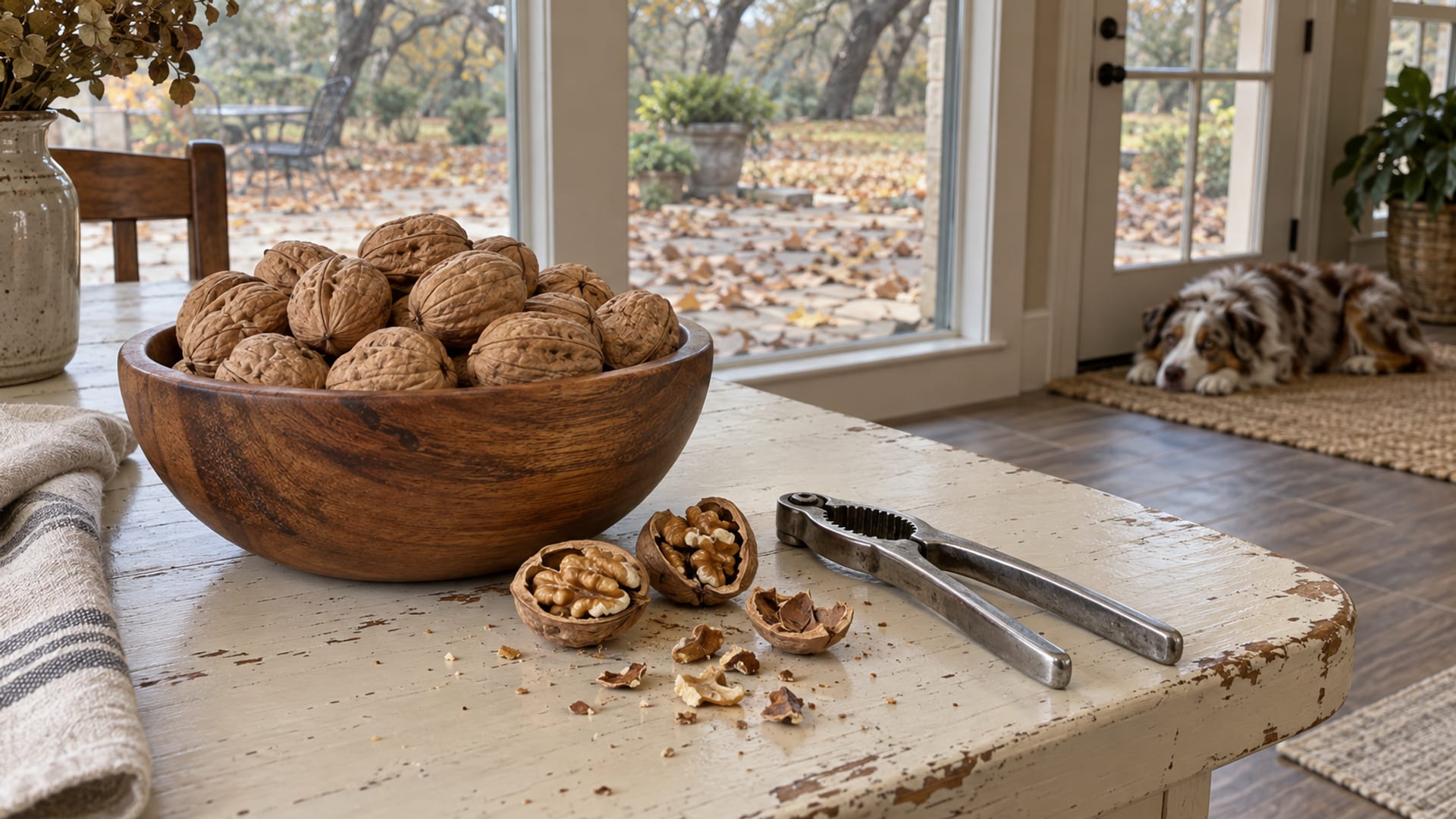
Walnuts are best kept away from dogs. One or two plain English walnuts from the grocery store are unlikely to do harm, according to the American Kennel Club, but walnuts are fatty, easy to choke on, and prone to a mold that can poison a dog. Black walnuts are a separate concern: the ASPCA lists the black walnut tree as toxic to dogs and says moldy nuts or hulls can cause tremors and seizures.
If your dog ate a piece of fresh, shelled English walnut, watch for choking, vomiting or diarrhea. If the walnuts came from under a tree, looked old or moldy, were black walnuts, still had shells or hulls, or you cannot tell how many were eaten, call your vet or a poison line now.
Key takeaways
Tap a card to bring it forward.
- One or two plain English walnuts are unlikely to harm a dog, but they are not a treat to offer.
- Moldy walnuts can carry toxins that cause tremors and seizures, often within a few hours.
- Black walnuts and their green hulls are toxic to dogs, according to the ASPCA.
- Shells and whole nuts can choke a dog or block the gut, especially in small dogs.
- Walnuts from under a tree are the riskiest kind: you rarely know their age, species or mold.
Your dog ate walnuts: what to do now
Tap or hover a row to highlight it.
| What your dog ate | What to do |
|---|---|
| What your dog ateA piece or two of fresh, shelled English walnut | What to doWatch for choking, vomiting or diarrhea. Call if your dog is small or unwell. |
| What your dog ateSeveral walnuts, or you are not sure how many | What to doCall your vet. |
| What your dog ateWalnuts in the shell, or shell pieces | What to doCall. Shells can choke or lodge in the gut. |
| What your dog ateWalnuts from under a tree, or from compost or trash | What to doCall now, even if your dog seems fine. |
| What your dog ateOld, dark, soft or moldy walnuts | What to doCall now. Do not wait for signs. |
| What your dog ateBlack walnuts or green hulls | What to doCall now. |
| What your dog ateWalnut brownies, cookies or bread | What to doCheck the recipe for chocolate, raisins or xylitol, then call. |
| What your dog ateTrembling, twitching, wobbling or a seizure | What to doGo to an emergency vet now. |
Pet Poison Helpline advises calling them or getting to a vet right away if you think your pet ate something potentially toxic, and moldy nuts are on its list. Tell the vet what kind of walnuts they were, how many, where they came from, and when. Hold off on home treatments until you have spoken to someone.
English walnuts, black walnuts, hulls and mold
Tap or hover a row to highlight it.
| Type or form | Risk | Why |
|---|---|---|
| Type or formFresh, shelled English walnut | RiskLower | WhyNot poisonous in itself, but fatty and a choking risk |
| Type or formEnglish walnut in the shell | RiskHigher | WhyThe hard shell can choke or block the gut |
| Type or formMoldy or rotting walnuts, any kind | RiskHighest | WhyMold toxins that cause tremors and seizures |
| Type or formBlack walnut nuts | RiskHigh | WhyListed as toxic to dogs by the ASPCA |
| Type or formBlack walnut green hulls | RiskHigh | WhyMoldy hulls can cause tremors and seizures (ASPCA) |
| Type or formWalnuts from under a tree | RiskHigh | WhyAge, species and mold are unknown |
| Type or formWalnut baked goods and spreads | RiskDepends on the recipe | WhyFat, sugar, and sometimes chocolate, raisins or xylitol |
The mold is the main danger. The Merck Veterinary Manual names moldy walnuts as a source of tremorgenic mycotoxins, toxins made by *Penicillium* molds that attack a dog's nervous system. Merck adds that there is no reliable dose for these toxins, and you cannot judge the toxin in a nut by looking at it. A walnut that has sat in wet leaves, in compost or at the back of a cupboard is the kind to worry about.
Black walnut has its own record. A study of 93 dogs exposed to black walnut found that the nuts and hulls most often caused vomiting, while exposure to the wood was tied more to nerve and muscle signs. The ASPCA lists the toxic principle as unknown.
Sharing walnuts with your dog
No veterinary source gives a walnut serving for dogs, and the AKC advises against feeding them. If your dog already gets nuts from your hand, plain unsalted peanuts are a simpler option in small amounts, and that page covers how to serve them.
Keep walnuts sealed and stored dry, and throw out any that look dark, shriveled or fuzzy where your dog cannot dig them back out. In the fall, rake under walnut trees. The AKC's article on tree nuts notes that autumn brings heaps of fallen nuts, and some years bring far more than others.
Signs to watch for, and how soon
From moldy walnuts. Merck says signs can begin within 1 to 2 hours or within several hours. A New Zealand case report describes a dog that started trembling about 2 to 3 hours after eating moldy walnuts. Look for:
- vomiting and drooling
- restlessness, or jumping at touch or sound
- muscle twitching and trembling
- a wobbly walk or flicking eyes
- fast breathing, a racing heart and overheating
- seizures
Mild cases may tremble for hours to days. Merck notes that recovery usually takes days but can take weeks, and a few dogs have kept a wobbly gait for months or longer. A review of 54 dogs poisoned after eating walnuts found that most did well with veterinary treatment, which is the reason to get there fast.
From too many plain walnuts. Vomiting, diarrhea and belly pain, and pancreatitis in some dogs, since walnuts are high in fat.
From a shell or whole nut. Gagging or choking at first, then repeated vomiting, belly pain, not eating or straining to pass stool if it lodges further down.
"My dog has eaten walnuts off the ground for years"
That can be true, and plenty of dogs pick through walnuts under a tree every fall and never get sick. What those years cannot tell you is what the next pile holds. The toxin comes from mold, and mold depends on the weather, how long the nuts have lain there and what grew on them. A dog that ate fresh windfalls last year can find a batch of rotting ones this year. The amount, the size of the dog, and whether shells went down change the picture too, and trembling can start hours after the snack. When the walnuts came off the ground, call.
Walnut foods and walnut look-alikes
- Walnut brownies and cookies: check for chocolate first. Can dogs eat chocolate? covers it.
- Walnut bread and fruit-and-nut loaves: may contain raisins. See can dogs eat grapes?
- Walnut butter, oil, flour and milk: processed products with no dog safety data. Read the label for xylitol, salt and chocolate.
- Candied or spiced walnuts: sugar, salt and seasonings on top of the fat.
- Pecans: a different tree with similar fat, shell and mold risks. See can dogs eat pecans?
- Mixed nuts and trail mix: may include macadamias. Can dogs eat nuts? covers which nuts matter most.
- Acorns: another fall yard nut. See can dogs eat acorns?
- Black walnut wood shavings: the ASPCA reports that swallowing black walnut shavings can cause a wobbly walk. Keep dogs off black walnut mulch and sawdust.
Check what you learned
Quick check
Questions about dogs and walnuts
My dog ate one English walnut. Is that an emergency?
Usually not. The AKC says one or two are unlikely to cause harm. Watch for choking, vomiting or diarrhea, and call if the walnut was moldy, black, still in its shell, or your dog is small.
Are black walnuts poisonous to dogs?
Yes. The ASPCA lists black walnut as toxic to dogs, and moldy nuts or hulls can cause tremors and seizures. Call your vet if your dog ate any.
Can walnuts cause seizures in dogs?
Moldy walnuts can. The mold makes toxins that attack the nervous system, and seizures can follow within hours. Fresh English walnuts are not expected to cause seizures.
What if my dog ate walnuts from the yard?
Call your vet or a poison line. Walnuts from the ground may be moldy, may be black walnuts, and often come with shells or hulls.
How long do walnut tremors last?
Mild tremors can last hours to days. Merck says most dogs recover over days, sometimes weeks, and a few keep a wobbly walk for longer.
Can dogs eat walnut shells?
No. Shells can choke a dog or block the gut, and shells from the ground can carry mold.
Sources
Checked September 25, 2026.
- American Kennel Club, Can Dogs Eat Walnuts?
- American Kennel Club, Can Dogs Eat Acorns and Other Tree Nuts?
- ASPCA Animal Poison Control Center, Black Walnut
- Merck Veterinary Manual, Tremorgenic Neuromycotoxicosis in Dogs
- Pet Poison Helpline, Moldy Food (Mycotoxins)
- Journal of Veterinary Diagnostic Investigation, Clinical Signs Associated with Ingestion of Black Walnut Tree Wood, Nuts, and Hulls in Dogs: 93 Cases
- New Zealand Veterinary Journal, Presumptive Tremorgenic Mycotoxicosis in a Dog in New Zealand, after Eating Mouldy Walnuts
- PubMed, Mycotoxin Intoxication in 54 Dogs after Ingestion of Walnuts