
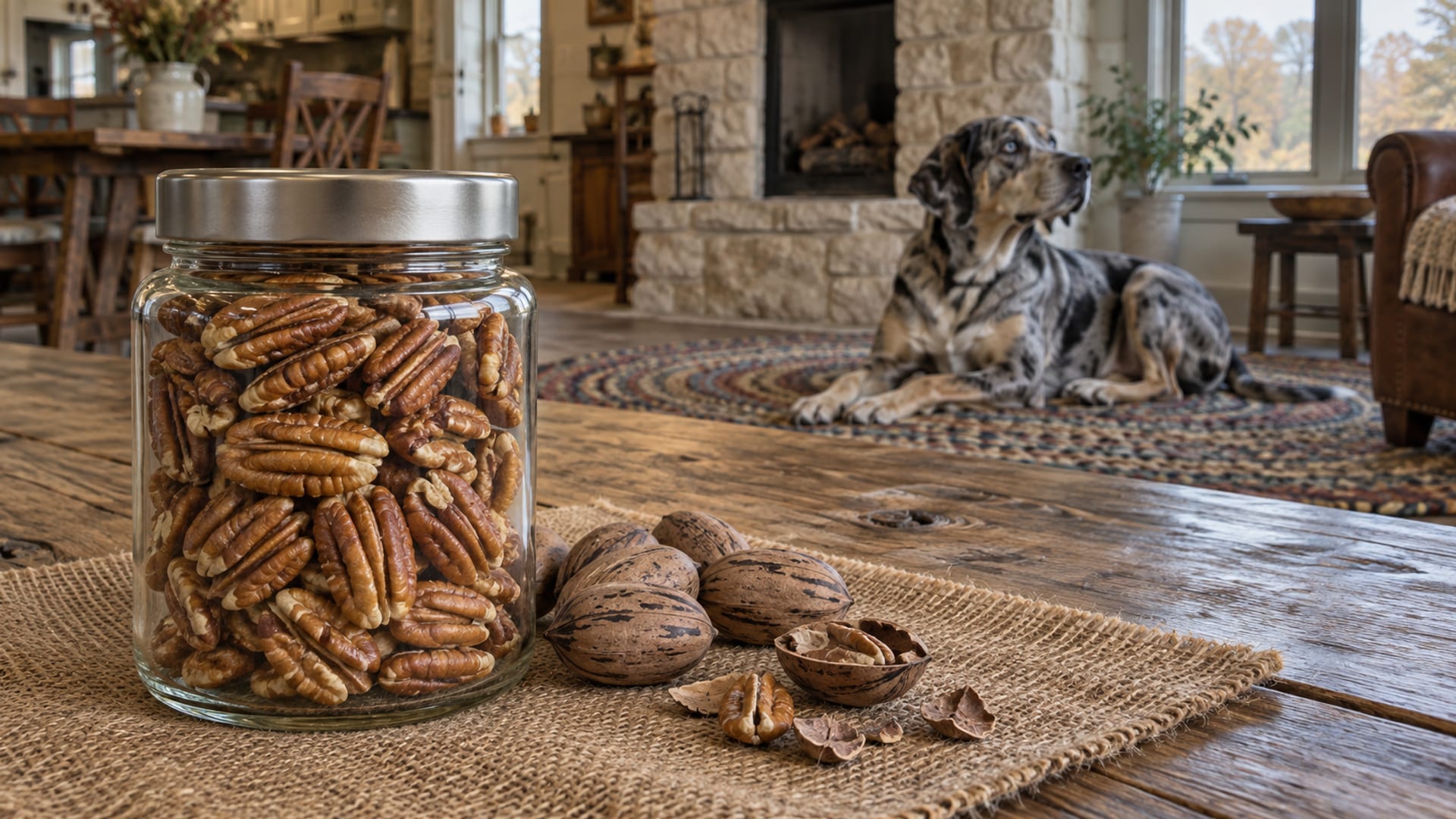
Pecans are best kept off your dog's menu, though one or two plain pieces are unlikely to cause a major problem, according to the American Kennel Club. The worries are the fat, the hard shells, and mold on old or fallen nuts, which can make a dog seriously ill.
If your dog just ate pecans, clear away the rest and work out what they got: how many, whether shells went down, whether the nuts came off the ground or out of a pie. The AKC's chief veterinary officer recommends calling a vet right away after any pecan snack, even a small one, and an emergency clinic if your own vet is closed.
Key takeaways
Tap a card to bring it forward.
- Pecans are fatty, and a fatty snack can upset a dog's stomach or set off pancreatitis.
- Shells and whole nuts can choke a dog or block the gut, especially in small dogs and puppies.
- Moldy, damp or fallen pecans can carry toxins that cause tremors, seizures or liver damage.
- Tremors from moldy nuts can start within 1 to 2 hours.
- Pecan pie, pralines and candied pecans add sugar, butter and sometimes chocolate or raisins.
My dog ate pecans: what to do now
Tap or hover a row to highlight it.
| What your dog ate | What to do |
|---|---|
| What your dog ateOne or two plain, fresh pecan pieces | What to doCall your vet for advice and watch for vomiting or diarrhea. |
| What your dog ateA handful or more, or you are not sure how many | What to doCall your vet now. |
| What your dog ateWhole pecans in the shell, or shells | What to doCall now. Shells can choke or lodge in the gut. |
| What your dog atePecans from under a tree, or anything old or moldy | What to doCall now, even if your dog seems fine. |
| What your dog atePecan pie, pralines, cookies or candied pecans | What to doCheck the recipe or label for chocolate, raisins or xylitol, then call. |
| What your dog ateTrembling, wobbling or a seizure after any nut | What to doGo to an emergency vet now. |
Have your dog's weight ready, plus what they ate, how much and when. Bring the package or a few of the nuts if you go in. Leave vomiting and home remedies to the vet's instructions.
Plain, shelled, fallen or baked: which pecans are riskier
Tap or hover a row to highlight it.
| Form | Risk | Main concern |
|---|---|---|
| FormPlain shelled pecan, fresh | RiskLower | Main concernFat; no safe serving is published |
| FormWhole pecan in the shell | RiskHigher | Main concernChoking and gut blockage |
| FormFallen, damp, old or moldy pecans | RiskHighest | Main concernMold toxins that affect the liver or nerves |
| FormRoasted, salted or spiced pecans | RiskHigher | Main concernFat plus salt and seasonings |
| FormCandied pecans, pralines, brittle | RiskHigher | Main concernSugar and butter, and hard pieces |
| FormPecan pie and baked goods | RiskDepends on the recipe | Main concernFat, sugar, and sometimes chocolate or raisins |
| FormPecan flour, oil or butter | RiskUnknown | Main concernNo dog safety data; check other ingredients |
Fat is the everyday problem. The AKC notes that nuts are high in fat, and a rich snack can bring on vomiting, diarrhea or pancreatitis, especially in a dog that has had pancreatitis before.
Mold is the serious one. The U.S. Food and Drug Administration explains that some molds make aflatoxins, which damage the liver and can kill a pet, and that early liver injury may show no signs at all. The Merck Veterinary Manual lists moldy nuts among the foods that can carry tremorgenic mycotoxins, a different group of mold toxins that attack the nervous system. You cannot see how much toxin a nut holds, and Merck notes there is no reliable dose for these toxins, so any nut that looks old, soft, dark or fuzzy counts.
Sharing pecans with your dog
No veterinary source gives a pecan serving for dogs, and the AKC's advice is not to give them. If you want a crunchy treat to share, pick one made for dogs or a plain food from a safer list, such as plain unsalted peanuts.
If you bake with pecans, keep the bag sealed and up high. The FDA's page on mycotoxins ties mold growth to temperature, humidity, rain and how food is stored, so a damp bag or a nut that has sat for months deserves suspicion.
Signs to watch for, and when they show up
What you see depends on what went wrong.
Too much fat. Vomiting, diarrhea, belly pain, a poor appetite and tiredness. Pancreatitis can follow, and it needs a vet.
A stuck shell or nut. The AKC's guide to intestinal blockage lists repeated vomiting, not eating, belly pain, tiredness and straining or not passing stool. A blockage can need surgery.
Mold toxins that affect the nerves. Merck says signs can begin within 1 to 2 hours or after several hours: vomiting, drooling, trembling, being jumpy or sensitive to touch, a wobbly walk, a racing heart, overheating and seizures. With treatment, many dogs recover over days, but severe cases can be fatal, and some dogs have been left with a wobbly gait for months or years.
Aflatoxin and the liver. The FDA lists sluggishness, not eating, vomiting, diarrhea, yellow gums or eyes, bruising and bleeding. These can come on gradually, which is why a known moldy-nut meal is worth a call before any sign shows.
"My dog eats pecans from our yard every fall and is fine"
Plenty of dogs snack under pecan trees without trouble, and yours may be one of them. What changes from one fall to the next is the nuts themselves. A wet season, a pile of old nuts under the leaves, or a day when your dog eats far more than usual can turn the same habit into a mold exposure or a shell stuck partway through. A smaller dog or a new puppy takes on more risk from the same number of nuts. The AKC's piece on tree nuts points out that fall brings a flood of fallen nuts, and some years bring far more than others. Raking under the tree is the simplest fix.
Pecan pie, pralines and other pecan foods
- Pecan pie: butter and sugar, and some recipes add chocolate. See can dogs eat chocolate? if there was any in it.
- Pralines, brittle and candied pecans: sugar and butter in hard pieces.
- Trail mix and holiday nut mixes: may include raisins or macadamias. Can dogs eat grapes? covers raisins, and can dogs eat nuts? covers the other nuts.
- Butter pecan ice cream and cookies: fat and sugar, and possibly xylitol in sugar-free versions. Read the label.
- Pecan butter and spreads: check for xylitol, salt and chocolate.
- Hickory nuts: pecans belong to the hickory family, but not every hickory nut is a pecan. If your dog ate nuts from a yard tree, find out what tree it is.
- Bitter pecan (water hickory): the ASPCA lists this tree as non-toxic to dogs. Its nuts still bring the same shell and mold risks.
- Walnuts and acorns: yard nuts with their own risks. See can dogs eat walnuts? and can dogs eat acorns?
Check what you learned
Quick check
Questions about dogs and pecans
Can dogs eat one pecan?
One or two plain pieces are unlikely to cause a major problem, according to the AKC. That is not a serving, and the AKC's vet still recommends a call after any amount.
What if my dog ate pecans from the yard?
Call your vet. Fallen nuts may be moldy, the shells can cause a blockage, and you rarely know how many went down.
Can pecans cause seizures in dogs?
Moldy pecans can. Merck lists moldy nuts as a source of mold toxins that cause tremors, a wobbly walk and seizures, sometimes within 1 to 2 hours.
Can pecan pie make a dog sick?
Yes. It is rich in fat and sugar, and some recipes include chocolate or other risky ingredients. Check the recipe and call your vet.
Are pecans bad for dogs with pancreatitis?
Yes. Pecans are high in fat, and a dog that has had pancreatitis should not get fatty nuts or pecan desserts.
Can dogs eat pecan shells?
No. Shells can choke a dog or block the gut, and shells from the ground may carry mold as well.
Sources
Checked September 25, 2026.
- American Kennel Club, Can Dogs Eat Pecans?
- American Kennel Club, Can Dogs Eat Acorns and Other Tree Nuts?
- American Kennel Club, Intestinal Blockage in Dogs
- U.S. Food and Drug Administration, Aflatoxin Poisoning in Pets
- U.S. Food and Drug Administration, Mycotoxins
- Merck Veterinary Manual, Tremorgenic Neuromycotoxicosis in Dogs
- ASPCA Animal Poison Control Center, Bitter Pecan