
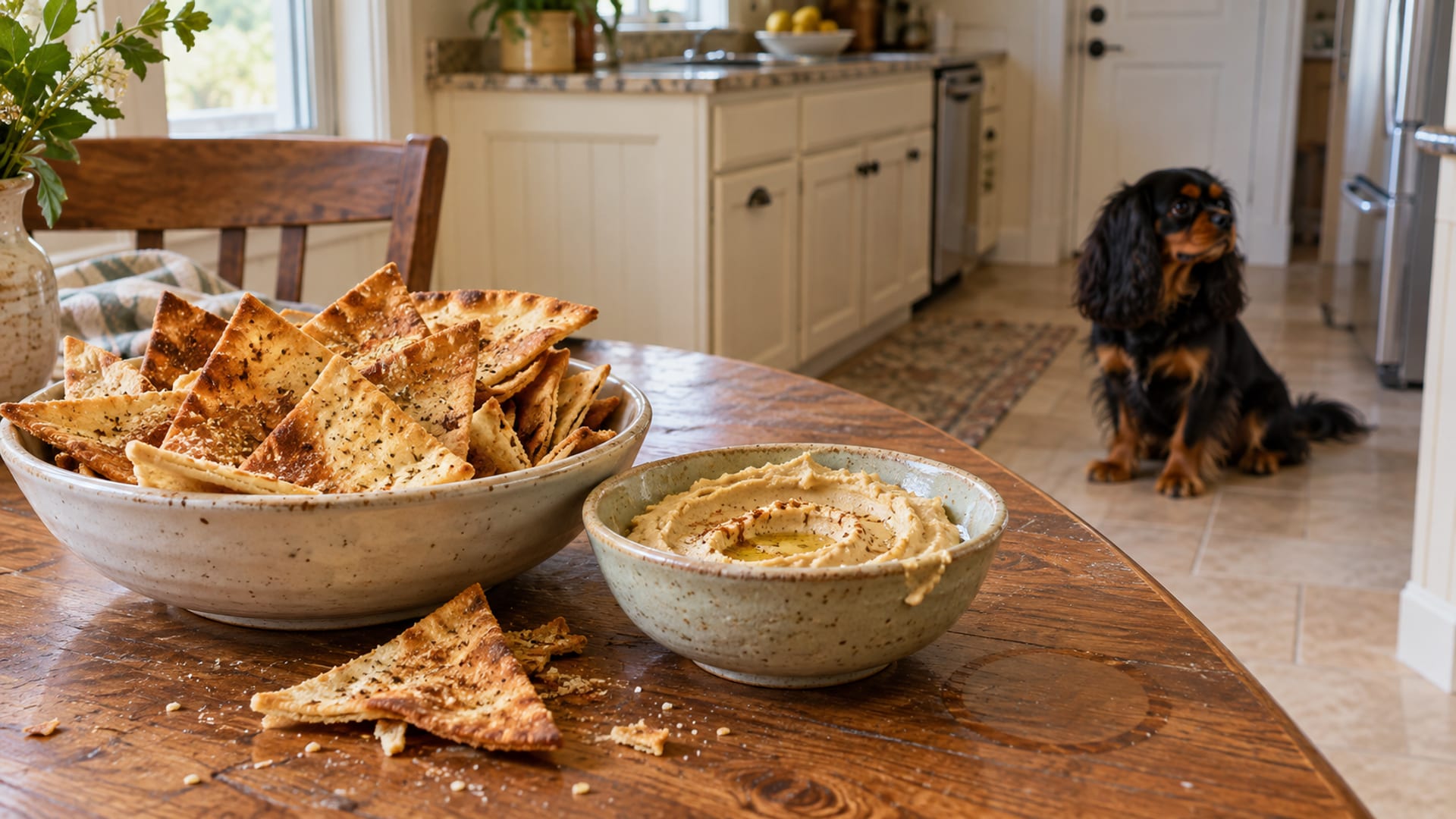
A plain baked pita chip or two is usually low risk for a healthy dog, though the chips are salty and fatty and give your dog nothing it needs. The flavor on the bag and how many chips disappeared are what change that answer, so if your dog just raided a snack bowl, find the package, read the ingredients, put down fresh water, and use the checks below to decide whether to call tonight.
Key takeaways
Tap a card to bring it forward.
- A small amount of plain pita chip is usually low risk for a healthy dog, but it is salty, fatty snack food for an occasional bite only.
- Onion or garlic seasoning makes a bigger helping more concerning, and signs of that damage can take several days to appear.
- Xylitol in a sugar-free product, also listed as birch sugar or wood sugar, is a reason to call right away.
- A large or unknown amount, a chewed or swallowed bag, or vomiting, heavy thirst, weakness, tremors or seizures mean calling your vet or a pet poison line now.
- Salt signs usually show up within 12 hours, so keep water available and watch your dog through the evening.
What to do if your dog just ate pita chips
Nearly every answer here comes from what is printed on the package, so start with the bag.
- Read the flavor and the ingredient list. Plain and sea salt chips are a different situation from garlic, onion or "everything" blends, and the label is the only reliable way to tell which one your dog ate.
- Check any sugar-free or low-carb product for xylitol, birch sugar or wood sugar. The FDA's xylitol warning explains that xylitol can drop a dog's blood sugar fast and lead to seizures, liver failure and death, so seeing it means calling immediately.
- Estimate how many chips are gone, and whether the bag was chewed. The amount and your dog's size decide how much salt and seasoning went in, and a missing piece of bag is its own problem.
- Put down fresh water. The Merck Veterinary Manual on salt toxicosis names water availability as an important factor, and salt poisoning is less likely in a healthy dog that can drink freely.
- Call now if the details point that way. Phone without waiting for xylitol, heavy onion or garlic seasoning, an unknown seasoning, a large or unknown amount, a swallowed bag, or vomiting, diarrhea, marked thirst, weakness, stumbling, tremors or seizures. The ASPCA advises contacting your veterinarian or its Animal Poison Control Center immediately if your pet may have eaten something toxic or seems to be reacting to something.
- Keep the package and your notes by the phone. You will be asked for the ingredients, the amount, your dog's weight and the time, and having them ready makes the advice more precise.
A healthy dog that ate one or two plain chips and is acting normal usually does not match the emergency pattern, according to Pet Poison Helpline's guide to sodium toxicity, though size, sodium and ingredients still decide the exact call.
Plain, seasoned, raw or in the bag: which forms matter
Pita chips are baked pieces of pita bread, usually drier and saltier than the bread and often made with oil and seasoning. Pita is a bread, so there is no pit, seed or peel to think about; the risk sits in what the maker added and in the packaging.
Tap or hover a row to highlight it.
| Form | Concern | Why |
|---|---|---|
| FormPlain baked pita chips | ConcernLow in a small amount | WhySalty and fatty, fine only as a rare bite |
| FormPlain baked pita bread | ConcernLow if plain | WhySame bread, usually less dry and salty |
| FormSea salt or heavily salted chips | ConcernCaution | WhySalt adds up fast with a big serving or a small dog |
| FormGarlic, onion or other seasoned chips | ConcernHigher concern | WhyDried onion and garlic are concentrated and can damage red blood cells |
| FormSugar-free pita products with xylitol | ConcernEmergency | WhyXylitol can cause fast low blood sugar and liver injury |
| FormRaw pita dough | ConcernAvoid | WhyRaw yeast dough can expand in the stomach and produce alcohol |
| FormThe snack bag | ConcernAvoid | WhyCan cover the nose and mouth, or block the gut if swallowed |
Seasoning deserves the closest look. The Merck Veterinary Manual on garlic and onion toxicosis groups onions, garlic, chives and leeks as Allium plants and reports poisoning from dehydrated flakes, powders and dry soup mixes. Their sulfur compounds can damage red blood cells and cause anemia, so a chip that lists garlic or onions high in its ingredients needs more thought than a plain one.
The FDA's list of potentially dangerous items includes raw yeast dough, which can keep rising in a warm stomach while the yeast makes ethanol, bringing a risk of blockage and of the poisoning covered on our alcohol page. The FDA's holiday hazards advice also warns that mylar-type chip bags can wrap around a dog's nose and mouth and suffocate it, so a dog with its head in a bag needs help out of it right away.
How much is too much, and how to share a plain chip
If you share, keep it to a very small piece of plain, fully baked chip, now and then, for a healthy adult dog. Leave out anything with onion, garlic, xylitol, chocolate, spicy seasoning or a heavy salt coating, and never offer raw dough or the bag.
The risky side has published numbers, but they describe salt and raw onion, not chips.
Tap or hover a row to highlight it.
| Substance | Amount per kilogram of body weight | What it caused |
|---|---|---|
| SubstanceSalt (sodium chloride) | Amount per kilogram of body weightAbout 2 to 3 g/kg | What it causedClinical signs of salt toxicosis |
| SubstanceSalt (sodium chloride) | Amount per kilogram of body weightAbout 4 g/kg | What it causedAcute oral lethal dose |
| SubstanceRaw onion | Amount per kilogram of body weight15 to 30 g/kg | What it causedClinical signs in dogs |
These come from Merck's pages on salt toxicosis and onion and garlic toxicosis. The onion figure is raw onion, not the seasoning on a chip, and the salt figure is salt itself, not the weight of the chips. Every brand carries different sodium, so I would not try to turn a bag into a dose at the kitchen counter. Read the sodium line on the label and give it to your vet or poison line with the amount eaten and your dog's weight, and let them do that math.
The same handful of chips is a bigger dose per kilogram for a small dog than a large one, and the same holds for a puppy, so with a small dog or a puppy a smaller amount is still worth a call.
Signs to watch for, and when they show up
Salt trouble tends to show up the same day. The ASPCA's list of people foods to avoid says signs from very salty foods usually appear within 12 hours, and Merck notes that vomiting comes within several hours and can move on to weakness, diarrhea, muscle tremors and seizures. Watch for extra thirst and peeing, vomiting, diarrhea, a dull or depressed dog, weakness, wobbling, tremors and seizures; in the worst cases, coma and death. After a small amount, mild tummy upset or nothing at all is the usual result.
Onion and garlic run on a slower clock. Merck explains that red blood cell changes can begin within 24 hours, while signs you would notice, such as weakness, pale gums, yellowing of the gums or eyes, and collapse, may take several days. After a big helping of heavily seasoned chips, keep watching for most of a week even if the first evening is quiet.
With xylitol, the FDA describes a fast drop in blood sugar with some serious effects showing up later, so call before any signs appear. With a swallowed bag, watch for gagging, retching, trouble breathing, vomiting, belly pain or straining without passing stool, and call promptly if you see any of them.
My dog ate pita chips before and was fine
That happens, and I believe it. It still is not a rule for this dog, this bag or this amount, and the reasons are clear.
The amount may have been too small to carry much salt, seasoning or fat. A big dog gets a smaller dose per kilogram from the same chips. Plain, heavily salted, garlic and sugar-free products are four different exposures. Merck points out that salt poisoning is less likely when a dog's sodium control is working and fresh water is nearby, and Pet Poison Helpline's page on salt makes the point that risk depends on amount, size and circumstances. Hydration and kidney health shift it too, and onion or garlic damage can show up days later, long after anyone links it to a snack.
Your dog's good outcome was real. It tells you about that time; the label and the amount tell you about this one.
Pita chips, pita bread and other look-alikes
Pita bread is the same wheat bread in a softer form, usually with less salt and oil; our bread entry covers plain bread. "Pita crisps" are usually the same kind of product, but the ingredient list counts, not the name. Garlic pita chips have more in common with garlic bread than with plain pita, because the seasoning is the concern.
Potato, tortilla and plantain chips each have their own ingredients and sodium levels, and flavored ones like BBQ chips bring their own seasoning questions. Within pita chips, check sweet flavors like cinnamon sugar for xylitol if the bag says sugar-free or low-carb, and check savory blends like "everything" for onion and garlic. If a dip came along with the chips, read its label for onion or garlic too.
Check what you learned
Three quick questions on the points that matter most.
Quick check
Questions about dogs and pita chips
These are the follow-up questions owners tend to have once the bag is back on the counter.
How long does recovery from too much salt usually take?
The ASPCA says recovery from overly salty food is usually expected within 24 to 72 hours. If your dog gets worse during that time, or new signs such as stumbling or tremors appear, call your vet rather than waiting it out.
My dog has kidney disease or has had pancreatitis. Does that change things?
It lowers the bar for calling. Merck notes that dogs with kidney disease or other conditions affecting how the body handles sodium and water may need veterinary advice sooner. The FDA flags high-fat foods as a concern, and for a dog with a pancreatitis history a fatty snack deserves a phone call.
Can my cat get sick from pita chips too?
Yes. Merck reports that cats are even more sensitive than dogs to onion and garlic, especially concentrated powders, and salt poisoning can affect cats as well. If your cat got into seasoned chips, call your vet with the label in hand.
Sources
Checked September 25, 2026.
- Merck Veterinary Manual, Salt Toxicosis in Animals
- Merck Veterinary Manual, Garlic and Onion (Allium spp) Toxicosis in Animals
- ASPCA, People Foods to Avoid Feeding Your Pets
- ASPCA, Is It Ever Safe to Induce Vomiting?
- Pet Poison Helpline, Salt
- Pet Poison Helpline, Sodium Toxicity Symptoms in Pets
- FDA, Paws Off Xylitol; It's Dangerous for Dogs
- FDA, Potentially Dangerous Items for Your Pet
- FDA, Keep Your Dogs and Cats Safe From Holiday Hazards