

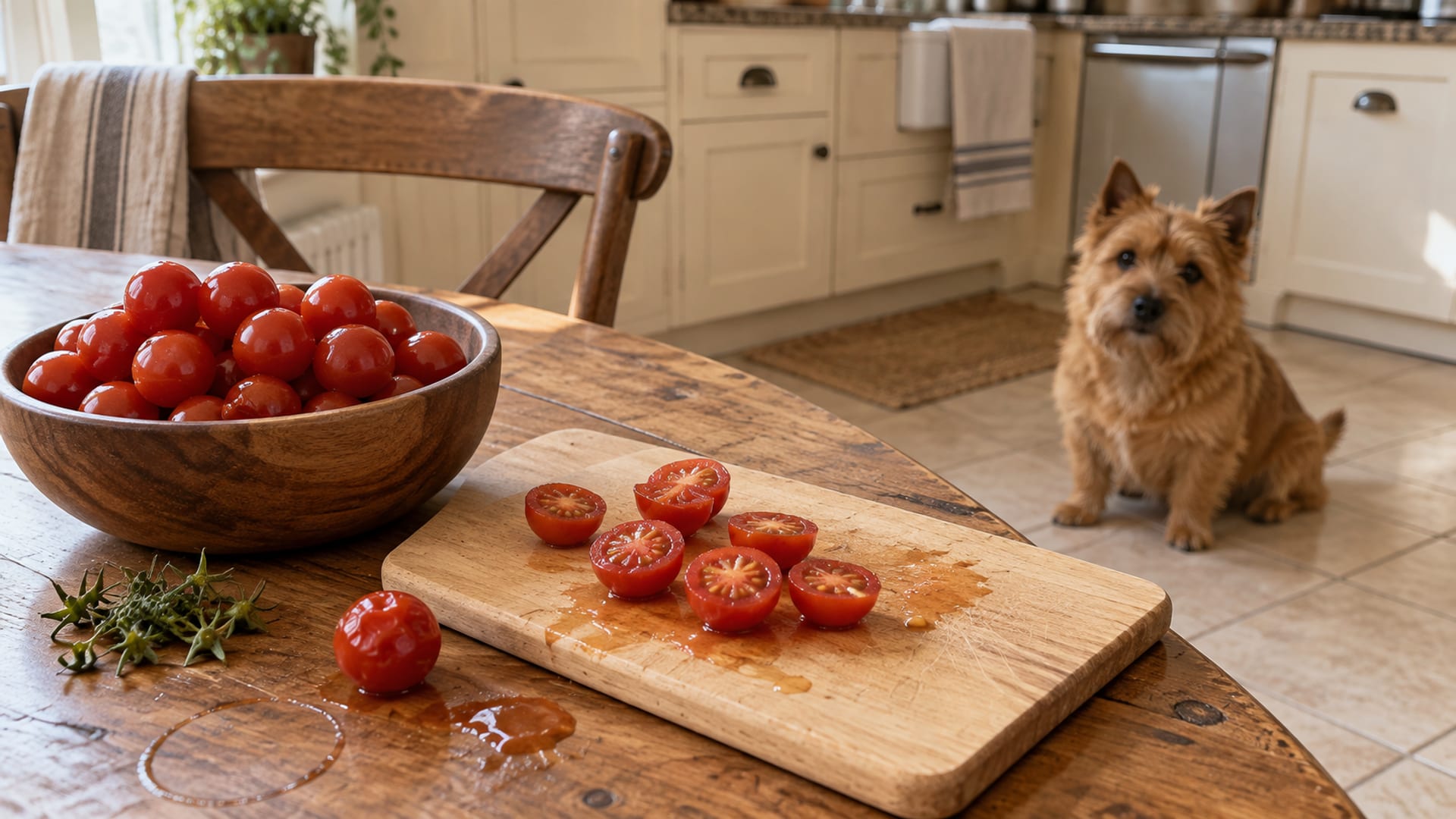
Usually, yes: a few plain, fully ripe red cherry tomatoes cut into small pieces are low risk for most dogs. The caution comes from everything growing around them, because green unripe tomatoes and the plant's leaves, stems, vines and flowers carry tomatine and solanine, two compounds that can make a dog sick.
If your dog snatched one ripe tomato out of the salad bowl, watching them at home is usually enough. If they chewed on the plant, ate green tomatoes, ate a lot of fruit, or you can't tell how much went down, call your vet or a pet poison line now. The same goes for a tomato that came out of salsa or pasta sauce made with onion, garlic or plenty of salt.
Key takeaways
Tap a card to bring it forward.
- Plain, fully ripe red cherry tomato flesh is generally fine for dogs in small amounts.
- Green tomatoes and the leaves, stems, vines and flowers contain tomatine and solanine, which can make a dog sick.
- Call your vet or a poison line for plant parts, green fruit, a large or unknown amount, or any signs of illness.
- Sauce, salsa and ketchup are their own question, because onion, garlic and salt can matter more than the tomato.
- Cut each cherry tomato into small pieces, since a whole one can be a choking risk for a small dog.
What to do if your dog already ate a cherry tomato
A few quick checks tell you whether this is a watch-at-home moment or a phone call.
- Look at what's left. Check for missing red fruit, green fruit, torn leaves or chewed stems. The ASPCA lists ripe tomato fruit as non-toxic but the tomato plant as toxic to dogs, so the part your dog ate matters most.
- Estimate how much. Count the missing tomatoes, or judge how much of the plant looks chewed. Pet Poison Helpline says the risk depends on the amount eaten and the size of the animal, so even a rough number helps the person you call.
- Factor in your dog's size. The AKC notes that small breeds and puppies can be affected by smaller amounts.
- Check whether it was plain. A tomato from a seasoned salad, salsa or pasta sauce may have come with onion, garlic or a lot of salt, and those ingredients carry their own risk.
- Call right away for the higher-risk cases. Leaves, stems, vines, flowers, green tomatoes, a large or unknown amount, or any drooling, vomiting, weakness, stumbling or tremors all mean calling your vet or a pet poison line now. Have your dog's weight and your best guess at the amount ready, since those are the first things they will ask.
- Watch the lower-risk cases. For a small amount of plain, ripe fruit, Pet Poison Helpline treats it as low concern. Keep your dog close and notice any change in appetite, energy or stomach, and call if anything seems off.
Which parts of a cherry tomato are safe and which are not
Ripeness and the part of the plant decide almost everything here. Pet Poison Helpline explains that ripe tomatoes have the lowest levels of the plant's toxic alkaloids and are considered non-toxic, while green fruit and the green parts of the plant have more.
Tap or hover a row to highlight it.
| Part or form | For dogs |
|---|---|
| Part or formRipe red fruit, raw and plain | For dogsGenerally fine in small pieces |
| Part or formRipe fruit cooked with nothing added | For dogsGenerally fine in small amounts |
| Part or formSkin and seeds of ripe fruit | For dogsGenerally fine |
| Part or formGreen or unripe fruit | For dogsAvoid: more tomatine |
| Part or formLeaves, stems, vines, flowers | For dogsAvoid: toxic plant alkaloids |
| Part or formSun-dried tomatoes, tomato powder | For dogsAvoid unless every ingredient is known |
| Part or formSauce, salsa, ketchup, soup | For dogsRead the label for onion, garlic, salt, sugar or fat |
Color can mislead you. Some varieties stay green when fully ripe, and yellow cherry tomatoes follow the same rule as red ones, so the better test is whether the fruit is mature and whether any stem or leaf came with it.
If you grow cherry tomatoes, most of the green material is in the garden. Pet Poison Helpline lists tomato plants among outdoor hazards, including dogs chewing the stems, vines and green fruit, and the AKC warns that tomato leaves are toxic to dogs. A fence or raised bed keeps the question from coming up.
How to share a ripe cherry tomato, and when green parts are a concern
If you want to share the ripe fruit, the AKC recommends small amounts as an occasional treat, starting with a bite-sized portion. Pet Poison Helpline says to give fully ripe cherry tomatoes only in small quantities and to cut them smaller for small dogs. In practice:
- Pick fruit that is fully ripe and red.
- Pull off the stem and the little green cap.
- Cut it into small pieces, smaller still for a little dog.
- Serve it plain, with no dressing, salt or oil.
- Start with one bite and keep it an occasional extra beside a complete diet.
A whole cherry tomato is round and slippery, and for a small dog swallowing one whole is a choking risk. Cutting it up takes care of that. For slicing tomatoes, Romas and big garden tomatoes, our Tomatoes entry covers the larger fruit.
The green parts work differently. Nobody has published a safe number of green tomatoes or a safe length of vine for any size of dog, so treat a real mouthful of plant or green fruit as a reason to call. Tell your vet or the poison line which part was eaten, roughly how much, and what your dog weighs. Severe poisoning is uncommon, but it can happen when a dog eats a lot of plant material.
Signs to watch for, and how soon they can show up
Most dogs that eat a bit of ripe fruit show nothing. After plant parts or a lot of unripe fruit, the ASPCA, Pet Poison Helpline and the AKC describe these signs:
- drooling and not wanting to eat
- vomiting, diarrhea or a badly upset stomach, including belly pain
- low energy, depression or weakness
- stumbling, wobbliness, loss of coordination or confusion
- dilated pupils
- tremors or seizures
- a slow or irregular heartbeat
Signs don't always appear right away. Timing depends on how much your dog ate, which part it was, the dog's size and the dog itself. Stomach trouble may come before the wobbly or shaky signs, though that order isn't fixed, so a dog that seems fine a few minutes after chewing the vine isn't in the clear yet.
Call your vet or a poison line promptly for any of those signs, and treat trouble breathing, collapse or seizures as an emergency. The worst realistic outcome is a serious effect on the nervous system or heart that needs veterinary care, although the AKC reports that most affected dogs fully recover and that tomato poisoning is rarely fatal.
My dog ate it before and was fine
Plenty of dogs have raided a tomato patch or cleaned a salad plate and had a perfectly normal evening. That really happened, and it tells you something true about that dog on that day.
It just doesn't carry over as a rule. That dog may have eaten only a little, eaten ripe fruit instead of green fruit or leaves, been big for the amount, or simply not taken in enough of the plant compounds to show signs. Dogs also differ, and Pet Poison Helpline names the amount, the animal's size and individual factors such as allergies as what shapes the outcome.
Signs can also show up later, and a stomach upset that evening is easy to miss as linked to a vine chewed hours before. A calm outcome with ripe fruit last summer says little about a puppy chewing leaves this afternoon.
Sauces, dried tomatoes and names that get mixed up
Many cherry tomatoes dogs get into come roasted, dressed or cooked into sauce, and the recipe decides the risk.
- Pasta sauce, marinara, pizza sauce, salsa, ketchup and tomato soup. These may contain onion, garlic, salt, sugar, spices or fat. If the label or recipe lists Onions or Garlic, read those entries and call your vet. A slice of Pizza raises the same question.
- Sun-dried tomatoes and tomato powder. Both can be concentrated, and they are often salted or blended into seasonings with onion or garlic. Skip them unless you know every ingredient and your vet agrees.
- Tomato juice and brand-name products. Store-bought juice may contain salt, onion, garlic or preservatives. With Prego, Heinz, V8 or any other brand, the ingredient list decides the answer.
Some names cause mix-ups too. True Cherries are a different plant, and the AKC warns that their pits, stems and leaves raise cyanide and blockage concerns, so a dog that ate cherries needs that entry. Grape, baby and cocktail tomatoes follow the same ripe-versus-green rule as cherry tomatoes. Tomatillos, with their papery husks, are a different plant and may not share this answer. Ground cherries and Cape gooseberries come from that same separate plant group; see Golden Berries for those.
Check what you learned
Try these three questions on the points that matter most in a hurry.
Quick check
Questions about dogs and cherry tomatoes
These cover the situations that come up after the first worry has passed.
Can puppies have cherry tomatoes?
A tiny piece of plain, fully ripe fruit follows the same rule as for adult dogs. The AKC points out that puppies can be affected by smaller amounts, and puppies chew everything in a garden. Keep them away from the plants and call sooner if one gets into leaves or green fruit.
Are roasted cherry tomatoes okay for dogs?
Plain cooked ripe tomato is treated like ripe fruit, but roasted tomatoes usually carry olive oil, salt, garlic or herbs. Share a piece only if you roasted it with nothing on it.
My dog's food lists tomato. Is that a problem?
It isn't the same as eating the plant. Pet Poison Helpline explains that tomatoes used in commercial dog food are processed and controlled, which is a different exposure from a dog chewing stems and green fruit.
Can cats eat cherry tomatoes?
The same split applies. The ASPCA lists the tomato plant as toxic to cats as well as dogs, with the ripe fruit listed as non-toxic. A cat nibbling leaves or green fruit deserves the same phone call.
Should a dog with pancreatitis, diabetes or kidney disease skip them?
A plain ripe cherry tomato has no special rule for these conditions, but the sugar, salt or fat in tomato products can matter for these dogs. If your dog is on a special diet, ask your vet before adding any treat.
Sources
Checked September 25, 2026.
- ASPCA, Tomato Plant
- Pet Poison Helpline, Tomato
- Pet Poison Helpline, Are Tomatoes Bad for Dogs? What's Safe & What's Toxic
- Pet Poison Helpline, Common Things That Are Toxic to Dogs Outdoors
- American Kennel Club, Can Dogs Eat Tomatoes?
- American Kennel Club, How to Plant a Dog-Friendly Garden
- American Kennel Club, Can Dogs Eat Cherries?