
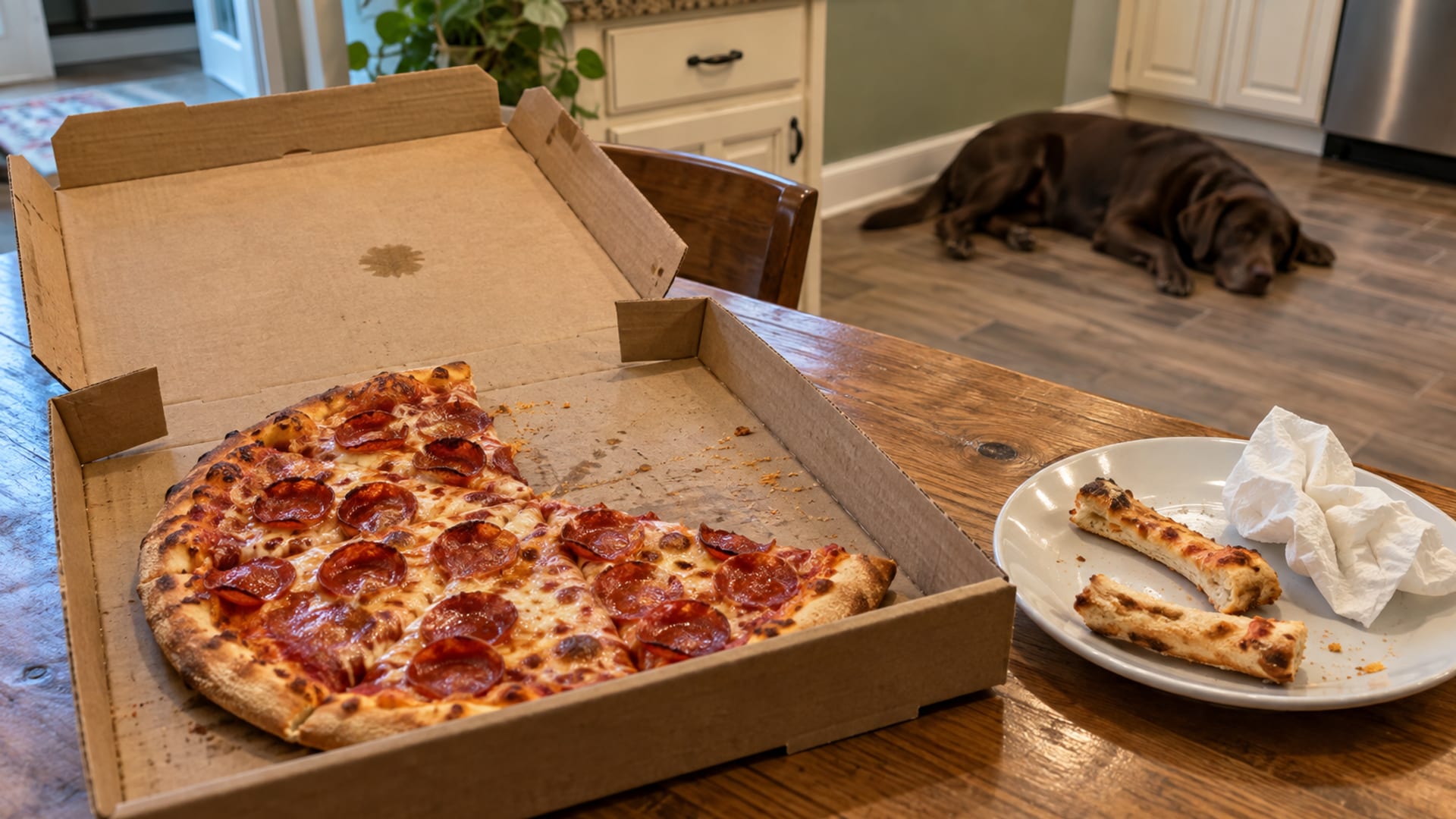
Pizza is a food to keep out of your dog's reach, though a bite of plain baked crust is a low-risk slip. The toppings are what matter. The ASPCA warns that onion and garlic can damage a dog's red blood cells, and many pizzas carry them in the sauce, the crust seasoning or the meat, along with plenty of salt and fat.
If your dog just ate a slice, find the box or the receipt and work out what was on it. A crust or two from a healthy, mid-sized dog usually means watching for an upset stomach. Garlic, onion, raw dough, a whole pizza, or a small dog means calling your vet today.
Key takeaways
Tap a card to bring it forward.
- A bite of plain baked crust is low risk; the toppings and the amount decide the rest.
- Garlic and onion, including powders in sauce and seasoning, can damage red blood cells.
- Signs from garlic or onion can take several days to show, so a normal dog today is not the all-clear.
- Pepperoni, sausage, extra cheese and oil add fat and salt that can upset the stomach.
- Raw pizza dough is a separate emergency. Call your vet right away.
My dog ate pizza: what to do now
- Check what was on it. Look at the box, the menu online or the frozen pizza label. Garlic, onion, garlic salt, onion powder and "Italian seasoning" blends are the ones to find.
- Estimate how much. One crust, one slice, or most of the pie. Note the time and your dog's weight.
- Call your vet for any garlic or onion, a large amount, a small dog, a dog with a history of pancreatitis, or any raw dough.
- Look for the box. A dog who chewed the cardboard or wax paper can end up with a blockage. Mention it when you call.
- Watch for several days, even after a small amount, because onion and garlic damage can surface late.
The ASPCA's guidance is to call your vet or its poison control line if you think your pet has eaten something toxic. Having the ingredient list in front of you makes that call much faster.
The parts of a pizza, ranked
Tap or hover a row to highlight it.
| Part | Risk | What to know |
|---|---|---|
| PartPlain baked crust | RiskLow | What to knowStarch, salt and some fat; a bite may cause no trouble |
| PartGarlic knots, garlic crust, garlic butter | RiskHigh | What to knowGarlic in a concentrated form |
| PartSauce | RiskDepends | What to knowPlain tomato is not the main worry; onion, garlic and salt often are |
| PartCheese | RiskModerate | What to knowFat, salt, and dairy that some dogs digest poorly |
| PartPepperoni and sausage | RiskModerate | What to knowFatty, salty, spiced, sometimes made with garlic |
| PartOnion topping | RiskHigh | What to knowRaw or cooked, onion can harm red blood cells |
| PartMushrooms, olives, anchovies | RiskDepends | What to knowSalt and the specific ingredient matter |
| PartRaw dough | RiskEmergency | What to knowYeast dough can rise in the stomach and produce alcohol |
| PartDessert pizza | RiskDepends | What to knowCheck for chocolate, raisins, xylitol or nuts |
| PartThe box | RiskMechanical | What to knowCardboard and wrappers can cause a blockage |
For the individual toppings, see can dogs eat pepperoni?, sausage, cheese and mushrooms. Raw dough is covered on can dogs eat bread?.
Garlic, onion and the powders you cannot see
The Merck Veterinary Manual says onion and garlic are toxic to dogs raw, cooked, dried or granulated, and that garlic is about three to five times more toxic than onion. On a pizza, the risk often hides in powders. Dried and powdered garlic and onion are concentrated, so a sauce or seasoned crust can carry more than a few visible onion rings would.
A plain "cheese pizza" can still contain garlic in the sauce or brushed on the crust. There is no single toxic amount for pizza as a whole, because every recipe is different. That is why the ingredient list matters more than the name on the box. For the onion and garlic details, see can dogs eat onions? and can dogs eat garlic?.
Fat, salt and an upset stomach
Most pizza is rich. Pepperoni, sausage, cheese and oil can bring vomiting and diarrhea, and for a dog prone to pancreatitis a fatty meal is a real concern. Merck calls low-fat feeding crucial for dogs with pancreatitis. The AKC lists fat, salt, spices, preservatives, onion and garlic among its concerns with pepperoni.
Salt adds up with the amount eaten, so a dog that works through a whole pizza, or a small dog with a big share, takes in a lot. The Merck Veterinary Manual says salt poisoning can start with vomiting within a few hours and move on to weakness, tremors and seizures. Keep fresh water out for your dog.
Signs, and when they show up
Tap or hover a row to highlight it.
| When | What you may see | Likely cause |
|---|---|---|
| WhenWithin hours | What you may seeVomiting, diarrhea, gas, a sore belly | Likely causeFat, cheese, spices or a large portion |
| WhenWithin hours | What you may seeVomiting, then weakness, tremors or seizures | Likely causeToo much salt |
| WhenAfter a fatty meal | What you may seeRepeated vomiting, belly pain, not eating | Likely causePossible pancreatitis |
| WhenStarting within a day, often worst 3 to 5 days later | What you may seeTiredness, weakness, pale or yellow gums, fast breathing, dark or red urine | Likely causeRed blood cell damage from garlic or onion |
| WhenAny time | What you may seeGagging, retching, straining, no stool | Likely causeCrust, box or wrapper stuck in the gut |
The garlic and onion timing is from Merck, which says red blood cell damage can begin within about a day and the breakdown of those cells often peaks three to five days after eating. Call your vet right away for any sign in the table, and especially for pale gums, collapse or red urine.
"My dog has had pizza crusts for years"
Many dogs get a crust now and then with no visible problem, and that experience is real. It does not carry over to every pizza or every dog. A plain crust has none of the garlic, onion or fatty meat that cause most of the trouble. The same slice is a much bigger dose for a Chihuahua than for a Labrador. Two pizzas from the same shop can differ in how much garlic and salt they hold. A dog with a history of pancreatitis can react to fat that another dog handles easily. And garlic or onion damage can build over several days, so a dog who seemed fine that night may not be fine by the weekend.
Frozen pizza, pizza rolls and other pizza foods
- Frozen and delivery pizza: read the label or the chain's ingredient list for garlic, onion and powdered seasoning.
- Pizza rolls, bites and pizza-flavored snacks: often seasoned with garlic and onion powder, and very salty.
- Garlic knots, breadsticks and dipping sauces: garlic-heavy by design. Treat them as a garlic exposure.
- Dessert pizza: check for chocolate, raisins, macadamia nuts or xylitol. Can dogs eat chocolate? and can dogs eat grapes? cover two of them.
- Cats in the house: Merck notes cats are even more sensitive to onion and garlic than dogs.
Check what you learned
Quick check
Questions about dogs and pizza
Can dogs eat pizza crust?
A bite of plain baked crust is low risk for most healthy dogs. Garlic crust, butter-brushed crust and anything stuffed with cheese are a different story.
My dog ate a whole pizza. What should I do?
Call your vet now. A whole pizza means a lot of fat and salt at once, and likely some garlic or onion. Have the brand or restaurant, the toppings and your dog's weight ready.
Is pepperoni pizza bad for dogs?
Pepperoni is fatty, salty and spiced, and some brands include garlic. A small bite may cause nothing more than a loose stool, but call your vet for a small dog, a big portion, or a dog that has had pancreatitis.
Can dogs eat pizza sauce?
It depends on the recipe. Many pizza sauces are seasoned with garlic, onion and salt, so treat sauce as a possible garlic or onion exposure unless the label says otherwise.
Can a puppy eat pizza?
It is best not to share it. A puppy's small size means any garlic, onion, fat or salt counts for more, so call your vet if your puppy got into a slice.
My dog ate pizza dough. Is that serious?
Raw yeast dough is an emergency. It can keep rising in the stomach and ferment into alcohol. Call your vet right away.
Sources
Checked September 25, 2026.
- ASPCA, People Foods to Avoid Feeding Your Pets
- ASPCA, Emergency Care for Your Pet
- Merck Veterinary Manual, Garlic and Onion (Allium spp) Toxicosis in Animals
- Merck Veterinary Manual, Salt Toxicosis in Animals
- Merck Veterinary Manual, Pancreatitis in Dogs and Cats
- American Kennel Club, Can Dogs Eat Pepperoni?