

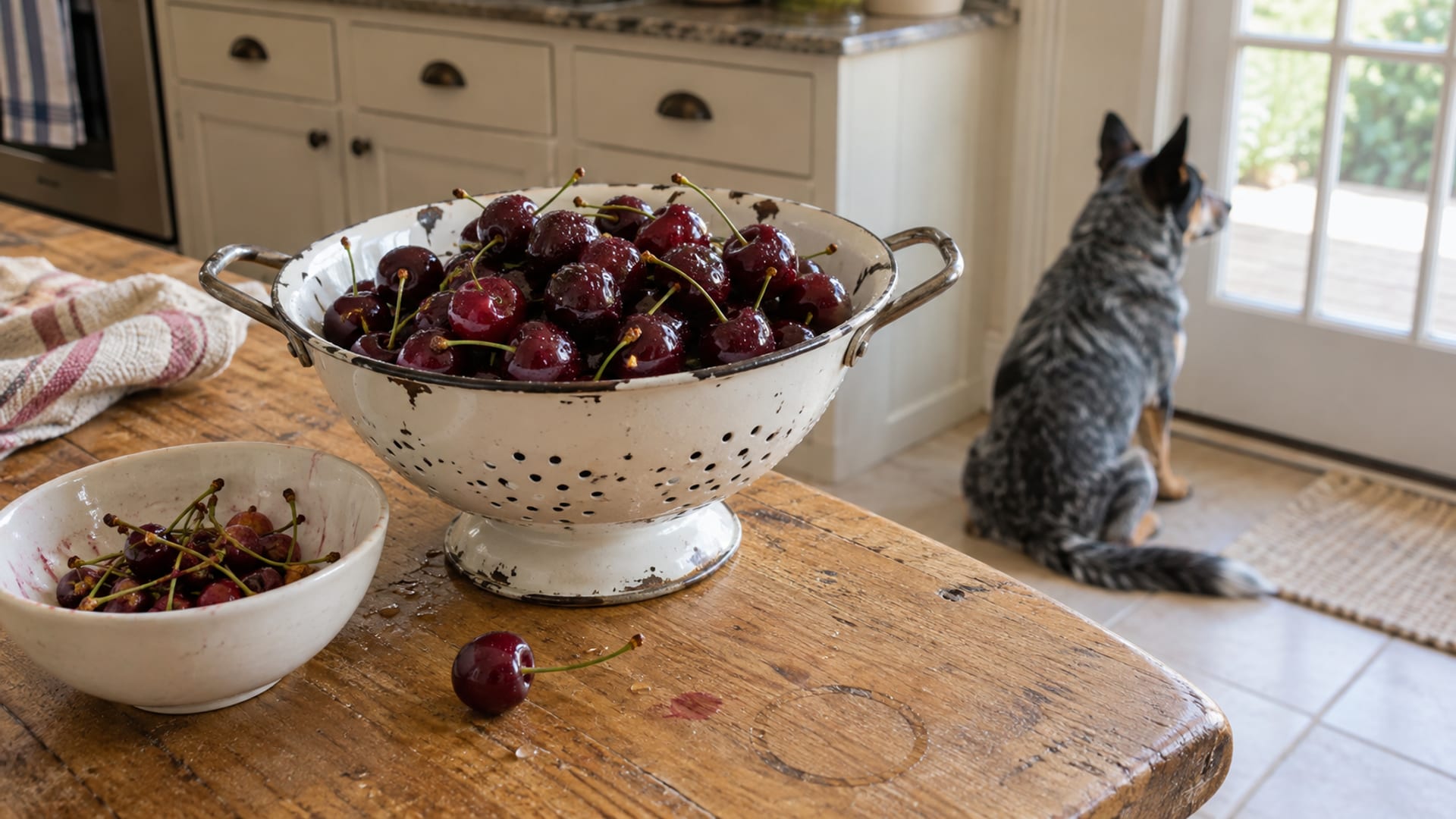
A few bites of ripe cherry flesh are low risk for a dog, as long as the pit, stem and leaves are gone. Pet Poison Helpline says the ripe pulp around the seed is not considered toxic, while the ASPCA lists the cherry plant as toxic to dogs because its stems, leaves and seeds contain cyanide. A pit can also get stuck.
If your dog swallowed one whole cherry and seems normal, keep an eye on them. If they chewed pits, ate a pile of cherries, got into a cherry tree's leaves or stems, or you have no idea how many went down, call your vet or a poison line now.
Key takeaways
Tap a card to bring it forward.
- Ripe cherry flesh, pitted and stem-free, is low risk in a small amount.
- Pits, stems and leaves contain compounds that release cyanide, most of all when chewed or crushed.
- One whole swallowed pit is unlikely to poison a dog, but it can block the gut, especially in a small dog.
- Cyanide signs can start within 15 minutes to a few hours: hard breathing, bright red gums, wide pupils, collapse.
- Maraschino cherries are sugary, and cherry-flavored products need their labels checked.
Your dog ate cherries: what to do next
Tap or hover a row to highlight it.
| What happened | What to do |
|---|---|
| What happenedA bite or two of pitted flesh | What to doNothing more than the usual watching. |
| What happenedOne whole cherry, pit swallowed unchewed | What to doWatch for vomiting, not eating, belly pain or no stool. Call if the dog is small or any of those show up. |
| What happenedPits that were chewed or crushed | What to doCall your vet or a poison line now, even if your dog looks fine. |
| What happenedA lot of cherries, or you cannot count | What to doCall now. Pet Poison Helpline advises contact after a large number, before signs. |
| What happenedLeaves, stems or branches from a cherry tree | What to doCall now. These carry the same compounds. |
| What happenedCherry pie, candy or a cherry-flavored product | What to doRead the label for xylitol, chocolate, alcohol or caffeine, then call if any are listed. |
When you call, have your dog's weight ready, plus what kind of cherry it was, roughly how many, whether pits were chewed or swallowed whole, and the time. The ASPCA's instruction for a suspected poisoning is to contact its poison control line or your own vet as soon as possible. Keep home remedies and medicine out of it unless a vet tells you otherwise.
Head straight to an emergency vet for trouble breathing, bright red or odd-colored gums, wide pupils, weakness, collapse or a seizure.
Flesh, pit, stem and leaf, part by part
Tap or hover a row to highlight it.
| Part | Okay for dogs? | Why |
|---|---|---|
| PartRipe flesh, pitted | Okay for dogs?Yes, a little | WhyPet Poison Helpline treats the ripe pulp as the non-toxic part |
| PartPit (stone) | Okay for dogs?No | WhyCan choke or block the gut; the seed inside releases cyanide when chewed |
| PartStem | Okay for dogs?No | WhyCyanogenic, according to the ASPCA and Pet Poison Helpline |
| PartLeaves | Okay for dogs?No | WhyCyanogenic, and wilting leaves may be the worst (ASPCA) |
| PartDried cherries | Okay for dogs?Only if pit-free and plain | WhyNo safe serving to recommend; check the bag |
| PartMaraschino cherries | Okay for dogs?Skip them | WhyPitted, but loaded with added sugar |
| PartJuice or cherry powder | Okay for dogs?Skip them | WhyNo safe amount to recommend, and added ingredients vary |
The Merck Veterinary Manual groups cherries with the other *Prunus* plants that can cause cyanide poisoning. The compounds sit mainly in the seed, stems and leaves, and chewing or crushing is what frees the cyanide. That is why a chewed pit is a different situation from a pit that went down whole.
A whole pit brings its own problem. The American Kennel Club points out that a single pit is unlikely to cause cyanide poisoning, but a blockage is a real worry, and more so in a small dog, where the same pit takes up more room in the gut.
Sharing cherries with your dog: how much and how
No veterinary source gives a cherry serving by dog size. Keep it to a few bites of flesh as an occasional treat, and plenty of dogs do just as well with fruit that has no pit to begin with.
- Wash the cherries and pull the stems off.
- Cut the flesh away from the pit at the counter, where your dog cannot grab a dropped pit.
- Put pits and stems straight into a lidded trash can.
- Offer the flesh in small pieces.
- Skip dried, candied, canned and maraschino cherries.
A cherry tree in the yard changes the picture more than a bowl of fruit does. Fallen fruit, pits, twigs and leaves all end up at dog height in early summer, and Pet Poison Helpline describes cherry-pit calls as a summer problem, often from fruit eaten outdoors or pits tossed where a dog can reach them.
Signs to watch for, and when they show up
Cyanide works fast. Merck puts the start of acute signs at 15 minutes to a few hours after a toxic exposure, and the ASPCA and Pet Poison Helpline list what to look for:
- fast or labored breathing, or heavy panting
- bright red or brick-red gums
- wide pupils
- weakness, shock or collapse
- seizures
Merck also notes that an animal with acute cyanide signs rarely survives more than two hours. After a chewed pit, that is the reason to call right away and not wait for something to change.
A swallowed pit that stays whole plays out slower. Vomiting, a poor appetite, belly pain, straining, constipation or very little stool can point to a blockage, and Pet Poison Helpline notes that signs from a cherry exposure can take up to a day to appear. Call your vet if you see any of them.
"My dog eats cherries under our tree every summer and has never been sick"
That is believable. Most of those pits likely went down whole, and a whole pit releases little cyanide, while a big dog can pass a pit that would stall in a small one. The track record still does not protect the next summer. A day when your dog cracks a few pits between their teeth, eats wilted leaves with the fruit, or swallows more pits than usual is a different exposure, and a blockage can build without warning. And a puppy or a small breed does not start with the same margin as the dog under your tree.
Maraschino cherries, pie filling and other cherry look-alikes
- Maraschino cherries: the pit is out, but the sugar is high. Not a dog treat. Can dogs eat jelly beans? covers what a sugary snack tends to do.
- Cherry pie and cobbler: sugar and butter, and home-baked filling can still hide a stray pit.
- Cherry-flavored candy, gum, medicine and drinks: "cherry" may be the flavor only. Read the label for xylitol, chocolate, alcohol or caffeine.
- Wild cherry, black cherry, chokecherry and cherry laurel: treat these trees and shrubs as risky *Prunus* plants, leaves and all.
- Ground cherry: a different plant altogether. Find out what it actually is before deciding anything.
- Cherry tomatoes: these belong to the tomato family. Can dogs eat tomatoes? covers them.
- Peaches, apricots and plums: relatives with the same pit problem. See can dogs eat apricots?, can dogs eat peaches? and can dogs eat plums?
- Cherry eye: an eye condition in dogs, unrelated to the fruit.
Check what you learned
Quick check
Questions about dogs and cherries
Can one cherry poison a dog?
One whole cherry is unlikely to cause cyanide poisoning, according to Pet Poison Helpline and the AKC. The pit can still cause choking or a blockage, so watch your dog and call if they are small or show any signs.
What if my dog swallowed a cherry pit whole?
A whole pit releases little cyanide, but it can lodge in the gut. Call your vet if your dog is small, you are unsure how many pits went down, or you see vomiting, a poor appetite, constipation or less stool than normal.
What if my dog chewed a cherry pit?
Call your vet or a pet poison line right away. Chewing opens the seed and lets the cyanide-releasing compounds out.
Are pitted cherries safe for dogs?
A few pieces of fresh, pitted flesh are low risk. There is no serving size to recommend, so keep it small and occasional.
Can dogs eat maraschino cherries?
They are not a good pick. The pit is usually gone, but the AKC flags the added sugar, and the syrup adds more.
Are cherry trees poisonous to dogs?
The leaves, stems and seeds contain compounds that can release cyanide, and the ASPCA notes that wilting leaves may be especially risky. Pick up fallen fruit and clippings where your dog plays.
Sources
Checked September 25, 2026.
- ASPCA Animal Poison Control Center, Cherry
- Pet Poison Helpline, Cherry Is Toxic to Dogs
- Pet Poison Helpline, My Dog Ate a Cherry Pit
- American Kennel Club, Can Dogs Eat Cherries?
- Merck Veterinary Manual, Cyanide Poisoning in Animals