

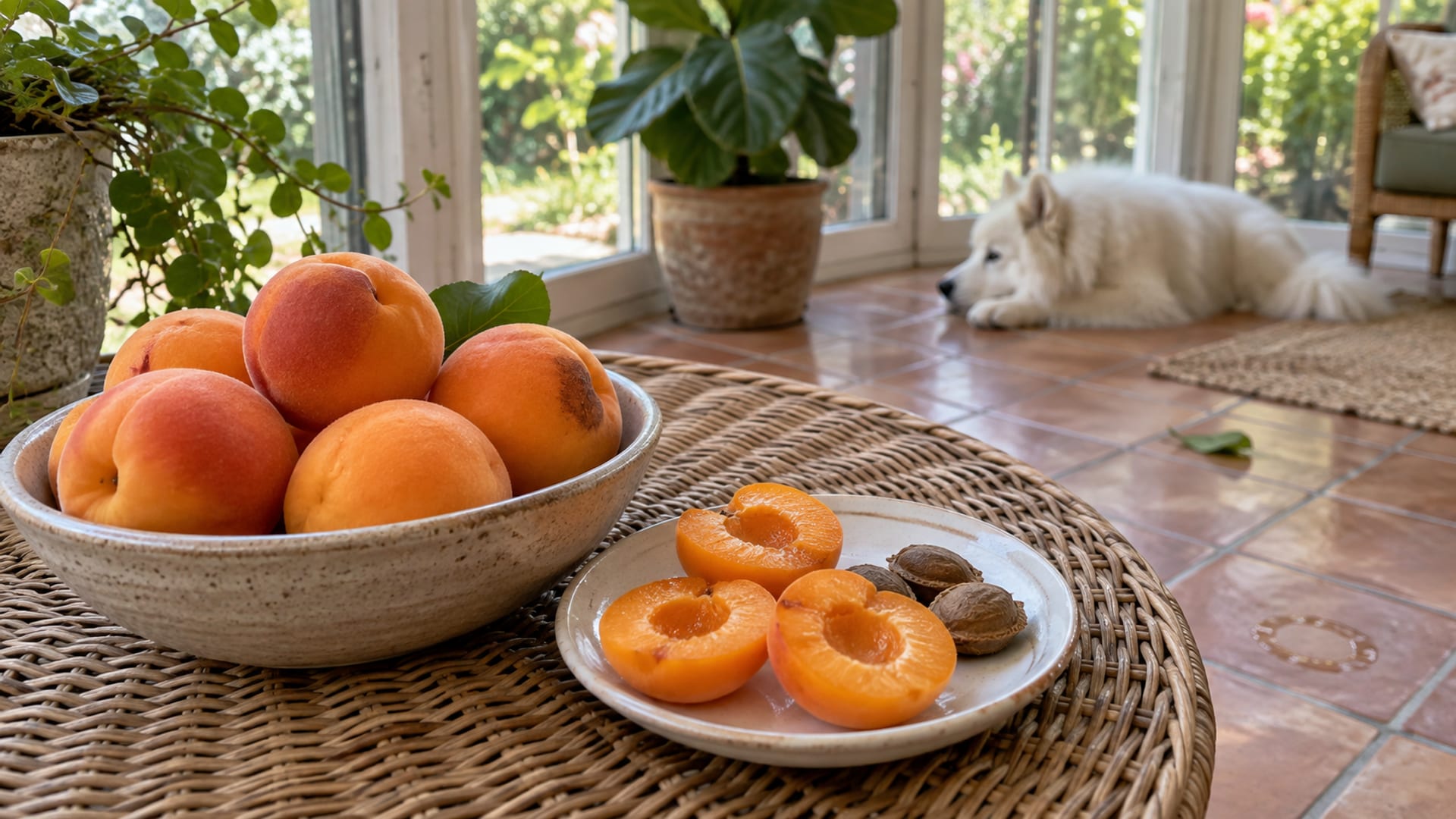
Yes, a little of the fresh fruit, as long as the pit is gone. Pet Poison Helpline says dogs can eat apricot flesh, while the ASPCA lists the apricot plant as toxic to dogs because its seeds, stems and leaves contain cyanide-releasing compounds, especially when the leaves are wilting. Cut the flesh away from the pit and share only a small amount.
If your dog ate a few bites of the fruit with no pit, watch as usual. If they chewed a pit, ate a kernel, got into apricot leaves or stems, or you cannot tell what they ate, call your vet or a poison line now.
Key takeaways
Tap a card to bring it forward.
- Fresh apricot flesh, with the pit out, is low risk in a small amount.
- The kernel inside the pit holds amygdalin, which releases cyanide when chewed or ground.
- A whole pit is also a choking and blockage risk.
- Cyanide signs can start within 15 to 20 minutes to a few hours: fast breathing, red gums, weakness, collapse.
- Dried apricots are sugary, and bitter apricot kernels are the riskiest form of all.
Your dog ate apricot: what to do
Tap or hover a row to highlight it.
| What they ate | What to do |
|---|---|
| What they ateA few bites of flesh, no pit | What to doWatch for an upset stomach. Nothing else is needed. |
| What they ateA whole pit, swallowed | What to doCall your vet now. It can choke or block the gut, and the kernel is inside. |
| What they ateA pit cracked or chewed into pieces | What to doCall now, even if your dog looks fine. Chewing opens the kernel. |
| What they ateBitter apricot kernels or kernel powder | What to doCall now. Pet Poison Helpline treats these as a high cyanide risk. |
| What they ateLeaves or stems from an apricot tree | What to doCall now. They carry the same compounds. |
| What they ateDried apricots, jam, pie or fruit leather | What to doCheck the label for xylitol, chocolate or alcohol, and call if any are listed or your dog ate a lot. |
The ASPCA's advice for a suspected toxic exposure is to call its poison control line or your local vet as soon as possible. Keep the pit, the plant or the package so it can be identified, and be ready with your dog's weight, what they ate, how much, and when. Skip home treatments and medicine unless the vet tells you otherwise.
Go straight to an emergency vet if your dog is breathing fast or hard, has bright red gums, is drooling or vomiting, turns weak or wobbly, collapses or has a seizure.
Flesh, pit, kernel and leaves: what is safe
Tap or hover a row to highlight it.
| Part | Okay for dogs? | Why |
|---|---|---|
| PartFresh flesh | Okay for dogs?Yes, a little | WhyPet Poison Helpline says dogs can eat it |
| PartPeel | Okay for dogs?Yes | WhyNot listed as a cyanide source; wash the fruit |
| PartPit (stone) | Okay for dogs?No | WhyCan choke a dog or block the gut |
| PartKernel, the seed inside the pit | Okay for dogs?No | WhyHolds amygdalin, which releases cyanide |
| PartLeaves and stems | Okay for dogs?No | WhyContain cyanide-releasing compounds, worse when wilted (ASPCA) |
| PartDried flesh, pit-free | Okay for dogs?A little | WhyNo cyanide worry, but a lot of sugar |
| PartKernel powder or supplements | Okay for dogs?No | WhyGrinding releases cyanide more easily |
The Merck Veterinary Manual lists apricot among the *Prunus* plants that can cause cyanide poisoning and notes that the fleshy fruit has low potential compared with the seeds and leaves. The European Food Safety Authority names amygdalin as the main compound in apricot kernels and explains that chewing or grinding them turns it into cyanide.
Pet Poison Helpline's apricot poison page spells out the difference in risk. A few leaves or a single pit is low risk for cyanide, while hulled bitter kernels are high risk, and the dog's size and the amount both matter. The pit that is low risk for cyanide can still get stuck, which is why a swallowed pit still means a call.
How much apricot to give, and how to serve it
Ask your vet for a serving that fits your dog's size; until then, keep it to a small amount of fresh flesh as an occasional treat.
- Wash the apricot and cut the flesh off the pit, away from your dog.
- Throw away the pit, stem and any leaves where your dog cannot reach them.
- Cut the flesh into small pieces.
- Share fresh apricot, and keep dried apricot to a bite, since Pet Poison Helpline flags its high sugar.
- If your dog is diabetic, has had pancreatitis or has kidney disease, ask your vet before sharing sweet or rich apricot foods.
An apricot tree in the yard adds leaves, stems and fallen fruit with pits to the picture. Pick up windfalls in summer before your dog finds them.
Signs of cyanide poisoning and a stuck pit
Cyanide works fast. Merck's pet owner guide and Pet Poison Helpline describe signs that can appear within 15 to 20 minutes to a few hours:
- fast breathing or a struggle to breathe
- a racing heart
- bright red or brick-red gums
- wide pupils
- drooling or vomiting
- weakness, muscle spasms, collapse or seizures
Merck notes that in acute cyanide poisoning, an animal showing signs rarely survives longer than two hours. That speed is the reason to call right away after a chewed pit or a kernel.
A swallowed pit that stays whole may cause trouble later, and in a different way: gagging or choking at first, then repeated vomiting, belly pain, not eating or straining if it lodges further down. Call your vet for any of those.
"My dog ate an apricot pit last summer and was fine"
That can happen, and your dog may well have been fine. A single pit that goes down whole releases little cyanide, and a large dog passes things a small one cannot. The story still does not carry over to the next time. Whether the pit was chewed, how many there were, the size of the dog, and how much amygdalin that particular kernel held all change the outcome. Signs can also start later than the first few minutes, so a dog who looks normal right away may not be out of the window yet. When the pit is chewed or you are not sure, make the call.
Dried apricots, kernels and look-alikes
- Dried apricots: pit-free, so no cyanide concern from the flesh, but high in sugar. Check the label for anything added.
- Bitter apricot kernels and kernel supplements: keep them shut away where your dog cannot reach. This is the form Pet Poison Helpline rates as high risk.
- Canned apricots, jam, syrup and pastries: concentrated sugar and sometimes other risky ingredients.
- Apricot fruit leather and snacks: read the label for xylitol, chocolate or alcohol.
- Peaches, plums, cherries, nectarines and almonds: relatives with the same kind of compounds in their seeds and leaves. Can dogs eat peaches? and can dogs eat almonds? cover two of them.
- Apple seeds: a similar story in a different fruit. Can dogs eat apples? explains it.
- "Apricot" coat color or flavor: the word on a dog's breed description or a treat flavor says nothing about the fruit. Check the ingredients.
Check what you learned
Quick check
Questions about dogs and apricots
Can dogs eat apricot flesh?
Yes, a small amount with the pit removed is low risk. Pet Poison Helpline says dogs can eat the flesh.
What if my dog ate an apricot pit?
Call your vet or a pet poison line right away, especially if the pit was chewed. The kernel can release cyanide, and a whole pit can choke a dog or block the gut.
Are dried apricots safe for dogs?
Plain, pit-free dried apricot is not a cyanide concern, but it is high in sugar, so keep it to a bite. Check the package for other ingredients.
Are apricot kernels poisonous to dogs?
They can be. Bitter raw kernels contain amygdalin, which turns into cyanide when chewed or ground. Pet Poison Helpline rates hulled bitter kernels as a high risk.
What are the signs of apricot poisoning in dogs?
Fast or labored breathing, bright red gums, vomiting, weakness, muscle spasms, collapse and seizures, starting within 15 to 20 minutes to a few hours.
Sources
Checked September 24, 2026.
- ASPCA Animal Poison Control Center, Apricot
- Pet Poison Helpline, Apricot Is Toxic to Dogs
- Pet Poison Helpline, Can Dogs Have Apricots
- Merck Veterinary Manual, Cyanide Poisoning in Animals
- Merck Veterinary Manual, Cyanide Poisoning
- European Food Safety Authority, Acute Health Risks Related to the Presence of Cyanogenic Glycosides in Raw Apricot Kernels