

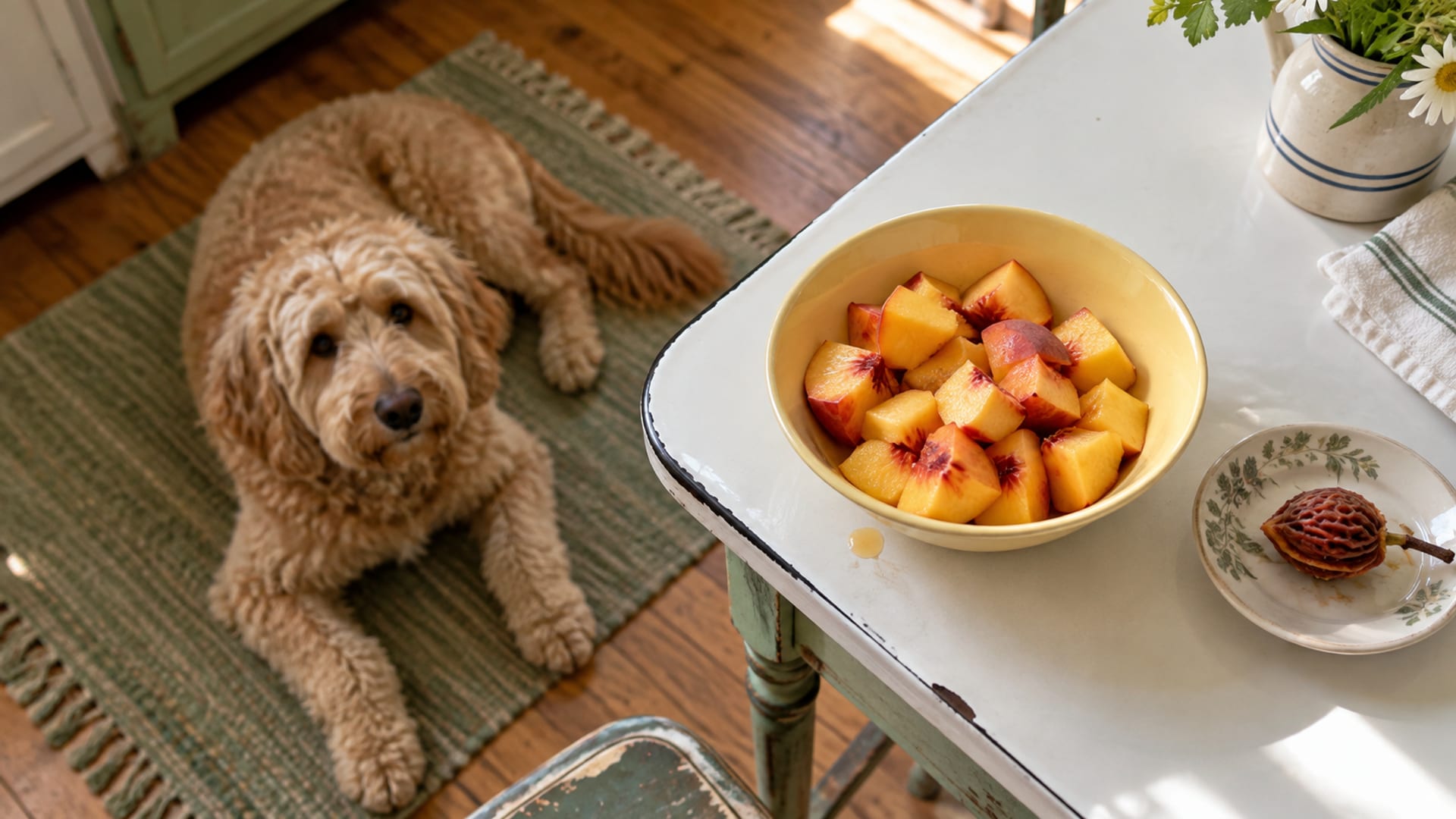
Yes. A few small cubes of ripe, fresh peach are fine for most dogs once the pit, stem and leaves are gone, according to the AKC. The pit is the part that causes trouble. It can choke a dog or lodge in the intestine, and the seed inside it holds compounds that release cyanide when chewed, according to Pet Poison Helpline.
If your dog ate a few pieces of peach flesh, watch for a loose stool and carry on. If they swallowed or chewed a pit, or ate leaves or stems from a peach tree, call your vet or a poison line now.
Key takeaways
Tap a card to bring it forward.
- Ripe peach flesh, cut into small cubes, is a fine occasional treat.
- A peach pit can choke a dog or block the intestine, and small dogs are most at risk.
- Chewed or crushed pits, leaves and stems can release cyanide.
- A swallowed or chewed pit is a reason to call your vet now, even if your dog seems fine.
- Peaches in syrup, peach pie and sugar-free peach products are best kept off the menu.
Your dog ate peach: what to do depends on the part
Tap or hover a row to highlight it.
| What they ate | What to do |
|---|---|
| What they ateA few pieces of flesh, no pit | What to doNothing more than watching for an upset stomach |
| What they ateA whole pit, swallowed | What to doCall your vet or a poison line now. The pit can cause a blockage even if your dog seems fine. |
| What they ateA pit chewed into pieces | What to doCall now. Chewing is what lets the seed release cyanide. |
| What they ateLeaves or stems from a peach tree | What to doCall now. The ASPCA lists them as containing cyanide compounds, especially when wilted. |
| What they ateCanned peaches, pie, cobbler, jam or peach yogurt | What to doCheck the label for xylitol, raisins, chocolate or alcohol, and call if any are listed |
The ASPCA's advice for a suspected toxic exposure is to call its poison control line or your local vet as soon as possible. When you call, say whether the pit went down whole or was chewed, how many pits, roughly when, and what your dog weighs.
Get to a vet right away if your dog has trouble breathing, brick-red or bluish gums, collapses, has a seizure, vomits again and again, or seems in pain.
Which parts of a peach are safe
Tap or hover a row to highlight it.
| Part | Okay for dogs? | Why |
|---|---|---|
| PartRipe flesh | Okay for dogs?Yes, a little | WhyAKC suggests small cubes of fresh peach |
| PartSkin | Okay for dogs?Yes | WhyIt is not known to be toxic; wash the fruit, and peel it if your dog's stomach objects |
| PartPit (stone) | Okay for dogs?No | WhyA choking and blockage hazard |
| PartSeed or kernel inside the pit | Okay for dogs?No | WhyHolds cyanogenic compounds that release cyanide when crushed |
| PartStem and leaves | Okay for dogs?No | WhyContain the same compounds (ASPCA) |
| PartNectarine flesh | Okay for dogs?Yes, a little | WhyA nectarine is a smooth-skinned peach, so the same rules apply |
The Merck Veterinary Manual says the peaches people buy to eat have very little cyanide in their seeds, and serious poisoning is rare unless a dog eats a large amount. A seed that goes down whole inside its pit does not release much. That is why, for most dogs, a swallowed pit is mainly a blockage worry, while a pit crunched into pieces adds the poisoning risk.
How much peach to give, and how to serve it
The AKC recommends small cubes of fresh peach with the stem and pit removed, and says treats of all kinds should stay within 10% of your dog's daily calories. There is no set number of pieces by dog size, so start with a cube or two and give a small dog less than a large one.
- Wash the peach and cut the flesh away from the pit on your cutting board, away from the dog.
- Cut it into bite-sized cubes.
- Plain frozen cubes work too, and the AKC lists fresh or frozen peach as fine in small amounts.
- Throw the pit into a bin with a lid so your dog cannot fish it out later.
If your dog is diabetic, overweight or has had pancreatitis, ask your vet before adding fruit.
Signs to watch for after a pit, leaves or stems
Cyanide signs can start 15 to 20 minutes to a few hours after a dog chews enough of the seed or plant, according to the Merck:
- gums that turn bright or brick red, later bluish
- wide pupils
- fast, hard breathing or panting
- a racing heart, drooling or vomiting
- muscle twitching, weakness, collapse or seizures
Blockage signs can take longer to show, according to the AKC:
- vomiting, especially again and again
- a sore belly
- not eating, or unusual tiredness
- straining without passing stool
Any of these means a call to your vet. From a few pieces of flesh, a short bout of loose stool is the usual worst case.
"My dog ate a whole peach pit once and was fine"
That happens. Many pits pass, a whole pit releases little cyanide, and a big dog has more room for one to move through. It is still not a rule for the next pit or the next dog. A small dog's gut can be blocked by a pit that a large dog passes. A pit that gets chewed releases what a whole one keeps in. And blockage signs can show up well after the dog seemed fine that evening. If it happens again, make the call again.
Canned, dried and other peach products
- Canned peaches: peaches in heavy syrup come with a lot of added sugar, according to the USDA. The AKC says to skip canned peaches with added sugar.
- Dried peaches: far more sugar per bite, and some have preservatives or added sweetener. Read the label.
- Peach juice and nectar: concentrated sugar. Water is the better drink.
- Peach pie, cobbler, jam and candy: sugar and fat, and sometimes raisins, alcohol or chocolate.
- Peach-flavored yogurt, drinks and treats: the flavor may not come from peach at all. Check for xylitol.
- Plums, apricots and cherries: close relatives of the peach with the same pit and seed concerns. Apple seeds carry the same kind of compound; Can dogs eat apples? covers them.
Check what you learned
Quick check
Questions about dogs and peaches
Is peach skin toxic to dogs?
No. The skin is not known to be toxic. Wash the fruit first, and peel it if your dog gets a loose stool from peach.
What happens if a dog eats a peach pit?
The pit can cause choking or get stuck in the intestine, and a chewed pit can release cyanide. Call your vet or a poison line, even if your dog looks fine, because a blockage can take time to show.
Can dogs eat canned peaches?
Better not. Canned peaches in syrup are loaded with added sugar. Plain fresh or frozen peach is the better choice.
Can dogs eat nectarines?
Yes, the flesh, in small pieces. A nectarine is a smooth-skinned peach, and its pit, stem and leaves carry the same risks.
How much peach can a dog have?
A little, now and then. Start with a cube or two, give a small dog less than a big one, and keep all treats within about 10% of daily calories, as the AKC suggests.
Are peaches safe for cats?
The ASPCA lists the peach plant as toxic to cats too, because of the stems, leaves and seeds. Pet Poison Helpline adds that a pit can block a small cat's gut.
Sources
Checked September 24, 2026.
- ASPCA Animal Poison Control Center, Peach
- Pet Poison Helpline, Peach Pits
- Merck Veterinary Manual, Houseplants and Ornamentals Toxic to Animals
- Merck Veterinary Manual, Cyanide Poisoning
- American Kennel Club, Can Dogs Eat Peaches?
- American Kennel Club, Fruits and Vegetables Dogs Can or Can't Eat
- American Kennel Club, Intestinal Blockage in Dogs
- U.S. Department of Agriculture, USDA Database for the Added Sugars Content of Selected Foods